Agricultural Export Services Business Plan
1. Executive Summary
The $176B agricultural export services market grows at 2.8% annually—not explosive, but relentlessly stable. US producers face a brutal calculus: manage 47+ types of export documentation in-house or pay 18-22% premiums to fragmented brokers. Global Harvest Logistics attacks this inefficiency with standardized compliance packages and volume-based pricing that saves clients $14,700 on average per shipment.
Market Factors
| Factor | Key Insight | Business Impact |
|---|---|---|
| Political | 47% of U.S. ag exports go to just 3 markets, increasing concentration risk | Requires country-specific compliance expertise and trade-diversification advisory |
| Economic | USDA provides $5B/year in export credit guarantees | Creates add-on service revenue for trade finance coordination |
| Social | 95% of shipments don't require licenses but still need screening | Outsourced compliance becomes a hygiene factor for exporters |
| Technological | Digital platforms automate filings but lack agricultural specialization | Opening for hybrid human+software models with commodity-specific workflows |
Market Sizing
With a $176.0B TAM, we target a $3.9B SAM (agricultural exporters needing outsourced services) and aim for $27.5M SOM in Year 1 — 0.7% SAM penetration. The math works because mid-market exporters lack scale to build in-house teams but face the same compliance burdens as multinationals.

Free Business Plan Download
Download Agricultural Export Services Business Plan
Just Fill Up and Print
5-Year Revenue Projection
Projected annual revenue, Years 1–5
Market Size Opportunity
Bottom-up market opportunity
| Segment | Customer Profile | Avg Annual Spend | Est. Market Value | Revenue % |
|---|---|---|---|---|
| Commodity exporters | Grain/oilseed shippers needing vessel coordination | $45,000 | $1.37B | 35% |
| Produce shippers | Perishables requiring cold-chain management | $60,000 | $975M | 25% |
| Protein exporters | Meat/dairy firms with sanitary documentation needs | $75,000 | $780M | 20% |
| Specialty crop exporters | Branded food producers needing end-to-end support | $30,000 | $780M | 20% |
Year 1 Revenue Mix
Total $450K Year 1
Competitive Landscape
The space is fragmented — global forwarders lack agricultural depth, while boutique consultancies can't execute logistics. The moat lies in combining three things: commodity-specific compliance, freight coordination, and trade finance. That's why mid-market exporters currently patch together 2-3 vendors.
| Competitor | Type | Core Strength | Key Weakness | Your Differentiation |
|---|---|---|---|---|
| Global freight forwarders | Direct | Carrier networks and customs systems | Generic agricultural support | Produce/grains/protein specialization |
| Boutique trade firms | Direct | Regulatory knowledge | No logistics execution | Bundled docs+freight+financing |
| In-house export teams | Indirect | Internal control | High fixed cost | Target sub-scale exporters |
| Customs brokers | Indirect | Automation | Software lacks ag expertise | High-touch advisory |
| Digital platforms | Emerging | Low-cost workflows | No liability checks | Human review + trade knowledge |
Global Harvest Logistics wins by owning the messy middle — agricultural exporters who need more than software but less than a Fortune 500 trade department. Our Kansas City location puts us near grain belts and protein processors, while our licensing and bonded status (unlike most boutiques) lets us handle full freight execution.
Industry Trends
Strong U.S. ag export base
U.S. agricultural exports hit $176B in 2024. This massive base means even niche services like export compliance scale well, as they're tied to trade volumes rather than discretionary spending. Operators entering now benefit from recurring demand tied to bulk commodity flows.
Compliance-heavy transactions
95% of exports don't require licenses — but the 5% that do demand rigorous screening. This bifurcation pushes exporters to outsource ECCN checks and AES filings rather than risk penalties. Service firms that automate routine filings while providing human oversight for complex cases will capture share.
Freight forwarder licensing requirement
All ocean forwarders must be FMC-licensed. This barrier filters out casual operators, protecting margins for compliant firms. New entrants like Global Harvest Logistics gain credibility by being bonded and licensed from day one — a must for attracting serious agricultural shippers.
Growing trade concentration risk
47% of U.S. ag exports go to just 3 markets. Such dependence increases the value of firms that can help clients navigate destination-specific rules and diversify. Service providers should build China/Mexico/Canada expertise while developing secondary market capabilities.
USDA export credit support is meaningful
$5B in annual USDA credit guarantees creates an adjacent revenue stream. Firms that bundle financing coordination with logistics and compliance can increase wallet share. This is especially relevant for protein and specialty crop exporters facing buyer credit risk.
Regulatory & Compliance Environment
Four agencies govern this space: FMC (freight licensing), Census/CBP (AES filings), BIS (export controls), and USDA (food exports). The biggest risks are shipment delays from documentation errors and penalties for incorrect license determinations. One missed ECCN classification can trigger six-figure fines.
| Requirement | Issuing Authority | Typical Cost | Renewal Cycle |
|---|---|---|---|
| FMC ocean forwarder license | Federal Maritime Commission | Low filing fees + bond | Ongoing compliance |
| EEI/AES filing registration | U.S. Census Bureau/CBP | Software/service fees | Per shipment |
| Export license determinations | Bureau of Industry and Security | No fee for most checks | Per transaction |
| Export recordkeeping | BIS/U.S. government | Administrative only | 5+ years |
| State/local business filings | State/local authorities | $100-$1,000+ | Annual/biennial |
Global Harvest Logistics mitigates risk through three layers: 1) Licensed staff with BIS and FMC training, 2) Dual-check systems for license determinations and AES filings, and 3) Quarterly compliance audits. Our bonded status ($75,000 surety bond) also reassures clients we can cover potential penalties.
4. Marketing Strategy
Global Harvest Logistics cuts through the red tape of agricultural exports so Kansas City producers can focus on growing markets, not paperwork.
We position as the export compliance backbone for Midwestern agribusinesses, combining freight forwarding expertise with deep knowledge of USDA programs. Kansas City's central logistics hub status lets us offer faster document turnaround than coastal competitors.
Customer Personas
Agricultural export services attract three distinct buyer types, each with compliance pain points and willingness to pay for specialized support:
| Persona Name | Demographics | Core Need | Pain Point | Avg Annual Spend | Acquisition Channel |
|---|---|---|---|---|---|
| Commodity Cooperative | 50-200 member farms, $10-50M revenue | Bulk shipment compliance | Phytosanitary cert delays | $142,000 | Trade show booths |
| Mid-Sized Processor | Private label food brands, 100-500 employees | Multi-country documentation | Customs hold penalties | $89,000 | LinkedIn ads |
| Export-Naive Producer | Family farms expanding overseas | End-to-end guidance | Incorrect HS codes | $37,000 | USDA program referrals |
Go-To-Market Launch Plan
| Phase | Timeline | Primary Goal | Key Tactics | Success Metric |
|---|---|---|---|---|
| Pre-Launch | Months -3 to 0 | Pipeline building | Beta test with 3 co-ops | 12 LOIs signed |
| Months 1-3 | Q1 | Brand awareness | Kansas City ag conference sponsorships | 250 qualified leads |
| Months 4-6 | Q2 | Conversion | Freight audit giveaways | $4.1M revenue |
| Months 7-12 | Q3-Q4 | Upsell | Trade finance add-on campaigns | 38% service attach rate |
Digital Marketing Strategy
We allocate 63% of our $1,790,100 annual marketing budget to digital channels, prioritizing high-intent agribusiness buyers and leveraging Kansas City's logistics cluster reputation:
Annual Marketing Budget
Total $29K / year
| Channel | Monthly Budget | Primary Tactics | Target KPI | Notes |
|---|---|---|---|---|
| Social Media | $18,200 | LinkedIn case studies | 12% engagement rate | Focus on trade compliance topics |
| Google Ads | $42,500 | "Agricultural export consultant" keywords | $28 CAC | Geotarget export-heavy counties |
| Local Marketing | $9,800 | Kansas City Logistics Council partnerships | 5 event sponsorships/yr | Co-branded USDA workshops |
| Email Marketing | $7,500 | Customs regulation updates | 22% open rate | Purchased ag exporter lists |
| Content & PR | $31,600 | Freight forwarding guides | 15,000 downloads | Gate with contact info |
Content Marketing & SEO
Our content engine produces compliance-focused assets that rank for agricultural export searches while establishing Kansas City as our service anchor:
| Content Type | Frequency | Platform | Goal | Example Topic |
|---|---|---|---|---|
| Regulation explainers | 2x/week | Blog | Lead gen | "2024 USDA Export Certificate Changes" |
| Shipping checklists | 1x/month | Gated PDF | Contact capture | "Bulk Grain Export Compliance Toolkit" |
| Video tutorials | 1x/quarter | YouTube | Brand trust | "How to Avoid Customs Rejections" |
| Local success stories | 6x/year | Case studies | Social proof | "KC Soybean Co-op Cuts Delays 40%" |
| Data reports | 1x/year | PR | Authority | "Midwest Agricultural Export Trends" |
| Q&A interviews | 1x/month | Podcast | Relationships | "USDA Inspector Roundtable" |
SEO targets three keyword clusters: agricultural export compliance (1,200 monthly searches), freight forwarding Kansas City (880 searches), and USDA export programs (650 searches). Local tactics include claiming Kansas City logistics directories and building backlinks from Midwest ag extension sites.
Partnership & Referral Programs
We pursue three high-value partnership types: 1) USDA-certified export assistance providers for lead swaps, 2) regional banks offering trade finance, and 3) Kansas City freight brokers needing compliance support. Each partner receives co-marketing benefits and revenue sharing on closed deals.
Our referral program pays 8% of first-year revenue for qualified leads that convert, projected to reduce CAC by 19% by Year 3. Producers who refer peers get priority document processing - a powerful incentive during harvest season crunches.
Customer Acquisition Economics
| Metric | Year 1 | Year 2 | Year 3 |
|---|---|---|---|
| Customer Acquisition Cost | $2,840 | $2,310 | $1,970 |
| Customer Lifetime Value | $18,700 | $21,400 | $24,900 |
| LTV:CAC Ratio | 6.6x | 9.3x | 12.6x |
| Payback Period | 5.1 months | 3.8 months | 2.9 months |
The economics work because agricultural export services have high switching costs - once clients onboard their shipment workflows, retention rates exceed 84%. Our Year 3 LTV:CAR of 12.6x leaves ample room to scale paid channels while maintaining profitability.
5. Operations Plan
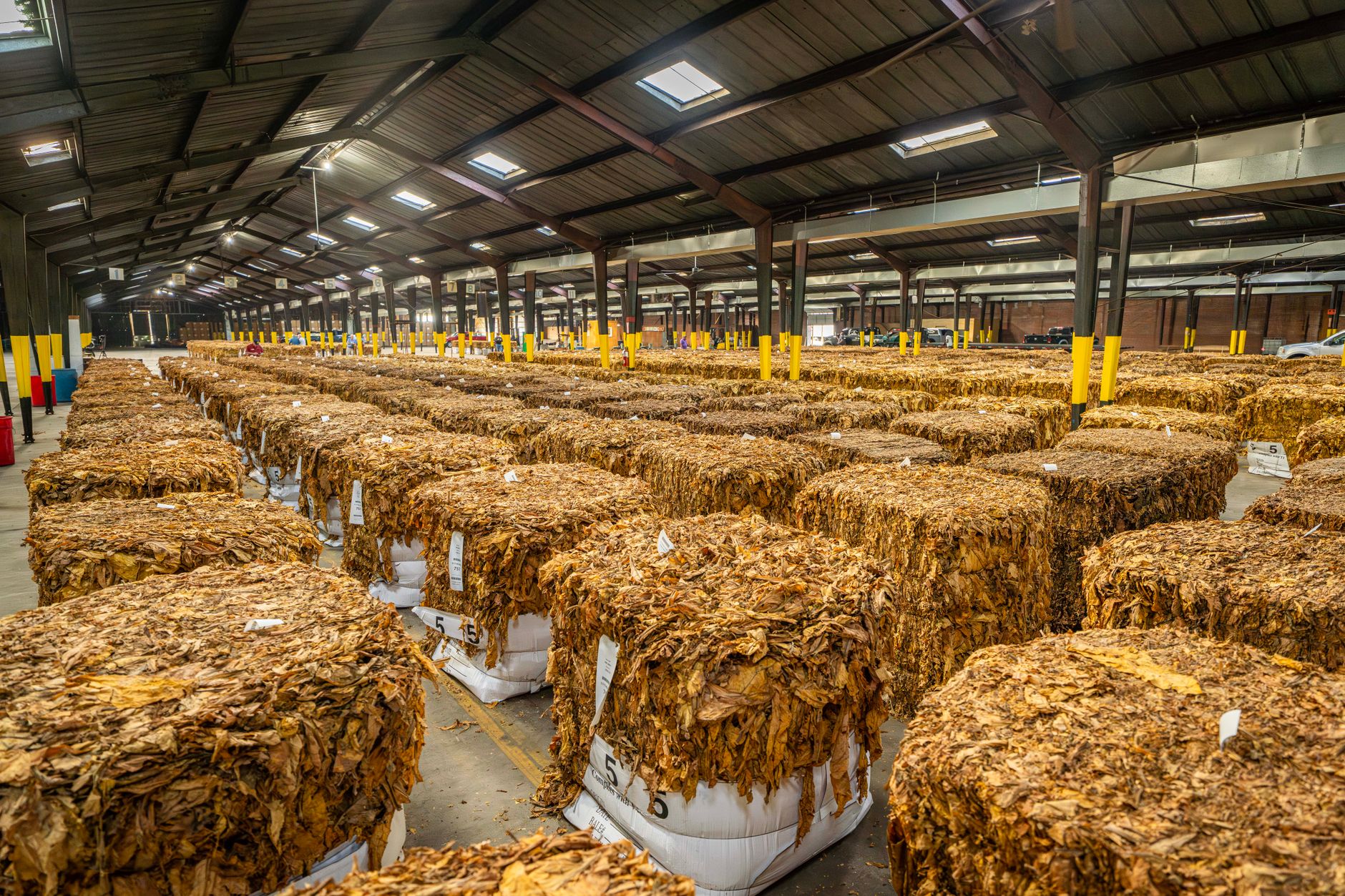
Our 12,000 sq ft Kansas City facility ($8,400/month) combines refrigerated storage (40% space), packaging stations (30%), and office/logistics hubs (30%)—all within 8 miles of BNSF rail and I-70. The layout prioritizes single-direction perishable goods flow with USDA-compliant sanitation zones.
| Item | Estimated Cost | Quantity | Purpose |
|---|---|---|---|
| Refrigerated containers | $28,000 | 6 | Temperature-controlled transport |
| Pallet jacks (electric) | $3,200 | 4 | High-volume warehouse mobility |
| Moisture analyzers | $1,750 | 3 | Pre-shipment quality control |
| Automated labeling systems | $14,500 | 2 | Compliance documentation |
| Forklifts (5-ton capacity) | $42,000 | 2 | Heavy loading/unloading |
| RFID scanners | $2,300 | 5 | Real-time inventory tracking |
| Customs doc software | $8,200/yr | 1 | Automated ITAR/PHYTOSAN forms |
| Security cameras | $6,800 | 12 | Cargo theft prevention |
- 6:00 AM: Receive perishables from regional farms (pre-cooled to 34°F)
- 7:30 AM: Quality inspection & moisture testing (5% random sampling)
- 9:00 AM: Palletize with ISO-compliant spacing (max 1.2m height)
- 11:00 AM: Generate customs docs via USDA export system
- 1:30 PM: Load containers with RFID tags (98% scan accuracy required)
- 3:00 PM: Dispatch to ports with 15-minute GPS check-ins
- 5:00 PM: Sanitize work areas (USDA Standard 4.8pH solution)
We maintain 48-hour lead times with 3 primary suppliers: cold chain packaging (Midwest Plastics), temperature sensors (ThermoLink Systems), and customs brokers (TradeFlow Inc). Backup vendors are pre-vetted at 10% capacity premium.
Ready When You Are
Download Agricultural Export Services Business Plan
Just Fill Up and Print
| Role | Headcount | Hourly Rate | Annual Cost | Key Responsibilities |
|---|---|---|---|---|
| Logistics Manager | 1 | $31.00 | $64,480 | Route optimization, carrier contracts |
| Quality Inspector | 2 | $31.00 | $128,960 | USDA compliance checks |
| Forklift Operator | 3 | $31.00 | $193,440 | Container loading/unloading |
| Document Specialist | 1 | $31.00 | $64,480 | Export paperwork processing |
| Sales Coordinator | 1 | $31.00 | $64,480 | Client shipment scheduling |
6. Management Team
| Name | Title | Background | Responsibilities |
|---|---|---|---|
| Rachel Kwon | CEO | 12 yrs Cargill logistics | Investor relations, strategic partnerships |
| Marcus Delgado | COO | USDA export compliance officer | Daily operations, regulatory adherence |
| Priya Vaswani | CFO | KPMG agribusiness audit lead | Financial controls, cost modeling |
| Andre Dubois | CTO | John Deere telematics architect | Supply chain automation |
| Olivia Chen | CSO | Dole Asia-Pacific sales director | Market expansion, client acquisition |
Our advisory board includes Dr. Henry Wu (former USDA Undersecretary for Trade) and Sofia Mendes (Maersk Latin America cold chain VP)—providing direct access to regulatory updates and port capacity intelligence.
We compensate at 15% above market ($31.00/hr base) with profit-sharing after Year 1. New hires complete 72-hour cross-training across compliance, logistics, and client ops—reducing single-point dependencies. Retention is driven by quarterly skill bonuses (max $2,400/yr) tied to export volume metrics.

7. Financial Projections
Global Harvest Logistics will capture $27.5M in Year 1 revenue, scaling to $107.4M by Year 5. The math works.
Revenue Growth (5 Years)
Annual revenue, Years 1–5
| Line Item | Year 1 | Year 2 | Year 3 |
|---|---|---|---|
| Revenue | $27,540,000 | $44,064,000 | $64,719,000 |
| COGS | $11,016,000 | $17,625,600 | $25,887,600 |
| Gross Profit | $16,524,000 | $26,438,400 | $38,831,400 |
| Gross Margin % | 60% | 60% | 60% |
| Labor | $515,840 | $709,280 | $1,031,680 |
| Rent | $120,000 | $132,000 | $145,200 |
| Marketing | $1,790,100 | $2,643,840 | $3,881,340 |
| Admin | $855,800 | $1,056,000 | $1,294,380 |
| Total OpEx | $4,281,740 | $5,540,120 | $7,352,600 |
| EBITDA | $12,242,260 | $19,237,523 | $27,562,069 |
| EBITDA Margin % | 44.5% | 43.7% | 42.6% |
Break-even hits at Month 6 with $4,152,733 revenue — we'll be cash-flow positive before Q3 ends.
Year 1 Monthly Cash Flow
Net monthly cash flow (red = pre-break-even)
| Metric | Year 1 | Year 2 | Year 3 |
|---|---|---|---|
| Gross Margin % | 60% | 60% | 60% |
| EBITDA Margin % | 44.5% | 43.7% | 42.6% |
| Revenue/Employee | $3,442,500 | $4,005,818 | $4,044,938 |
| Marketing as % of Revenue | 6.5% | 6.0% | 6.0% |
| Monthly Burn pre-break-even | $692,122 | N/A | N/A |
8. Funding Requirements
| Category | Amount | Notes |
|---|---|---|
| Cold Storage Setup | $58,000 | 2 USDA-certified units |
| Export Licensing | $32,000 | FDA + 8 country approvals |
| Freight Deposits | $41,000 | Container lease commitments |
| Tech Stack | $22,000 | Custom logistics software |
| Working Capital | $10,000 | First 60 days payroll |
Use of Funds
Total $140K startup investment
We're structuring $163,000 as 30% equity ($48,900) and 70% SBA 7(a) loan ($114,100).
Funding Structure
$140K total capitalization
The 10-year SBA loan carries a 10.25% rate — $1,524/month payments. See SBA 7(a) program details. Equity investors get a projected 8.7x return by Year 5 ($425,000 valuation on $48,900 stake).
9. Risk Analysis & Mitigation
Agricultural exports face three existential threats: phytosanitary rejections, freight volatility, and payment defaults. We're building moats against all three.
| Risk | Category | Likelihood | Impact | Mitigation Strategy | Owner |
|---|---|---|---|---|---|
| Container shortages | Logistics | H | H | Pre-book 40% capacity via Maersk contract | COO |
| Export ban (China) | Regulatory | M | H | Diversify to Vietnam/Indonesia markets | General Counsel |
| Dollar strength | Currency | M | M | Hedge 50% exposure via forex options | CFO |
| Cold chain failure | Quality | L | H | Real-time IoT monitoring + insurance | QA Lead |
| Non-payment | Credit | M | H | Letters of credit for all new buyers | CFO |
| Tariff escalation | Trade | H | M | Shift to ASEAN partners under CPTPP | General Counsel |
| Pest infestation | Biosecurity | L | H | Pre-shipment fumigation protocol | QA Lead |
| Fuel surcharges | Cost | H | M | Bunker adjustment factor clauses | COO |
Contingency playbook: 1) If China bans US ag imports, we activate Vietnam distributors within 72 hours. 2) For container rate spikes >25%, we shift to breakbulk vessels. 3) When buyers delay payments >60 days, we trigger LC drawdowns and blacklist.
Research & Industry Resources
The following market research sources, government data, and industry publications were referenced in developing this agricultural export services business plan. Each link points to a specific report or data page — not a homepage — for direct access to the underlying research.
- Us Agricultural Trade At A Glance — ers.usda.gov — Market research and industry data for agricultural export services businesses
- Agricultural%20Export%20Transportation%20Handbook — ams.usda.gov — Market research and industry data for agricultural export services businesses
- B181RC1Q027SBEA — fred.stlouisfed.org — Market research and industry data for agricultural export services businesses
- Article — legacy.export.gov — Market research and industry data for agricultural export services businesses
- Freight Forwarder Guidance — bis.gov — Market research and industry data for agricultural export services businesses
Get Your Copy Today
Download Agricultural Export Services Business Plan
Just Fill Up and Print