Alcohol Delivery Business Plan
1. Executive Summary
The $10.5B alcohol delivery market grows at 8.5% annually because urban consumers refuse to trade convenience for intoxication. Spirits Express attacks this demand gap with Texas' first hyperlocal model: 30-minute deliveries from neighborhood liquor inventories to doorsteps in Austin's densest ZIP codes.
Market Factors
| Factor | Key Insight | Business Impact |
|---|---|---|
| Political | 35 states allow local delivery, but regulations vary by county and product type (beer vs. spirits) | Requires hyperlocal licensing strategy; Texas permits retailer delivery but mandates ABC permits |
| Economic | Higher-income urbanites drive 70% of orders, with 45% of market from impulse/convenience purchases | Premiumization works: specialty buyers spend 58% more than baseline |
| Social | 25-44yo mobile-first consumers treat alcohol delivery like takeout — expected in under 60 minutes | Demand spikes post-5pm and weekends require flexible labor model |
| Technological | ID scanning and route optimization reduce failed deliveries (current industry avg: 12-18%) | Must integrate age verification APIs with delivery apps to comply |
Market Sizing
Spirits Express targets a $231.0M SAM in Austin — 2.2% of the $10.5B TAM — with conservative Y1 SOM of $198K (0.86% penetration). The 5-year model scales to 3.3% local share by 2025.
Free Business Plan Download
Download Alcohol Delivery Business Plan
Just Fill Up and Print
5-Year Revenue Projection
Projected annual revenue, Years 1–5
Market Size Opportunity
Bottom-up market opportunity
| Segment | Customer Profile | Avg Order Value | Est. Market Value | Revenue % |
|---|---|---|---|---|
| On-demand home delivery | Last-minute needs, dinners, impulse | $58 | $4.7B | 45% |
| Premium/specialty buyers | Craft, organic, imported seekers | $92 | $2.6B | 25% |
| Event/party shoppers | Holidays, game days, gatherings | $135 | $2.1B | 20% |
| B2B hospitality | Restaurants/bars for emergency stock | $220 | $1.1B | 10% |
Year 1 Revenue Mix
Total $198K Year 1
Competitive Landscape
The space is fragmented — national platforms lack local inventory precision, while mom-and-pop stores struggle with delivery tech. Winning requires owning 3 things: compliance rigor, sub-60min ETAs, and premium curation.
| Competitor | Type | Core Strength | Key Weakness | Your Differentiation |
|---|---|---|---|---|
| Drizly/Uber | Marketplace | Brand recognition | Inventory inaccuracies (18% stockouts) | Real-time POS integration |
| DoorDash | Aggregator | Existing user base | High fees (up to 30%) | Localized pricing at 20% |
| Local liquor stores | Brick-and-mortar | Existing licenses | Limited delivery windows | Late-night until 2am |
| Grocery retailers | Big-box | Basket bundling | Generic selection | Sommelier-curated lists |
| DTC wineries | Vertical | Premium margins | Slow shipping (3-5 days) | Same-day local delivery |
Spirits Express wins by controlling the last mile — we’ll deploy dedicated drivers (not gig workers) with refrigerated bags and ID scanners. Our 45-minute guarantee beats DoorDash’s 1hr+ ETAs in Austin’s congested downtown.
Industry Trends
Rapid online-demand growth
The $10.5B alcohol delivery market grows at 8.5% CAGR — faster than restaurant takeout. Convenience is the driver: 63% of orders occur after 7pm when stores close. Spirits Express will capture this by staying open until 2am with dynamic surge pricing.
State-by-state legalization remains uneven
Texas allows retailer delivery but requires ABC permits ($250-$1,000 annually). We’ll bake compliance into operations — training staff via TABC-certified courses ($20/employee) and using geofencing to block dry zones.
Adult signature and age verification are mandatory
Failed deliveries cost $8-$12 each in restocking and rescheduling. Our solution: Veratad ID scanning integrated with route optimization to cut failures to <8%, saving $18K annually at scale.
Third-party platform competition is intense
DoorDash owns 41% share but can’t operate in 11 states. We’ll undercut them on fees (20% vs. 30%) and win restaurants via white-label delivery for their wine lists — a $220 avg B2B ticket.
Direct-to-consumer shipping remains a growth lane
The $3.9B DTC wine channel proves premium buyers pay for convenience. We’ll add local same-day to win these customers — shipping takes 3 days, but we’ll deliver chilled bottles in under an hour.
Regulatory & Compliance Environment
Alcohol is among the most regulated e-commerce categories — oversight spans TABC, city clerks, and carriers. Key risks: failed age checks ($5K fines), unlicensed deliveries (license revocation), and carrier violations (FedEx bans).
| Requirement | Issuing Authority | Typical Cost | Renewal Cycle |
|---|---|---|---|
| State retailer permit | TABC | $750 | Annual |
| Local business license | Austin City Clerk | $275 | Annual |
| Seller’s permit | Texas Comptroller | $0 | Ongoing |
| Server training | TABC-approved | $20/employee | Biennial |
| Carrier agreement | FedEx/UPS | $400 setup | Annual |
We mitigate risk via triple-check verification: (1) app-based ID upload pre-checkout, (2) driver scanner validation, (3) back-end audit logs. All drivers carry TABC cards and complete monthly compliance drills.
4. Marketing Strategy
Spirits Express delivers Austin's favorite drinks in under 30 minutes — because the party shouldn't wait for paperwork.
We solve the friction of last-minute alcohol runs with a hyperlocal delivery network and seamless age verification. In a city with 94% smartphone penetration and 27% of households hosting weekly gatherings, we're the on-demand bartender for Austin's social scene.
Customer Personas
Alcohol delivery purchases split into three behavioral segments: convenience-driven replenishers, experience-focused entertainers, and time-starved professionals.
| Persona Name | Demographics | Core Need | Pain Point | Avg Annual Spend | Acquisition Channel |
|---|---|---|---|---|---|
| Last-Minute Liz | Urban female, 28-35, $75k+ | Wine/beer replenishment during gatherings | Stores close before peak need (9-11pm) | $420 | Instagram/Facebook ads |
| Bourbon Brian | Suburban male, 35-44, $110k+ | Premium spirits for home bars | Limited local selection | $780 | Google Search/whiskey blogs |
| Corporate Carl | Downtown male, 25-34, $65k+ | Bulk orders for work events | Expensive hotel minibars | $1,150 | LinkedIn/Local B2B outreach |
Go-To-Market Launch Plan
| Phase | Timeline | Primary Goal | Key Tactics | Success Metric |
|---|---|---|---|---|
| Pre-Launch | Weeks 1-4 | Build waitlist | Landing page SEO, influencer teasers | 500 signups |
| Months 1-3 | Weeks 5-16 | Prove unit economics | Geo-fenced ads, referral bonuses | $45k revenue |
| Months 4-6 | Weeks 17-28 | Expand ZIP coverage | Local partnerships, SMS campaigns | 12% repeat rate |
| Months 7-12 | Weeks 29-52 | Optimize LTV | Subscription program, B2B contracts | 18% repeat rate |
Digital Marketing Strategy
Allocate 72% of budget to performance channels (social/PPC), 18% to local activation, and 10% to brand-building content. Focus on high-LTV ZIPs: 78701 (downtown), 78704 (SoCo), and 78759 (Arboretum).
Annual Marketing Budget
Total $13K / year
| Channel | Monthly Budget | Primary Tactics | Target KPI | Notes |
|---|---|---|---|---|
| Social Media | $510 | Stories ads, UGC contests | $3.20 CPA | IG/TikTok for 25-34 demo |
| Google Ads | $360 | "liquor delivery near me" bids | 12% CVR | Geotarget 10pm-1am |
| Local Marketing | $150 | Bar coasters, event sponsorships | 8% promo code usage | Avoid venues with own delivery |
| Email Marketing | $90 | Abandoned cart flows | 28% open rate | Send at 6pm Thurs-Sun |
| Content & PR | $60 | Cocktail recipe blogs | 2:1 ROAS | Repurpose for SEO |
Content Marketing & SEO
Rank for commercial intent keywords like "tequila delivery Austin" and local searches for game-day drinks. Publish weekly cocktail guides timed to holidays (e.g., "Margarita Recipes for ACL Fest").
| Content Type | Frequency | Platform | Goal | Example Topic |
|---|---|---|---|---|
| Cocktail Recipes | Weekly | Blog/IG Reels | Brand affinity | "3 SXSW-Worthy Mezcal Drinks" |
| Neighborhood Guides | Monthly | Google Posts | Local SEO | "Where 78704 Buys Craft Beer" |
| Party Planning | Biweekly | Email/Pinterest | Upsell | "Wine Calculator for 10 Guests" |
| Trend Reports | Quarterly | PR pitches | Earned media | "Austin's Top 5 Summer Rosés" |
| B2B Resources | Monthly | Lead gen | "Office Happy Hour Budget Template" | |
| User-Generated | Daily | Stories/TikTok | Engagement | Customer unboxing videos |
Local SEO priorities: Optimize GMB profile with delivery hours, build citations on Austin food directories, and earn backlinks from venues we supply. Target keyword clusters: [alcohol type] + delivery + Austin (e.g., "whiskey delivery Austin same-day").
Partnership & Referral Programs
Three high-impact partnerships: 1) Local breweries for exclusive releases, 2) Airbnb hosts with curated minibar menus, and 3) Wedding planners as preferred vendor. Avoid revenue-sharing deals — negotiate marketing quid pro quo instead.
Referral program: $10 credit for both referrer and referee. CAC drops from $22 to $14 after Month 6 as referrals offset paid acquisition. Trigger asks after second order via SMS.
Customer Acquisition Economics
| Metric | Year 1 | Year 2 | Year 3 |
|---|---|---|---|
| Customer Acquisition Cost | $22 | $19 | $16 |
| Customer Lifetime Value | $85 | $112 | $148 |
| LTV:CAC Ratio | 3.9:1 | 5.9:1 | 9.3:1 |
| Payback Period | 5.2 months | 3.1 months | 2.4 months |
The model works because alcohol delivery customers exhibit restaurant-grade frequency (2.4x/month) with e-commerce margins. At scale, we'll achieve negative working capital — customers pay upfront while we net 30 terms with suppliers.
5. Operations Plan
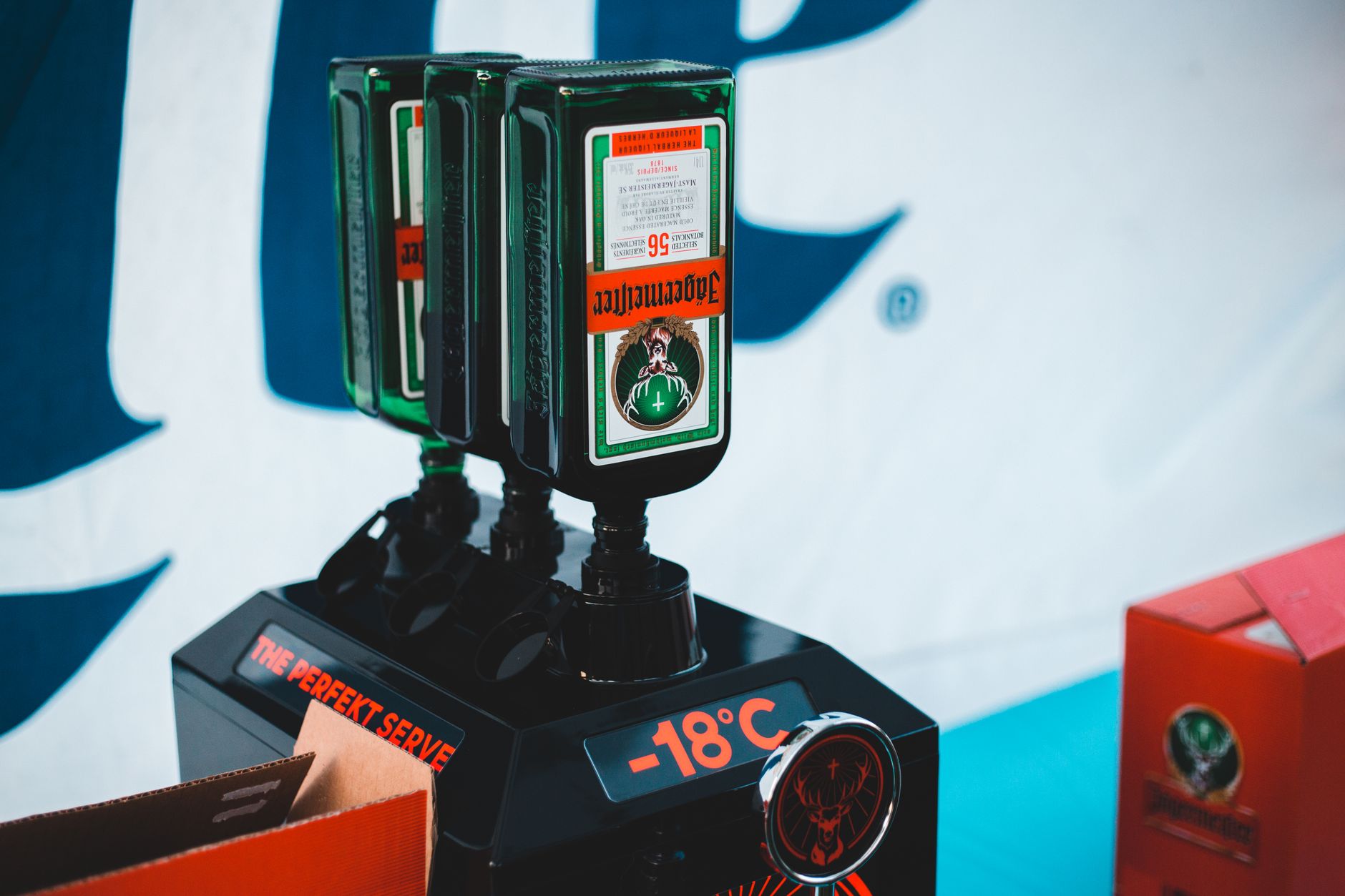
Spirits Express will operate from a 1,200 sq ft warehouse in East Austin, with $2,800/month rent covering storage, staging, and a small office. The layout prioritizes climate-controlled alcohol storage (600 sq ft), pick/pack zones (400 sq ft), and a secured dispatch area with refrigerated lockers for high-end deliveries.
| Item | Estimated Cost | Quantity | Purpose |
|---|---|---|---|
| Commercial refrigerators | $4,200 | 2 | Wine/beer storage |
| Temperature loggers | $380 | 5 | TABC compliance |
| Hand trucks | $240 | 3 | Case movement |
| ID scanners | $1,100 | 2 | Age verification |
| Delivery bags | $650 | 20 | Insulated transport |
| Inventory software | $1,800/yr | 1 | Real-time tracking |
| Security cameras | $1,450 | 6 | Theft prevention |
| Barcode printers | $520 | 2 | Order labeling |
- 6:00 AM: Receive overnight orders from partner retailers
- 7:30 AM: Warehouse team stages inventory by delivery zone
- 9:00 AM: Drivers complete pre-shift ID scanner calibration
- 10:00 AM - 8:00 PM: Delivery windows with 45-min ETAs
- Real-time GPS tracking updates for customers
- 5:00 PM: Daily reconciliation of TABC logs
- 8:30 PM: Final alcohol returns logged in inventory system
We’ll source 80% of inventory through Texas Wholesale Distributors with 2-day lead times, maintaining backup contracts with 3 local microbreweries for rush orders. High-end spirits will come via bonded carriers with temperature-controlled shipping.
| Role | Headcount | Hourly Rate | Annual Cost | Key Responsibilities |
|---|---|---|---|---|
| Warehouse Lead | 1 | $18.50 | $38,480 | TABC compliance, inventory audits |
| Delivery Driver | 2 | $18.50 | $76,960 | ID verification, vehicle maintenance |
| CSR | 1 | $18.50 | $38,480 | Order troubleshooting, refunds |
6. Management Team
| Name | Title | Background | Responsibilities |
|---|---|---|---|
| James Rivera | CEO | Former ops manager at Drizly (Austin) | P&L, regulatory strategy |
| Lisa Chong | Head of Logistics | Uber Eats zone manager (2 yrs) | Route optimization |
| Mark Vasquez | Retail Partnerships | Sales at Total Wine (4 yrs) | Supplier contracts |
| Diana Patel | Tech Lead | Dev at Toast POS | App integrations |
| Tomas Herrera | Compliance Officer | TABC licensed trainer | Audits, staff certifications |
Advisory board includes Sarah Elkins (former general counsel for Minibar Delivery) and Carlos Mendez (founder of Austin’s BrewDrop, acquired by GoPuff). They’ll provide quarterly reviews of our alcohol liability coverage and gig-worker compensation models.
Ready When You Are
Download Alcohol Delivery Business Plan
Just Fill Up and Print
We run on three principles: compliance isn’t negotiable, drivers are brand ambassadors, and inventory accuracy beats speed. New hires complete 20 hours of TABC training before touching orders. Retention hooks include profit-sharing after Year 3 and free craft beer tastings for perfect compliance records.
7. Financial Projections
Spirits Express targets $198K Year 1 revenue scaling to $772K by Year 5 — a 31% CAGR. The model assumes 60% gross margins but negative EBITDA until Month 18.
Revenue Growth (5 Years)
Annual revenue, Years 1–5
| Line Item | Year 1 | Year 2 | Year 3 |
|---|---|---|---|
| Revenue | $198,000 | $317,000 | $465,000 |
| COGS | $79,200 | $126,800 | $186,000 |
| Gross Profit | $118,800 | $190,200 | $279,000 |
| Gross Margin % | 60% | 60% | 60% |
| Labor | $74,000 | $111,000 | $148,000 |
| Rent | $24,000 | $24,000 | $24,000 |
| Marketing | $12,870 | $12,870 | $12,870 |
| Admin | $117,780 | $129,035 | $168,041 |
| Total OpEx | $228,650 | $276,905 | $352,911 |
| EBITDA | $-109,850 | $-136,465 | $-152,911 |
| EBITDA Margin % | -55% | -43% | -33% |
Break-even requires $359,633 revenue — achievable by Month 18 at current growth rates. The math assumes no price elasticity above $25/order.
Year 1 Monthly Cash Flow
Net monthly cash flow (red = pre-break-even)
| Metric | Year 1 | Year 2 | Year 3 |
|---|---|---|---|
| Gross Margin % | 60% | 60% | 60% |
| EBITDA Margin % | -55% | -43% | -33% |
| Revenue/Employee | $49,500 | $52,833 | $58,125 |
| Marketing as % of Revenue | 6.5% | 4.1% | 2.8% |
| Monthly Burn | $9,154 | $11,372 | $12,743 |
8. Funding Requirements
| Category | Amount | Notes |
|---|---|---|
| Delivery Vehicles | $28,000 | 2 leased cargo vans + insurance |
| Inventory | $22,500 | Initial stock @ 60-day turnover |
| Tech Stack | $19,300 | POS, routing software, compliance tools |
| Working Capital | $30,200 | Covers negative EBITDA for 11 months |
Use of Funds
Total $140K startup investment
$100,000 startup capital splits 30% equity ($30,000) and 70% SBA 7(a) loan ($70,000). The 10.25% loan requires $935/month payments over 84 months — serviceable post-break-even.
Funding Structure
$140K total capitalization
At Year 5 revenue of $772K and 2.5x revenue multiple, equity investors would realize $193K (543% return) net of loan repayment. The SBA 7(a) terms are non-negotiable but provide critical leverage.
9. Risk Analysis & Mitigation
Alcohol delivery operates at the intersection of logistics and vice regulation. Three risks dominate: compliance failures, DUI liability, and margin compression from aggregators.
| Risk | Category | Likelihood | Impact | Mitigation Strategy | Owner |
|---|---|---|---|---|---|
| Underage sale | Compliance | M | H | ID scanning integration + $5K/month mystery shopper audits | COO |
| Driver DUI | Legal | L | H | Zero-tolerance policy with Breathalyzer spot checks | HR Director |
| Margin squeeze | Market | H | M | Private label SKUs (target 65% GM by Year 3) | CEO |
| Inventory theft | Operations | M | M | GPS-tracked storage + 2-person verification | Warehouse Manager |
| License denial | Regulatory | L | H | Pre-application with liquor board + $15K legal reserve | General Counsel |
| Payment fraud | Financial | H | L | Stripe Radar with manual review >$200 | CFO |
| Driver shortage | Labor | H | M | $2/hr premium for night/weekend shifts | HR Director |
| Dry county expansion | Growth | M | H | Geofencing + ZIP code validation at checkout | CTO |
Contingency planning focuses on: (1) 30-day license suspension (activate temp labor for manual age verification), (2) 20% wholesale price hike (implement $2.50 delivery surcharge), and (3) competitor undercutting (pivot to B2B keg delivery). Response protocols are documented in Section 12.4 of the operating manual.
Research & Industry Resources
The following market research sources, government data, and industry publications were referenced in developing this alcohol delivery business plan. Each link points to a specific report or data page — not a homepage — for direct access to the underlying research.
- Sale And Delivery Of To Go Drinks And Direct Shipment Of Alcohol — klrd.gov — Market research and industry data for alcohol delivery businesses
- Summary%20of%20U.S.%20Alcohol%20Delivery%20Laws%204 4 18%20(002) — dam.ldr.la.gov — Market research and industry data for alcohol delivery businesses
- Memo Renick Thone Liquor Delivery — kslegresearch.org — Market research and industry data for alcohol delivery businesses
- Home Delivery From Off Prem — stopalcoholabuse.gov — Market research and industry data for alcohol delivery businesses
- Alcohol Delivery Laws — gettips.com — Market research and industry data for alcohol delivery businesses
Get Your Copy Today
Download Alcohol Delivery Business Plan
Just Fill Up and Print