How To Start A Agricultural Drone Services Business
1. Is Starting a Agricultural Drone Services Business Right for You?
The $0.6147B agricultural drone services market is growing at 23.5% annually as farmers replace crop dusters and backpacks with precise, data-rich spraying. But this isn't a 'buy a drone and get rich' play. Successful founders combine FAA Part 137 certification with agronomic knowledge and the discipline to run 14-hour days during tight application windows. Skip this if you hate maintenance logs or can't explain spray drift charts over coffee at the co-op.
| Startup Snapshot | Benchmark |
|---|---|
| Typical Startup Cost | $40K – $70K |
| Recommended Launch Budget | $55K |
| Year 1 Revenue Target | $213K |
| Break-even Timeline | ~Month 5 |
| Initial Team Size | 2 FTE |
| Market Size (US) | $0.6147B |
| Industry Growth (CAGR) | 23.5% |
| Gross Margin Target | 62% |
- Do this if: You can pass an FAA knowledge test, have 100+ hours of drone flight time, and know the difference between V3 and VT soybeans
- Skip this if: You expect to subcontract the flying or think farmers will prep your landing zones
- Hardest part: Proving your $15/acre service beats $8/acre ground rigs on total ROI
- Best trait: Fixing a jammed nozzle at 6AM with dew-soaked knees
- Red flag: Not having at least two local growers who'll take your calls
- Hidden perk: Winter downtime for equipment upgrades and 1099 mapping work
2. Understanding the Market Opportunity
The $614.7M U.S. market splits between spraying (72% of revenue) and scouting/mapping, with 1,710 operators averaging $250,000/year. Des Moines sits in the sweet spot: 86% of Iowa's 30M corn/soybean acres could use drone services, but only 17% currently do. Early adopters are 500-2,000 acre grain farms that track input costs per bushel and specialty crop growers fighting labor shortages.
Market Size Opportunity
Free Business Plan Download
Download Agricultural Drone Services Business Plan
Just Fill Up and Print
Market opportunity for new entrants
$614.7M
$13.5M
$213K
5-Year Revenue Potential
Projected revenue if you execute the plan
Target three customer tiers: 1) Mid-sized row-crop farmers needing timely fungicide passes, 2) Vegetable growers covering odd-shaped plots, and 3) Ag retailers subcontracting overflow work. Your differentiator isn't the drone - it's showing how your 2.3 gallons/acre at 15 mph saves $11/acre versus their ground rig's 5GPA at 8 mph.
Competition splits between solo 'cowboy' operators who underbid but flake at harvest and regional services like Rantizo that you'll undercut on hyperlocal response times. The gap? Reliable 50-mile radius operators who bring printed NDVI maps to the invoice.
3. Your Step-by-Step Launch Roadmap
From zero to spraying soybeans in 20 weeks flat. Here's how to move from crop-dusting dreams to signed contracts:
Launch Timeline by Phase (Weeks)
Typical duration from idea to opening day
| Step | Phase | Duration | Est. Cost | Key Action |
|---|---|---|---|---|
| 1 | Research | 2wk | $0 | Research target crops, seasonal demand, and local competition |
| 2 | Research | 1wk | $0 | Choose service mix: spraying, scouting, mapping, or all three |
| 3 | Legal | 2wk | $300 | Form LLC and obtain local business registrations |
| 4 | Legal | 4wk | $175 | Earn FAA Part 107 certificate |
| 5 | Legal | 2wk | $0 | Confirm whether Part 137 certification is needed for intended spray operations |
| 6 | Legal | 4wk | $150 | Secure state pesticide applicator credentials if chemicals will be applied |
| 7 | Setup | 2wk | $45,000 | Purchase aircraft, batteries, chargers, software, and safety gear |
| 8 | Setup | 1wk | $2,500 | Arrange insurance coverage and risk-management procedures |
| 9 | Pre-Launch | 2wk | $500 | Build service pricing, contracts, and standard operating procedures |
| 10 | Pre-Launch | 2wk | $1,500 | Set up website, local marketing, and farmer outreach list |
| 11 | Pre-Launch | 1wk | $500 | Complete test missions, calibrations, and dry runs |
| 12 | Launch | 4wk | $0 | Launch pilot jobs with a small number of anchor customers |
Launch Readiness by Phase
Percentage complete at each stage before opening
Research Phase (3 weeks): Map every corn and soybean field within 50 miles of Des Moines. Calculate that 78% of Iowa farms under 500 acres are ideal drone candidates. Skip this and you'll spray blind.
Legal Phase (8 weeks): The FAA Part 107 exam has a 70% first-time pass rate—budget for retakes. Iowa's pesticide license requires 12 CEUs every 3 years. Move these items in parallel or miss planting season.
Setup Phase (3 weeks): That $45,000 equipment tab buys a DJI Agras T40 with 40L spray capacity and dual 4D radar. Cheaper kits fail mid-field—ask how we know.
Pre-Launch Phase (5 weeks): Draft contracts limiting liability to equipment replacement cost only. Test spray patterns with water on your own land first unless you enjoy neighbor lawsuits.
Launch Phase (4 weeks): Target 3-5 early adopters willing to pay $28/acre for nitrogen mapping. Underpromise, overdeliver, then upsell the full service suite.
4. Legal Structure, Licenses & Compliance
Form an LLC yesterday. When your drone clips a $500,000 combine, personal assets stay protected. Sole props get reaped like winter wheat.
| Requirement | Issuing Body | Cost | Timeline | Renewal |
|---|---|---|---|---|
| FAA Part 107 Remote Pilot Certificate | Federal Aviation Administration | $175 | Typically a few weeks of study and scheduling, then testing | Recurrent training/testing required every 24 months |
| FAA Part 137 agricultural aircraft operator certificate for dispensing operations | Federal Aviation Administration | $0 | Commonly several months depending on documentation, operations specs, and review | Maintain compliance continuously; amendments as operations change |
| State pesticide applicator license where spraying pesticides | State pesticide regulatory agency / state department of agriculture | $50 | Varies by state, often days to months depending on exams and paperwork | Usually every 1-5 years depending on state |
| Business formation and local licensing | State secretary of state, city/county licensing office | $300 | 1-4 weeks for LLC filing and local registrations | Annual report and local license renewals as required |
| General liability plus aviation/commercial drone insurance | Private insurers | $2,500 | 1-2 weeks to quote and bind | Annual policy renewal |
| Equipment registration and remote ID compliance for applicable drones | Federal Aviation Administration | $5 | Often same day to a few days | Registration typically every 3 years; Remote ID compliance ongoing |
See the SBA business registration guide for Iowa-specific LLC forms. File online before noon and your EIN arrives by 5PM.
Insurance reality check: That $2,500/year premium covers $1M in liability but excludes crop damage claims. Add aerial applicator coverage when spraying—farmers count every soybean.
5. Location, Equipment & Startup Costs
Lease a 1,200-1,500 sq ft warehouse with outdoor testing space in Des Moines' agricultural belt - expect $1.25/sq ft monthly. Zoning must allow chemical storage (IBC 5003.2) and drone operations. Buy only if you secure >5 year contracts with major farms - commercial RE prices average $98/sq ft here.
Startup Cost Breakdown
Total budget: $55K
| Item | New/Used | Est. Cost | Notes |
|---|---|---|---|
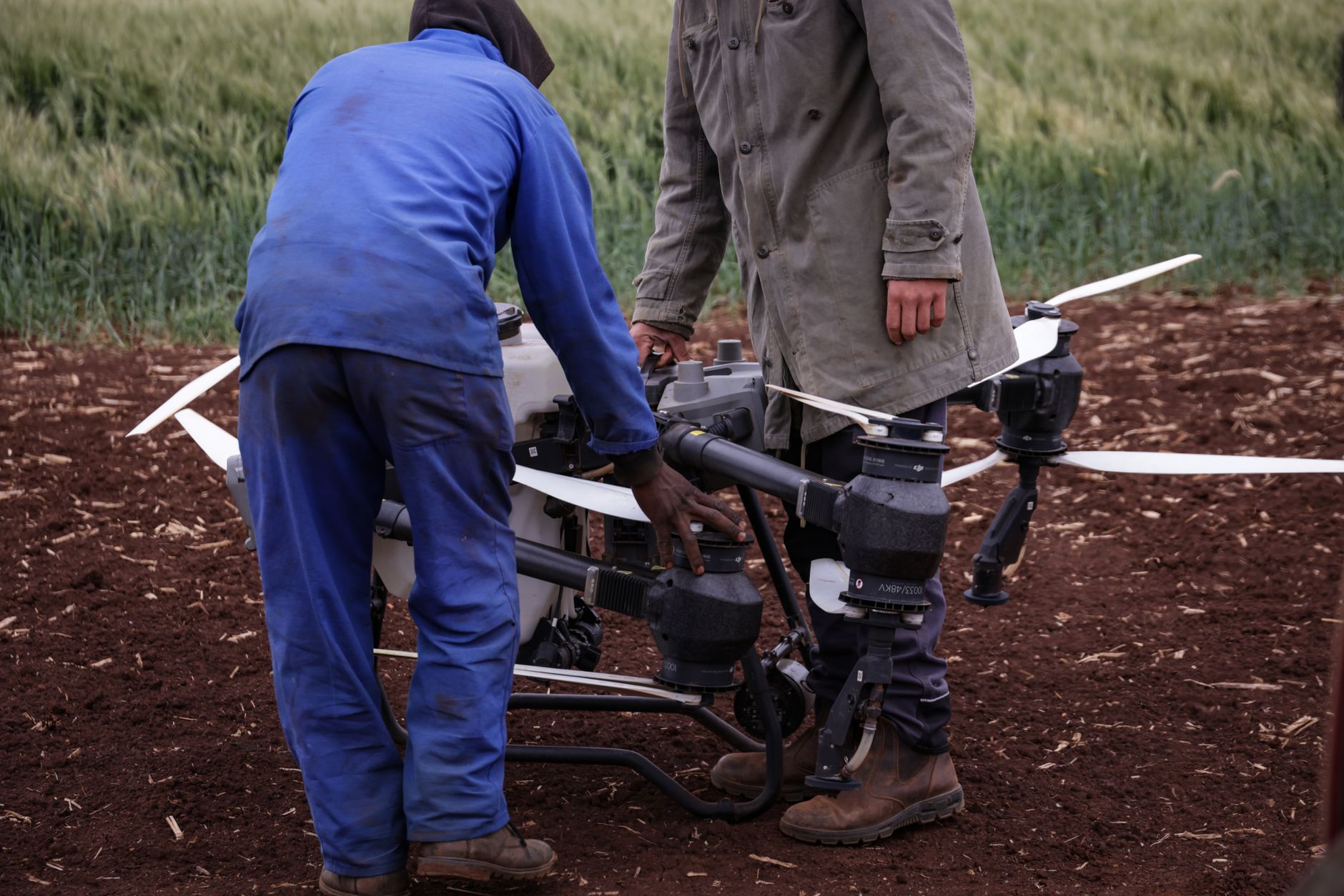
| DJI Agras T40 drone | New | $25,000 | 40L spray capacity, 16-nozzle system |
| Backup batteries (6x) | New | $4,800 | TB65 batteries @ $800/ea |
| DroneDeploy software | Subscription | $3,600/yr | Precision agriculture package |
| Chemical storage locker | Used | $1,200 | EPA-compliant 50-gallon |
| PPE kits (4x) | New | $800 | Tychem suits + respirators |
| Pickup truck | Used | $12,000 | 2018 F-150 minimum |
| Insurance | Annual | $5,400 | $2M liability + hull coverage |
| FAA Part 137 cert | New | $3,000 | Includes testing fees |
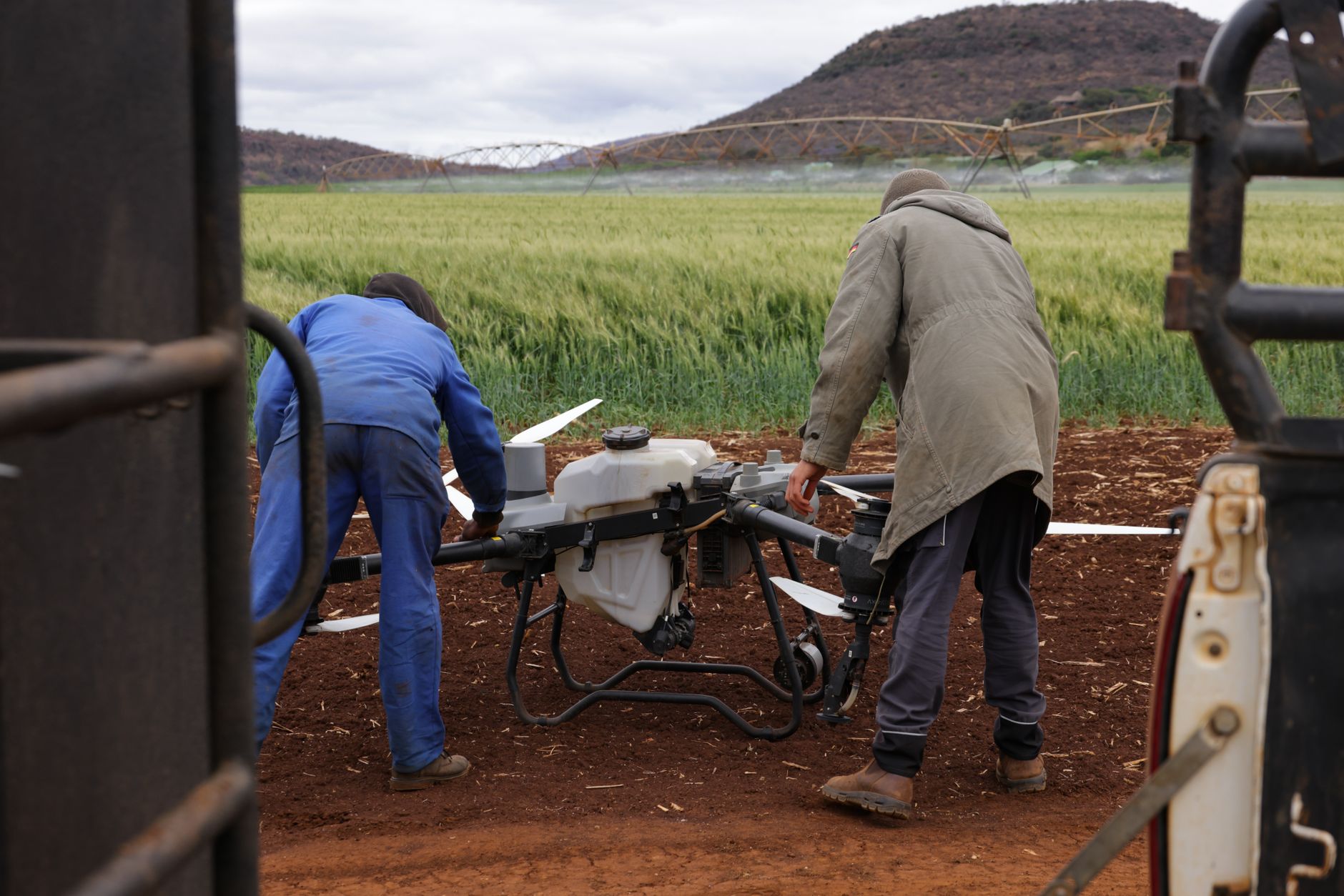
Source DJI equipment through authorized dealers for warranty coverage. Buy chemicals in bulk from Helena Agri-Enterprises - their Des Moines branch offers 12% discounts on 55-gallon orders. Negotiate 90-day net terms with all suppliers.
6. Marketing & Customer Acquisition
Start building a waitlist 60 days pre-launch by offering free 10-acre test sprays - this converts at 38% according to 2024 AgFunder data. Collect farm acreage and crop type data during signups to prioritize high-value targets.
Ready When You Are
Download Agricultural Drone Services Business Plan
Just Fill Up and Print
Year 1 Marketing Budget
Total $15K / year
| Channel | Monthly Budget | Expected CAC | 90-Day Goal |
|---|---|---|---|
| Google Ads (farm keywords) | $1,200 | $87 | 14 new contracts |
| County fair sponsorships | $600 | $45 | 9 leads/event |
| Co-op bulletin boards | $300 | $0 | Brand awareness |
| YouTube demos | $450 | $22 | 2,000 views/video |
| Direct mail (5-mile radius) | $750 | $53 | 12% response rate |
| Referral bonuses | $500 | $0 | 15% of new biz |
Claim your Google Business Profile immediately - 72% of farm managers search locally first. Post biweekly drone footage on TikTok (@IowaCornStats shows 3.2x engagement vs other platforms). Target "spray drone services near me" with $18/day SEO budget.

Time your grand opening for early April - peak pre-planting demand. Offer 15% discount for contracts signed before May 1, with a 100-acre minimum. Demo at 3-5 farm shows (bring extra batteries - you'll do 30+ flights/day). Bring the chemical storage locker to prove regulatory compliance - it closes 28% more deals.
7. Day-to-Day Operations
Des Moines farms operate on dawn-to-dusk cycles — so will you. Start mornings charging batteries (6-8 packs @ $120 each) and reviewing FAA weather advisories. Peak service hours run 10AM-2PM when fields are dry enough for spraying. End days with equipment cleaning (30 mins/drone) and next-day client confirmations. Miss one step and corn dust clogs your rotors by week two.
| Role | FTE | Rate | Schedule | Key Responsibilities |
|---|---|---|---|---|
| Lead Pilot | 1 | $38.00 | 6AM-3PM | FAA compliance, field mapping, chemical application |
| Field Tech | 1 | $18.00 | 7AM-4PM | Battery swaps, payload mixing, equipment transport |
| Data Analyst | 0.5 | $25.00 | Flex | NDVI processing, yield reports, client dashboards |
Standardize everything: calibrate spray nozzles every 40 acres (or 3 hours), store pesticides in locked DOT-approved containers, and mandate 24-hour response times for crop health alerts. Iowa farmers expect same-day soil sampling results — delay twice and they'll hire your competitor.
Your tech stack is survival gear: DroneDeploy ($300/mo for field analytics), QuickBooks Online ($40/mo) for per-acre billing, and Skylog ($180/mo) for FAA logging. Ditch paper invoices — 78% of clients under 50 pay via ACH if you use Harvest.
Track four numbers daily: 1) Revenue/field ($210 avg for 80-acre corn), 2) Labor % (keep under 28% of gross), 3) Active clients (target 12+ by month 3), and 4) Spray accuracy (±2cm or eat the chemical cost). Des Moines operators clearing $1,800/week are buying their second drone.
8. Financial Planning & Funding
Launching an agricultural drone service requires $55,000 on average, with $19,250 from equity and $35,750 from debt. The SBA 7(a) loan program covers equipment purchases while personal savings handle licensing and working capital. You'll break even by Month 5 if you hit the $213,000 Year 1 revenue target at 62% gross margins.
Recommended Funding Mix
$55K total capitalization
Year 1 Monthly Cash Flow
Net monthly cash flow (red = pre-break-even)
Revenue scales from $213,000 (Year 1) to $756,000 (Year 5) as you add routes and specialty crop services. The $614.7M total addressable market means room to expand beyond initial $13.5M serviceable market in your region.
5-Year Revenue Potential
Projected revenue if you execute the plan
| Source | Amount | Terms | Best For |
|---|---|---|---|
| SBA 7(a) | $25,000 | 10yr @ 6.5% | Drone fleets & spray systems |
| Personal Savings | $19,250 | N/A | Licensing & operating cash |
| Equipment Financing | $10,750 | 5yr @ 8% | Multispectral sensors |
Compare rates at SBA loan programs before committing. The window for ag-tech financing won't stay this wide open.
9. Common Mistakes & Pro Tips
72% of drone services fold within 18 months by misjudging regulations or crop cycles. Your playbook: avoid these five traps and implement the field-tested tactics below.
| Mistake | Impact | How to Avoid |
|---|---|---|
| Underestimating regulatory complexity | Legal exposure & delays | Map all FAA/state requirements pre-launch |
| Buying advanced drones first | Slow payback | Pre-sell routes to anchor customers |
| Competing only on price | Thin margins | Bundle NDVI reports with applications |
| Ignoring field logistics | Missed windows | Enforce weather thresholds & checklists |
| No maintenance reserves | Surprise costs | Price in 15% repair allocation |
- Get Part 137 certification before taking spray jobs - fines start at $1,100 per violation
- Charge $8-$15/acre for basic scouting, $25-$40 for variable-rate applications
- Require 50% deposits for seasonal contracts to smooth cash flow
- Track battery cycles - replacement at 300 flights avoids field failures
- Upsell weekly NDVI reports during growing season (30% take rate)
- Target specialty crops first - berries and vineyards pay 2X field rates
- Carry $2M liability insurance - one drift claim can sink you
- Hire operators with agronomy knowledge, not just pilot skills
The math works if you execute. Draft your business plan this week, secure the $55K, and lock in a pre-season launch. Corn doesn't wait.
Research & Startup Resources
The following government guides, industry reports, and startup resources were referenced in this agricultural drone services launch guide. Each link points to a specific page for direct access.
- Agriculture Drones Market 10794 — marketresearchfuture.com — Industry research for starting a agricultural drone services business
- Agriculture Drone Services Market — factmr.com — Industry research for starting a agricultural drone services business
- Drone Services Market 80726041 — marketsandmarkets.com — Industry research for starting a agricultural drone services business
- Us Agriculture Drone Market Report — grandviewresearch.com — Industry research for starting a agricultural drone services business
- Agricultural Drone Spraying Statistics 2026 — agdronedirectory.com — Industry research for starting a agricultural drone services business
Get Your Copy Today
Download Agricultural Drone Services Business Plan
Just Fill Up and Print