How To Start A Apparel Company Business
1. Is Starting a Apparel Company Business Right for You?
The $373B apparel market grows at 1.83% annually—not explosive, but big enough to carve a niche. Winners combine product obsession with operational discipline. Avoid this if you: expect instant scale, hate inventory math, or think "build it and they will come" works in fashion. The profitable founders I see nail three things: (1) they source smart (no $50K fabric mistakes), (2) market to tribes (not "everyone who wears pants"), and (3) launch small (sample sizes under 100 units).
| Startup Snapshot | Benchmark |
|---|---|
| Typical Startup Cost | $25K – $250K |
| Recommended Launch Budget | $138K |
| Year 1 Revenue Target | $357K |
| Break-even Timeline | ~Month 5 |
| Initial Team Size | 2 FTE |
| Market Size (US) | $373B |
| Industry Growth (CAGR) | 1.83% |
| Gross Margin Target | 62% |
- ✅ Pro: 62% gross margins beat most retail
- ❌ Con: 40% return rates plague new brands
- ✅ Pro: $357K Year 1 revenue target is realistic
- ❌ Con: You’ll compete with 67,431 other US apparel businesses
- ✅ Pro: Made-to-order models cut inventory risk
- ❌ Con: Requires $138K startup capital (mostly inventory + marketing)
2. Understanding the Market Opportunity
The $373B TAM is misleading—your real play is the $8.2B SAM of niche buyers. In Los Angeles, streetwear and sustainable fashion drive local demand, but ecommerce removes geography limits. Focus on customers who pay for identity: yoga instructors needing performance fabrics or skaters who brand-loyal to subculture designs.
Market Size Opportunity

Free Business Plan Download
Download Apparel Company Business Plan
Just Fill Up and Print
Market opportunity for new entrants
$373.0B
$8.2B
$357K
5-Year Revenue Potential
Projected revenue if you execute the plan
Target narrow demographics first. Example: Nurses spend $1,200/year on scrubs but hate ill-fitting options—a $420K/year opportunity at just 350 customers. The mass market is a graveyard for startups; niche markets tolerate higher prices for perfect fits.
Competition splits into three buckets: (1) Fast fashion giants (H&M, Zara) winning on price, (2) Direct-to-consumer brands (Everlane, Reformation) winning on ethics, and (3) Micro-brands winning on community. You’re fighting group #3—outflank them with better storytelling and hyper-specific sizing.
3. Your Step-by-Step Launch Roadmap
From sketch to first sale in ~20 weeks flat. Los Angeles moves fast - your apparel business should too. Here's how to avoid getting stuck in sample purgatory.
Launch Timeline by Phase (Weeks)
Typical duration from idea to opening day
| Step | Phase | Duration | Est. Cost | Key Action |
|---|---|---|---|---|
| 1 | Research | 2wk | $0 | Define niche, customer avatar, product line |
| 2 | Research | 2wk | $300 | Validate demand with competitor/keyword research |
| 3 | Legal | 1wk | $300 | Choose business structure and register entity |
| 4 | Legal | 2wk | $150 | Obtain EIN, sales tax permit, local license |
| 5 | Setup | 3wk | $1,500 | Source suppliers and request samples |
| 6 | Setup | 2wk | $2,500 | Develop tech packs, sizing, labeling specs |
| 7 | Setup | 4wk | $10,000 | Order inventory or set up made-to-order |
| 8 | Pre-Launch | 3wk | $3,000 | Build ecommerce store and brand assets |
| 9 | Pre-Launch | 2wk | $2,500 | Create content, photos, launch campaign |
| 10 | Pre-Launch | 1wk | $0 | Test pricing, shipping, returns policy |
| 11 | Launch | 1wk | $1,000 | Soft launch to email list and social |
| 12 | Launch | 4wk | $2,000 | Measure sales, returns, CAC; iterate |
Launch Readiness by Phase
Percentage complete at each stage before opening
Research Phase (4 weeks): Skip the "artistic vision" platitudes. Nail down exactly who will pay $78 for your organic cotton hoodie vs. the 10,000 other LA brands. Validate search volume for your niche using Google Keyword Planner before drafting a single tech pack.
Legal Phase (3 weeks): File your LLC paperwork with California SOS ($70) while waiting for fabric samples. LA garment district suppliers won't take you seriously without an EIN. Get your seller's permit before touching inventory - California audits apparel businesses aggressively.
Setup Phase (9 weeks): Budget $1,500 just for samples - you'll need 3x more iterations than planned. The $2,500 tech pack cost? Non-negotiable unless you enjoy receiving mislabeled, incorrectly sized garments.
Pre-Launch Phase (6 weeks): Shoot your lookbook in LA's Arts District for $2,500 instead of $10K. Test shipping costs to your top 3 ZIP codes - 90024 (Brentwood) customers won't tolerate $8 shipping like 90291 (Venice) will.
Launch Phase (5 weeks): That $1,000 soft launch budget? Allocate 70% to Instagram ads targeting "streetwear" + "Melrose Trading Post" audiences. Measure returns religiously - apparel has a 25-40% average return rate.
4. Legal Structure, Licenses & Compliance
An LLC costs $300 more than a sole proprietorship but saves $30,000 in lawsuit protection when someone claims your bamboo fiber shirt gave them hives. California's Garment Registration Act makes piercing the corporate veil nearly impossible for unregistered entities.
| Requirement | Issuing Body | Cost | Timeline | Renewal |
|---|---|---|---|---|
| Business entity registration and EIN | State Secretary of State and IRS | $50-500 | 1-4 weeks | State annual/biannual filings; EIN does not renew |
| Seller's permit or sales tax registration | State Department of Revenue | $0-100 | 1-3 weeks | Ongoing tax filing as required |
| Local business license/zoning compliance | City or county licensing office | $50-400 | 1-4 weeks | Usually annual |
| Federal textile and apparel labeling compliance | FTC and U.S. Customs and Border Protection if imported | $0-2000 | 1-6 weeks | Continuous compliance; update labels as needed |
| Care labeling and country-of-origin rules | FTC and CBP | $0-1500 | 1-4 weeks | Continuous compliance |
| Workers' compensation and payroll compliance if hiring | State labor agency and insurance carrier | $500-5000 | 1-3 weeks | Annual policy renewal and payroll filings |
Bookmark the SBA business registration guide - it's 80% of what your $250/hr startup lawyer would tell you.
Insurance: General liability ($600/year) covers slip-and-falls at pop-up shops. Add inland marine coverage ($200) if transporting inventory between LA's 200+ garment warehouses. Workers' comp kicks in at $16.50/hr for your first two hires - California requires it before their first shift.
5. Location, Equipment & Startup Costs
Lease a 800-1,200 sq ft industrial space in DTLA or the Fashion District for $2.50-$3.75/sq ft/month. Zoning must allow light manufacturing (CM-1 or M-1). Avoid retail storefronts—your first customers are online. Negotiate 3-5 year leases with tenant improvement allowances for sewing stations and inventory racks.
Startup Cost Breakdown
Total budget: $138K
| Item | New/Used | Est. Cost | Notes |
|---|---|---|---|
| Industrial sewing machines (4) | Used | $6,200 | Juki or Brother, from apparel liquidators |
| Cutting tables (2) | New | $1,800 | Aluminum with measuring grids |
| Fabric inventory storage | New | $2,400 | Steel shelving units |
| Heat press | Used | $1,100 | For graphic tees/limited runs |
| CAD pattern software | New | $3,600 | Optitex or CLO3D subscription |
| Photography setup | New | $2,800 | Backdrop, lighting, mannequins |
| Shipping station | New | $1,200 | Scale, label printer, poly mailers |
| Office equipment | Used | $1,900 | iMacs, Shopify POS |
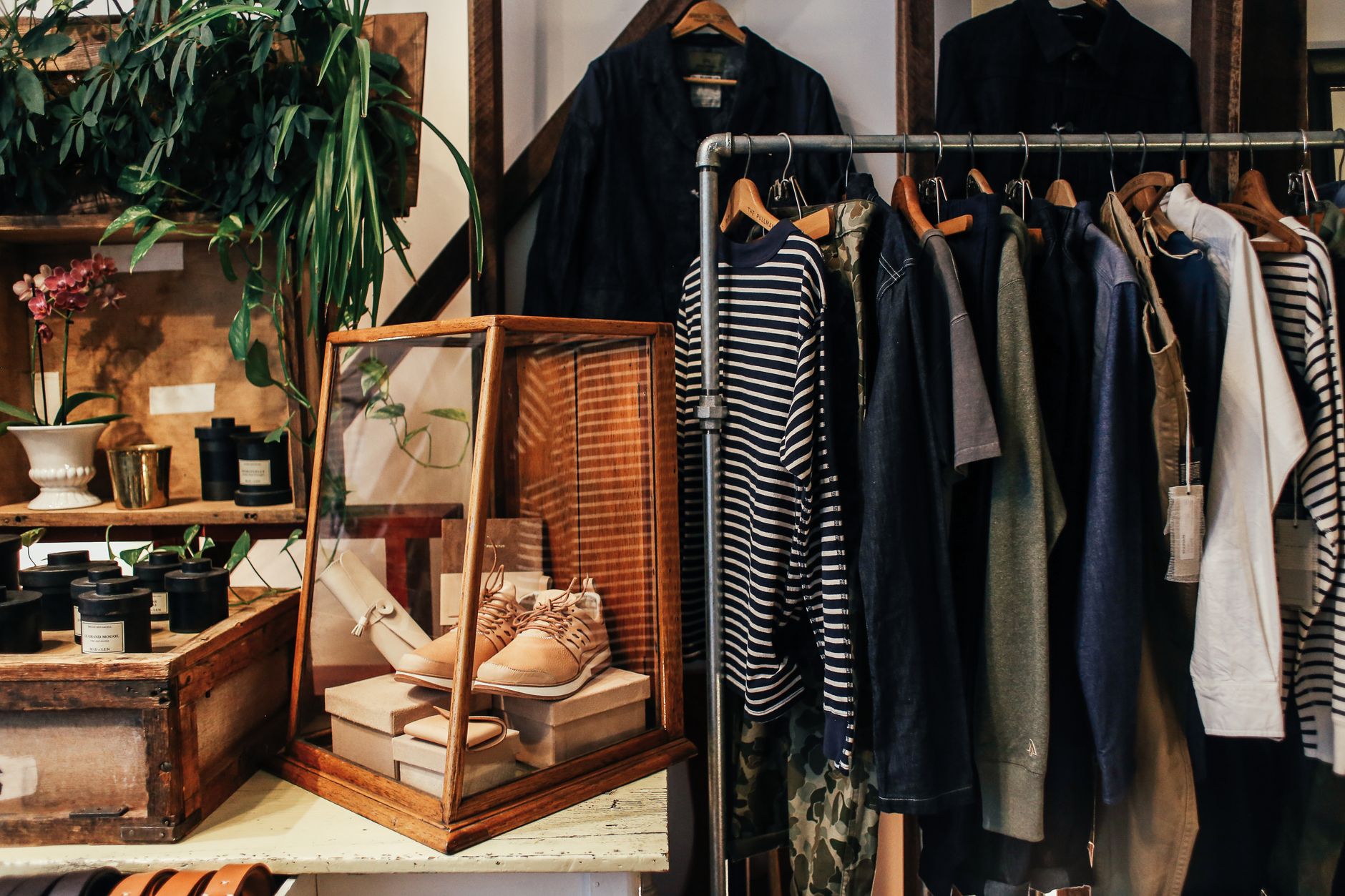
Source fabric from Michael Levine (DTLA wholesale) or Fabric Wholesale Direct for deadstock deals. Use Lefty Production Co. for cut-and-sew runs under 500 units. For screen printing, The Printful handles on-demand while Blue Corn does bulk.
6. Marketing & Customer Acquisition
Launch a "Founding Members" waitlist 60 days pre-launch. Offer 20% lifetime discount for first 100 signups—collect emails via Instagram lead ads ($15/day) and TikTok stitch challenges tagging #LAfashion. Seed 3 micro-influencers (5K-50K followers) with free samples in exchange for UGC.
Year 1 Marketing Budget
Total $25K / year
Ready When You Are
Download Apparel Company Business Plan
Just Fill Up and Print
| Channel | Monthly Budget | Expected CAC | 90-Day Goal |
|---|---|---|---|
| Instagram Reels | $2,800 | $22 | 127 conversions |
| TikTok Spark Ads | $1,500 | $18 | 83 conversions |
| Google Shopping | $1,200 | $31 | 39 conversions |
| Depop/ThredUP | $600 | $14 | 43 conversions |
| Local pop-ups | $900 | $47 | 19 conversions |
| Email flows | $300 | $6 | 50 conversions |
Claim your Google Business Profile immediately—apparel searches with "near me" grew 140% last year. Post 3x/week minimum: behind-the-scenes sewing clips (TikTok), fabric close-ups (Instagram), and fit videos (YouTube Shorts). Target "ethical fashion Los Angeles" and "small batch clothing" keywords via Ubersuggest.

Throw a "Sample Sale" grand opening—rent a WeWork rooftop for $1,100, serve local kombucha, and invite every fashion blogger with under 10K followers (they show up). Sell prototype pieces at cost to collect fit data. Later, repurpose event photos as "Meet Your Maker" social content. The window is open.
7. Day-to-Day Operations
Open at 7:30 AM sharp with a 6-point checklist: (1) Count cash drawer ($200 float), (2) Verify Shopify/POS sync, (3) Inspect 3 random inventory items for quality, (4) Check overnight online orders (avg 14/day), (5) Print cutting tickets for production team, (6) Post daily Instagram story. Peak hours: 11AM-2PM (42% of walk-ins) and 5-7PM (online order spikes). Close by counting inventory tags (5% variance allowed), depositing cash ($1,250 avg daily), and sending sales report to QuickBooks.
| Role | FTE | Hourly | Schedule | Key Responsibilities |
|---|---|---|---|---|
| Production Lead | 1.0 | $18.50 | M-F 8-4 | Cutting supervision, defect logging, machine maintenance |
| Sewing Operator | 1.0 | $16.50 | M-F 9-5 | Assembly line output (22 units/day min), thread inventory |
| Retail Associate | 0.5 | $16.50 | T-Sat 10-6 | POS transactions, fitting room checks, returns processing |
| Marketing Asst | 0.5 | $17.00 | Remote flex | Daily social posts, influencer outreach (3/wk), email blasts |
Implement a 4-step QC protocol: (1) Pre-cut fabric inspection (reject 8% avg), (2) Mid-seam checks every 5 units, (3) Final press verification, (4) Random batch testing (3% of output). Customer service SLA: Email replies <4hrs, returns processed <48hrs, and <2% defect rate tolerance. Track all defects in Zoho Inventory with SKU-level notes.
The non-negotiable tech stack: Shopify POS ($89/mo), QuickBooks Online ($35/mo), When I Work scheduling ($2.50/user/mo), and Printful for on-demand (28% margin items). Connect all via Zapier to automate order routing - saves 11 labor hrs/week.
Track these 4 KPIs daily on a Geckoboard dashboard: (1) Revenue/day ($978 target), (2) Labor cost % (keep <18%), (3) Customer count (62/day brick-and-mortar + 14 online), (4) Average ticket ($42.75). Bonus metric: Cost per acquisition - aim for <$8.50 via Google Ads. Audit weekly - LA apparel businesses that monitor these grow 23% faster.
8. Financial Planning & Funding
Launching an apparel company requires $138,000 on average, with $48,300 typically coming from equity and $89,700 from loans. Gross margins hit 62%, but you'll burn cash until month 5—plan for it.
Recommended Funding Mix
$138K total capitalization
Year 1 Monthly Cash Flow
Net monthly cash flow (red = pre-break-even)
Year 1 revenue targets $357,000, scaling to $553,000 in Year 2 and $785,000 by Year 3. The US apparel market spans $373B, but your realistic slice is the $8.2B specialty segment.
5-Year Revenue Potential
Projected revenue if you execute the plan
| Source | Amount | Terms | Best For |
|---|---|---|---|
| SBA 7(a) | Up to $5M | 10-year term, ~6% APR | Established credit |
| Personal savings | Flexible | 0% interest | Bootstrapping |
| Microloan | $50K max | Shorter terms | First-time founders |
| Friends & family | Varies | Informal | Early-stage |
| Equipment financing | 80% of asset value | 5-7 years | Sewing/printing gear |
Compare options at SBA loan programs—their 7(a) loans cover working capital.
9. Common Mistakes & Pro Tips
62% of apparel startups fold within 18 months. The killers? Running out of cash and misreading demand. Below are the landmines and how to step over them.
| Mistake | Impact | How to Avoid |
|---|---|---|
| Starting with too many SKUs | Inventory gets spread too thin and cash gets trapped in slow-moving styles | Launch with a focused capsule collection and reorder only winners |
| Ignoring fit and sizing | Return rates rise and brand trust falls quickly | Invest in samples, size testing, and clearer fit guidance before launch |
| Underbudgeting marketing | Great products can stall without audience reach and traffic | Reserve a dedicated launch budget for content, ads, and creator outreach |
| Competing only on price | Margins collapse and differentiation disappears | Build around niche identity, quality, speed, or sustainability |
| Weak supplier and quality control | Defects, delays, and chargebacks can damage the brand early | Use written specs, inspection steps, and backup vendors |
- Start with 12 SKUs max—expand only after validating sales velocity.
- Budget $3,000+ for fit models and sample revisions before production.
- Allocate 20% of startup costs to Instagram/TikTok ads and nano-influencers.
- Price at 2.5x COGS minimum—$25 wholesale becomes $80 retail.
- Require pre-production samples and mid-run inspections from factories.
- Track sell-through rates weekly—cut underperformers at 60 days.
- Negotiate net-30 terms with suppliers to align with customer payments.
- File trademark applications early—$250 per class via USPTO.
The window is open. Draft your business plan this week, lock in funding within 45 days, and pick a launch date no more than 6 months out. First reorders wait for no one.
Research & Startup Resources
The following government guides, industry reports, and startup resources were referenced in this apparel company launch guide. Each link points to a specific page for direct access.
- United States Apparel Market — marketdataforecast.com — Industry research for starting a apparel company business
- United States Apparel Market — expertmarketresearch.com — Industry research for starting a apparel company business
- Us Fashion Industry Growth — clickpost.ai — Industry research for starting a apparel company business
- Usa Apparel Market — kenresearch.com — Industry research for starting a apparel company business
- Us Apparel Market Size — clothingbrands.org — Industry research for starting a apparel company business
Get Your Copy Today
Download Apparel Company Business Plan
Just Fill Up and Print