Guide to Small Business Loans Avoiding Risks and Choosing Right

For local small business owners, borrowing money can feel like a quick fix that turns into a long-term drain. The core challenge isn’t just getting approved, it’s managing loan complexity while staying on top of day-to-day operations, especially when cash flow shifts. Business financing risks often show up fast: payments that tighten options, terms that limit flexibility, and decisions that quietly hand control of the business over to the debt. With clearer expectations and stronger business debt management, owners can spot trouble early and keep a loan from running the business.
Understanding Small Business Financing Basics
Small business financing is mainly about choosing between a term loan and a line of credit, then reading the key terms the same way you would read a contract. A term loan gives you a lump sum you repay on a set schedule, while a line of credit is a reusable pool you draw from as needed.
This matters because the interest rate, repayment timeline, and collateral rules determine how much pressure the debt adds to your weekly cash flow. Lenders also use your paperwork to evaluate repayment ability, which affects both approval and pricing.
Think of it like choosing shoes for work. A line of credit can fit day-to-day gaps, while a term loan can match a one-time purchase like equipment. If the “fit” is wrong, every payment rubs. With the basics clear, you can map a safe loan amount using cash flow, runway, and debt-service math.
Right-Size Your Loan: A Simple Method to Pick a Safe Amount
Deciding how much to borrow is a balancing act: too much debt can squeeze your monthly budget, but too little can leave you short of runway and force painful last-minute choices. Start by grounding the number in what the money will be used for and whether you can repay it comfortably, because a “good” loan amount is really about the payment you can handle without creating ongoing stress. Loan calculators can help you see how different amounts, terms, and rates change your repayment, and it’s worth running those numbers before you accept a lender’s offer (especially if they’re willing to approve more than you asked for). Many owners find that comparing small business loan options makes it easier to spot structures that would push payments too high.
Financing Options Compared at a Glance
This table compares common borrowing paths side by side, focusing on what each option does best and what to watch for. The goal is to match your need (speed, flexibility, or a specific purchase) to a structure your cash flow can reliably support.
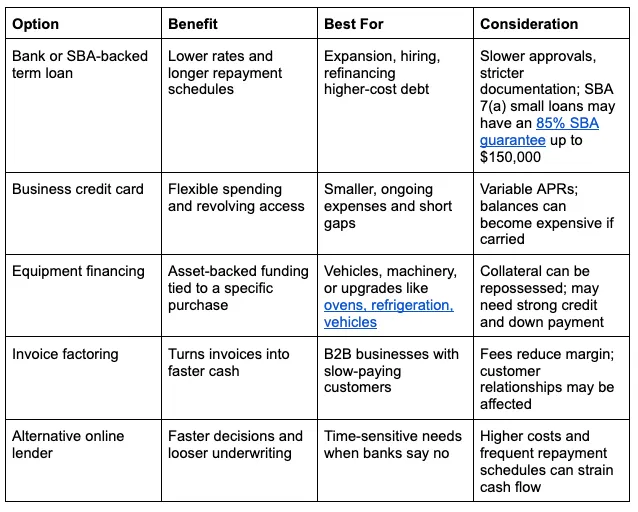
A simple rule is to choose the most specific tool that fits the job: asset purchases often fit equipment financing, while growth plans may suit term loans. If speed is the priority, focus even more on total cost and repayment frequency. When the tradeoffs are clear, your next step feels a lot more doable.
Borrowing Money: Common Questions, Clear Answers
Q: How do I spot hidden loan fees in the fine print?
A: Ask the lender for a written fee schedule and compare it to the term sheet line by line. Scan for origination, underwriting, documentation, wire, late, and “processing” charges, plus any fees tied to renewals or draws. If a fee is described vaguely, request the exact dollar amount and when it applies before you sign.
Q: What does a prepayment penalty really cost me?
A: A prepayment penalty is a fee that some lenders charge when you pay off a loan early, which can erase the savings you expected from paying faster. Get the formula in writing, then run two scenarios: payoff at 6 months and at 12 months. If the numbers sting, negotiate for a shorter penalty window or a lower cap.
Q: When does “default” actually get triggered?
A: Default is often more than missing a payment; it can include covenant breaches like failing to maintain insurance or required financial ratios. The specific events of default should be listed clearly in your agreement. Ask which items are most commonly tripped and what cure period you get to fix them.
Q: Can I negotiate fees and penalties, or is it take-it-or-leave-it?
A: Many terms are negotiable, especially if your cash flow is stable and documentation is clean. Prioritize the biggest dollar impacts: origination fees, prepayment language, and late fee rules. Bring a competing offer or ask for a “no surprises” addendum that lists every fee.
Q: Should I worry about weekly or daily repayments even if the rate looks okay?
A: Yes, because repayment frequency can strain your operating cash and raise the chance of missed payments. Map the repayment calendar to your slowest weeks, not your best weeks. If it feels tight, request monthly payments or a smaller principal amount.
Create a Steady Borrowing Plan That Protects Cash Flow
Borrowing can feel like a tug-of-war between urgent growth needs and the fear of taking on the wrong debt. A calm mindset, grounded in small business loan planning, clear funding strategies, and steady debt awareness, keeps decisions from being driven by pressure or fine print surprises. When this approach guides the choice, informed borrowing decisions become easier to defend, and financial stability is easier to maintain even when sales fluctuate. Borrow only when the terms support your cash flow and your sleep.
About the contributor of this article
This article has been written by Andrea Needham and edited by Shah Alvi. Andrea Needham is the founder of EldersDay.org . It was created to celebrate aging adults.