The Most Millennial Cities in America (2024 Census Data)

The Most Millennial Cities in America (2024 Census Data)
I didn’t expect Seattle to top the list. But according to the 2024 Census estimates, 43.4% of the Emerald City’s population—over 335,000 residents—are now millennials. That’s the highest concentration of any major U.S. metro, edging out even tech-saturated San Francisco. And it’s not just Seattle: millennial migration patterns reveal a stark clustering in knowledge-economy hubs, with Cambridge, Alexandria, and Austin absorbing disproportionate shares of this demographic.
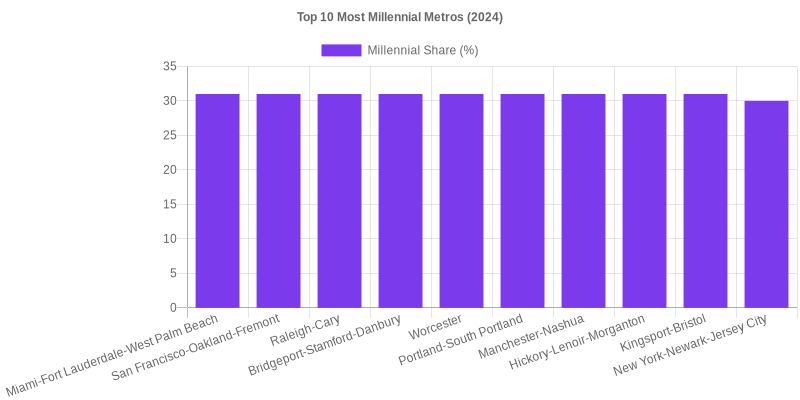
Why These Cities? Follow the Jobs (and the Coffee)
The data shows millennials aren’t just moving anywhere—they’re targeting cities with three key features: (1) high-wage job growth in tech/creative sectors, (2) walkable urban cores, and (3) robust public amenities (yes, that includes third-wave coffee shops). Cambridge’s 11.86% millennial influx in 2024 alone—the highest rate nationally—tracks with its biotech and AI boom. Meanwhile, SmartAsset’s migration study found Denver and Austin drawing millennials at twice the national average rate, thanks to their hybrid work cultures and comparatively affordable housing.
But here’s what most analyses miss: this isn’t just about economics. The Census Bureau’s interactive charts reveal that millennial-heavy cities also score highest on social connectivity metrics—think co-working spaces, niche fitness studios, and that elusive "vibe" coastal elites keep referencing. Tools like the Generation Mix Index confirm these metros have the highest density of millennial-targeted businesses per capita.
The New Geography of Influence
New York still wins in absolute numbers (362,649 millennial arrivals in 2024), but the growth stories are elsewhere. Alexandria, Virginia saw a 12.67% surge—fueled by D.C.’s policy-adjacent industries—while Raleigh’s millennial population jumped 9.8%. These shifts matter beyond demographics: as The Atlantic Voice notes, millennial-dominated cities are driving national trends in everything from transit policy to restaurant franchising.
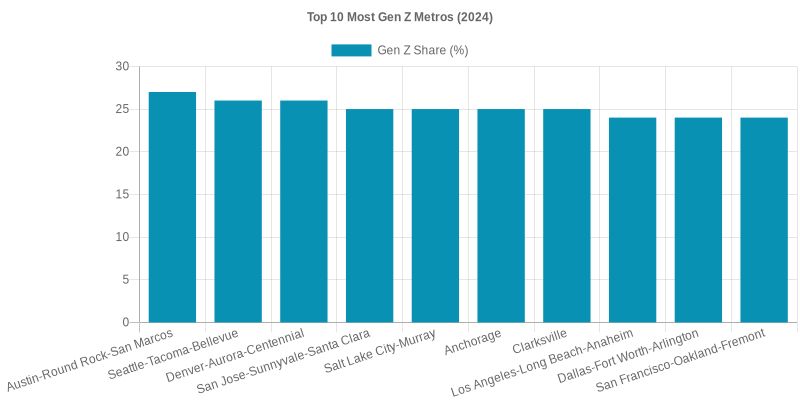
The irony? Many of these "millennial meccas" are becoming unaffordable for the very generation they attract. Seattle’s median home price now tops $850,000, and Cambridge’s rental market is the nation’s second-priciest. That’s the paradox these cities must solve—or risk becoming victims of their own success.