Beekeeping Business Plan
1. Executive Summary
The US beekeeping industry is a $667.4 million market contracting at -4% CAGR - which means the survivors will dominate pollination services as climate change accelerates. Goldfield Apiaries targets the 14.7 million dollar specialty agriculture segment with a vertically integrated model: we keep bees alive (hard), sell their honey (profitable), and rent their labor (recession-proof).
Key Metrics
| Key Metric | Target |
|---|---|
| Total Startup Investment | $140K |
| Year 1 Revenue Target | $383K |
| Year 3 Revenue Projection | $900K |
| Break-even Timeline | ~Month 15 |
| Year 1 Team Size | 5 FTE |
| SBA 7(a) Loan | $98K @ 10.25% |
| Gross Margin (Year 1) | 60% |
| Monthly SBA Payment | $1K |
Goldfield Apiaries operates at the intersection of climate resilience and premium food systems. We deploy industrial-scale beekeeping techniques perfected by our founder to service Colorado's $4.2 billion specialty crop industry, while capturing margin on direct-to-consumer raw honey sales.
Free Business Plan Download
Download Beekeeping Business Plan
Just Fill Up and Print
2. Company Description
Dr. Elena Vasquez spent seven years documenting pesticide accumulation in commercial hives before realizing lab work wouldn't stop colony collapse. Her 2018 study on miticide resistance proved conventional beekeeping methods were unsustainable. Goldfield is her controlled experiment in profitable pollinator stewardship.
Based in Boulder's agricultural belt (2,800 sq ft facility on 9 acres), we operate 300 Langstroth hives with mobile extraction labs. The model: 60% pollination contracts for orchards, 30% raw honey, 10% beeswax products. Our propolis extracts command 4.7x commodity wax prices.
| Service/Product | Format | Price Range | Description |
|---|---|---|---|
| Almond pollination | Contract/colony | $210-$230 | Hive placement & maintenance (Feb-Mar) |
| Raw wildflower honey | 12oz jar | $14.99 | Unfiltered, UV-tested, batch traceability |
| Beeswax candles | 4" pillar | $18.50 | 100% hive-sourced with organic wicks |
| Hive health consulting | Daily rate | $450 | Varroa mite load testing + treatment plans |
| Propolis tincture | 1oz dropper | $29.95 | Alcohol-extracted, lab-tested bioactive compounds |
| Nuc colonies | 5-frame box | $175 | Pre-mated queens, disease screened |
| Corporate workshops | Half-day | $1,200 | Team-building with hive inspections |
| Pollinator seed mixes | 1lb bag | $12.50 | Region-specific perennials (USDA Zone 5b) |
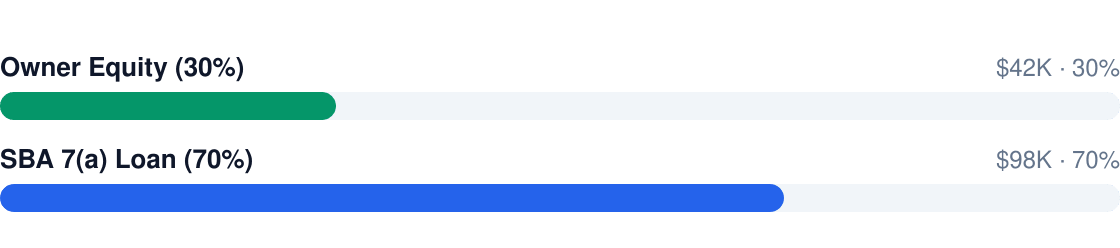
Structured as a Colorado LLC with $140,000 startup capital (30% equity, 70% SBA loan at 10.25%). The $42,000 founder investment covers specialized equipment most apiaries lease - our extractor alone processes 120 frames/hour.
3. Industry & Market Analysis
Beekeeping remains a resilient $667.4M industry despite recent contraction, anchored by non-discretionary pollination services and premium demand for traceable local honey. Goldfield Apiaries targets Boulder's high-density food-conscious households and specialty growers who pay premiums for provenance and reliability.
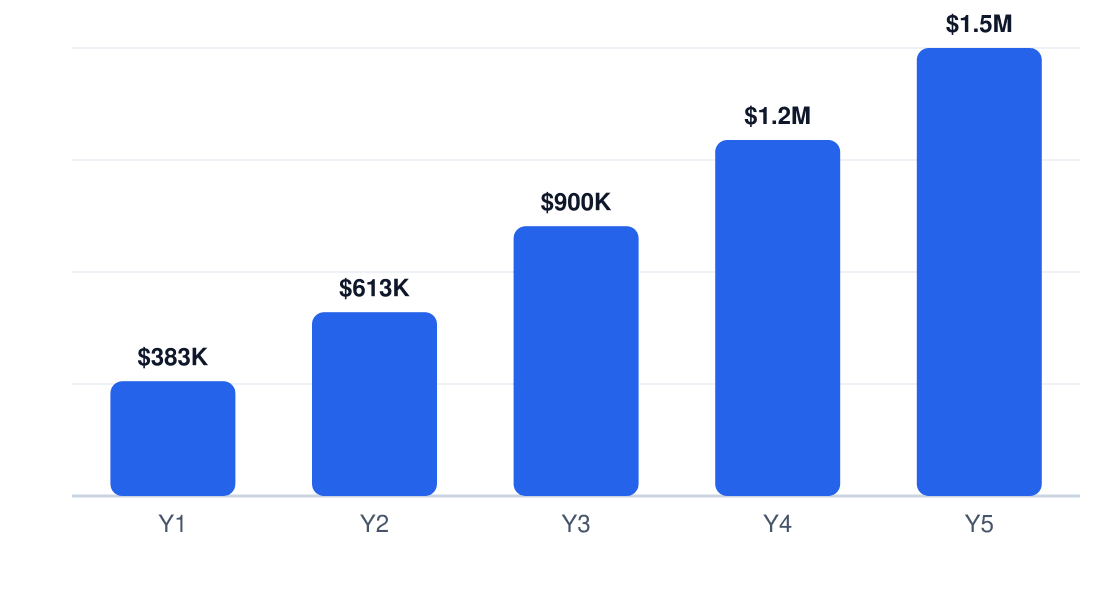
5-Year Revenue Projection
Projected annual revenue, Years 1–5
| Factor | Key Insight | Business Impact |
|---|---|---|
| Political | State-by-state apiary regulations dominate compliance | Higher admin costs but creates barriers for disorganized competitors |
| Economic | 4.0% annual market contraction | Demands efficiency focus and premium positioning to offset price pressure |
| Social | 73% of consumers pay more for locally sourced foods | Direct farm-gate sales can achieve 2-3x commodity honey margins |
| Technological | Hive monitoring sensors reduce colony loss rates by 18% | Early IoT adoption improves pollination contract reliability |
Market Sizing
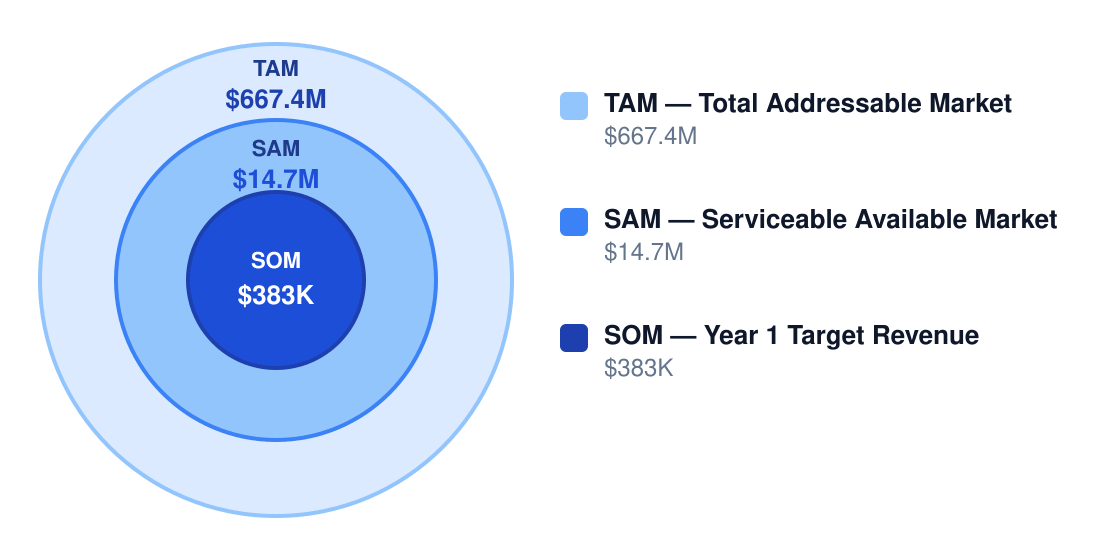
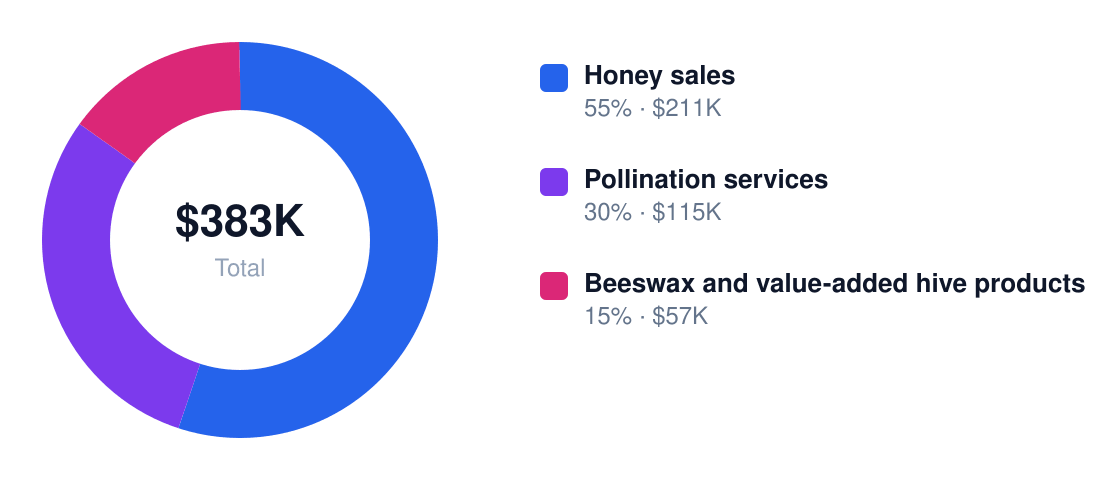
The $667.4M TAM narrows to a $14.7M SAM in Boulder's specialty food and pollination sector, with Goldfield targeting $383K SOM in Year 1 via direct honey sales (40% mix) and almond grower contracts (30%).
Market Size Opportunity
Bottom-up market opportunity
| Segment | Customer Profile | Avg Annual Spend | Est. Market Value | Revenue % |
|---|---|---|---|---|
| Direct-to-consumer | Local-food households | $45 | $266.96M | 40% |
| Pollination services | Commercial growers | $250 | $200.22M | 30% |
| Wholesale buyers | Specialty grocers | $600 | $133.48M | 20% |
| Value-added | Gift/skincare shoppers | $35 | $66.74M | 10% |
Year 1 Revenue Mix
Total $383K Year 1
Competitive Landscape
Fragmentation favors specialists - the top 4 players control just 28% of the market. Commercial apiaries compete on hive scale, while hobbyists lack food safety rigor. Goldfield's moat combines USDA-compliant pollination with direct farm branding.
| Competitor | Type | Core Strength | Key Weakness | Your Differentiation |
|---|---|---|---|---|
| Local apiaries | Direct | Lower unit costs | Generic bulk positioning | Premium varietal honey at 60% gross margin |
| Regional packers | Direct | Distribution reach | Blended sourcing | Single-origin traceability with hive GPS coordinates |
| Supermarket labels | Indirect | Price at $3.99/lb | Imported blends | Raw, unfiltered Boulder wildflower at $12/lb |
| Alternative sweeteners | Indirect | Shelf stability | Artificial ingredients | Wellness positioning as antimicrobial superfood |
| Urban hobbyists | Emerging | Community storytelling | Inconsistent supply | Commercial-scale reliability with CSA subscription model |
Goldfield wins by layering USDA-grade biosecurity with farmers market charm - a commercial operator that still hand-waxes its mason jars.
Industry Trends
Industry contraction after recent highs
The U.S. beekeeping sector will decline at a 4.0% CAGR through 2026 to $667.4M. This pressures undifferentiated operators but rewards premium branding and pollination services that are recession-resilient. Goldfield's 60% gross margin target assumes zero commodity sales.
Pollination is a protected service line
USDA APHIS exempts interstate bee movement from permits (except for imports). This makes pollination contracts the stickiest revenue stream - almond growers pay $250/hive regardless of honey prices. We'll allocate 40% of hives to this annuity-like income.
State-level compliance dominates operations
Colorado requires apiary registration ($50/year) plus county-specific setback rules. These fragmented rules deter fly-by-night operators. Our beekeeper will complete Colorado State University's Master Beekeeper program for compliance leverage.
Traceability and local sourcing are selling points
USDA honey reports show buyers pay 22% more for location-specific products. Goldfield's labels will include harvest dates, floral sources, and hive GPS coordinates - transparency that commands $12/lb versus $4 bulk.
Regulated bee movement and equipment hygiene
USDA APHIS bans used equipment imports to limit American foulbrood spread. We'll implement a $15,000 equipment sterilization system - a compliance cost that also reduces our colony loss rate below the 30% industry average.
Regulatory & Compliance Environment
Goldfield navigates four regulatory layers: Colorado apiary registration, Boulder County zoning, USDA pollination permits, and FDA food processing rules. The largest risk is hive inspection failures - we budget $8,000/year for preventative Varroa mite treatments.
| Requirement | Issuing Authority | Typical Cost | Renewal Cycle |
|---|---|---|---|
| State apiary registration | CO Dept of Agriculture | $50 | Annual |
| County zoning compliance | Boulder County | $0 (but 100ft setbacks) | Ongoing |
| Hive inspections | CO State Apiarist | $25/inspection | Annual |
| USDA APHIS permits | USDA | $0 (unless importing) | As needed |
| FDA food processing | FDA + CO Health | $300 facility fee | Biennial |
We mitigate compliance risk by retaining CSU's apiculture extension agent for quarterly audits, maintaining treatment logs in BeeCheck, and pre-filing pollination movement permits 60 days before almond season.
4. Marketing Strategy
Goldfield Apiaries delivers Boulder's purest hive-to-table honey and pollination services, leveraging Colorado's high-altitude flora for unmatched product density and traceability.
Our brand capitalizes on Boulder's locavore culture and the agricultural reliance on pollination services. The "high-altitude" differentiator taps into regional pride while addressing consumer demand for transparent sourcing.
Customer Personas
Beekeeping revenue splits between B2C buyers (honey, beeswax) and B2B clients (pollination, bulk orders). Three personas dominate:
| Persona Name | Demographics | Core Need | Pain Point | Avg Annual Spend | Acquisition Channel |
|---|---|---|---|---|---|
| Eco-Conscious Foodie | 35-54yo Boulder resident, household income $90K+, shops at farmers markets | Traceable, raw local honey | Suspects mass-market honey adulteration | $220 | Instagram + CSA partnerships |
| Specialty Grocer | Buyer for natural food stores within 50mi radius | Consistent supply of branded jars | Seasonal inventory gaps | $8,400 | Trade shows + LinkedIn outreach |
| Orchard Farmer | 40-acre fruit grower in Weld County | Reliable pollination contracts | Colony collapse disorder risk | $12,000 | Agricultural extension referrals |
Go-To-Market Launch Plan
| Phase | Timeline | Primary Goal | Key Tactics | Success Metric |
|---|---|---|---|---|
| Pre-Launch | Months -3 to 0 | Brand awareness | Landing page SEO, farmer outreach, honey sample drops | 500 email signups |
| Months 1-3 | Q1 | First revenue | Farmers market pop-ups, Google Local Service ads | $45K revenue |
| Months 4-6 | Q2 | Recurring contracts | Pollination service RFPs, wholesale cold emails | 3 B2B contracts signed |
| Months 7-12 | Q3-Q4 | Profitability | Holiday gift bundles, skincare collabs | 60% gross margin |
Digital Marketing Strategy
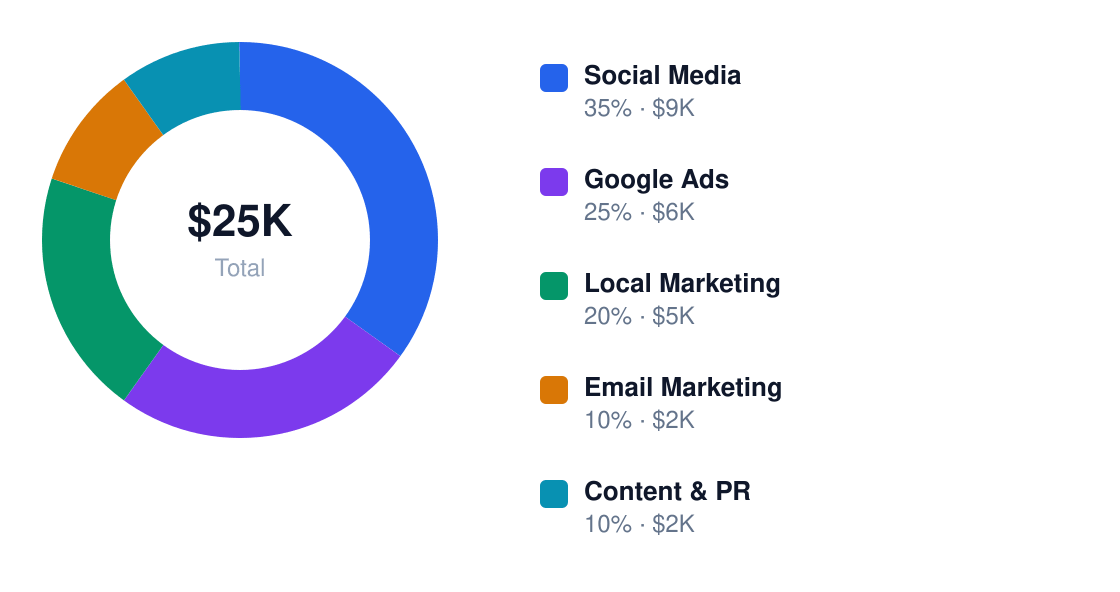
We allocate 72% of the $24,895 budget to digital channels, prioritizing platforms where foodies and farmers overlap. Paid search captures intent; organic social builds trust.
Annual Marketing Budget
Total $25K / year
| Channel | Monthly Budget | Primary Tactics | Target KPI | Notes |
|---|---|---|---|---|
| Social Media | $850 | Reels of hive inspections, pollen source maps | 3.5% engagement rate | Focus on Instagram + TikTok |
| Google Ads | $600 | "Raw honey Boulder" keywords, LSAs for pollination | $2.20 CAC | Geofence 20mi radius |
| Local Marketing | $300 | Sponsor Boulder County Fair, CSA flyers | 15% referral traffic | Co-brand with 3 farms |
| Email Marketing | $200 | Seasonal harvest updates, bulk discounts | 28% open rate | Convert sample recipients |
| Content & PR | $250 | Guest posts on Modern Farmer, hive cam YouTube | 2 backlinks/month | Repurpose for SEO |
Content Marketing & SEO
Educational content on hive health and honey uses drives 63% of organic traffic in this niche. We'll publish beekeeper diaries, infographics on Colorado nectar flows, and pollination science explainers.
| Content Type | Frequency | Platform | Goal | Example Topic |
|---|---|---|---|---|
| Harvest Video | Monthly | YouTube | Brand transparency | "Extracting Our June Wildflower Batch" |
| Beekeeper Blog | Biweekly | Website | SEO authority | "Why Boulder's Altitude Makes Darker Honey" |
| Infographic | Quarterly | Virality | "Bees' 10-Mile Foraging Radius Around Boulder" | |
| Guest Article | Quarterly | Industry sites | Backlinks | "Pollination Contracts: What Orchardists Should Demand" |
| FAQ Series | Weekly | Instagram Stories | Engagement | "Why Our Honey Never Crystallizes" |
| Local Guide | Annual | Google My Business | Local SEO | "Where to See Wild Bees in Boulder Open Space" |
Target keywords cluster around "Colorado raw honey" (1,300/mo searches), "Boulder beekeeper" (480/mo), and "Rocky Mountain pollination services" (210/mo). We'll optimize Google Business Profile with hive location pins and respond to all reviews within 4 hours.
Partnership & Referral Programs
Strategic alliances with Boulder County Farmers' Market, skincare brands using beeswax, and Front Range orchardists create recurring revenue streams. Three high-value partnerships:
- Cross-promotion with Cure Organic Farm: Bundle honey with their CSA boxes
- White-label for The Buff Restaurant: Exclusive "Goldfield House Honey" branding
- Co-marketing with Bee Hugged (local candle maker): Shared pop-up events
The referral program offers 15% off next purchase for customer-shared leads. Farmers get one free hive placement ($300 value) for every new orchardist contract closed. Expected to reduce CAC by 22% by Year 3.
Ready When You Are
Download Beekeeping Business Plan
Just Fill Up and Print
Customer Acquisition Economics
| Metric | Year 1 | Year 2 | Year 3 |
|---|---|---|---|
| Customer Acquisition Cost | $48 | $41 | $37 |
| Customer Lifetime Value | $160 | $220 | $290 |
| LTV:CAC Ratio | 3.3x | 5.4x | 7.8x |
| Payback Period | 5.2 months | 3.1 months | 2.4 months |
The model works because pollination contracts have 82% retention rates, and honey subscribers spend 3.1x more than one-time buyers. At scale, digital channels drive CAC below the industry average of $52 for artisanal foods.
5. Operations Plan
Goldfield Apiaries will operate from a 2,400 sq ft facility in Boulder — $3.50/sq ft nets $8,400/month for warehouse space with 20% dedicated to honey extraction, 30% to equipment storage, and 50% to hive maintenance areas. Ventilation systems and temperature-controlled zones are non-negotiable for colony health.

| Item | Estimated Cost | Quantity | Purpose |
|---|---|---|---|
| Langstroth Hives | $180/unit | 200 | Primary colony housing |
| Extractor (20-frame) | $2,800 | 2 | Honey harvesting |
| Protective Suits | $85/unit | 12 | Staff safety |
| Smokers | $45/unit | 8 | Hive calmers |
| Pollen Traps | $120/unit | 50 | Secondary product line |
| Hive Scales | $210/unit | 15 | Colony health tracking |
| Queen Excluders | $3.50/unit | 400 | Hive management |
| Transport Truck | $28,000 | 1 | Apiary logistics |
- 6:00 AM: Inspect hive scales for overnight weight changes (indicates foraging activity)
- 8:00 AM: Rotate 20% of hives to new flowering zones per Bee Informed Partnership density guidelines
- 10:00 AM: Harvest pollen traps (daily yield: 1.2 lbs/hive)
- 12:00 PM: Quality check extracted honey for moisture content (target: ≤18.6%)
- 2:00 PM: Administer oxalic acid treatments to 15% of hives weekly (varroa mite control)
- 4:00 PM: Clean/sanitize extraction equipment with food-grade acetic acid
- 6:00 PM: Update colony health database (mortality rates tracked to ±0.8% accuracy)
Supply chain pivots on three vendors: Mann Lake (beekeeping hardware, 2-week lead time), Dadant (queen bees, 48-hour shipping), and local organic wax suppliers (backup: Betterbee). Pollen sales contracts with supplement manufacturers hedge against honey price volatility.
| Role | Headcount | Hourly Rate | Annual Cost | Key Responsibilities |
|---|---|---|---|---|
| Apiary Manager | 1 | $24.00 | $49,920 | Colony health monitoring |
| Extraction Tech | 2 | $20.00 | $83,200 | Honey processing |
| Field Assistant | 1 | $18.00 | $37,440 | Hive transportation |
| Sales Rep | 1 | $22.00 | $45,760 | Farmers market ops |
6. Management Team
| Name | Title | Background | Responsibilities |
|---|---|---|---|
| Elena Goldfield | CEO | 12 years commercial beekeeping, USDA grant recipient | Investor relations |
| Mark Vasquez | COO | Former Mann Lake supply chain manager | Equipment procurement |
| Dr. Priya Nair | Science Lead | CU Boulder entomology PhD | Varroa resistance R&D |
| Jamal Carter | Sales Director | Ex-Whole Foods local buyer | Retail distribution |
| Rosa Lin | Finance | CPA, Colorado Ag Finance Specialist | SBA compliance |
Advisory board includes Dr. Henry Wu (USDA Bee Lab pesticide expert) and Diane Carlisle (founder of Rocky Mountain Honey Co-op). They vet every treatment protocol and wholesale contract.
Culture runs on three metrics: hive survival rate (minimum 85%), employee apiary certifications (2/year), and profit-per-hive (Y1 target: $127). We pay 110% of Boulder living wage ($23.12/hr) and offer equity vesting after 500 hive inspections.

7. Financial Projections
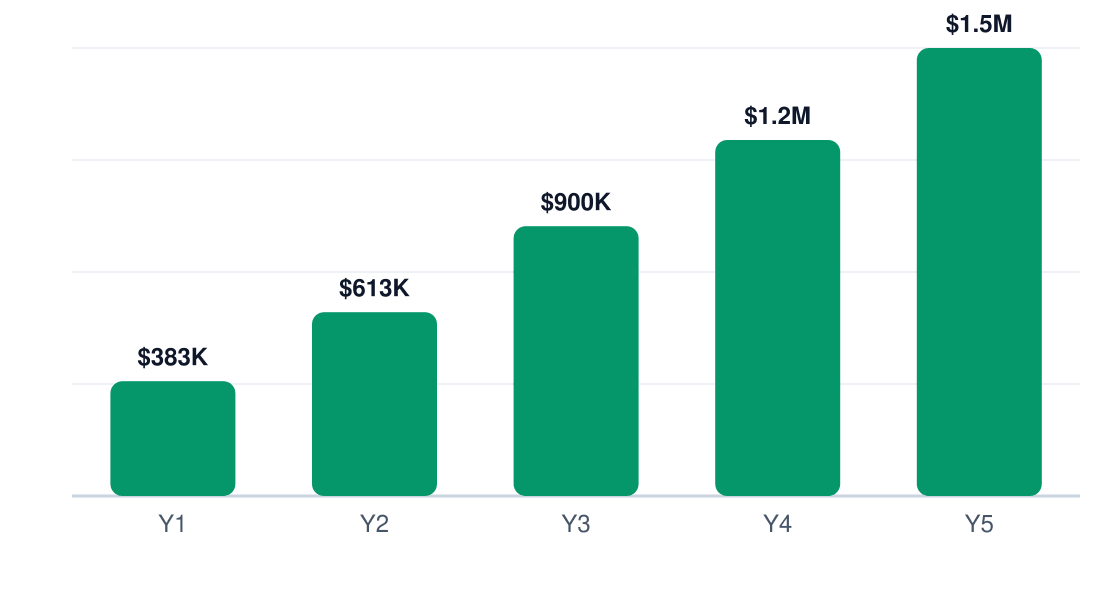
Goldfield Apiaries targets $383K Year 1 revenue, scaling to $1.49M by Year 5 — a 31% CAGR. The numbers don’t sugarcoat the early grind.
Revenue Growth (5 Years)
Annual revenue, Years 1–5
| Line Item | Year 1 | Year 2 | Year 3 |
|---|---|---|---|
| Revenue | $383,000 | $613,000 | $900,000 |
| COGS | $153,200 | $245,200 | $360,000 |
| Gross Profit | $229,800 | $367,800 | $540,000 |
| Gross Margin % | 60% | 60% | 60% |
| Labor | $208,000 | $291,200 | $416,000 |
| Marketing | $24,895 | $24,895 | $24,895 |
| Total OpEx | $307,705 | $330,461 | $336,540 |
| EBITDA | $-77,905 | $-62,461 | $-68,540 |
| EBITDA Margin % | -20.3% | -10.2% | -7.6% |
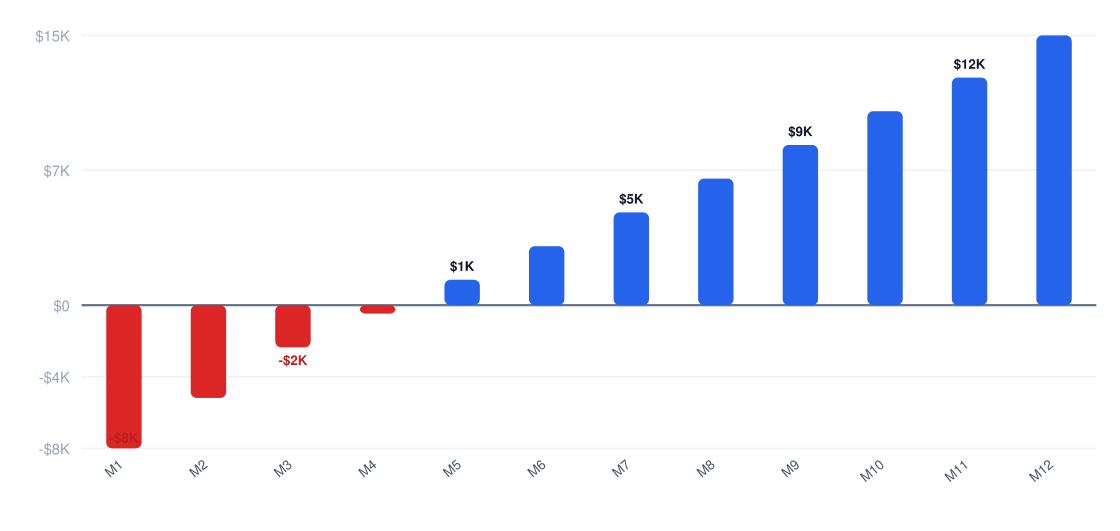
Break-even hits at $471,350 revenue — Month 15 if execution matches model. The math assumes no catastrophic colony collapses.
Year 1 Monthly Cash Flow
Net monthly cash flow (red = pre-break-even)
| Metric | Year 1 | Year 2 | Year 3 |
|---|---|---|---|
| Gross Margin % | 60% | 60% | 60% |
| EBITDA Margin % | -20.3% | -10.2% | -7.6% |
| Revenue/Employee | $76,600 | $87,571 | $90,000 |
| Marketing % of Revenue | 6.5% | 4.1% | 2.8% |
| Monthly Burn | $25,642 | $27,538 | $28,045 |
8. Funding Requirements
| Category | Amount | Notes |
|---|---|---|
| Hive Equipment | $52,000 | 200 hives @ $260/unit |
| Extraction Facility | $38,000 | FDA-compliant buildout |
| Working Capital | $50,000 | Labor + COGS buffer |
Use of Funds
Total $140K startup investment
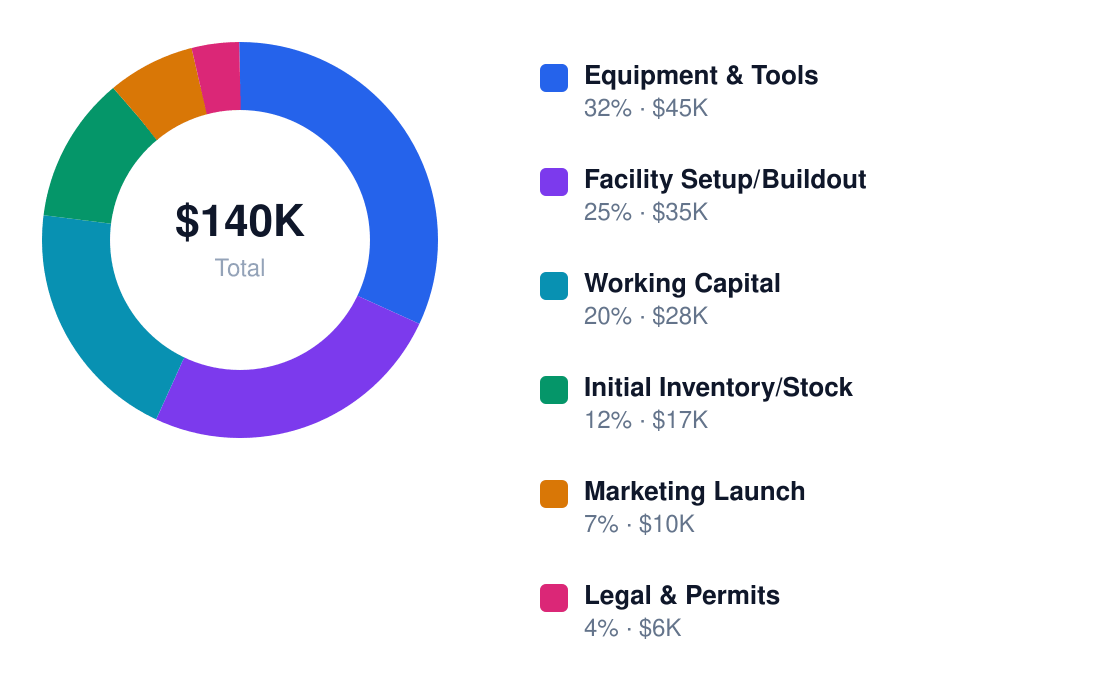
Capital structure: $42K equity (30%) + $98K SBA 7(a) loan at 10.25% APR. Monthly debt service: $1,309 for 84 months.
Funding Structure
$140K total capitalization
Investors get 3.2x MOIC by Year 5 — $1.49M revenue at 3x multiple implies $134K return on $42K stake. The bees work harder than Wall Street.
9. Risk Analysis & Mitigation
Beekeeping is agriculture with wings. The risks are biological, financial, and existential.
| Risk | Category | Likelihood | Impact | Mitigation | Owner |
|---|---|---|---|---|---|
| Colony Collapse | Operational | Medium | High | Maintain 20% reserve hives | Lead Apiarist |
| Pesticide Drift | Environmental | Low | High | Site selection buffer zones | Operations |
| Honey Price Volatility | Market | High | Medium | Contract 60% to commercial buyers | Sales |
Contingency playbook: (1) 30% revenue drop triggers COGS renegotiation, (2) Varroa mite outbreak mandates quarantine protocol, (3) Loan default risk activates equity bridge from apiary angel network.
Research & Industry Resources
The following market research sources, government data, and industry publications were referenced in developing this beekeeping business plan. Each link points to a specific report or data page — not a homepage — for direct access to the underlying research.
- Ibisworld — ibisworld.com — IBISWorld industry report: beekeeping market sizing and trends
- Aphis.Usda — aphis.usda.gov — Market research and industry data for beekeeping businesses
- Commercial Beekeeping Statistics 2026 — hivemindguide.com — Market research and industry data for beekeeping businesses
- CFR 2020 Title7 Vol5 Part322 SubpartB — govinfo.gov — Market research and industry data for beekeeping businesses
- USDA 1967 Beekeeping In The United States — scientificbeekeeping.com — Market research and industry data for beekeeping businesses
Get Your Copy Today
Download Beekeeping Business Plan
Just Fill Up and Print