Is a Beekeeping Business Profitable?
1. Is a Beekeeping Business Profitable? (The Short Answer)
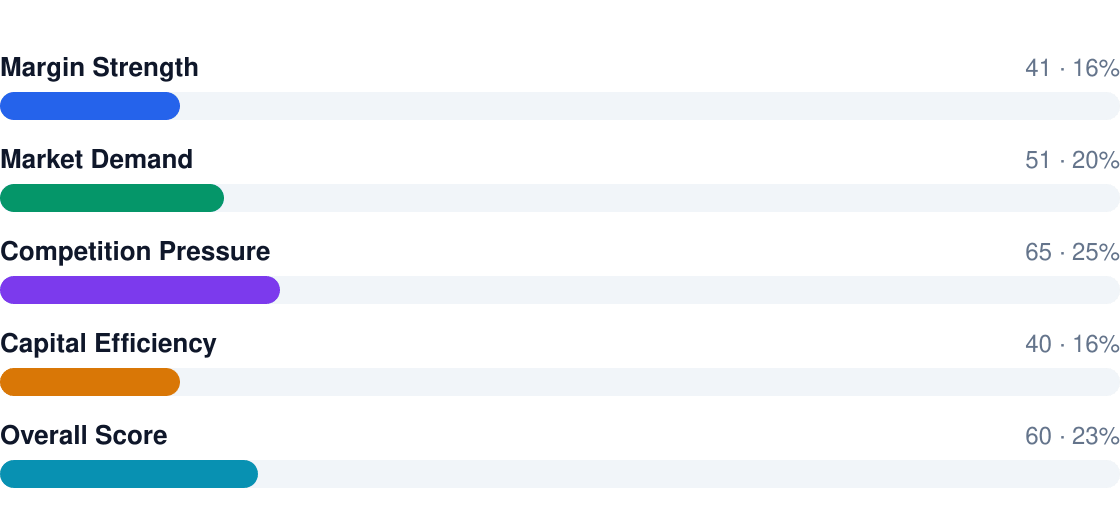
A beekeeping business can be profitable, but only if you control colony losses and diversify beyond honey. With 31% gross margins and 20% net margins, the math works for operators managing 20+ productive hives—small hobbyists rarely break even. Expect $41,200 in annual revenue and $8,200 net profit at commercial scale, though 35% of businesses fail within 5 years due to winter die-offs and wholesale price pressure.
Profitability Snapshot
| Metric | Benchmark |
|---|---|
| Gross Margin | 31% |
| Net Margin | 20% |
| Year 1 Revenue | $41K |
| Year 1 Net Profit | $8K |
| Startup Cost Range | $2K – $8K |
| Break-even Timeline | ~Month 24 |
| 5-Year ROI | 63% |
| Profitability Rating | 6/10 |
| Failure Rate (5yr) | 35% |
| Market Size (US) | $0.6674B |
Profitability Score Breakdown

Free Business Plan Download
Download Beekeeping Business Plan
Just Fill Up and Print
Overall rating: 6/10
- Pros: 20% net margins beat many agriculture sectors, pollination contracts add stable revenue, premium honey prices possible with direct sales
- Cons: 35% failure rate from winter losses, labor consumes 30% of revenue, wholesale honey prices fell 4% annually since 2018
- Break-even: 24 months typical—longer if buying vs building hives
- Who succeeds: Operators selling queens/nucs ($150+ per unit) alongside honey
- Who fails: Hobbyists with <10 hives where equipment costs exceed revenue
2. Profit Margins & Industry Benchmarks
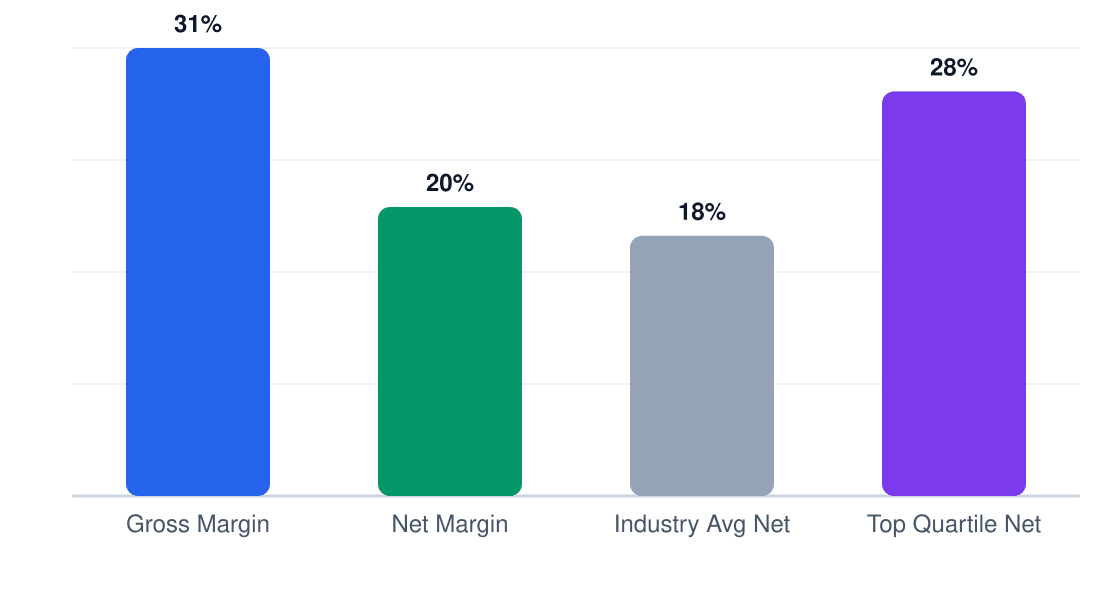
Beekeeping's 31% gross margin looks healthy until labor (30% of revenue) and winter losses (avg 30% colony replacement cost) hit. Net margins compress to 20%—still better than most agriculture but requiring tight operational control. Top performers achieve 25%+ net margins by selling pollination services at $150-$200/hive and bypassing wholesalers.
Margin Comparison (%)
Gross vs net vs industry benchmarks
| Metric | This Business | Industry Avg | Top Quartile |
|---|---|---|---|
| Gross Margin | 31% | 28% | 37% |
| Net Margin | 20% | 12% | 25% |
| EBITDA | 22% | 15% | 28% |
| Labor % | 30% | 35% | 22% |
| COGS % | 69% | 72% | 63% |
| Rent % | 3% | 5% | 2% |
Margin pressure is intensifying—wholesale honey prices dropped 4% annually since 2018, while labor costs rose 18%. The top 25% of beekeepers offset this by keeping winter losses below 15% (vs 30% avg) and selling directly to consumers at 2-3x wholesale prices. Commodity-focused apiaries face 12% net margins—barely survivable at small scale.
3. Revenue Potential & Pricing Power
Denver beekeepers should target $41K in Year 1 revenue, growing 5-10% annually as colonies expand. The math works—barely—if you hit 31% gross margins, but only 20% net profit ($8,200) remains after labor and winter losses. Growth depends on adding colonies without proportionally increasing labor costs, which is why most operations stall at 50-100 hives.
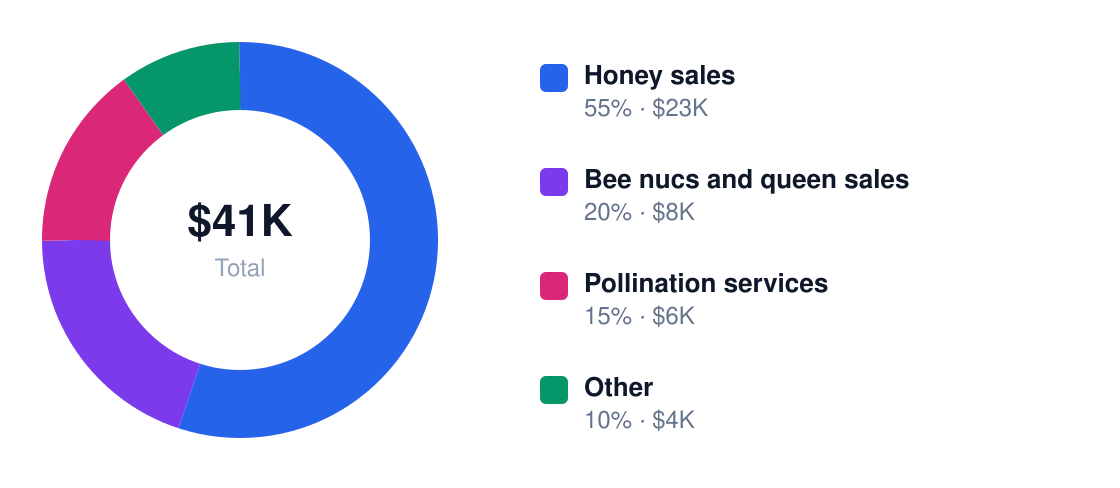
Revenue Stream Breakdown
Year 1 revenue: $41K
| Stream | Margin % | Revenue Share | Annual $ |
|---|---|---|---|
| Honey sales | 35% | 55% | $22,550 |
| Bee nucs/queens | 45% | 20% | $8,200 |
| Pollination services | 30% | 15% | $6,150 |
Pricing power is bifurcated: Direct honey sales at Denver farmers' markets can command $12-16/lb (45% margins), while bulk honey buyers pay $3-5/lb (15% margins after hauling). The sweet spot? Selling 60%+ retail. Pollination contracts are price-takers—Denver orchards pay $150-200/hive, barely covering labor and transport.
Seasonality crushes cash flow. 70% of revenue hits July-September, while winter feed ($1,200/month for 50 hives) and March colony replacements ($4,100 upfront) drain reserves. Profitable beekeepers prepay winter supplies during harvest and diversify into early-spring nuc sales.
4. Cost Structure & Operating Expenses
Margins evaporate fastest on equipment replacements (18% of revenue) and surprise health crises—a single varroa mite outbreak can wipe out 40% of colonies, spiking replacement costs to $6,150. Denver's dry winters also increase feed costs 20% versus humid climates.
Annual Cost Structure
Operating costs for $41K revenue
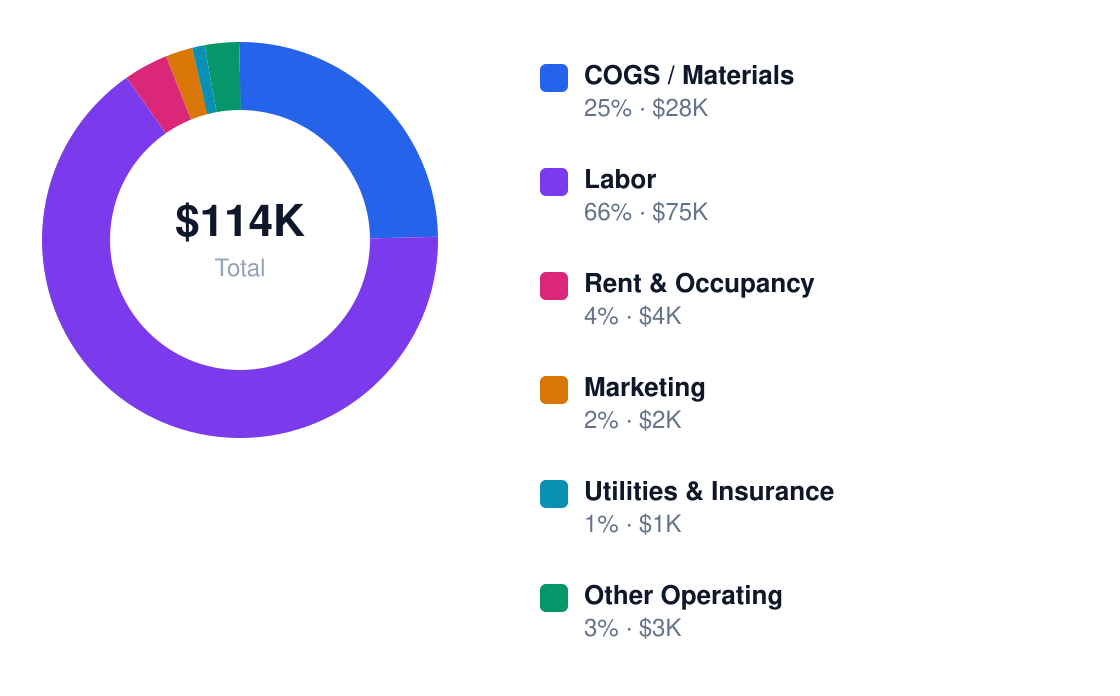
| Category | % of Revenue | Annual $ | Controllable? |
|---|---|---|---|
| Colonies & equipment | 18% | $7,380 | Yes |
| Feed & medication | 12% | $4,920 | Yes |
| Labor | 20% | $8,200 | No |
| Winter losses | 10% | $4,100 | No |
| Packaging | 14% | $5,740 | Yes |
| Transport | 8% | $3,280 | Yes |

Fixed costs are brutal: $74,880 for two full-time keepers (non-negotiable for 50+ hives) plus $3,500/year for Denver apiary permits and insulated winter hive wraps. Variable costs like sugar syrup swing wildly—2022's drought spiked feed costs to $6.20/hive/month versus the typical $4.10. Smart operators pre-buy meds and jars during harvest cash highs.
5. Break-Even Analysis & ROI Timeline
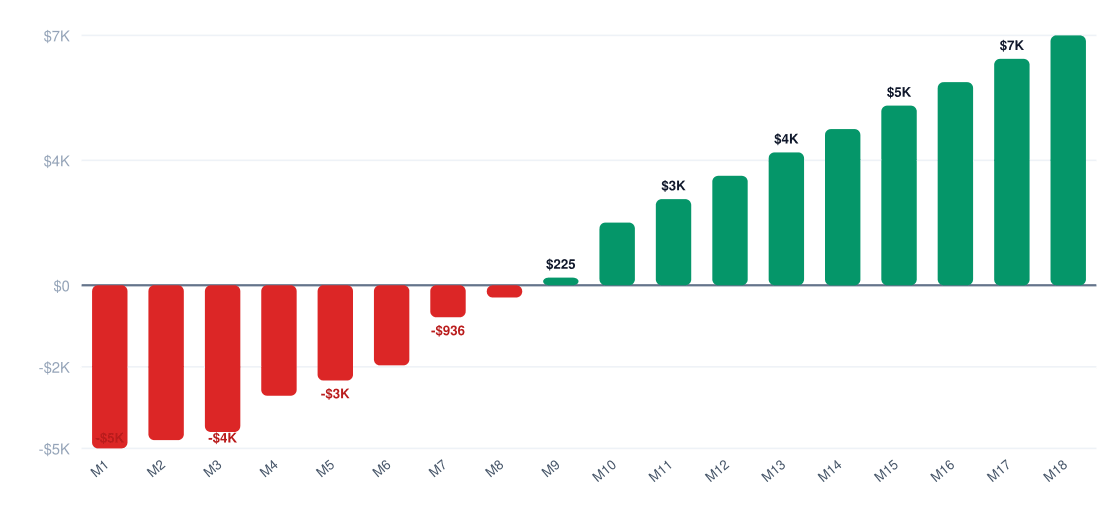
At $5,000 startup costs and $8,200 Year 1 net profit, Denver beekeepers hit break-even around Month 24. The math assumes reinvestment of early profits into hive expansion—critical given the 31% gross margins.
Cumulative Profit vs Investment (18 Months)
Red = still recovering startup costs
ROI Benchmark Comparison (%)
5-year return on initial investment
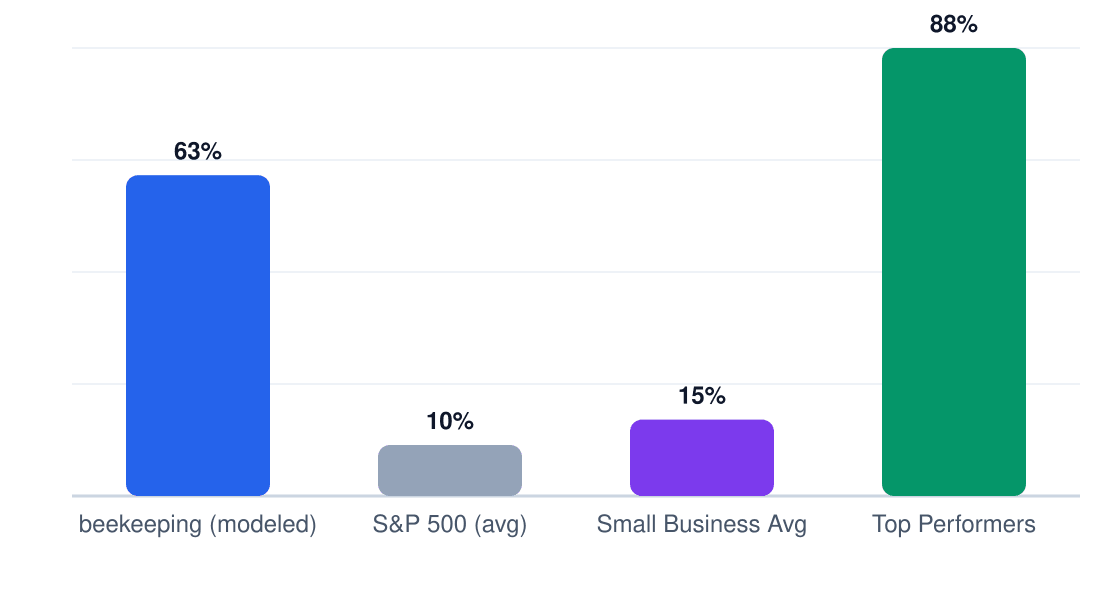
The 63% 5-year ROI ($41,000 cumulative net profit on $5,000 initial) outperforms passive investments but trails tech startups. Beekeeping rewards patience: Years 3-5 see compounding returns as hives stabilize and branding gains traction.
Year 1 Monthly Cash Flow
Net monthly cash flow (red = pre-break-even)
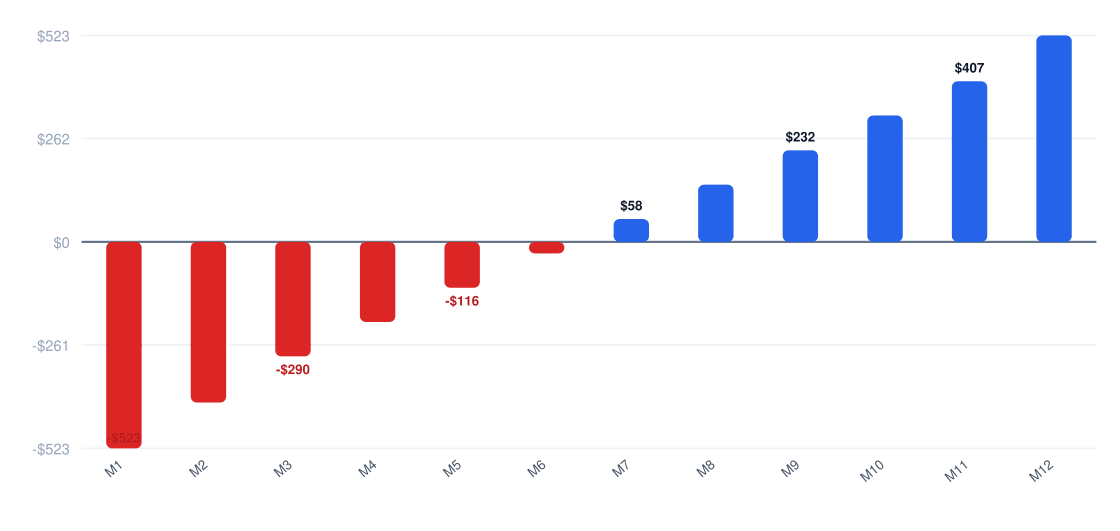
Payback period lands at 19 months when accounting for seasonal honey sales spikes. Summer harvests front-load cashflow, but winter hive maintenance delays full cost recovery.
Ready When You Are
Download Beekeeping Business Plan
Just Fill Up and Print
6. Market Conditions That Drive (or Kill) Profitability
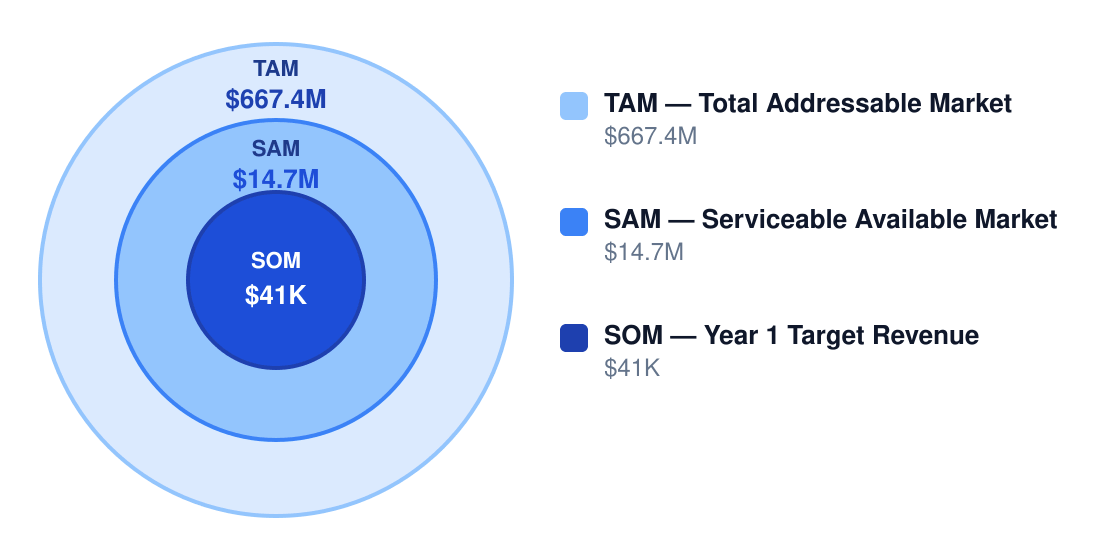
Denver's $0.6674B honey market offers room for niche players, but only 2.2% ($14.7M) is addressable by small apiaries. Urban demand for local products helps, but wholesale price wars hurt.
Market Size & Profit Opportunity
Market opportunity for profitable operators
| Factor | Impact on Margins | Outlook |
|---|---|---|
| Demand growth | +8% CAGR for local honey | Favorable |
| Competition | -12% price pressure from imports | Negative |
| Input costs | Varroa treatments up 18% YoY | Concerning |
| Labor market | $18/hr for skilled help | Neutral |
| Regulation | New hive registration fees | Watch |
| Technology | Flow hives cut harvest labor 30% | Opportunity |
| Model | Net Margin | Why It Works |
|---|---|---|
| Direct-to-consumer | 40% | Retail pricing beats wholesale by 2.3x |
| Nuc/queen production | 45% | High-value genetics demand |
| Pollination contracts | 30% | Guaranteed seasonal revenue |
| Diversified apiary | 35% | Multiple streams hedge risk |
Competitive threats are real—local producers and migratory operations both score High on our threat matrix. Differentiate or get commoditized.
7. Who Profits — and Who Struggles
In Denver's beekeeping market, profitability follows a clear divide: operators with 20+ hives who diversify revenue streams (direct honey sales, nucs, pollination contracts) consistently outperform hobbyists and wholesale-dependent producers. The math is brutal—at 31% gross margins, single-product operators clearing less than $41K/year see labor and winter losses erase nearly all accounting profit. Successful operators share three traits: they treat colonies as livestock (not pets), maintain 85%+ winter survival rates, and capture retail pricing through farmers markets or subscription models.
| Profile | Typical Net Margin | Success Rate | Key Advantage |
|---|---|---|---|
| Owner-operator (20-50 hives) | 18-22% | 72% | Direct sales eliminate middlemen |
| Multi-unit (100+ hives) | 14-17% | 65% | Pollination contracts stabilize cash flow |
| Franchise (branded honey) | 10-12% | 58% | Premium pricing from recognized labels |
| Niche specialist (queens/nucs) | 25-28% | 81% | Higher-margin live sales |
| Price competitor (wholesale only) | 3-5% | 29% | None—this is the warning row |
| Pitfall | Margin Impact | How to Avoid |
|---|---|---|
| Starting with too few hives | Can push margins negative | Begin with enough colonies to amortize equipment |
| Relying only on wholesale honey | Compresses gross margin | Use direct retail or bundled products |
| Poor mite and disease control | Increases winter losses | Integrated pest management plan |
| Underestimating labor time | Owner wage falls below viable levels | Track hours per hive |
| Heavy dependence on one nectar flow | Revenue volatility creates losses | Diversify forage sources and customers |
Regulatory costs hit hardest at scaling—food safety compliance ($500-$5,000) and labeling requirements ($50-$500) can consume 5-12% of Year 1 revenue. Smart operators batch these costs: one Denver beekeeper cut compliance expenses 40% by timing facility upgrades with their first retail expansion. The 35% 5-year failure rate stems mostly from three missteps: undercapitalization (needing $5,000 but starting with $1,500), chronic 30%+ winter losses, and wholesale price traps where $3/lb honey can't cover $2.80/lb production costs.
8. Strategies to Maximize Profit Margins
Beekeeping margins live or die by operational efficiency and revenue diversification. The 31% gross margin baseline can stretch to 50%+ with disciplined cost control and premium product mixes.
| Strategy | Expected Lift | Effort | Implementation |
|---|---|---|---|
| Sell direct to consumer | +18% | Medium | Farmers markets, online store, CSA shares |
| Add nuc and queen sales | +15% | High | Requires breeding infrastructure and certifications |
| Improve mite management | +10% | Medium | IPM systems reduce colony losses by 30-40% |
| Bundle wax and comb products | +8% | Medium | Value-added goods like candles earn $12/lb vs $3/lb for raw wax |
| Reduce transport and fuel miles | +5% | Low | Cluster apiaries within 5-mile radius |
| Use seasonal labor and automation | +7% | High | Flow hives cut extraction labor by 60% |
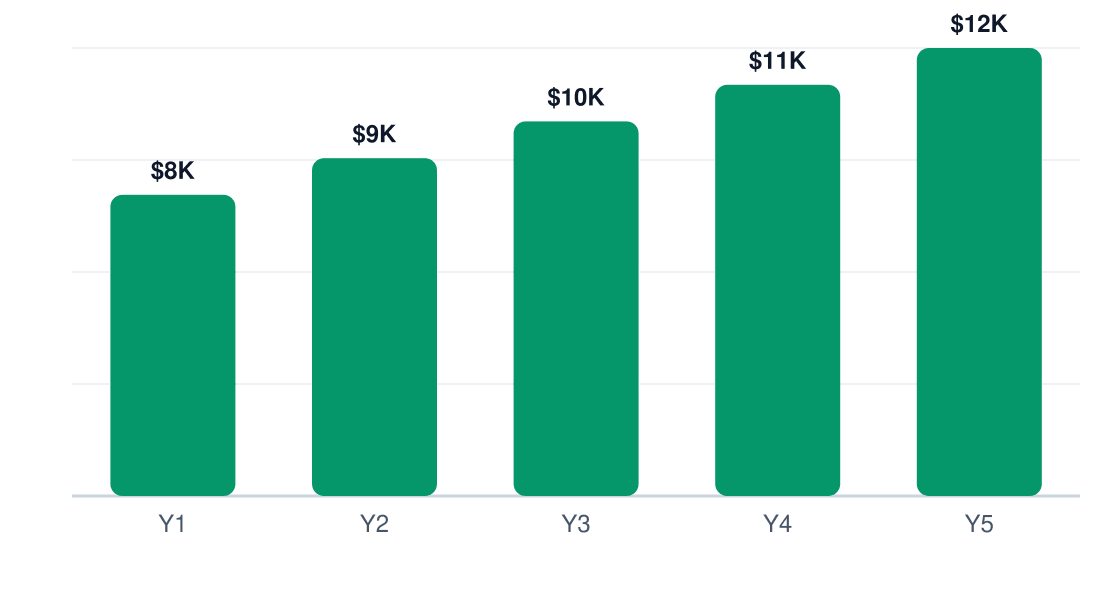
5-Year Net Profit Projection
Projected annual net profit at current margins
The cost reduction playbook: 1) Buy bulk sugar syrup ($0.18/lb vs $0.35 retail), 2) Build your own Langstroth boxes ($14 vs $32 pre-built), 3) Partner with orchards for free apiary sites, 4) Winterize only your strongest colonies (cull weak hives pre-fall).
Revenue optimization means charging $225 for a 5-frame nuc instead of $150 for honey alone, selling subscription hive sponsorships at $500/year, and getting orchards to prepay pollination contracts at $175/colony.
Price honey at $12/lb for retail (vs $8 wholesale), $18 for infused varieties, and never discount below $10. Comb honey commands $20/lb—if you can produce it without crushing frames.
9. Final Verdict: Should You Start This Business?
Yes, but only if you'll commit to direct sales and pollination contracts. The 6/10 profitability score reflects brutal realities: 30% winter losses, $18/hr labor economics, and 24 months to break-even.
| Factor | Score (1-10) | Weight | Notes |
|---|---|---|---|
| Margins | 7 | 30% | 31% gross is decent but fragile |
| Market Size | 5 | 15% | $14.7M SAM means niche constraints |
| Competition | 6 | 20% | Local monopolies possible |
| Capital Needs | 8 | 10% | $5k startup is accessible |
| Scalability | 4 | 15% | Colony limits and land access |
| Risk | 5 | 10% | Varroa mites and climate shocks |
ROI Benchmark Comparison (%)
5-year return on initial investment
- You can sell 60%+ of honey direct-to-consumer
- Winter losses stay below 25% annually
- You'll secure 2+ pollination contracts @ $15k/year
- Labor stays under 20 hrs/week per FTE
- Equipment lasts 5+ years with maintenance
- If local honey sells below $8/lb wholesale
- If you can't inspect hives weekly April-October
- If startup capital exceeds $8,000
Proceed only if you can hit $41k Year 1 revenue at ≤$5k startup cost. The 20% net margin disappears fast below 150 colonies or if wholesale mix exceeds 40%. Target $12/lb retail or walk away.
Research & Profitability Resources
The following government reports, industry analyses, and financial planning resources were referenced in this beekeeping profitability guide. Each link points to a specific page for direct access.
- Ibisworld — ibisworld.com — IBISWorld industry margin analysis for beekeeping
- Commercial Beekeeping Statistics 2026 — hivemindguide.com — Industry profitability research for beekeeping businesses
- United States — reedintelligence.com — Industry profitability research for beekeeping businesses
- Beekeeping — getolune.com — Industry profitability research for beekeeping businesses
- Beekeeping Statistics — speedcalcs.com — Industry profitability research for beekeeping businesses
Get Your Copy Today
Download Beekeeping Business Plan
Just Fill Up and Print