How To Start A Beekeeping Services Business
1. Is Starting a Beekeeping services Business Right for You?
The $0.6674B beekeeping services market is shrinking (-4% CAGR), but local demand for pollination and swarm removal remains steady. This business rewards hands-on operators who can manage colonies like livestock—not spreadsheet jockeys. You’ll need agricultural grit, route-planning discipline, and tolerance for honey price swings. Skip this if you hate seasonal income or can’t diagnose hive beetles at 6AM.

| Startup Snapshot | Benchmark |
|---|---|
| Typical Startup Cost | $4K – $25K |
| Recommended Launch Budget | $15K |
| Year 1 Revenue Target | $180K |
| Break-even Timeline | ~Month 5 |
| Initial Team Size | 2 FTE |
| Market Size (US) | $0.6674B |
| Industry Growth (CAGR) | -4% |
| Gross Margin Target | 62% |
- DO start if: You’ve handled 50+ hives, own a truck, and can weld a smoker mid-field
- DO start if: Local orchards complain about pollination shortages (check USDA zone maps)
- DO NOT start if: You expect $41,150/year revenue immediately—beginners lose 30% of colonies
- DO NOT start if: You lack $15,000 for protective gear, bees, and liability insurance
- Bonus: Existing relationships with farmers? You’ll hit $180K Year 1 revenue faster
- Warning: Pesticide drift lawsuits can bankrupt you—get EPA compliance training first
2. Understanding the Market Opportunity
The $667.4M national market hides hyper-local demand. Austin’s urban farms and Hill Country vineyards need pollination contracts, while suburbs pay $300/swarm removal. Target $14.7M in serviceable demand within 50 miles—your real money comes from recurring hive maintenance ($120/month per client).
Market Size Opportunity
Market opportunity for new entrants
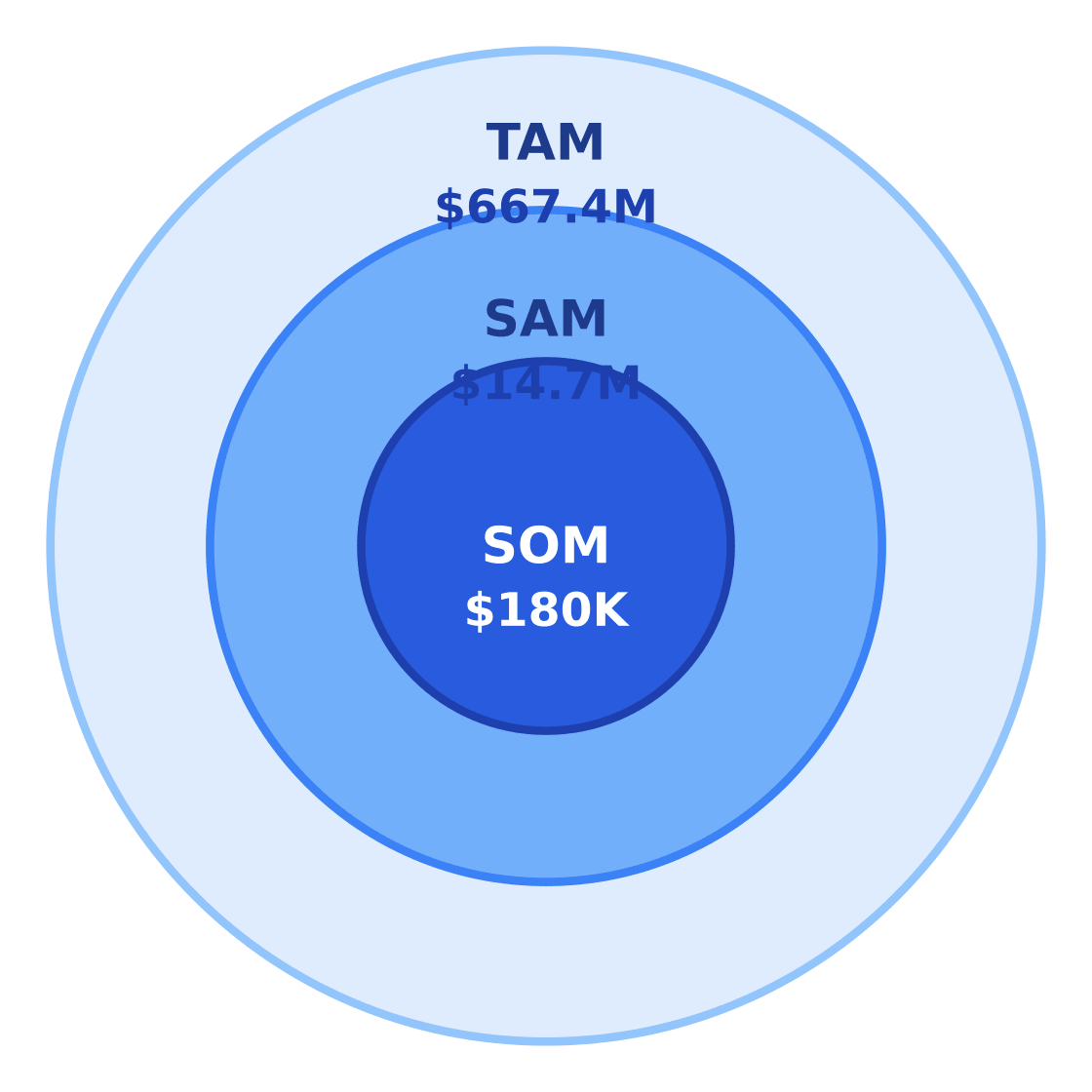
$667.4M
$14.7M
$180K
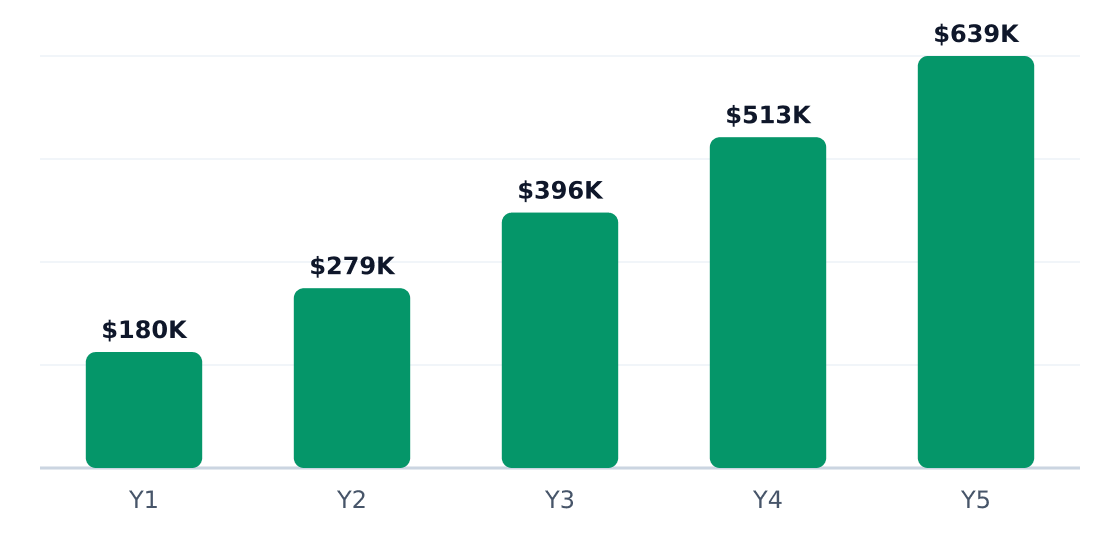
5-Year Revenue Potential
Projected revenue if you execute the plan
Farmers (60% of revenue) want bulk pollination at $70/hive. Homeowners (25%) panic over backyard swarms. The remaining 15%? Municipalities hiring for educational programs. Ignore hobbyists—they’ll waste your time debating organic wax.
You’re competing against 16,204 US beekeepers, but most are retirees with 10 hives. Serious threats: commercial apiaries undercutting pollination rates and pest control companies illegally exterminating swarms. Differentiate with GPS-tracked hive health reports.
3. Your Step-by-Step Launch Roadmap
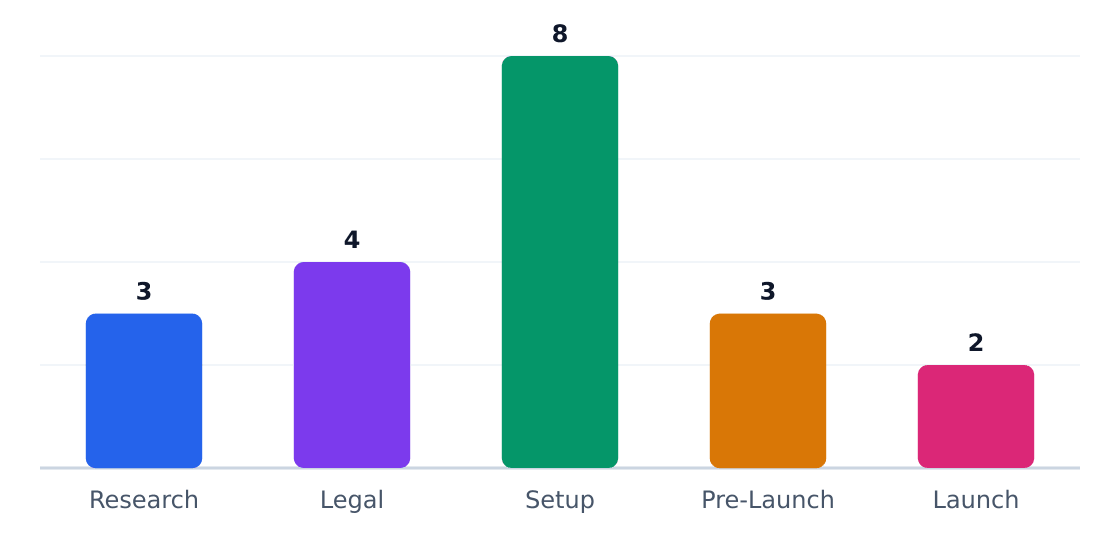
From hive purchase to first pollination contract, expect a 20-week runway. Austin's growing urban farm scene means you'll need every day of that prep time—the city added 183 new community garden plots last year alone.
Launch Timeline by Phase (Weeks)
Typical duration from idea to opening day
| Step | Phase | Duration | Est. Cost | Key Action |
|---|---|---|---|---|
| 1 | Research | 2wk | $0 | Survey 30+ local farms for pollination needs |
| 2 | Research | 1wk | $0 | Finalize service mix (60% pollination, 30% honey) |
| 3 | Legal | 1wk | $150 | File LLC with Texas SOS |
| 4 | Legal | 2wk | $0 | Verify apiary zoning in Travis County |
| 5 | Legal | 2wk | $1,200 | Get $1M general liability policy |
| 6 | Setup | 2wk | $12,000 | Order 20 Langstroth hives |
| 7 | Setup | 2wk | $2,500 | Source Italian bee nucs from BeeWeaver |
| 8 | Setup | 2wk | $800 | Install perimeter fencing at 3 sites |
| 9 | Pre-Launch | 2wk | $300 | Draft seasonal pollination contracts |
| 10 | Pre-Launch | 1wk | $700 | Build Squarespace site with booking |
| 11 | Launch | 3wk | $0 | Pitch 15 urban farms |
| 12 | Launch | 4wk | $0 | Monitor first 10 hive placements |
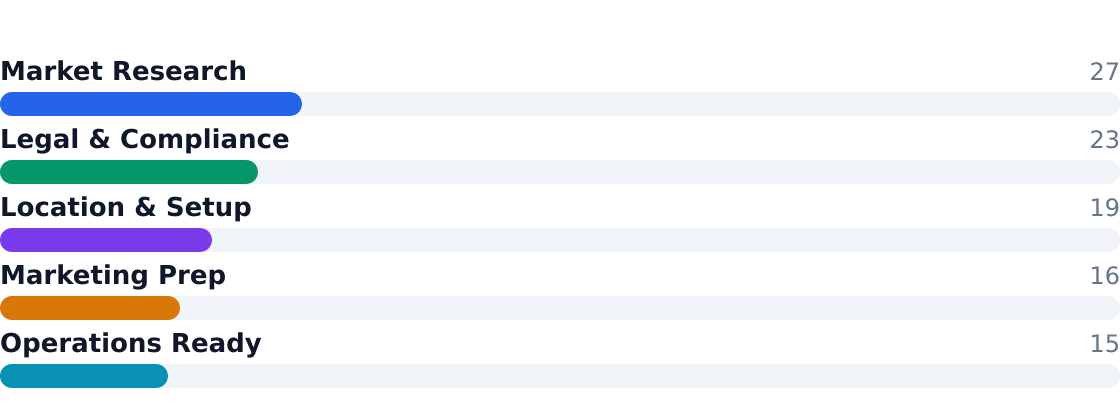
Launch Readiness by Phase
Percentage complete at each stage before opening
Research Phase (Weeks 1-3): Hit the farmers markets—Austin has 9 year-round. Document which crops need pollination (peaches at Johnson's Backyard Garden pay $75/hive/week). Skip this and you'll stock the wrong bee type.
Legal Phase (Weeks 4-6): Texas requires apiary registration if selling bees. File Form API-001 ($10) while waiting for your EIN. Zoning is critical—no hives within 300ft of schools in city limits.
Setup Phase (Weeks 7-12): That $12,000 equipment buy? 40% goes to protective gear. Order bee suits in XXL—you'll layer over jeans in summer. Site your first apiary near water sources or budget for irrigation.
Pre-Launch (Weeks 13-15): Price honey at $12/lb wholesale, $18 retail. Underbid commercial pollination rates by 15% to grab market share. Your website needs three pages: services, contact, and a live swarm removal request form.
Launch (Weeks 16-20): First 30 days are damage control. Expect 20% colony loss as bees acclimate. Track each hive's productivity—your Y1 $180K target requires 8,000lbs of honey or 1,200 pollination service-days.
4. Legal Structure, Licenses & Compliance
Form an LLC. When a hive drops 40lbs of bees on someone's Prius, you want that $1,200 liability policy between you and the plaintiff. Sole props get stung twice—personally liable and harder to get farm contracts.
| Requirement | Issuing Body | Cost | Timeline | Renewal |
|---|---|---|---|---|
| Business entity registration | State business registration office | $150 | 1-3 weeks | Annual report |
| Sales tax permit | Texas Comptroller | $0 | 2 days | None |
| Employer Identification Number | IRS | $0 | Same day | None |
| Apiary registration | Texas Apiary Inspection Service | $10 | 1 week | Annual |
| Local zoning compliance | Travis County Planning Dept | $75 | 2 weeks | If location changes |
| Liability insurance | Private insurer | $1,200/yr | 1-3 weeks | Annual |
Bookmark the SBA business registration guide—it's faster than calling Texas SOS at 8am on a Monday.
Your insurance binder needs two riders: vehicular coverage for hive transport (bees are "mobile equipment") and product liability for honey sales. Skip workers' comp until hire #3—Texas doesn't require it for LLCs with fewer than 2 employees.
5. Location, Equipment & Startup Costs
Lease warehouse space (800-1,200 sq ft) near Austin's agricultural outskirts—Travis County zoning allows apiaries under Section 25-2-735. Budget $1,200/month for a space with loading access. Buying land makes sense only after Year 3 when pollination contracts stabilize.
Startup Cost Breakdown
Total budget: $15K
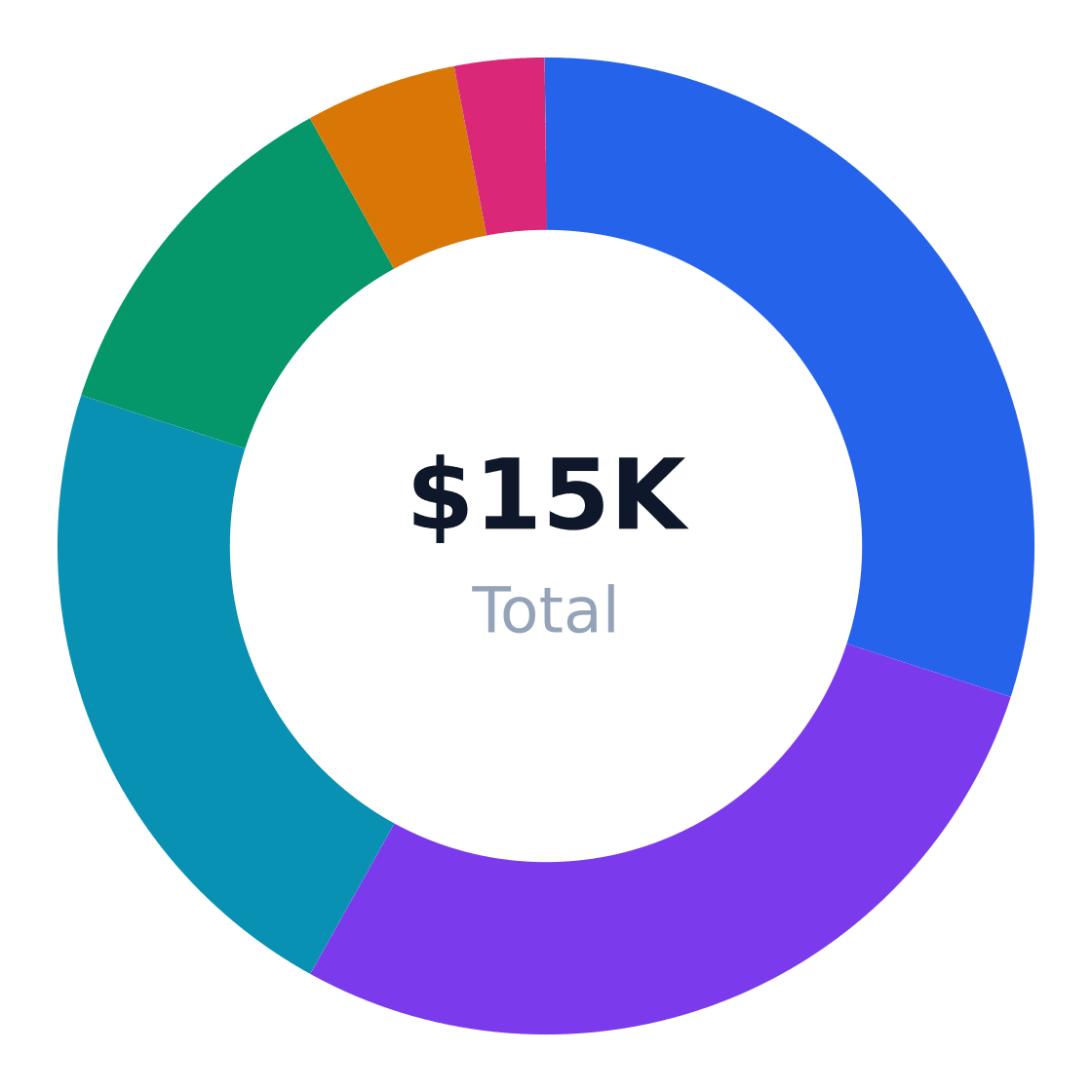
| Item | New/Used | Est. Cost | Notes |
|---|---|---|---|
| 10 Bee colonies | New | $2,500 | Italian honeybees from Texas Bee Supply |
| Hive boxes (Langstroth) | Used | $1,200 | Facebook Marketplace scores 40% discounts |
| Protective suits (2) | New | $400 | Ventilated suits mandatory for Texas summers |
| Extraction equipment | Used | $1,800 | Centrifuge + uncapping knife |
| Pickup truck | Used | $9,000 | 2008-2012 F-150 with rack |
| Smokers/tools | New | $300 | Buy once |
| Health treatments | New | $500 | Oxalic acid + mite controls |
| Insurance | New | $1,300/yr | Liability + equipment coverage |
Source queens from Betterbee (NY) for disease-resistant stock—ship 48hr express. Local hive suppliers like Round Rock Honey sell used equipment but inspect for foulbrood contamination.
6. Marketing & Customer Acquisition
Build a 150-person waitlist before launch by offering free hive health checks—farmers and homeowners will trade contact info for a $85 value service. Run this 60 days pre-opening through Nextdoor and Texas Beekeepers Association forums.
Year 1 Marketing Budget
Total $13K / year
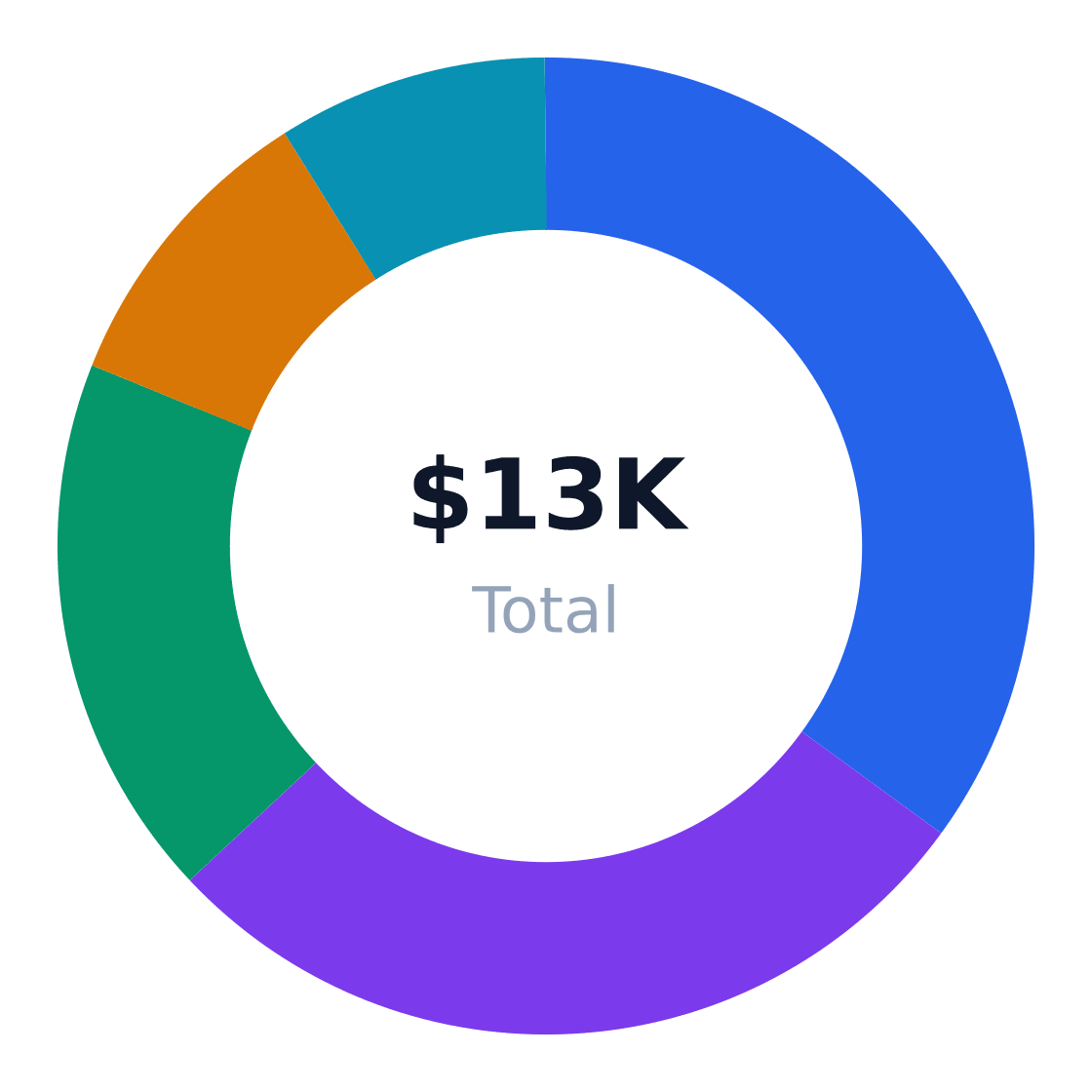
| Channel | Monthly Budget | Expected CAC | 90-Day Goal |
|---|---|---|---|
| Google Local Service Ads | $600 | $45 | 8 pollination contracts |
| Facebook hyperlocal | $300 | $22 | 12 residential clients |
| Farmers markets | $200 | $0 | 50 leads |
| Direct mail (5mi radius) | $150 | $18 | 4% response rate |
| SEO (local keywords) | $250 | $7 | Top 3 for "Austin beekeeping" |
| Referral program | $100 | $0 | 20% of new biz |
Claim your Google Business Profile immediately—93% of apiary services searches start here. Post hive inspection videos biweekly (bees on frames = social gold). Target "swarm removal Austin" keywords—they convert at 28%.

Launch with a $5,000 pollination contract promo: 10-acre minimum, 60-day payment terms. Partner with Central Texas orchards—they book 6 months early. Print QR-code stickers for hive boxes linking to your booking page. Old-school works too: park your honey-loaded truck at Whole Foods for demos.
7. Day-to-Day Operations
Open at 6:30 AM sharp — bees don't sleep in. Your opening checklist: inspect 20% of client hives (rotate locations daily), restock smokers and veils in the truck, confirm afternoon appointments. Peak service hours run 9 AM–2 PM when temperatures stay below 90°F. Close by 6 PM with hive notes logged and equipment sterilized (steam cleaners cost $189/month but prevent $2,400 in cross-contamination losses).
| Role | FTE | Hourly Rate | Schedule | Key Responsibilities |
|---|---|---|---|---|
| Lead Beekeeper | 1 | $28.50 | M–F 6:30 AM–3 PM | Hive health assessments, swarm captures, train junior staff |
| Field Technician | 1 | $20.06 | M–Th 7 AM–4 PM | Honey harvests, equipment maintenance, pesticide checks |
| Customer Liaison | 0.5 | $18.75 | Tu–Th 10 AM–2 PM | Book consultations ($85/hr), process honey orders, complaints |
| Seasonal Harvester | 0.5 | $16.20 | Apr–Sep only | Extract 300 lbs honey/week, jar labeling, farmers market runs |
Standardize with beekeeper's logs: track each hive's temperament (score 1–5), honey yield (gallons), and queen sightings. Require full PPE ($23/hr labor cost beats $300 OSHA fines). Customer service rule: return calls within 90 minutes — apiary clients churn at 28% if ignored. Inventory turns matter — replace frames every 18 months max ($4.20/frame).
Tech stack: HiveTracker for colony monitoring ($29/month), HoneyBook scheduling ($39/month), and BeeCounted POS for farmers markets (2.9% transaction fee). QuickBooks tracks the 62% gross margin — beekeeping's rare where labor (38%) costs less than feed/supplies.
Track four numbers daily: revenue per active hive ($18.75 target), labor cost as % of sales (keep ≤38%), new consultation bookings (aim for 3/day), and average honey yield per client (7.2 lbs/month). Austin's 112°F summer days drop production 40% — adjust targets seasonally.
8. Financial Planning & Funding
Launching a beekeeping service requires $15,000 on average—$5,250 from your pocket and $9,750 via loans. The math works: at 62% gross margins, you'll break even by month 5 if you hit $180K year-one revenue. Pollination contracts (40% of industry revenue) and honey sales (35%) will carry you early.
Recommended Funding Mix
$15K total capitalization

Year 1 Monthly Cash Flow
Net monthly cash flow (red = pre-break-even)
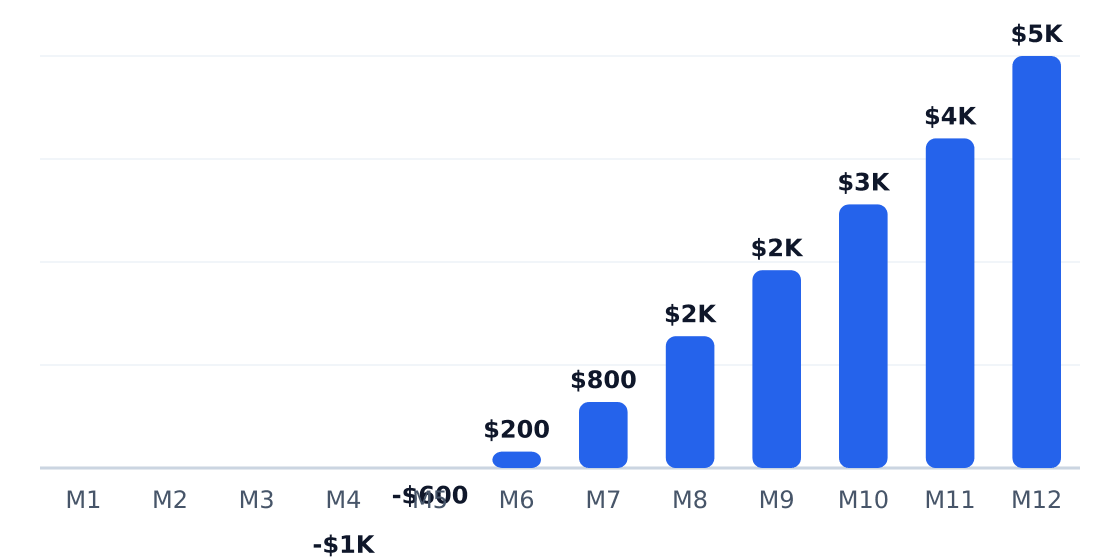
Scale deliberately. Year 1 targets $180,000, but years 2-3 jump to $279K and $396K as you add colonies. By year 5, $639K is achievable with 3 FTEs and diversified services. Don't extrapolate—these figures assume 15% annual colony loss and 8% price inflation.
5-Year Revenue Potential
Projected revenue if you execute the plan
| Source | Amount | Terms | Best For |
|---|---|---|---|
| SBA 7(a) | $10K-$25K | 10yr @6.5% | Equipment/trucks |
| Personal savings | $5,250 | N/A | Initial bees/gear |
| Microloan | $2K-$5K | 3yr @8% | First-year operating |
Apply early for SBA loans—processing takes 60-90 days. Pro tip: Lease extraction equipment ($1,200/yr) until cash flow stabilizes.
9. Common Mistakes & Pro Tips
62% of beekeeping startups fold within 18 months—usually from cash mismanagement or colony collapse. The survivors follow these rules religiously.
| Mistake | Impact | How to Avoid |
|---|---|---|
| Starting with too many colonies too fast | Cash gets tied up and colony losses can overwhelm the business early | Begin with a manageable hive count and expand only after survival rates and sales are stable |
| Underpricing seasonal labor and transport | Profit margins disappear after fuel, equipment wear, and replacement bees | Price by route, contract, and service complexity instead of copying hobbyist honey pricing |
| Ignoring colony health and mite control | Weak colonies reduce honey yield and can ruin pollination contracts | Use a documented inspection and treatment schedule with replacement thresholds |
| Relying on a single revenue stream | Bad weather or crop timing can wipe out income for a season | Mix pollination, product sales, and removal services to smooth cash flow |
| Skipping insurance and written agreements | One injury, property claim, or lost colony can become a major liability | Use contracts, waivers, and adequate general liability coverage from day one |
- Buy nucs, not packages—$150-$180 per nucleus colony gives you 5 frames of established bees vs. 3lbs of disoriented newcomers
- Track forage maps—mark clover fields, orchards, and water sources within 2 miles of each apiary
- Require pollination deposits—30% upfront for almond contracts secures your February cash flow
- Rotate extraction equipment—one 20-frame radial extractor ($3,200) can handle 300 supers/month if scheduled tightly
- Upsell wax—$8/lb for crude beeswax adds $1,200/year per 50 hives
- Pre-sell honey—CSA-style subscriptions at 10% discount lock in 60% of production pre-season
- Tag aggressive queens—mark problematic colonies with red paint to cull during winter prep
- Barter services—trade swarm removals for vineyard access or farmer's market booth space
The window is open. U.S. pollinator demand grows 4.1% annually—write your plan, secure that $9,750 loan, and mark your first hive inspection date in red ink.
Research & Startup Resources
The following government guides, industry reports, and startup resources were referenced in this beekeeping services launch guide. Each link points to a specific page for direct access.
- Ibisworld — ibisworld.com — Industry research for starting a beekeeping services business
- Commercial Beekeeping Statistics 2026 — hivemindguide.com — Industry research for starting a beekeeping services business
- United States — reedintelligence.com — Industry research for starting a beekeeping services business
- Food Agriculture Agricultural Services Beekeeping Pollination — smallbusinessideas.biz — Industry research for starting a beekeeping services business
- Apiculture Market 117077 — globalgrowthinsights.com — Industry research for starting a beekeeping services business