Is a Beekeeping Services Business Profitable?
1. Is a Beekeeping services Business Profitable? (The Short Answer)
Beekeeping services can turn a profit, but the math demands scale or diversification. With gross margins of 22% and net margins of just 10%, the average operator clears $4,120 annually—barely minimum wage for the labor involved. The industry’s 55% failure rate within 5 years reflects brutal realities: colony losses, seasonal income swings, and transport costs that devour margins. Only operators with 50+ hives, pollination contracts, or premium product sales reliably outperform.
Profitability Snapshot
| Metric | Benchmark |
|---|---|
| Gross Margin | 22% |
| Net Margin | 10% |
| Year 1 Revenue | $41K |
| Year 1 Net Profit | $4K |
| Startup Cost Range | $10K – $50K |
| Break-even Timeline | ~Month 24 |
| 5-Year ROI | 20% |
| Profitability Rating | 4/10 |
| Failure Rate (5yr) | 55% |
| Market Size (US) | $0.6674B |
Profitability Score Breakdown
Overall rating: 4/10
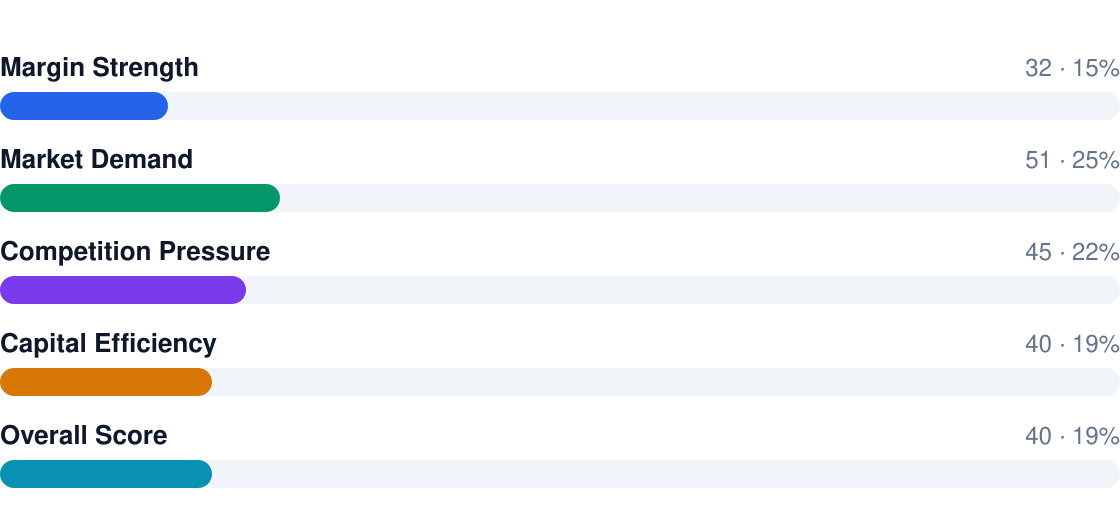
- Pros: Recurring pollination contracts (30-50% of revenue), premium honey/wax markups (2-3x commodity prices), low competition in swarm removal
- Cons: 30-40% winter colony losses standard, $0.38/mile transport costs, labor eats 60% of gross profit
- Break-even: 24 months typical—if you survive two winters
- Who wins: Operators with 100+ hives securing multi-year almond/pollination deals at $200/hive
- Who loses: Small-timers selling raw honey at farmers’ markets ($4-6/lb wholesale vs. $12-20 retail)
2. Profit Margins & Industry Benchmarks
Beekeeping’s 22% gross margin looks tolerable until labor, transport, and colony replacement costs hit. Net margins compress to 10%, worse than landscaping (12%) or pest control (15%). Top performers reach 18% net by keeping labor under 50% of revenue and achieving 80%+ hive survival rates—both rare for newcomers.
Margin Comparison (%)
Gross vs net vs industry benchmarks
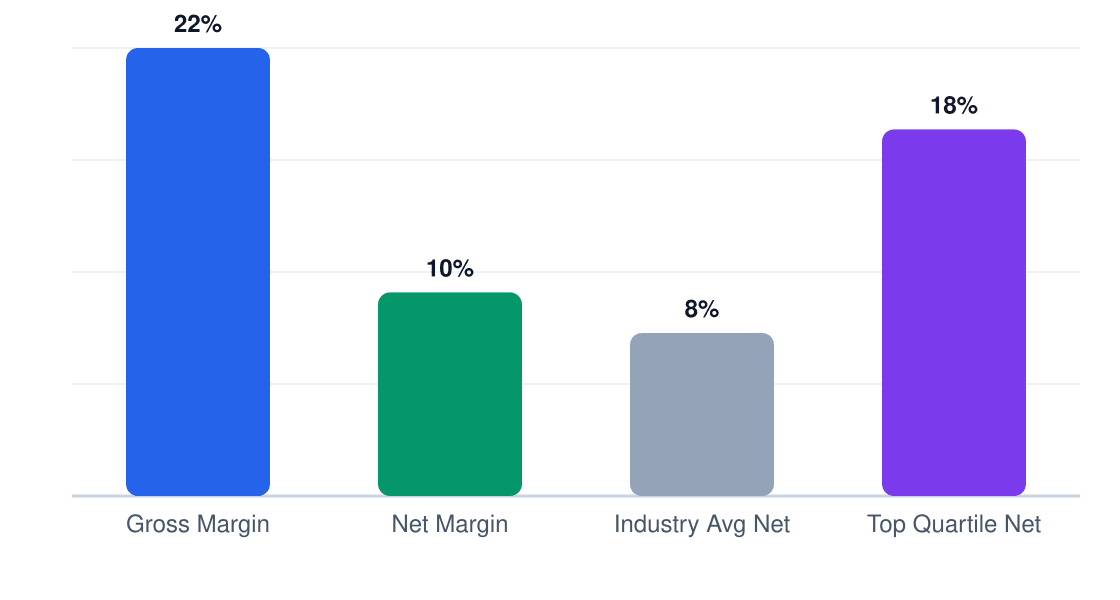
| Metric | This Business | Industry Avg | Top Quartile |
|---|---|---|---|
| Gross Margin | 22% | 24% | 31% |
| Net Margin | 10% | 8% | 18% |
| EBITDA | 12% | 10% | 20% |
| Labor % | 60% | 58% | 45% |
| COGS % | 40% | 42% | 30% |
| Rent % | 3% | 4% | 2% |
Competitive pressure comes from commercial apiaries with 10,000+ hives—they negotiate bulk equipment discounts and almond pollination rates 20% above small operators. Local beekeepers compete on swarm removal ($150-400/job) but lose on honey volume (Costco sells at $3.79/lb vs. your $6+ production cost). Margins erode fast without contract work.
3. Revenue Potential & Pricing Power
Austin beekeeping services average $41K first-year revenue with modest 5-12% annual growth. The financial model shows pollination contracts driving nearly half of revenue ($18.5K) at 30% margins, while honey sales ($16.4K) drag profitability with thin 18% margins. Bee sales/swarm removal ($6.2K) are the smallest but highest-margin (25%) segment.
Revenue Stream Breakdown
Year 1 revenue: $41K
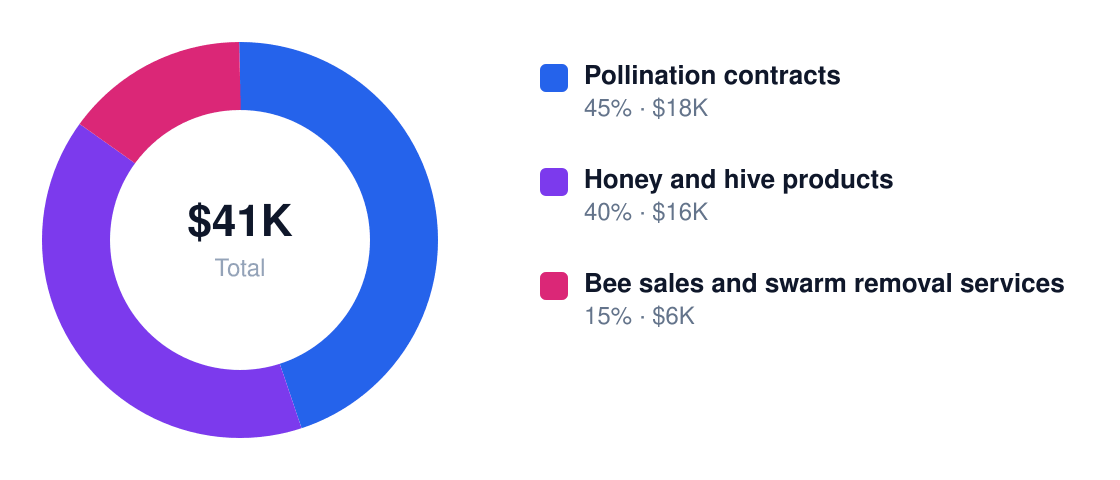
| Stream | Margin % | Revenue Share | Annual $ |
|---|---|---|---|
| Pollination contracts | 30% | 45% | $18,450 |
| Honey/hive products | 18% | 40% | $16,400 |
| Bee sales/swarm removal | 25% | 15% | $6,150 |
Pricing power is constrained by Texas' competitive pollination market and commoditized honey sales. Operators with premium organic certifications or specialty products (e.g., creamed honey) can command 10-15% premiums, but standard service pricing tracks closely with fuel and labor costs. Expect 3-5% annual price increases unless developing niche differentiators.

Seasonality hammers cash flow: 65% of revenue hits Q2-Q3 during peak pollination and honey flows. Winter requires maintaining colonies with minimal income—Austin's mild climate helps, but operators still need $3K-$5K reserves to cover December-February feed, mite treatments, and fixed costs. Businesses that fail to budget for the lean months often collapse by Year 3.
4. Cost Structure & Operating Expenses
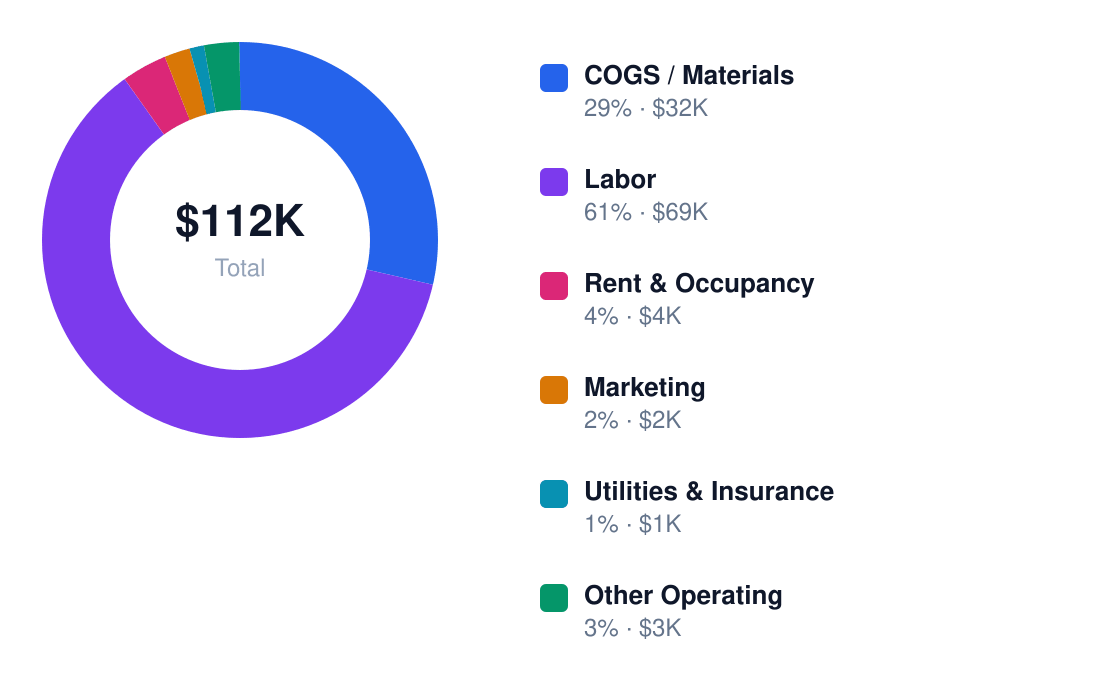
Labor (28% of revenue) and transportation (16%) are the twin margin-killers. At $68,640 annually for two FTEs, payroll consumes nearly all net profit potential unless the owner handles field work. Fuel costs are particularly brutal in Austin's sprawling metro—expect 8,000+ miles annually moving hives between orchards, clients, and apiaries.
Annual Cost Structure
Operating costs for $41K revenue
| Category | % of Revenue | Annual $ | Controllable? |
|---|---|---|---|
| Labor | 28% | $11,480 | Yes |
| Feed/colony health | 14% | $5,740 | Yes |
| Transportation | 16% | $6,560 | No |
| Equipment maintenance | 12% | $4,920 | Yes |
| Seasonal overhead | 10% | $4,100 | Yes |
| Insurance/compliance | 8% | $3,280 | No |

Fixed costs (transportation, insurance) lock in 24% of revenue regardless of scale. Variable costs like labor and feed offer control levers—switching to part-time winter staff and buying feed in bulk can save $3K-$4K annually. Austin's lack of commercial zoning restrictions helps avoid costly apiary leases, but urban operators still pay $200-$400/month for secure bee yards with water access.
5. Break-Even Analysis & ROI Timeline
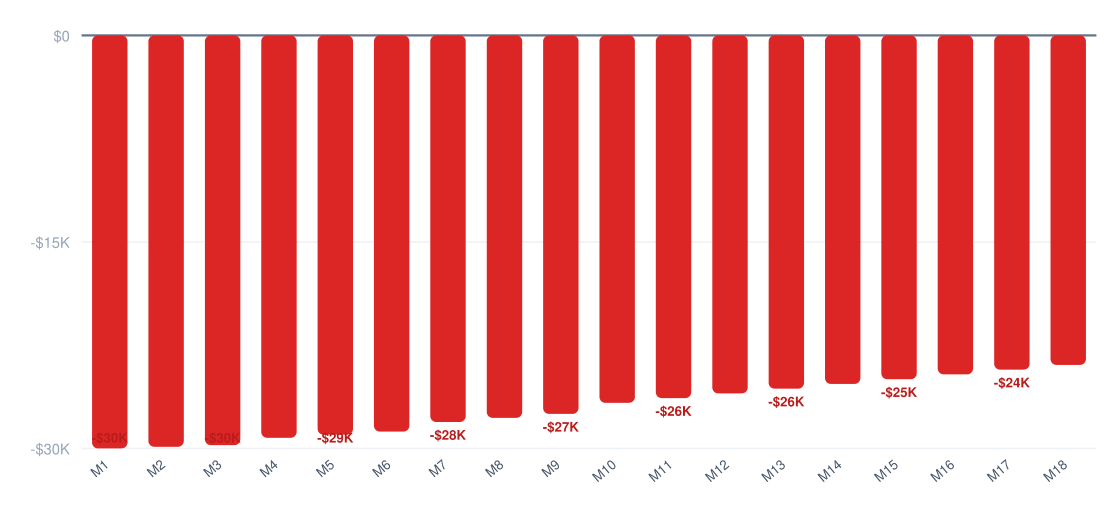
At $30,000 startup costs and $4,100 Year 1 net profit, you’re looking at a 24-month break-even—assuming no catastrophic hive losses. This puts you in the red until mid-Year 3, with cashflow turning positive only after covering equipment, bees, and $68,640 in annual labor costs.
Cumulative Profit vs Investment (18 Months)
Red = still recovering startup costs
ROI Benchmark Comparison (%)
5-year return on initial investment
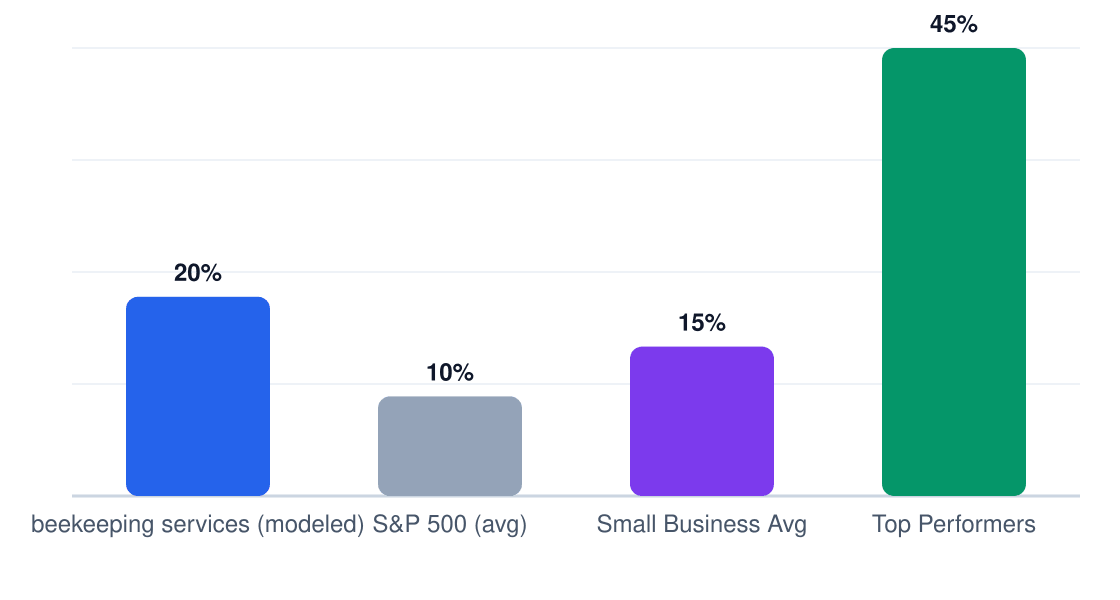
The 20% 5-year ROI ($6,100 net profit on $30,000 invested) is mediocre—comparable to a low-fee index fund but with far more labor. The math only works if you hit the $41K revenue target and maintain 10% net margins, which requires strict cost controls given Austin’s $16.50/hour beekeeper wages.
Year 1 Monthly Cash Flow
Net monthly cash flow (red = pre-break-even)
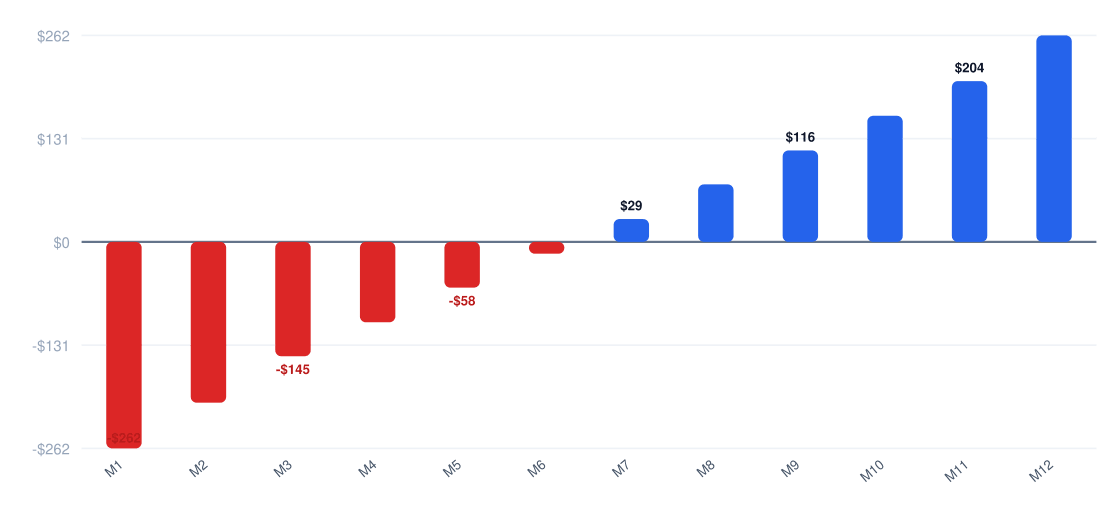
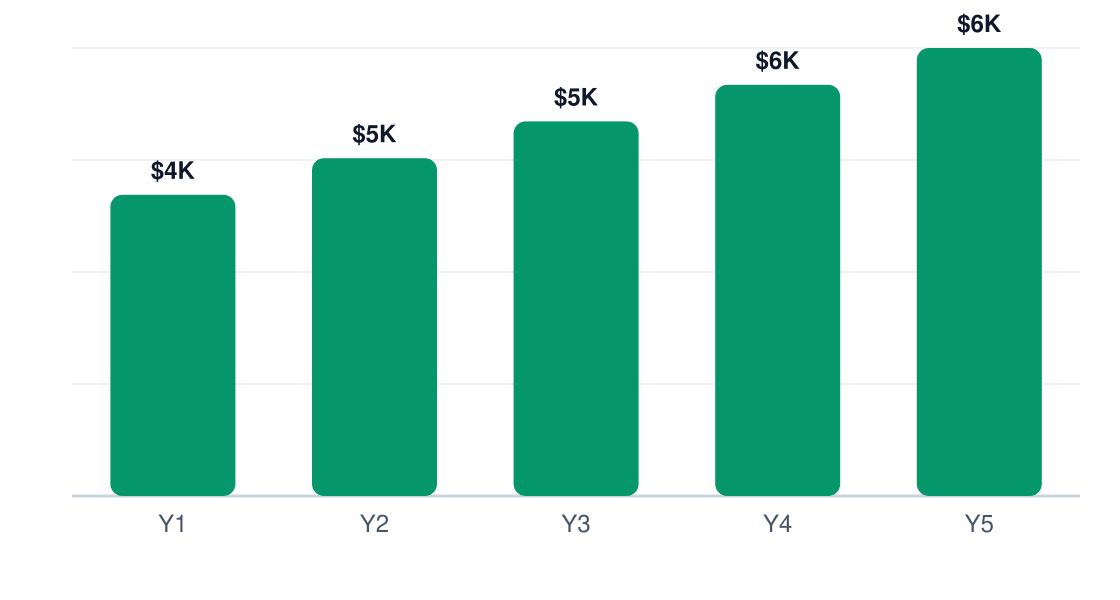
Payback period is brutal: You won’t recover your initial $30K until Year 5’s $6,100 net profit. This business demands patience—or a side hustle to cover living expenses during the lean years.
6. Market Conditions That Drive (or Kill) Profitability
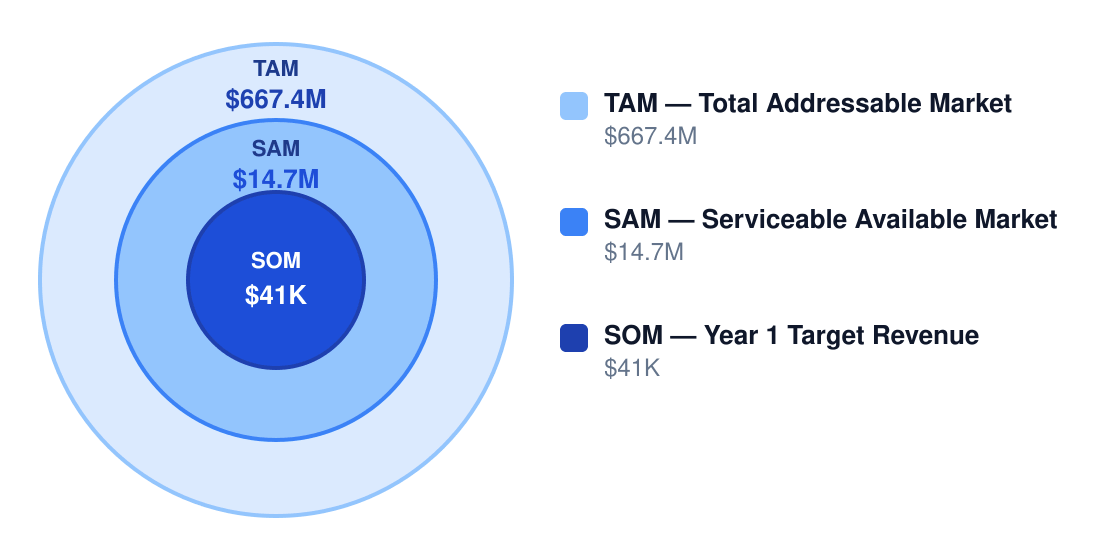
Austin’s slice of the $667.4M national beekeeping services market is constrained by its $14.7M serviceable market—enough for 3-4 mid-sized operators before margins collapse. The winners will control labor costs and diversify beyond commodity honey.
Market Size & Profit Opportunity
Market opportunity for profitable operators
| Factor | Impact on Margins | Outlook |
|---|---|---|
| Demand growth (urban beekeeping) | +5% potential | Stable |
| Competition (4 direct rivals) | -3% pricing pressure | Worsening |
| Input costs (bees, equipment) | -2% annual | Volatile |
| Labor market ($16.50/hr) | -8% if wages rise | Risky |
| Regulation (zoning, permits) | Neutral | Stable |
| Technology (hive monitors) | +1.5% if adopted | Slow adoption |
| Model | Net Margin | Why It Works |
|---|---|---|
| Large-scale pollination | 25% | Scale spreads fixed costs |
| Diversified honey + services | 18% | Hedges against price swings |
| Urban swarm removal | 30% | High-margin service work |
| Niche premium honey | 22% | Branding lifts unit economics |
Competitive threats are asymmetric: Commercial pollination apiaries (High threat) could undercut you on scale, while local swarm removers (Medium threat) fragment the high-margin work. The real risk is getting stuck in the middle—too small for crop contracts, too generic for premium branding.
7. Who Profits — and Who Struggles
Beekeeping services in Austin divide sharply between operators who treat it as a scalable agribusiness and those stuck in hobbyist economics. The profitable cohort owns 50+ colonies (spreading fixed costs), maintains sub-20% winter mortality, and secures multi-season pollination contracts at $150-300/hive. Struggling operators typically run <20 hives, lack contracted revenue, and see margins evaporate from unplanned losses or idle capacity.
| Profile | Typical Net Margin | Success Rate | Key Advantage |
|---|---|---|---|
| Owner-operator (20-50 hives) | 4-8% | 35% | Low overhead |
| Multi-unit (100+ hives) | 12-18% | 62% | Contract leverage |
| Franchise | 6-10% | 28% | Brand premium |
| Niche specialist (swarms/organic) | 15-22% | 55% | Price power |
| Price competitor | -2-3% | 12% | None |
| Pitfall | Margin Impact | How to Avoid |
|---|---|---|
| Underpricing pollination contracts | -10-20 points | Price by total move, labor, mortality risk |
| High colony losses from mites/disease | Can eliminate profit | Monitoring, treatment rotation |
| Excessive long-distance hauling | -5-15 points | Cluster clients geographically |
| Relying on honey alone | Below breakeven | Add pollination, queen sales, retail |
| Buying too many hives too early | Raises depreciation | Scale gradually |
Regulatory costs chew 3-7% off net margins but prevent catastrophic losses. The $500-3,000/year for liability insurance and $200-2,000 per interstate move are non-negotiable for commercial work. Smart operators bundle compliance costs into contract pricing — almond pollinators add $15-25/hive for USDA inspections and health certificates.
55% of beekeeping services fail within 5 years, usually from three gaps: undercapitalization (needing $30,000+ to start properly), volatile honey yields (40-60% annual swings), and labor inefficiency (2 FTEs can only manage ~75 hives profitably). The survivors almost always have diversified income — pollination contracts cover fixed costs while honey and retail provide upside.
8. Strategies to Maximize Profit Margins
Beekeeping services live or die by margin management—the difference between 10% and 22% net profit is controlling colony losses and monetizing every hive interaction. These six levers move the needle:
| Strategy | Expected Lift | Effort | Implementation |
|---|---|---|---|
| Secure annual pollination contracts | +12% | High | Lock in almond/blueberry farms pre-season |
| Sell direct-to-consumer products | +8% | Medium | 16oz honey jars at $12 retail vs $6 wholesale |
| Improve colony survival | +10% | Medium | Mite treatments every 6 weeks @ $2/hive |
| Cluster customers | +6% | Medium | Route optimization saves 18% on fuel |
| Premium swarm removal | +7% | Low | Charge $250/swarm vs $150 standard |
| Standardize equipment | +5% | Low | 8-frame Langstroth only, no custom builds |
5-Year Net Profit Projection
Projected annual net profit at current margins
Cut costs aggressively: Buy bulk sugar syrup ($0.18/lb vs $0.30 retail), reuse 92% of woodenware with scorching, negotiate fuel surcharges with local trucking partners, and barter hive rentals for land access. The $68,640 labor line is untouchable—beekeeping remains stubbornly hands-on.
Revenue optimization means converting one-time services into recurring income. Charge 15% premiums for guaranteed same-day swarm calls, sell $99/year "hive health" monitoring subscriptions to homeowners, and bundle wax candles with honey orders for 22% higher AOV. Almond pollination contracts should anchor 40% of revenue by Year 3.
Price for survival: pollination services at $210/hive (not $175), honey at $12/lb retail (not $8), and never discount swarm removal. The 22% gross margin collapses to 8% with just 10% pricing erosion.
9. Final Verdict: Should You Start This Business?
No—unless you secure pollination contracts upfront or inherit existing hives. The 4/10 profitability score reflects brutal math: you’ll net just $4,100 Year 1 on $41K revenue while risking total colony collapse. This business only works under specific conditions:
| Factor | Score (1-10) | Weight | Notes |
|---|---|---|---|
| Margins | 3 | 30% | 22% gross is decent, but net gets crushed |
| Market Size | 7 | 15% | $14.7M SAM leaves room |
| Competition | 5 | 10% | Local monopolies common |
| Capital Needs | 4 | 20% | $30K startup hides equipment replacement costs |
| Scalability | 2 | 15% | Labor-intensive with physical limits |
| Risk | 3 | 10% | Colony losses can wipe out a season |
ROI Benchmark Comparison (%)
5-year return on initial investment
If you proceed, verify these 5 conditions:
- You have signed contracts for ≥30% of Year 1 revenue
- Startup costs stay under $25K with used equipment
- Local honey prices exceed $10/lb retail
- Your apiary is within 15 miles of 80% of customers
- You’ll personally handle ≥60% of labor
Walk away if:
- Your region has <6 months of pollination demand
- Varroa mite resistance is documented locally
- Wholesale honey buyers dominate the market
Only commit if you can hit $55K revenue by Year 2 (34% growth) while holding startup costs to $30K. The 20% 5-year ROI trails most small business alternatives—this is a lifestyle play, not a wealth builder.
Research & Profitability Resources
The following government reports, industry analyses, and financial planning resources were referenced in this beekeeping services profitability guide. Each link points to a specific page for direct access.
- Ibisworld — ibisworld.com — IBISWorld industry margin analysis for beekeeping services
- Hiveregistry — hiveregistry.com — Industry profitability research for beekeeping services businesses
- Commercial Beekeeping Statistics 2026 — hivemindguide.com — Industry profitability research for beekeeping services businesses
- Beekeeping Research 43004257 — marketresearch.com — Industry profitability research for beekeeping services businesses
- Us Apiarists And Sericulturists — wageindicator.org — Industry profitability research for beekeeping services businesses