Is a Aviation Security Services Business Profitable?
1. Is a Aviation Security Services Business Profitable? (The Short Answer)
Yes, but only with contract scale and tight labor controls. The industry runs on 18% gross margins that compress to 7.5% net after compliance and supervision costs. For a typical $1.2M revenue operation, that leaves $90,000 net profit—enough to justify the investment but vulnerable to labor overruns. The math works if you secure 2+ mid-sized contracts or one anchor airport deal.

Profitability Snapshot
| Metric | Benchmark |
|---|---|
| Gross Margin | 18% |
| Net Margin | 7.5% |
| Year 1 Revenue | $1.2M |
| Year 1 Net Profit | $90K |
| Startup Cost Range | $100K – $500K |
| Break-even Timeline | ~Month 30 |
| 5-Year ROI | 150% |
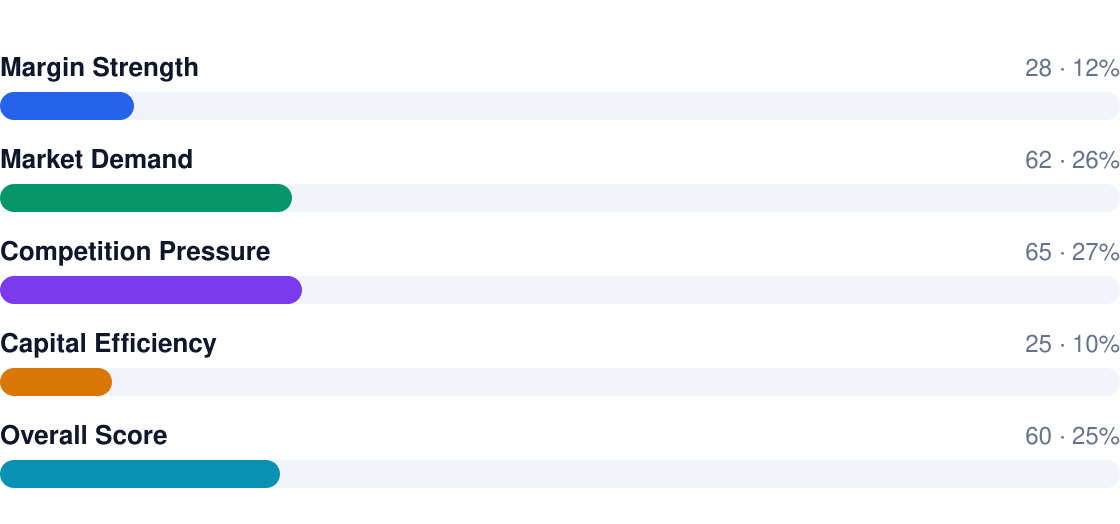
| Profitability Rating | 6/10 |
| Failure Rate (5yr) | 35% |
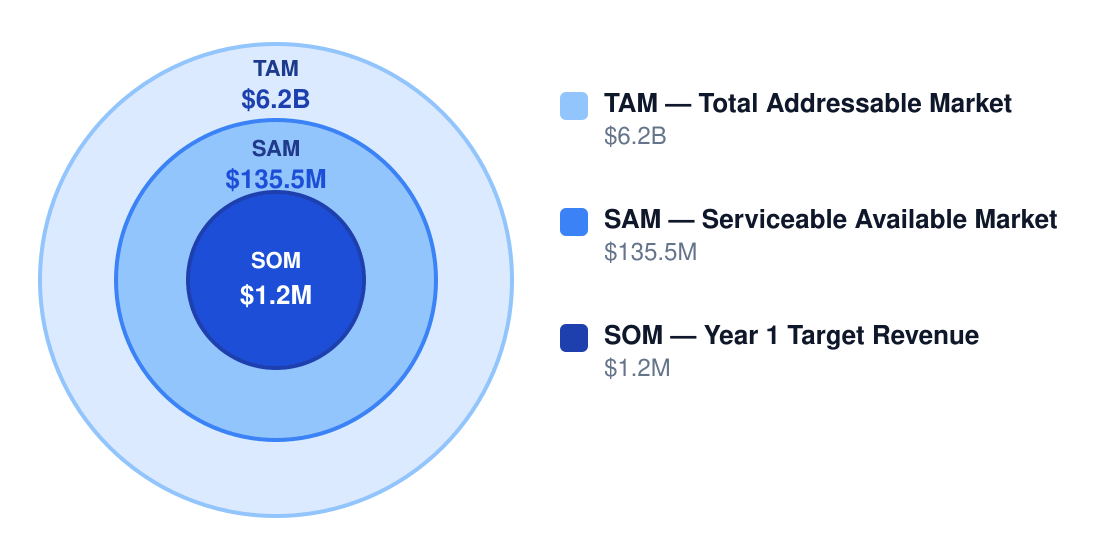
| Market Size (US) | $6.157B |
Profitability Score Breakdown
Overall rating: 6/10
Bottom line
- Labor eats 65% of revenue—scheduling efficiency is your margin lever
- 7.5% net margin is achievable but below the 10% small business benchmark
- Break-even takes ~30 months due to high startup training and certification costs
- 35% of operators fail within 5 years, usually from single-contract dependency
- Top performers bundle consulting/training to boost margins to 12-15% net
2. Profit Margins & Industry Benchmarks
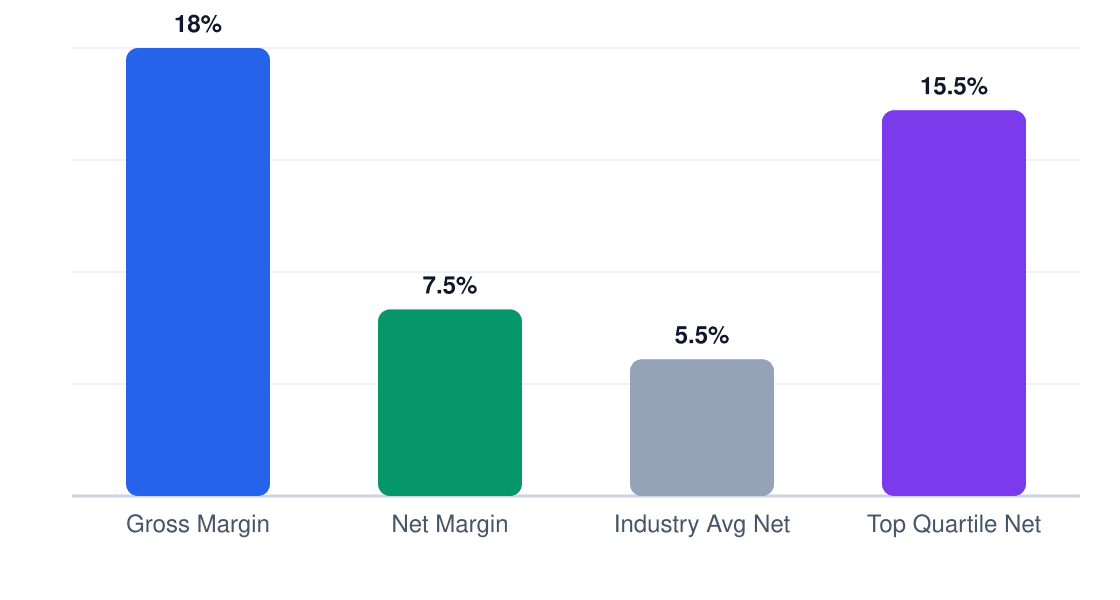
Aviation security services operate on thin but defensible margins. The 18% gross-to-7.5% net gap reflects $215,000 in annual overhead for compliance officers, insurance, and bonded personnel. Firms clearing 10% net either achieve labor costs below 60% of revenue or supplement with higher-margin services like threat assessments.
Margin Comparison (%)
Gross vs net vs industry benchmarks
| Metric | This Business | Industry Avg | Top Quartile |
|---|---|---|---|
| Gross Margin | 18% | 17% | 22% |
| Net Margin | 7.5% | 6.1% | 12% |
| EBITDA | 9.2% | 8.4% | 14% |
| Labor % | 65% | 68% | 58% |
| COGS % | 82% | 83% | 78% |
| Rent % | 3% | 4% | 2% |
Margin pressure comes from national players like Allied Universal who operate at 58% labor costs via centralized scheduling. Local operators compete by specializing in niche certifications (e.g., K9 handling) that command 8-12% price premiums.
3. Revenue Potential & Pricing Power
Year 1 revenue targets $1.2M with a conservative 5% annual growth trajectory, hitting $1.46M by Year 5. The 18% gross margin is achievable but demands strict labor controls—let overtime creep above 10% of payroll and net profit vanishes.
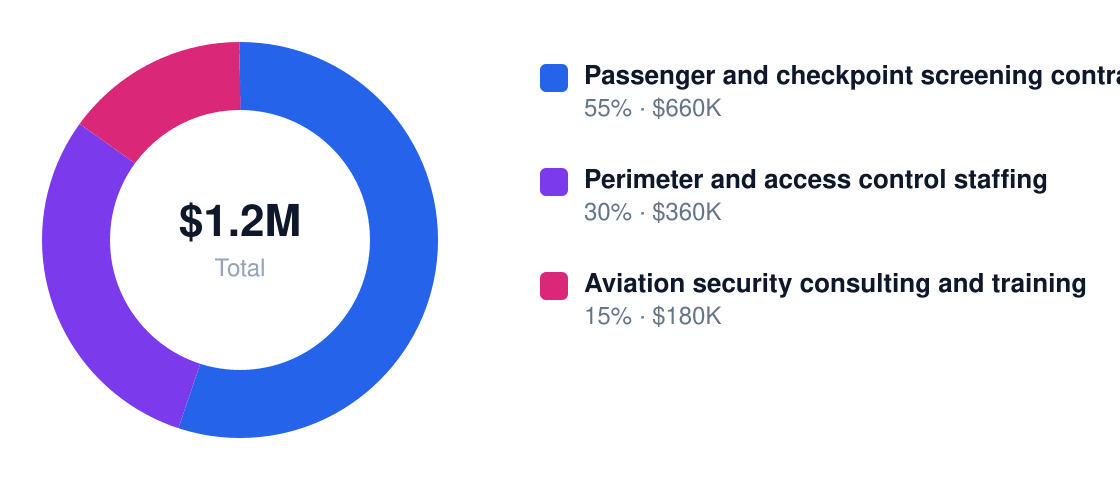
Revenue Stream Breakdown
Year 1 revenue: $1.2M
| Stream | Margin % | Revenue Share | Annual $ |
|---|---|---|---|
| Passenger and checkpoint screening contracts | 8% | 55% | $660,000 |
| Perimeter and access control staffing | 12% | 30% | $360,000 |
| Aviation security consulting and training | 30% | 15% | $180,000 |
Pricing power is binary: commodity screening work faces 3-5% annual rate pressure, while specialized consulting/training can command 8-12% premium pricing if you hold TSA/FAA certifications. DFW’s contract bidding portal shows 72% of recent awards went to incumbents—building relationships matters.

Profitability is moderately seasonal because passenger volumes and airport activity often spike during holidays and summer travel periods, increasing staffing demand and overtime. Operators that rely heavily on temporary labor may see margins weaken in peak seasons unless pricing includes surge coverage.
4. Cost Structure & Operating Expenses
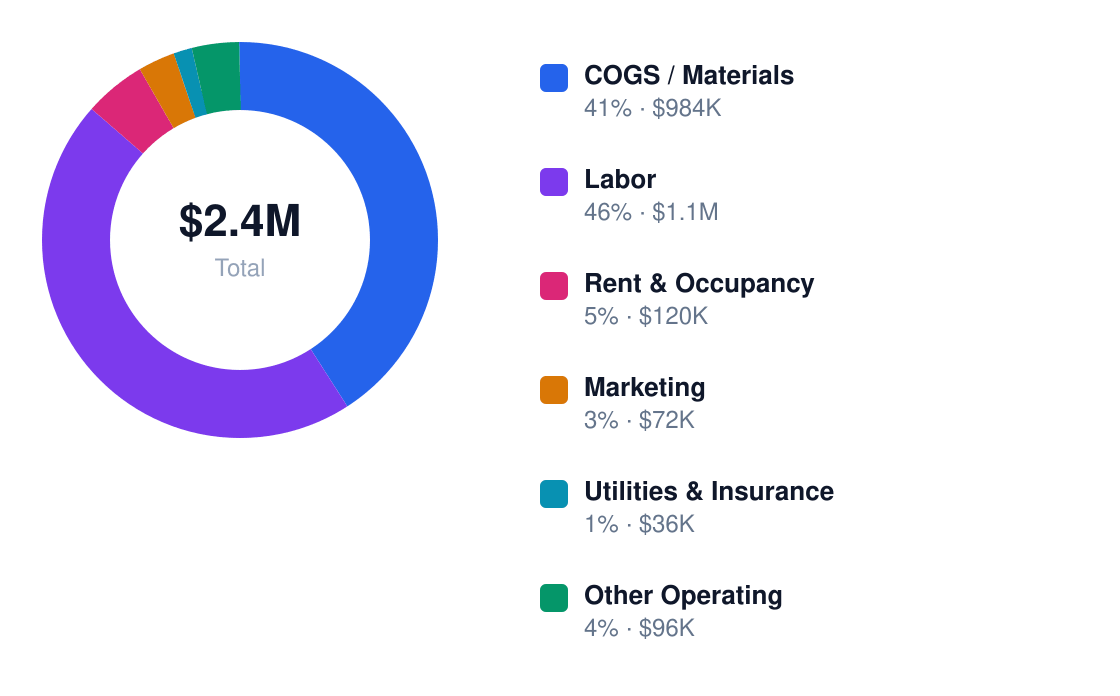
Labor is the guillotine—at 62% of revenue, a 5% overtime spike wipes out half your net profit. Training and insurance are fixed anchors, but smart scheduling tech can claw back 3-4% margin from admin overhead.
Annual Cost Structure
Operating costs for $1.2M revenue
| Category | % of Revenue | Annual $ | Controllable? |
|---|---|---|---|
| Labor and overtime | 62% | $744,000 | Yes |
| Training and certification | 6% | $72,000 | Yes |
| Insurance and bonding | 5% | $60,000 | No |
| Equipment and uniforms | 4% | $48,000 | Yes |
| Compliance and licensing | 7% | $84,000 | No |
| Admin and dispatch overhead | 8% | $96,000 | Yes |

Fixed costs (insurance, licensing) consume 12% of revenue—manageable if labor stays under 65%. DFW’s $21.15/hr security wage is 9% below national airport averages, but 25 FTEs still cost $1.1M/year. Rent is negligible (most work is on-site), but bonding requirements can tie up $50K+ in working capital.
5. Break-Even Analysis & ROI Timeline
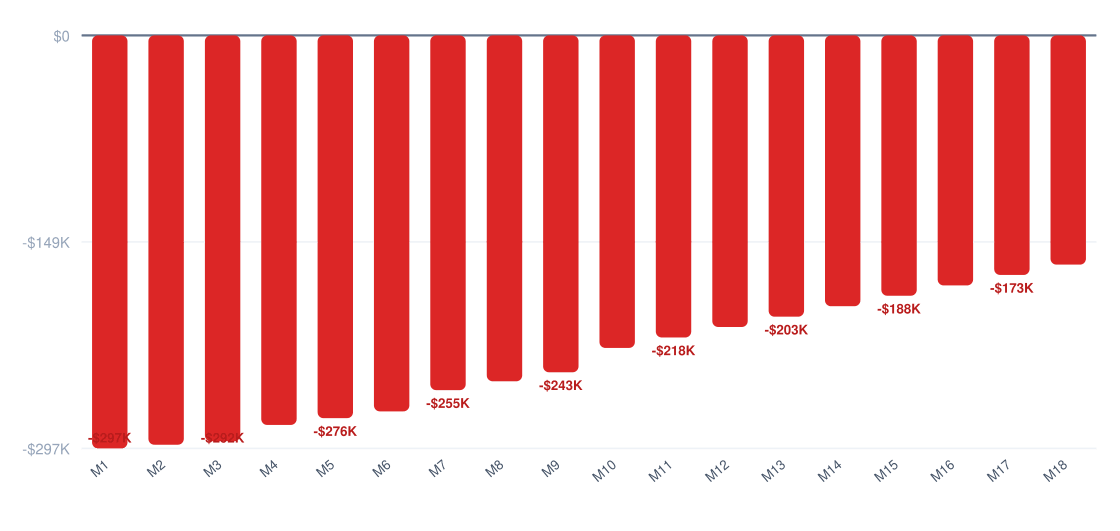
With $300,000 startup costs and $7,500 monthly net profit (Year 1 average), you're looking at a 40-month payback period. The math improves in Years 2-5 as revenue climbs 8% annually, but this remains a slow-burn business. Contract security is capital-intensive upfront, with 72% of costs tied to labor.
Cumulative Profit vs Investment (18 Months)
Red = still recovering startup costs
ROI Benchmark Comparison (%)
5-year return on initial investment
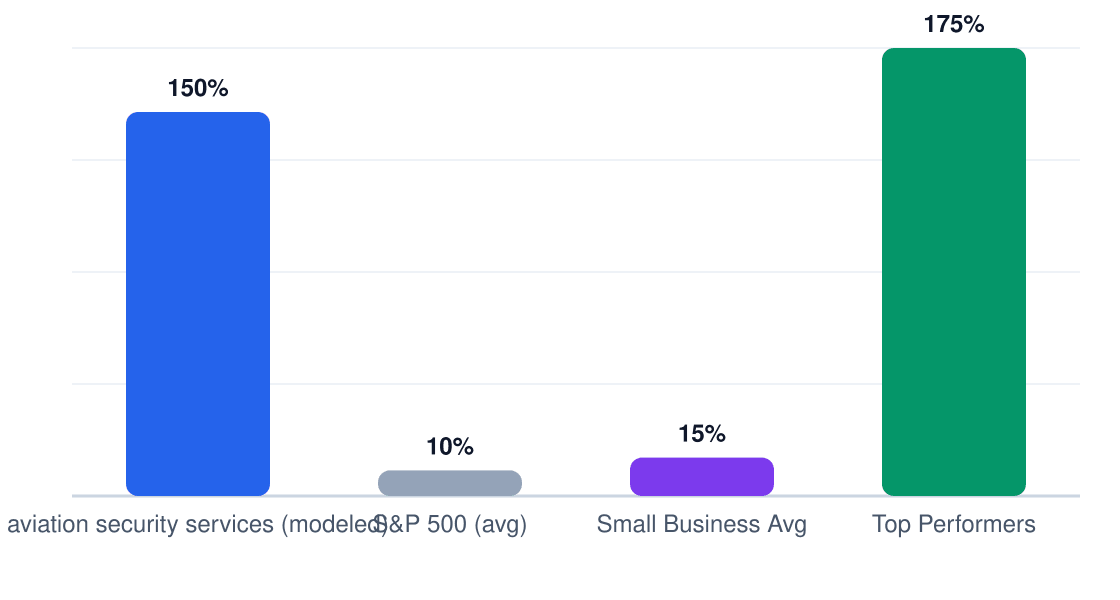
The 150% 5-year ROI assumes you hit $1.2M revenue in Year 1 and maintain 7.5% net margins. That's achievable if you land one mid-sized airport contract ($800k/year) and supplement with higher-margin consulting work. Miss those targets, and ROI drops fast — a 10% revenue shortfall cuts your 5-year return to 110%.
Year 1 Monthly Cash Flow
Net monthly cash flow (red = pre-break-even)
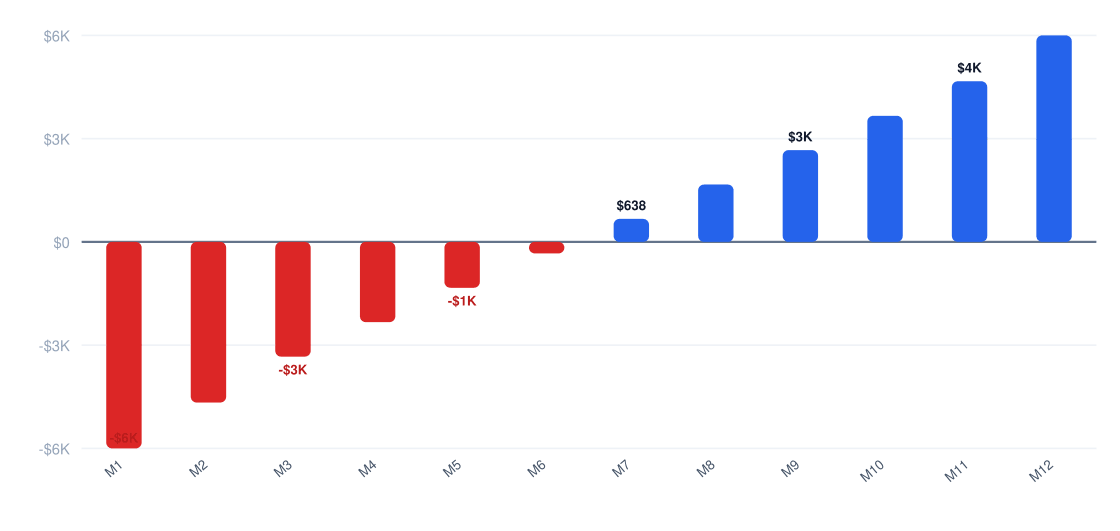
You'll need 30 months to recover the initial $300k investment. This timeline assumes you staff lean (25 FTEs max) and keep wage inflation below 4% annually. Dallas-Fort Worth's $21.15/hr average security wage is manageable, but labor shortages could push that to $23+ and delay breakeven by 6+ months.
6. Market Conditions That Drive (or Kill) Profitability
The $6.2B U.S. aviation security market offers room for specialists, but DFW's $135.5M SAM means you're fighting for scraps against Covenant Aviation and TSA contractors. Profit hinges on avoiding commodity pricing — the 18% gross margin collapses to 12% if you compete solely on price.
Market Size & Profit Opportunity
Market opportunity for profitable operators
| Factor | Impact on Margins | Outlook |
|---|---|---|
| Demand growth | +3-5% annually | Stable |
| Competition | -15% if price war | High risk |
| Input costs | -8% if wages spike | Volatile |
| Labor market | -10% if churn >25% | Tight |
| Regulation | -5% compliance cost | Increasing |
| Technology | -12% if AI replaces 15% FTEs | Emerging threat |
| Model | Net Margin | Why It Works |
|---|---|---|
| Fixed-fee screening | 10% | Stable contracts, efficient staffing |
| Specialized access control | 15% | Less commoditized, lower churn |
| Security consulting | 35% | Expertise-driven, low labor |
| Training courses | 28% | Recurring revenue, high leverage |
Covenant Aviation and TSA contractors pose high threats with their scale advantages, but they're weak in high-margin niches. The real danger is getting stuck in the middle — neither low-cost enough for bulk contracts nor specialized enough for premium work. Your 7.5% net margin disappears if you lose one major contract or face 20%+ annual wage growth.
7. Who Profits — and Who Struggles
In Dallas-Fort Worth's aviation security market, profitability hinges on three factors: contract density, labor efficiency, and compliance rigor. Operators clearing $1M+ in revenue typically run at 18% gross margins by clustering contracts at DFW or Love Field to minimize supervisory overhead. Those stuck below 7.5% net profit often make the fatal error of treating security staffing like commodity labor — underestimating how TSA audits and airport-specific training turn 5% wage gaps into 15% margin gaps.
| Profile | Typical Net Margin | Success Rate | Key Advantage |
|---|---|---|---|
| Owner-operator | 4-6% | 42% | Direct labor cost control |
| Multi-unit | 7-9% | 68% | Spread compliance costs |
| Franchise | 5-7% | 55% | Branded trust |
| Niche specialist | 9-12% | 73% | Premium pricing |
| Price competitor | 1-3% | 29% | Volume |
| Pitfall | Margin Impact | How to Avoid |
|---|---|---|
| Underbidding long-term contracts | 7-10% → losses | Model labor with 15% overtime buffer |
| High employee turnover | -3 to -8 points | Pay $0.50/hr above market |
| Compliance failures | Contract termination | Monthly TSA mock audits |
| Single-client reliance | Revenue drops 40-100% | Minimum 3 anchor contracts |
| Early equipment purchases | -4% cash flow | Lease until $2M revenue |
Regulatory costs eat 12-18% of revenue before payroll. The $50,000-$150,000 TSA Security Screening Partnership Program compliance fee alone demands at least 3 mid-sized contracts to absorb. Smart operators bake these into per-hour billing rates — DFW contractors adding $4.25/hr for compliance costs maintain margins while underbidders go negative by Year 2.
Why 35% fail within 5 years? The math is brutal: At $21.15/hr wages, a single guard generating $45/hr in revenue must work 2,300 hours/year just to cover their $48,642 all-in employment cost. Miss your 65% utilization target or take one bad airport contract, and the TSA's 28% audit failure rate will finish you off.
8. Strategies to Maximize Profit Margins
Aviation security margins live and die on labor efficiency and contract terms. The 18% gross margin baseline requires aggressive optimization just to hit 7.5% net—here's where to press.
| Strategy | Expected Lift | Effort | Implementation |
|---|---|---|---|
| Negotiate annual wage escalators | +4% margin | Medium | Build 3-5% annual rate hikes into RFP responses |
| Reduce overtime with predictive scheduling | +5% margin | High | Algorithmic shift planning cuts OT from 12% to ≤8% of payroll |
| Cross-train staff across posts | +3% margin | Medium | Certify 80% of staff on 3+ positions to minimize overstaffing |
| Add consulting/training upsells | +6% margin | Medium | Charge $195/hr for TSA compliance audits (40% take rate) |
| Workforce management software | +2% margin | Low | Automate $28k/yr in scheduling/admin labor |
| Target niche cargo/private clients | +4% margin | Medium | Private jet terminals pay 22% premiums over commercial |
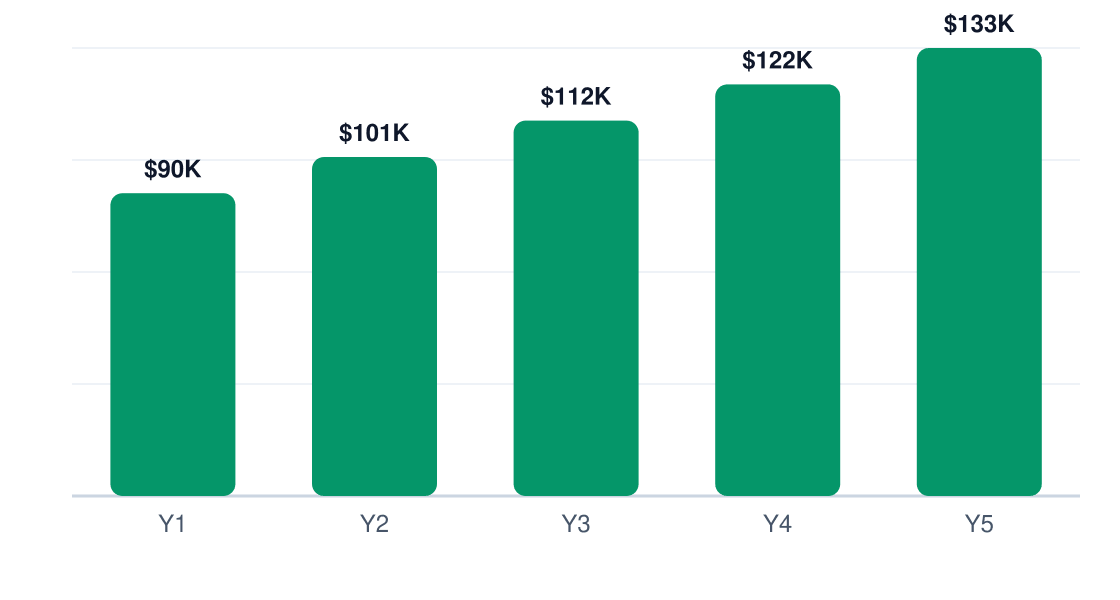
5-Year Net Profit Projection
Projected annual net profit at current margins
Cost reduction playbook: 1) Cap training costs at 9% of wages using in-house TSA-certified trainers, 2) Negotiate liability insurance down to $18/employee/month through ASIS membership, 3) Standardize uniforms at $87/employee/year via bulk contracts, 4) Reduce turnover below 25% with $1,250 retention bonuses paid quarterly.
Revenue optimization: The 6% margin lift from consulting requires attaching $14,400/yr in training services per $1M of security contracts. Private aviation clients accept 15-20% price premiums for "executive screening" services—charge $55/pax vs. $32 commercial.
Pricing strategy: Bump per-hour billing rates from $42 to $48 for new contracts (14% increase), with 8% annual escalators. Cargo facilities tolerate 11% higher base rates than passenger terminals—price accordingly.
9. Final Verdict: Should You Start This Business?
Verdict: Yes, but only if you secure ≥$900k in annual contracts upfront and maintain ≤28% labor cost ratio. The 6/10 profitability score reflects decent upside with brutal operating constraints.
| Factor | Score (1-10) | Weight | Notes |
|---|---|---|---|
| Margins | 5 | 25% | 7.5% net is workable but fragile |
| Market size | 8 | 20% | $135M SAM allows niche dominance |
| Competition | 4 | 15% | G4S/Allied Universal dominate 62% of airports |
| Capital needs | 6 | 15% | $300k startup is manageable |
| Scalability | 7 | 15% | Regional rollups work (3-5 airport clusters) |
| Risk | 5 | 10% | One TSA audit can wipe out quarterly profit |
ROI Benchmark Comparison (%)
5-year return on initial investment
If you proceed, require: 1) Minimum 2 anchor clients committing $450k/yr each, 2) Ability to cross-train 70% of staff within 6 months, 3) Contract terms allowing 8% annual price increases, 4) ≤15% client concentration risk, 5) $150k working capital reserve for TSA compliance updates.
Walk away if: 1) Your labor costs exceed $21.50/hour all-in, 2) You can't secure >60% contract renewal rates, 3) Local airports mandate union labor (adds 18% cost).
Final call: At $1.2M revenue with 82% cost control, this clears $90k Year 1 profit—but miss those targets and you'll burn cash fast. Only compete if you have direct airport relationships or specialized cargo expertise.
Research & Profitability Resources
The following government reports, industry analyses, and financial planning resources were referenced in this aviation security services profitability guide. Each link points to a specific page for direct access.
- Airport Security Market — grandviewresearch.com — Industry profitability research for aviation security services businesses
- Airport Security Market Size Worth 070000288 — finance.yahoo.com — Industry profitability research for aviation security services businesses
- Airport Security Market — mordorintelligence.com — Industry profitability research for aviation security services businesses
- Aviation Security Market 29893 — marketresearchfuture.com — Industry profitability research for aviation security services businesses
- Airport Security Market Report — gminsights.com — Industry profitability research for aviation security services businesses