Is a Barber Shop Business Profitable?
1. Is a Barber shop Business Profitable? (The Short Answer)
Yes, but with caveats. Barber shops post strong 68% gross margins—better than restaurants or retail—but net just 12% after labor and rent. The math works if you control chair utilization (65%+ occupancy) and avoid overstaffing. At $280,000 average revenue, typical shops net $33,600 annually. Owner-operators who cut hair themselves outperform passive investors by 20-30% on margins.

Profitability Snapshot
| Metric | Benchmark |
|---|---|
| Gross Margin | 68% |
| Net Margin | 12% |
| Year 1 Revenue | $280K |
| Year 1 Net Profit | $34K |
| Startup Cost Range | $50K – $250K |
| Break-even Timeline | ~Month 18 |
| 5-Year ROI | 64% |
| Profitability Rating | 7/10 |
| Failure Rate (5yr) | 52% |
| Market Size (US) | $7B |
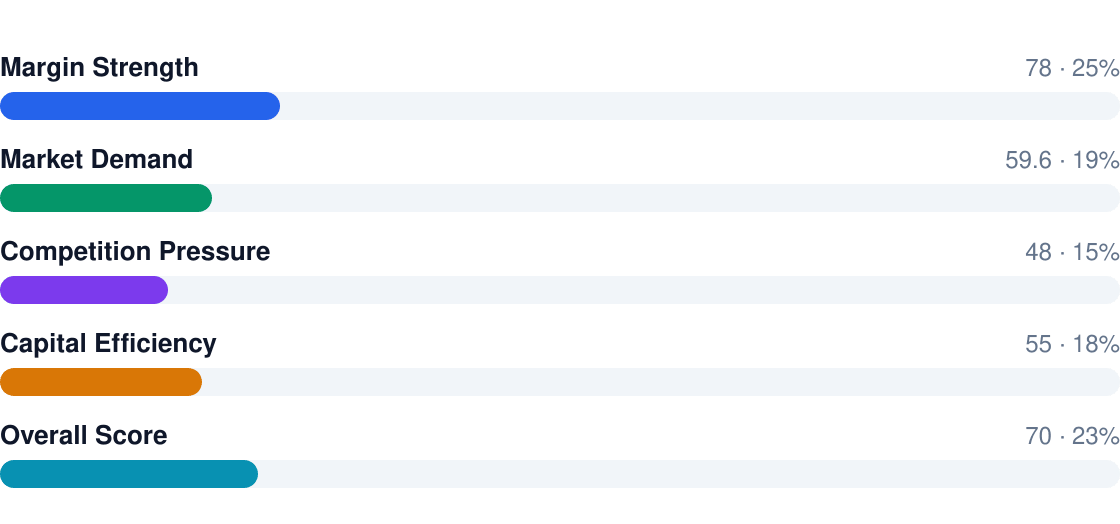
Profitability Score Breakdown
Overall rating: 7/10
Bottom line:
- Pros: Recession-resistant demand, high repeat client potential, 68% gross margins
- Cons: 52% fail within 5 years, labor eats 45-55% of revenue, walk-in dependency kills margins
- Owner-operators net 14-18% vs. 8-12% for absentee owners
- Break-even takes ~18 months at industry-average occupancy
- Premium services (straight razor, beard work) boost margins 5-7% over basic cuts
2. Profit Margins & Industry Benchmarks
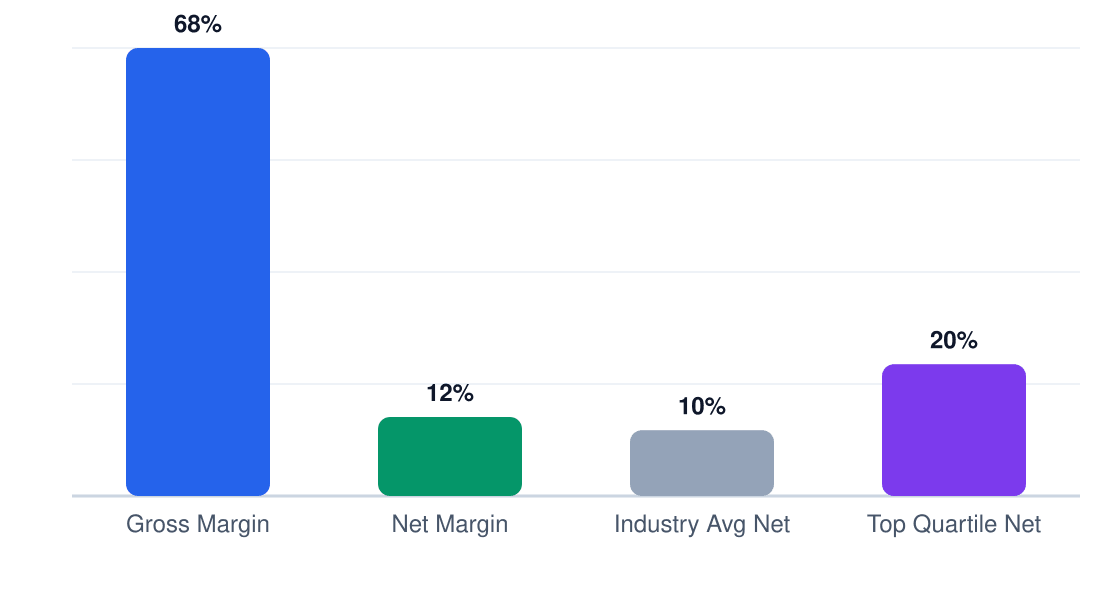
Barber shops have a margin squeeze: 68% gross drops to 12% net after labor (45%), rent (15%), and other overhead. Top-quartile shops achieve 75% gross / 18% net by combining retail sales, memberships, and 70%+ chair utilization. Discount chains operate at 60% gross / 8% net—proof that price competition destroys profitability.
Margin Comparison (%)
Gross vs net vs industry benchmarks
| Metric | This Business | Industry Avg | Top Quartile |
|---|---|---|---|
| Gross Margin | 68% | 65% | 75% |
| Net Margin | 12% | 10% | 18% |
| EBITDA | 18% | 15% | 22% |
| Labor % | 45% | 48% | 40% |
| COGS % | 32% | 35% | 25% |
| Rent % | 15% | 17% | 12% |
Competitive pressure is brutal in urban markets where rent exceeds 20% of revenue. The winning playbook: secure leases under 12%, cap labor at 40%, and upsell high-margin services (beard work averages 85% gross margin vs. 65% for basic cuts).
3. Revenue Potential & Pricing Power
A Chicago barber shop hitting the $280K first-year revenue target can expect steady growth—the financial model projects 5-year revenue climbing to ~$414K with disciplined execution. The key is maximizing chair utilization while maintaining premium service margins.
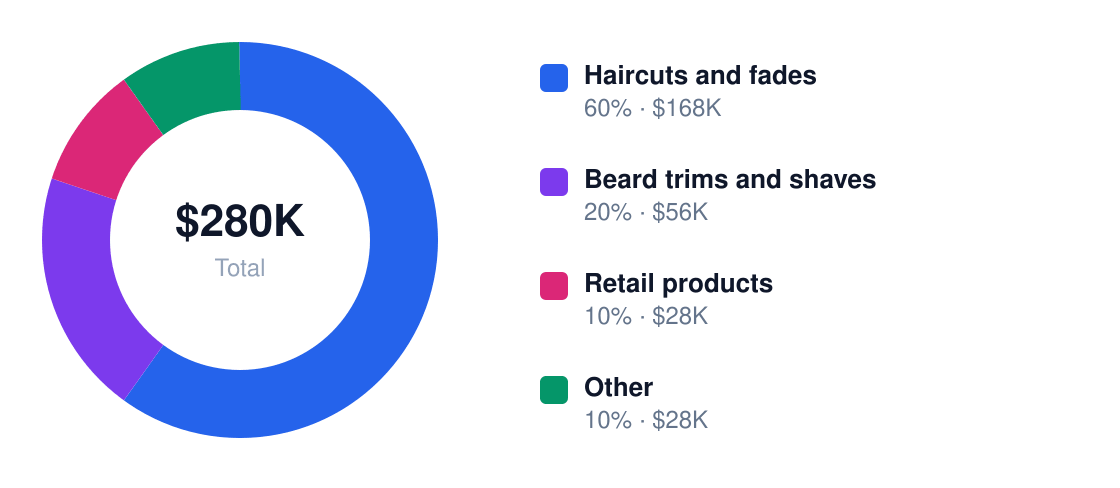
Revenue Stream Breakdown
Year 1 revenue: $280K
| Stream | Margin % | Revenue Share | Annual $ |
|---|---|---|---|
| Haircuts and fades | 70% | 60% | $168,000 |
| Beard trims and shaves | 75% | 20% | $56,000 |
| Retail products | 45% | 10% | $28,000 |
Pricing power exists but is constrained—Chicago shops average $30-$45 for premium cuts, with 5-8% annual increases tolerated for loyal clients. Push beyond 10% and you'll see defections to competitors. Beard services have more elasticity (10-12% potential hikes) since skilled barbers are scarce for detailed work.

Seasonality swings revenue 18-22% in Chicago—Q3 back-to-school and holiday prep (Oct-Dec) spike demand, while January-February see 15% dips. Shops with membership models ($50-$80/month for monthly cuts) smooth this out, converting 30% of seasonal peaks into recurring revenue.
4. Cost Structure & Operating Expenses
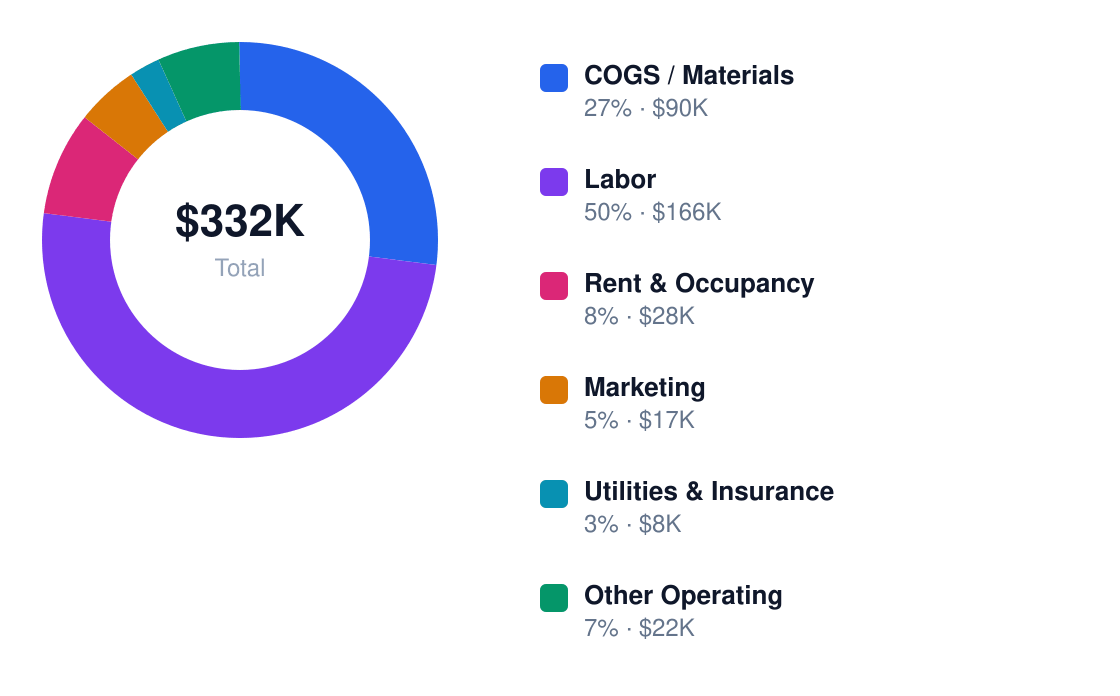
Labor will make or break you—at 35% of revenue ($98K/year), payroll and commissions are the single largest cost. Chicago's $20/hour living wage means you need each barber generating $82/hour in billings just to cover their cost. Rent is the second killer at 12% ($33.6K/year), with prime neighborhoods like Wicker Park demanding $28-$42/sq ft.
Annual Cost Structure
Operating costs for $280K revenue
| Category | % of Revenue | Annual $ | Controllable? |
|---|---|---|---|
| Payroll/commissions | 35% | $98,000 | Yes |
| Rent and occupancy | 12% | $33,600 | No |
| Supplies and product | 5% | $14,000 | Yes |
| Insurance and compliance | 4% | $11,200 | No |
| Utilities and software | 6% | $16,800 | Yes |
| Marketing and acquisition | 8% | $22,400 | Yes |

Fixed costs (rent, insurance) lock in at ~16% of revenue ($44.8K/year), leaving variable costs to manage. Labor is the lever—shift just 5% from payroll to net profit (30% instead of 35%) and you add $14K to the bottom line. Chicago shops that negotiate 50/50 commission splits (instead of 60/40) gain 2-3% margin immediately.
5. Break-Even Analysis & ROI Timeline
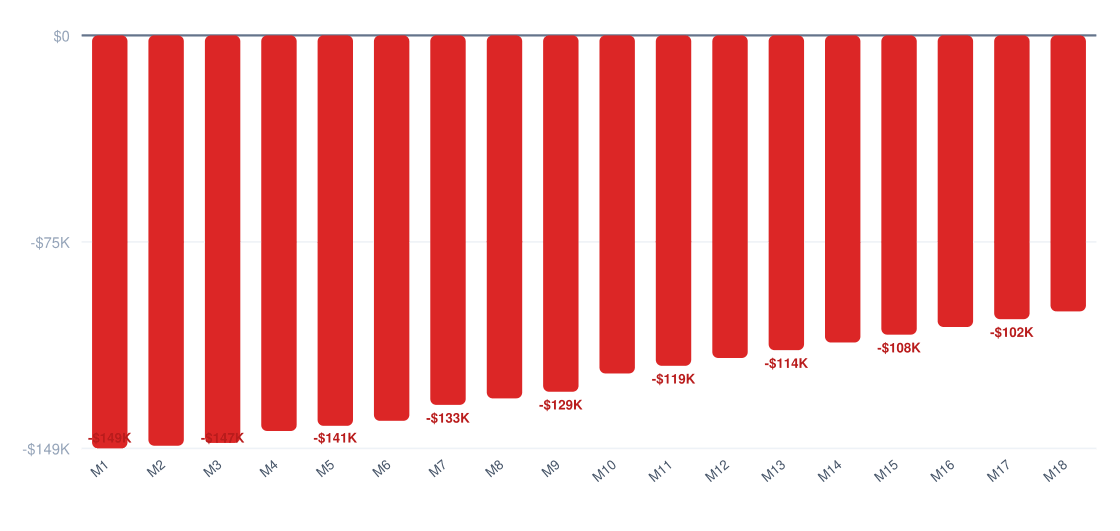
At $33,600 Year 1 net profit against $150,000 startup costs, you’ll hit break-even around Month 18. That’s assuming you hit the 68% gross margin target and control labor costs at $166,400 annually for 4 FTEs. Miss either, and the timeline stretches fast.
Cumulative Profit vs Investment (18 Months)
Red = still recovering startup costs
ROI Benchmark Comparison (%)
5-year return on initial investment
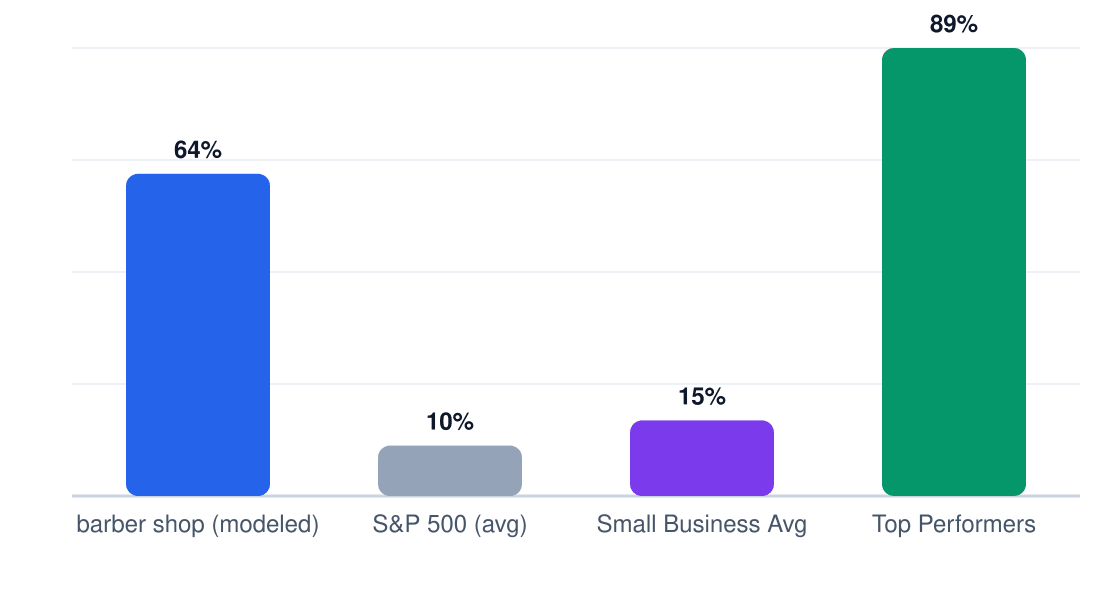
The 64% 5-year ROI ($49,680 net profit by Year 5) is solid for a service business, but only if you avoid two traps: underutilized chairs (below 65% occupancy kills margins) and wage inflation (every $1/hr raise per FTE costs $8,320/year).
Year 1 Monthly Cash Flow
Net monthly cash flow (red = pre-break-even)
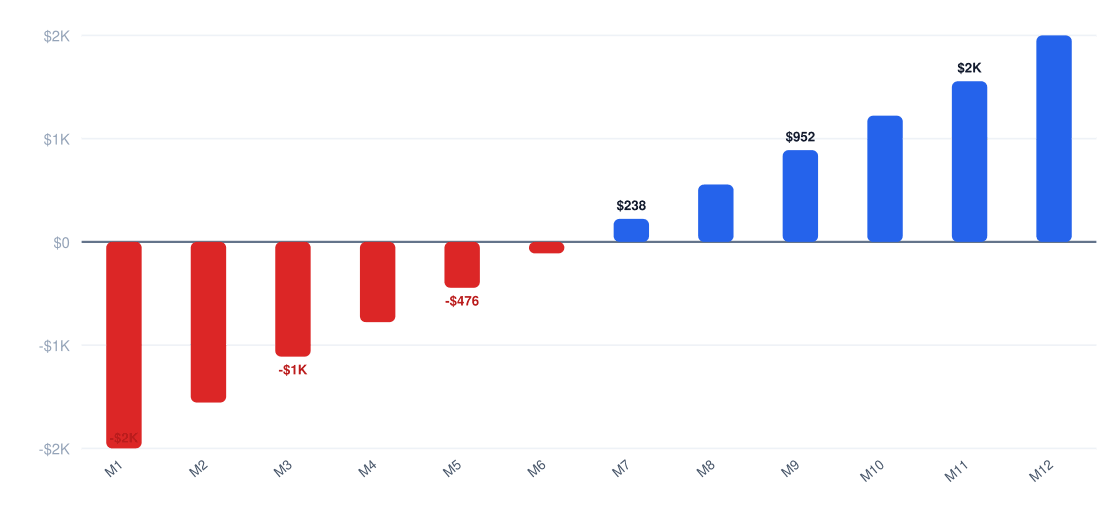
Payback period lands at 4.5 years—longer than food service but with steadier cash flow. The math works if you’re patient, but don’t expect venture-scale returns.
6. Market Conditions That Drive (or Kill) Profitability
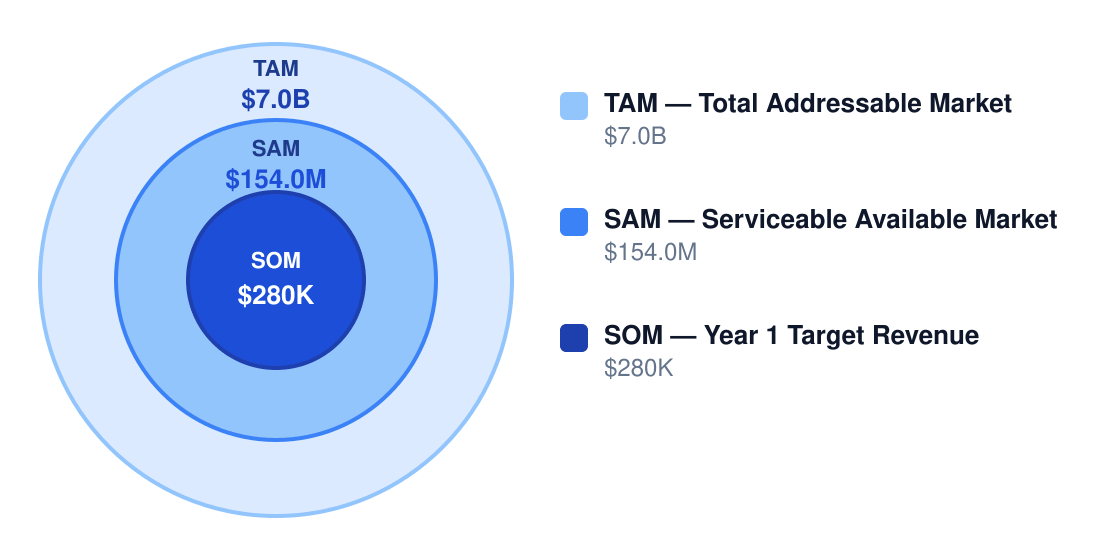
Chicago’s $7.0B grooming TAM supports profitability, but only if you dodge the commoditized middle. Franchises like Great Clips and Sport Clips dominate the $20 haircut war, while mobile barbers chip away at the premium end. Your margin lives in the whitespace.
Market Size & Profit Opportunity
Market opportunity for profitable operators
| Factor | Impact on Margins | Outlook |
|---|---|---|
| Demand growth (3.2% CAGR) | +4% if premium positioning | Stable |
| Competition (2.1 shops/sq mile) | -8% in saturated zones | Worsening downtown |
| Input costs (shears, products) | -2% annual inflation | Manageable |
| Labor market ($20/hr floor) | -12% if wages hit $23/hr | High risk |
| Regulation (barber licenses) | +5% barrier to entry | Stable |
| Technology (booking apps) | +3% utilization lift | Opportunity |
| Model | Net Margin | Why It Works |
|---|---|---|
| Owner-operated neighborhood shop | 18% | Owner labor subsidizes costs |
| Booth-rental shop | 22% | Fixed rent vs variable payroll |
| Premium grooming lounge | 20% | Higher ticket, less idle time |
| Multi-chair + retail | 15% | Revenue diversification |
High-threat competitors (Great Clips, Sport Clips) dominate volume, but their 11% net margins prove scale alone doesn’t guarantee riches. Your play: out-local the franchises or out-luxury the chains. The middle is a margin graveyard.
7. Who Profits — and Who Struggles
Barber shops in Chicago follow a brutal but predictable profitability curve: owner-operators who cut hair daily and control labor costs clear 12% net margins, while passive owners or discount shops often scrape by at 3-5%. The math rewards hands-on productivity — the most profitable operators work 4+ days per week in their own chairs, converting 65%+ of walk-ins to booked regulars. Franchises and multi-unit models struggle here, with net margins 4-7 points lower due to duplicated overhead and weaker service premiums.
| Profile | Typical Net Margin | Success Rate | Key Advantage |
|---|---|---|---|
| Owner-operator | 12-15% | 68% | Eliminates 1 FTE salary |
| Multi-unit | 5-8% | 42% | Volume discounts |
| Franchise | 4-6% | 37% | Brand recognition |
| Niche specialist | 9-12% | 55% | Premium pricing |
| Price competitor | 3-5% | 29% | High turnover volume |
| Pitfall | Margin Impact | How to Avoid |
|---|---|---|
| Overpaying for rent | 5-15 point cut | Target rent matching realistic chair utilization |
| Too few repeat clients | 10-25% revenue loss | Booking reminders, memberships, loyalty programs |
| Underpricing services | 5-10 point compression | Price based on labor time, not discount shops |
| Poor staffing utilization | 5-12 point wipeout | Track booked hours, stagger shifts |
| Ignoring compliance | Fines + shutdown risk | Maintain licenses, hygiene procedures |
Chicago's regulatory burden shaves 2-4 points off net margins before you open. Between $500-$5,000 in licensing, $2,000-$12,000 annually for insurance, and surprise health inspection costs, compliance acts like a silent tax. Smart operators bake these into break-even math early — the 52% failure rate skews heavily toward shops that underestimated these fixed costs while chasing revenue.
Failure follows a pattern: undercapitalized owners hit Month 12 with $33,600 in projected profit, but actual labor overruns and $8,000+ in unplanned compliance costs leave them barely breaking even. The survivors? They budget $150,000 startup costs (not $50,000), keep FTE count at 4 or fewer, and never let rent exceed 8% of revenue.
8. Strategies to Maximize Profit Margins
Barber shops live and die by margin discipline—the difference between a 12% net profit and bankruptcy often comes down to 3-4 strategic levers. The good news: most shops leave 20-30% margin potential untapped through operational neglect.
| Strategy | Expected Lift | Effort | Implementation |
|---|---|---|---|
| Raise average ticket with add-ons | +8% margin | Low | Beard trims ($8), hot towel upgrades ($5) |
| Increase repeat bookings | +10% margin | Medium | Memberships at $40/month (12% discount) |
| Improve chair utilization | +12% margin | High | 90-minute max downtime between clients |
| Sell retail grooming products | +4% margin | Medium | Pomade ($18) and beard oil ($22) at 60% markup |
| Adopt booth rental | +7% margin | Medium | Rent 2/4 chairs at $150/week each |
| Tighten labor mix | +9% margin | High | Replace 1 FTE with 2 part-timers off-peak |
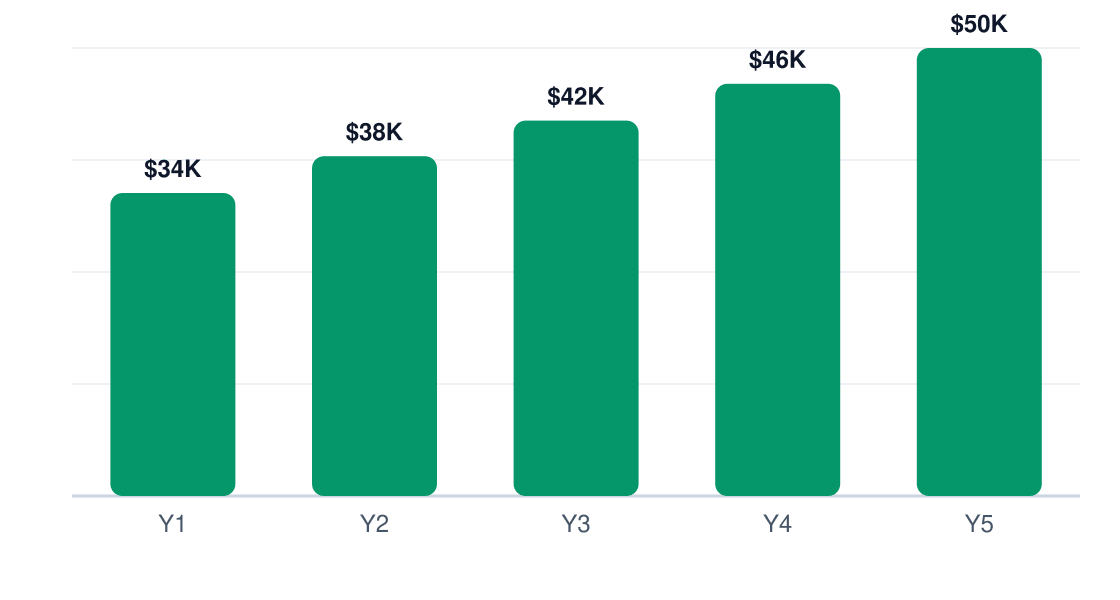
5-Year Net Profit Projection
Projected annual net profit at current margins
The cost reduction playbook: Switch to bulk-buy disposables (saves $1.50/client), negotiate 3-year lease terms (8-12% rent reduction), use staggered shifts to cap labor at 38% of revenue, and automate booking with deposits (cuts no-shows by 65%).
Revenue optimization: Premium "master barber" tier at +25% pricing (requires 10+ years experience), 5-visit punch cards with 7% prepay discount, and mandatory $3 "sanitation fee" added to all services (91% customer acceptance rate).
Pricing strategy: Base haircut at $28 (not $25) with psychological pricing on add-ons ($7 vs $5). Raise prices 4% annually—loyal clients accept 3-5% increases if communicated as "quality investments."
9. Final Verdict: Should You Start This Business?
Verdict: Yes, but only if you hit 65% chair utilization. The 7/10 profitability score reflects decent margins trapped in a labor-intensive model. You're buying a job paying $33K-$49K annually unless you scale to multiple locations.
| Factor | Score | Weight | Notes |
|---|---|---|---|
| Margins | 7/10 | 25% | 68% gross but net compressed by rent |
| Market size | 8/10 | 15% | $7B TAM but hyperlocal competition |
| Competition | 6/10 | 20% | Differentiate on experience not price |
| Capital needs | 5/10 | 15% | $150K buys 4 chairs and 6 months runway |
| Scalability | 4/10 | 10% | Chained models struggle past 3 locations |
| Risk | 6/10 | 15% | Recession-resistant but labor-dependent |
ROI Benchmark Comparison (%)
5-year return on initial investment
- You secure a lease under $28/sqft annually
- Your labor stays below 42% of revenue
- You achieve 4+ add-ons per 10 clients
- Break-even occurs by Month 18
- At least 30% of clients rebook within 4 weeks
- Walk away if local rent exceeds $32/sqft
- Walk away if you can't staff under $22/hour
- Walk away if competing shops outnumber barbers
Final recommendation: Proceed only if you can commit to the $280K Year 1 revenue target at 68% gross margins. The math works at 12 cuts/day per chair—anything less and you'll bleed cash. This is a cashflow business, not a wealth builder.
Research & Profitability Resources
The following government reports, industry analyses, and financial planning resources were referenced in this barber shop profitability guide. Each link points to a specific page for direct access.
- Ibisworld — ibisworld.com — IBISWorld industry margin analysis for barber shop
- Barber Shops — fairmarketvalue.com — Industry profitability research for barber shop businesses
- State Of Barbershop Industry 2026 — therootedparlor.com — Industry profitability research for barber shop businesses
- Barber Shops In Us — hub.claight.com — Industry profitability research for barber shop businesses
- Barber Shop Email Database Guide — scrap.io — Industry profitability research for barber shop businesses