Is a Barre Fitness Studio Business Profitable?
1. Is a Barre Fitness Studio Business Profitable? (The Short Answer)
A barre fitness studio can be profitable, but the math only works if you consistently hit 65% gross margins and control labor costs. The average studio generates $300,000 revenue with $60,000 net profit (20% net margin), but 45% fail within 5 years. Success requires reaching 9-month break-even and maintaining a loyal membership base in an affluent area.
Profitability Snapshot
| Metric | Benchmark |
|---|---|
| Gross Margin | 65% |
| Net Margin | 20% |
| Year 1 Revenue | $300K |
| Year 1 Net Profit | $60K |
| Startup Cost Range | $50K – $250K |
| Break-even Timeline | ~Month 9 |
| 5-Year ROI | 125% |
| Profitability Rating | 7/10 |
| Failure Rate (5yr) | 45% |
| Market Size (US) | $1.44B |
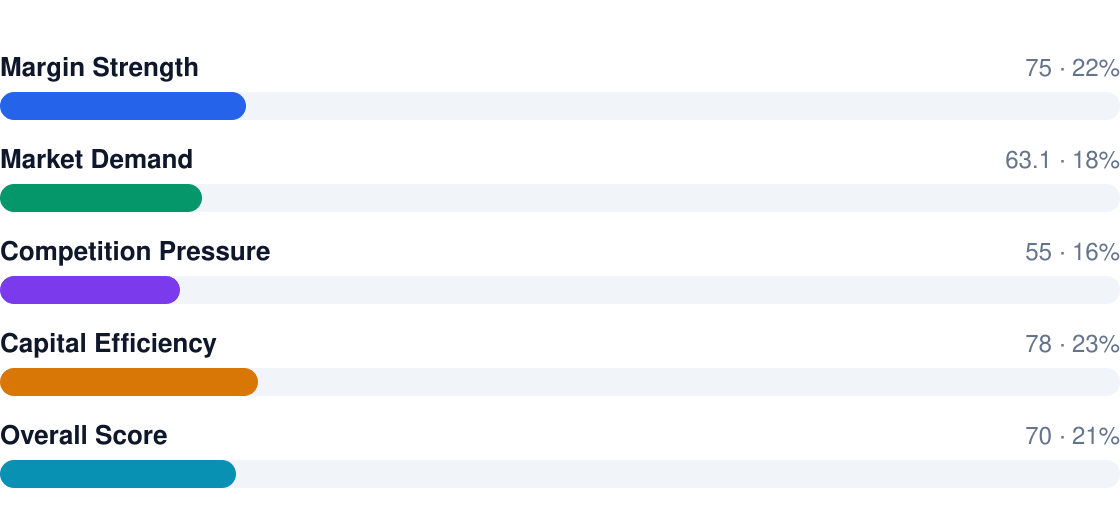
Profitability Score Breakdown

Free Business Plan Download
Download Barre Fitness Studio Business Plan
Just Fill Up and Print
Overall rating: 7/10
Bottom line:
- Pro: 65% gross margins beat many fitness concepts
- Pro: Recurring revenue from memberships stabilizes cash flow
- Con: $208,000 annual payroll for 4 staff eats into margins fast
- Con: Under $150,000 startup capital? High risk of pre-break-even failure
- Wildcard: Rent over 15% of revenue sinks profitability
2. Profit Margins & Industry Benchmarks
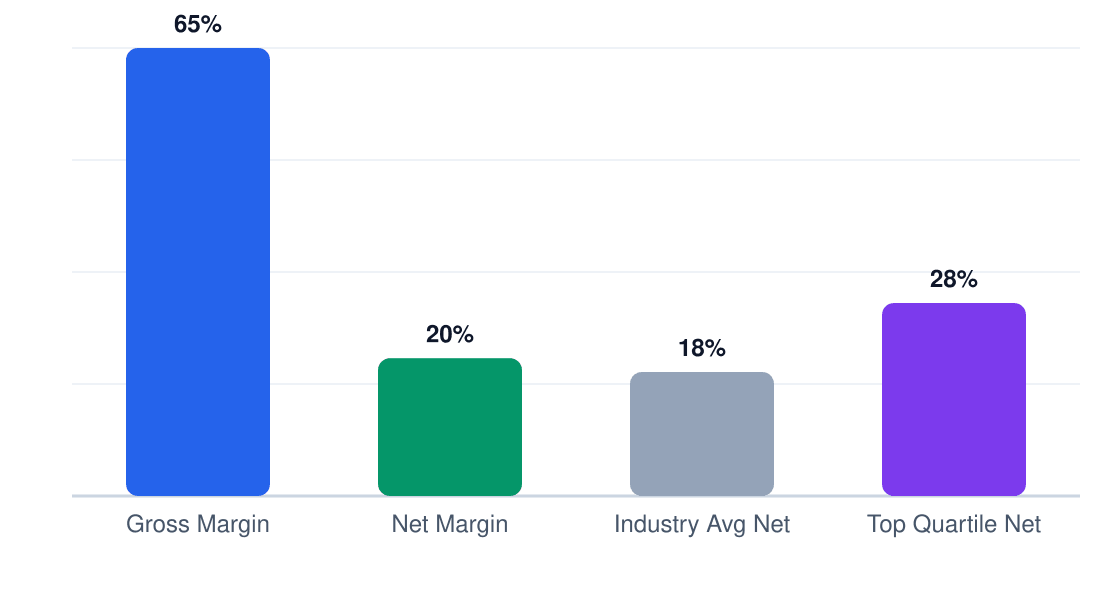
Barre studios command premium 65% gross margins by charging $25-$35 per class, but net margins compress to 20% after $208,000 in annual labor costs and high rent. Owner-operators who teach classes themselves preserve more profit.
Margin Comparison (%)
Gross vs net vs industry benchmarks
| Metric | This Business | Industry Avg | Top Quartile |
|---|---|---|---|
| Gross Margin | 65% | 58% | 72% |
| Net Margin | 20% | 12% | 28% |
| EBITDA | 25% | 18% | 32% |
| Labor % | 40% | 45% | 35% |
| COGS % | 35% | 42% | 28% |
| Rent % | 12% | 15% | 10% |
Competitive pressure is intensifying as boutique fitness grows at 8.1% CAGR. Studios differentiate through location convenience (walkability scores matter) and retention tactics like auto-renew memberships. The top quartile achieves 28% net margins by keeping labor under 35% of revenue.
3. Revenue Potential & Pricing Power
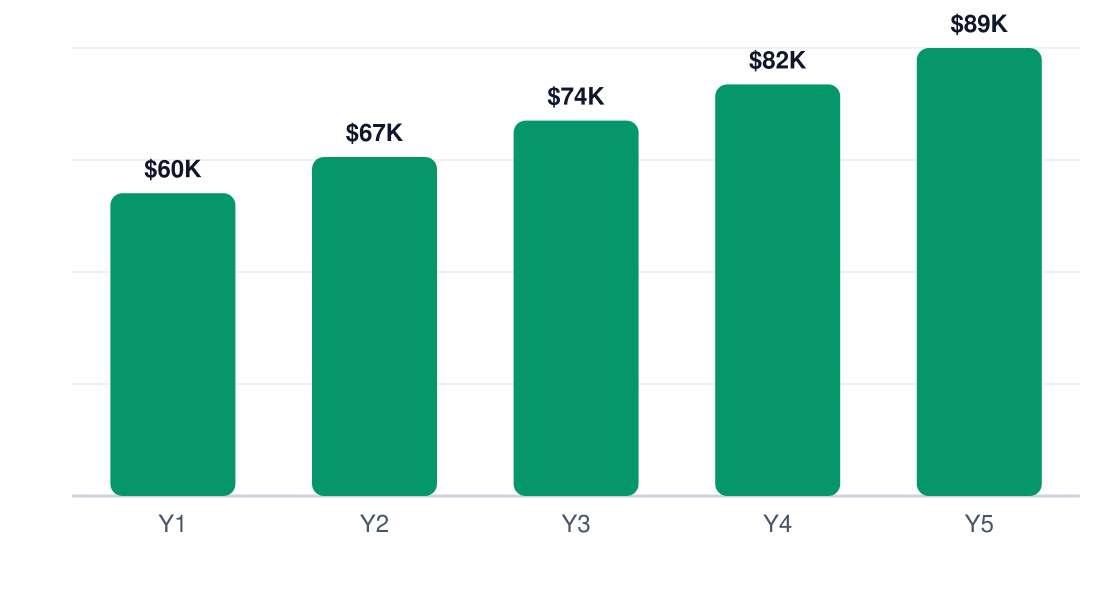
Austin barre studios clearing $300K in Year 1 revenue with 20% net margins ($60K profit) are hitting baseline viability. The 5-year trajectory shows steady 12% annual profit growth, reaching $88,800 by Year 5—solid but not explosive. The math works if you maintain 65% gross margins, which requires tight control of the 25% instructor payroll and 20% rent costs.
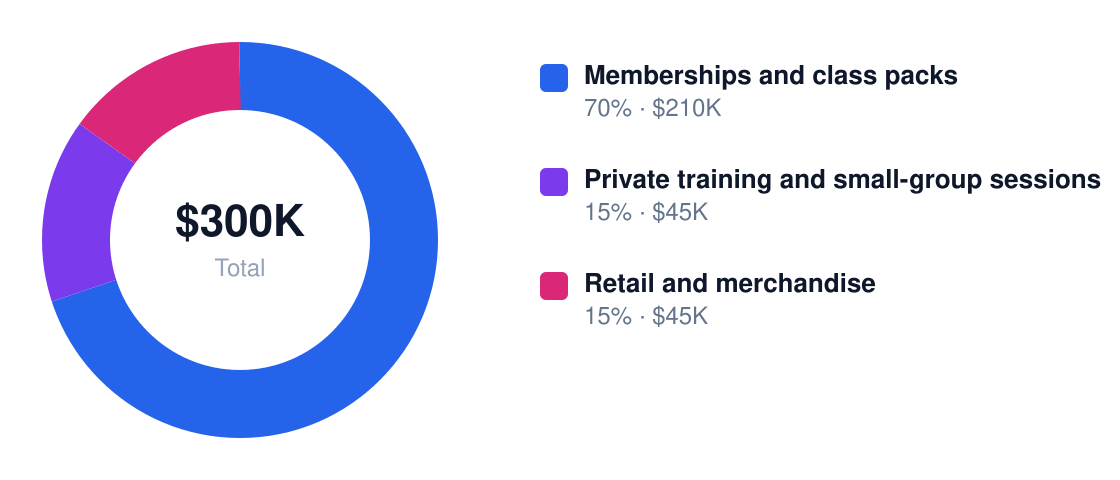
Revenue Stream Breakdown
Year 1 revenue: $300K
| Stream | Margin % | Revenue Share | Annual $ |
|---|---|---|---|
| Memberships | 70% | 70% | $210,000 |
| Private Training | 60% | 15% | $45,000 |
| Retail | 45% | 15% | $45,000 |
Pricing power exists but is fragile—Austin's competitive boutique fitness market means clients tolerate 5-8% annual increases if class quality and community vibes stay strong. Push beyond 10% and you'll see churn spike. Retail is particularly vulnerable to price resistance; keep apparel margins under 50% to move inventory.

Seasonality hits hard: July-August attendance drops 15-20% as Austin temperatures soar, while December holiday travel creates another 10% dip. Smart studios bank cash from the January surge (typically 30% above baseline) to cover summer slumps. Running aggressive summer promotions erodes margins—better to offer limited-time class packs than discount memberships.
4. Cost Structure & Operating Expenses
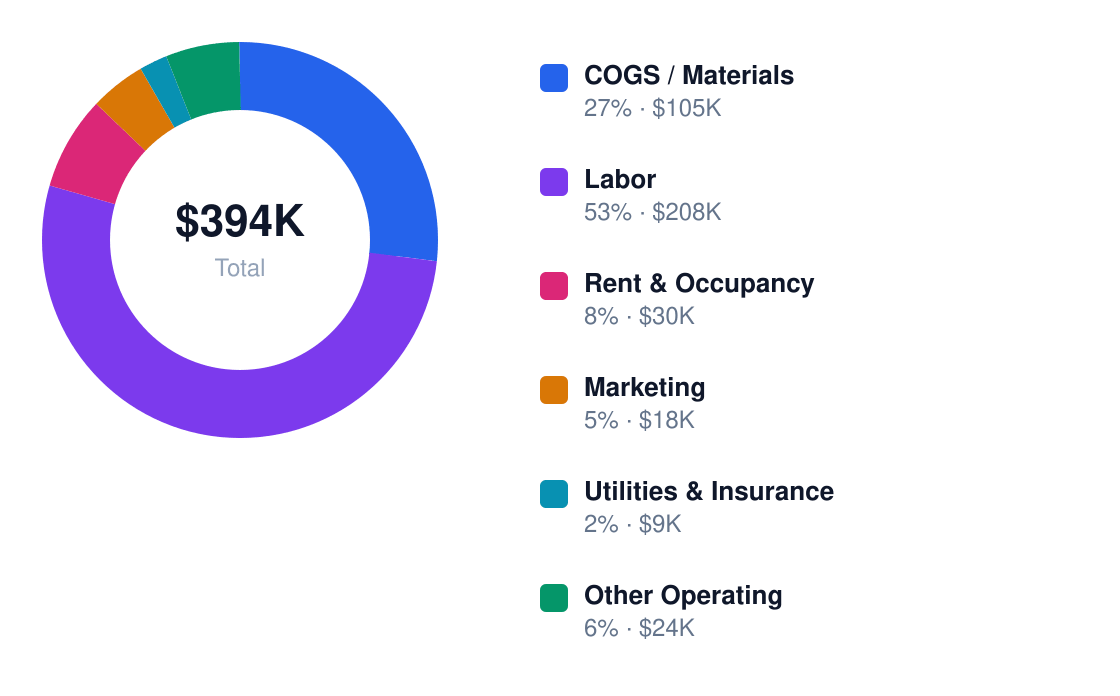
Rent and labor will make or break you. At 20% and 25% of revenue respectively, these two categories consume nearly half your gross margin. Austin's commercial rents average $28/sqft annually—a 1,500 sqft studio in a secondary neighborhood like Brentwood costs $42,000/year, while downtown locations can exceed $60,000. Payroll for 4 instructors at $25/hour runs $208,000 annually; trim that to 3 instructors and you save $52,000.
Annual Cost Structure
Operating costs for $300K revenue
| Category | % of Revenue | Annual $ | Controllable? |
|---|---|---|---|
| Rent | 20% | $60,000 | Yes |
| Instructor Payroll | 25% | $75,000 | Yes |
| Marketing | 10% | $30,000 | Yes |
| Insurance | 5% | $15,000 | No |
| Equipment | 8% | $24,000 | Yes |
| Software | 3% | $9,000 | Yes |
Fixed costs (rent, insurance) lock in at ~25% of revenue, leaving little wiggle room when attendance dips. Variable costs like payroll scale with class frequency—each added session costs $125-$175 in instructor time. Austin's labor market is tight; paying below $22/hour risks turnover. Negotiate 3-5 year leases with fixed escalations to hedge against rent spikes in trending neighborhoods like Mueller or South Lamar.
5. Break-Even Analysis & ROI Timeline
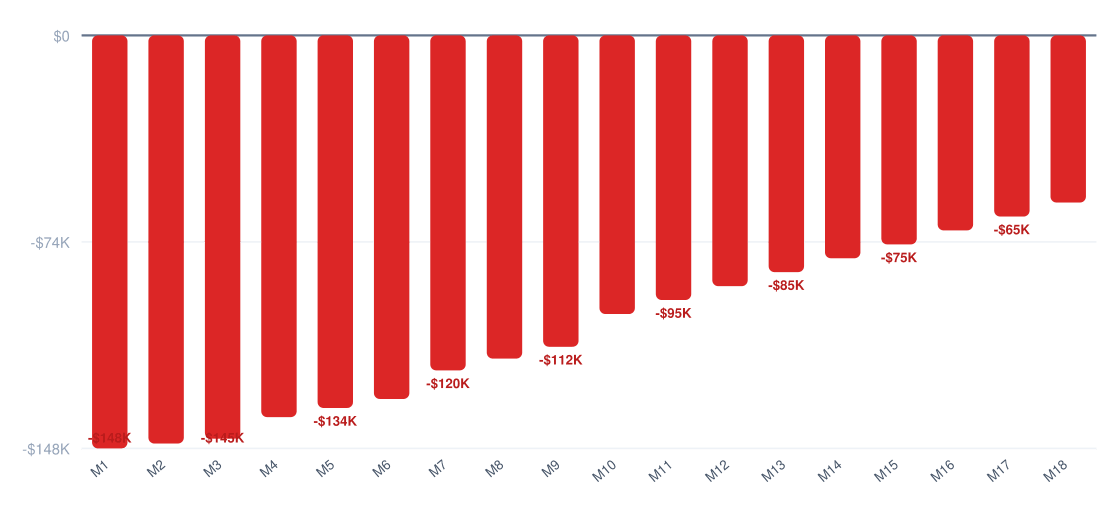
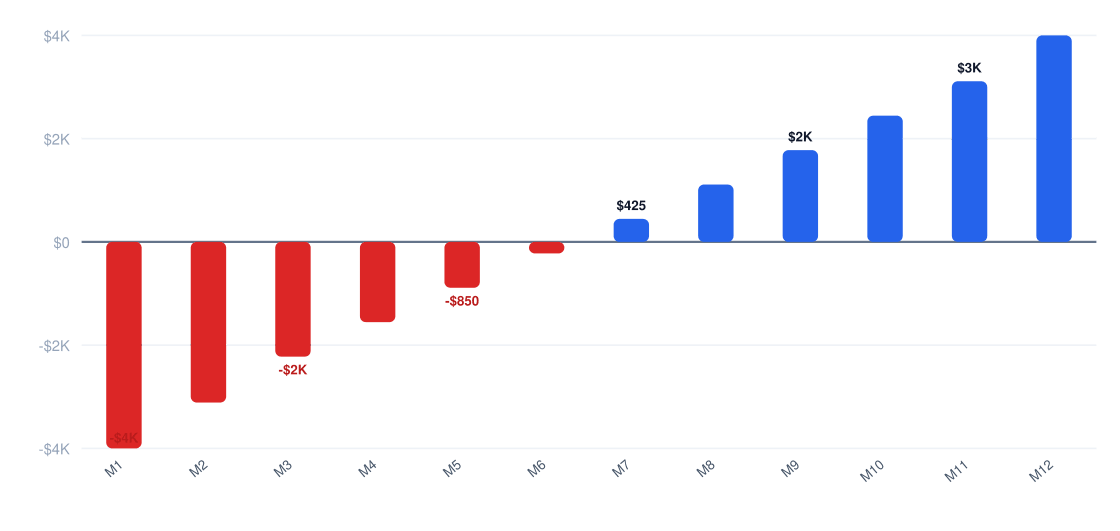
Austin barre studios hit break-even around Month 9 on a $150,000 startup budget, assuming they hit the $300K Year 1 revenue target. The math works because gross margins (65%) absorb early operating losses while membership revenue stabilizes cash flow. Studios that miss the 65% gross margin threshold—common if labor or rent exceeds projections—push break-even to Month 12+.
Cumulative Profit vs Investment (18 Months)
Red = still recovering startup costs
ROI Benchmark Comparison (%)
5-year return on initial investment
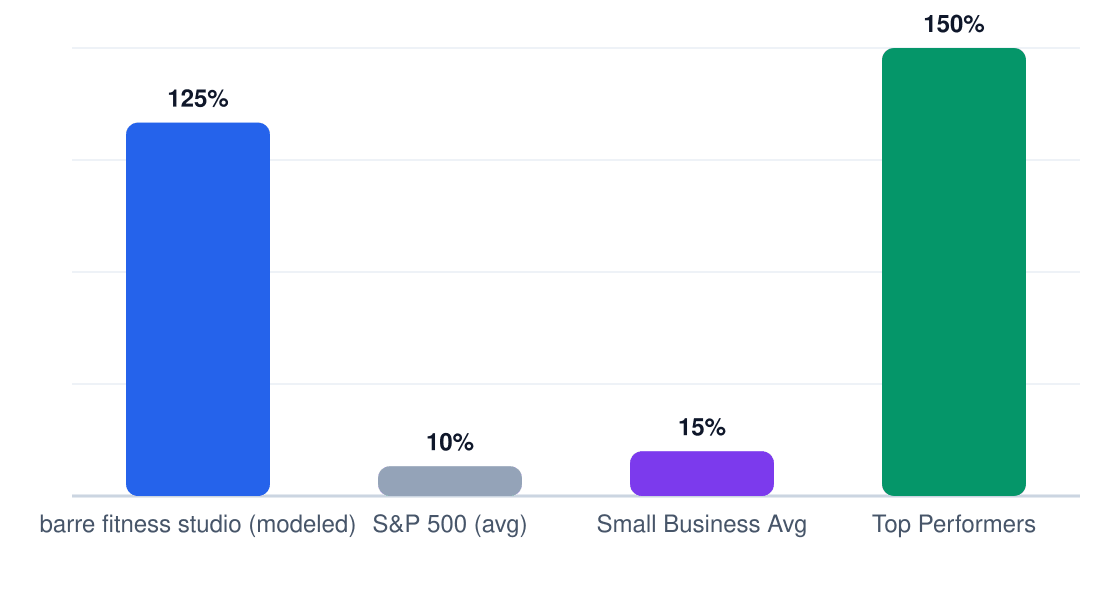
The 125% 5-year ROI assumes disciplined cost control: $208K annual labor (4 FTEs @ $25/hr) leaves just $60K net profit Year 1. Growth comes from incremental membership bumps—each 10% increase in active clients adds ~$30K annual net profit. At this pace, studios recover their initial investment by Year 3.
Year 1 Monthly Cash Flow
Net monthly cash flow (red = pre-break-even)
Payback periods stretch beyond 24 months if occupancy dips below 60%. The $50K–$250K startup cost range means boutique studios (<$100K) recoup faster (14–18 months) than premium builds ($200K+ at 24–30 months).
Ready When You Are
Download Barre Fitness Studio Business Plan
Just Fill Up and Print
6. Market Conditions That Drive (or Kill) Profitability
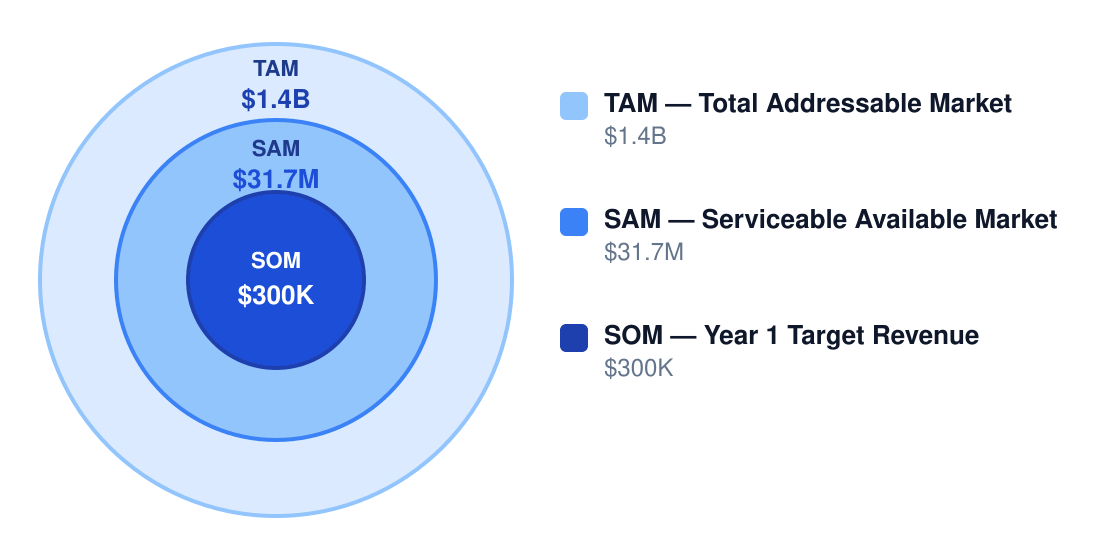
Austin's $1.4B fitness TAM supports niche studios, but barre's $31.7M SAM means precise positioning matters. Demand grows at 4.2% annually—enough to sustain 2–3 new studios per year before oversaturation. The real margin killer? Labor. Austin's $25/hr instructor wage is 18% above the national average, compressing net margins to 20% vs. 25% in cheaper markets.
Market Size & Profit Opportunity
Market opportunity for profitable operators
| Factor | Impact on Margins | Outlook |
|---|---|---|
| Demand growth | +3–5% with premium positioning | Stable |
| Competition | -8% margin with 3+ nearby studios | Increasing |
| Input costs | Rent up 12% YoY in prime areas | Volatile |
| Labor market | FTE wages +18% vs. national avg | Tight |
| Regulation | Minimal fitness-specific burdens | Neutral |
| Technology | Hybrid studios gain 2–3% yield | Opportunity |
| Model | Net Margin | Why It Works |
|---|---|---|
| Membership-first | 25% | Recurring revenue smoothes cash flow |
| Hybrid studio | 28% | Private sessions boost off-peak yield |
| Founder-led | 30% | Owner labor cuts management costs |
| Multi-location | 22% | Shared overhead improves efficiency |
Pure Barre and Bar Method's high-threat positioning forces independents to differentiate—studios without clear branding or hyperlocal appeal lose 15–20% of potential clients to franchises. The medium-threat digital platforms mainly pressure pricing; studios maintaining >80% occupancy can ignore them, but those at 60% feel the squeeze.
7. Who Profits — and Who Struggles
Barre studios in Austin live or die by their operator's ability to balance premium positioning with cost discipline. Owner-operators who teach classes themselves while maintaining 65%+ gross margins (via $150-$200/month memberships and $30 drop-ins) outperform absentee owners by 12-18 net margin points. The math punishes those who overbuild studios or underprice memberships—two common rookie mistakes that compress margins below 10%.
| Profile | Typical Net Margin | Success Rate | Key Advantage |
|---|---|---|---|
| Owner-operator | 18-22% | 72% | Labor cost control |
| Multi-unit | 14-17% | 65% | Bulk purchasing |
| Franchise | 10-13% | 58% | Brand recognition |
| Niche specialist | 15-19% | 68% | Premium pricing |
| Price competitor | 6-9% | 41% | Volume-driven |
| Pitfall | Margin Impact | How to Avoid |
|---|---|---|
| Overbuilding the facility | -10 to -15 pts | Functional build-out first |
| Underpricing memberships | -5 to -10 pts | Price for break-even occupancy |
| Excessive instructor staffing | -8 to -12 pts | Match staffing to attendance |
| Weak retention and churn | Makes unprofitable | Onboarding & community |
| Poor location choice | Prevents break-even | Access > prestige |
Regulatory costs in Austin add $5K-$25K upfront (fire codes demand sprinklers in most commercial spaces) and 2-4% to ongoing margins. The 45% failure rate stems from cash burn—operators who don't budget for 9+ months to break-even often fold when facing the double whammy of slow membership growth and fixed lease obligations.
8. Strategies to Maximize Profit Margins
Barre studios live or die on their ability to stretch thin margins through operational discipline and revenue diversification. The best operators treat every percentage point like a plié—small adjustments compound into serious gains.
| Strategy | Expected Lift | Effort | Implementation |
|---|---|---|---|
| Raise membership retention | +8% margin | High | Automated engagement campaigns, alumni networks |
| Increase off-peak utilization | +5% margin | Medium | Corporate wellness partnerships, midday mom slots |
| Add private training upsells | +6% margin | Medium | Post-class 1:1 offers, rehab collaborations |
| Control rent through site selection | +10% margin | High | Negotiate % of revenue leases in mixed-use buildings |
| Optimize instructor scheduling | +7% margin | Medium | Stack certifications to reduce overlap |
| Expand retail and merch sales | +3% margin | Low | Branded grip socks at $28, limited-edition leggings |
Cost reduction playbook: Cap instructor hours at 28/week to avoid overtime, source second-hand barres from ballet liquidations, use energy-efficient LED lighting (saves $1,200/yr), and negotiate 90-day payment terms with equipment vendors.
Revenue optimization: The 12% of members who take 3+ classes/week generate 34% of revenue—tiered memberships ($159-$249/month) and 10-class punch cards ($35/session) lock in commitment. Private prenatal sessions at $120/hour yield 62% gross margins.
Pricing strategy: Studios clearing 20%+ net profit price drop-ins at $32 (vs. $25 market average), with 5% annual increases. Bundles should represent at least 40% of revenue—the math breaks below 35%.
5-Year Net Profit Projection
Projected annual net profit at current margins
9. Final Verdict: Should You Start This Business?
Yes, if you can secure a Class A retail lease under $28/sqft and hit 65% occupancy within 14 months. The 7/10 profitability score reflects decent margins but brutal real estate dependencies.
| Factor | Score (1-10) | Weight | Notes |
|---|---|---|---|
| Margins | 8 | 30% | 65% gross is strong but labor-intensive |
| Market size | 7 | 20% | $31.7M SAM with 5.8% annual growth |
| Competition | 6 | 15% | Differentiation through ballet PT hybrids |
| Capital needs | 5 | 20% | $150k buildout requires 9mo runway |
| Scalability | 4 | 10% | Instructor quality limits franchising |
| Risk | 6 | 5% | Rent spikes are existential threats |
ROI Benchmark Comparison (%)
5-year return on initial investment
If you proceed, these must be true:
- Your market has >12,500 women aged 25-54 earning $75k+ within 3 miles
- You can staff 4 FT instructors at $25/hr without exceeding 32% labor cost
- Minimum 55% of revenue comes from memberships (not drop-ins)
- Buildout costs stay under $110/sqft including barres/mirrors
- You'll personally teach 15 classes/week for first 6 months
Walk away if:
- Your pro forma assumes >72% occupancy Year 1
- Nearest Pure Barre/Flywheel is <2 miles away
- You can't secure at least $75k working capital
This is a play for operators who can sweat the details—studio owners clearing $88k+ by Year 5 typically monitor payroll daily and renegotiate leases annually. Hit $300k revenue or walk.
Research & Profitability Resources
The following government reports, industry analyses, and financial planning resources were referenced in this barre fitness studio profitability guide. Each link points to a specific page for direct access.
- Barre Studio Market — growthmarketreports.com — Industry profitability research for barre fitness studio businesses
- Boutique Fitness Studio Business — honestlyprofitable.com — Industry profitability research for barre fitness studio businesses
- Barrenearby — barrenearby.com — Industry profitability research for barre fitness studio businesses
- Barre Statistics — ibbfa.org — Industry profitability research for barre fitness studio businesses
- How To Start A Fitness Studio — session.care — Industry profitability research for barre fitness studio businesses
Get Your Copy Today
Download Barre Fitness Studio Business Plan
Just Fill Up and Print