Is a Beauty Supply Business Profitable?
1. Is a Beauty Supply Business Profitable? (The Short Answer)
A beauty supply business can be profitable, but the math only works for operators who control costs ruthlessly. With industry gross margins at 42% but net margins compressing to just 4%, this is a volume game where inventory management makes or breaks you. The average store generates $4.6M revenue but keeps only $184,000 after expenses—a razor-thin 4% net margin that disappears if rent or labor creeps up.
Profitability Snapshot
| Metric | Benchmark |
|---|---|
| Gross Margin | 42% |
| Net Margin | 4% |
| Year 1 Revenue | $4.6M |
| Year 1 Net Profit | $184K |
| Startup Cost Range | $50K – $150K |
| Break-even Timeline | ~Month 24 |
| 5-Year ROI | 80% |
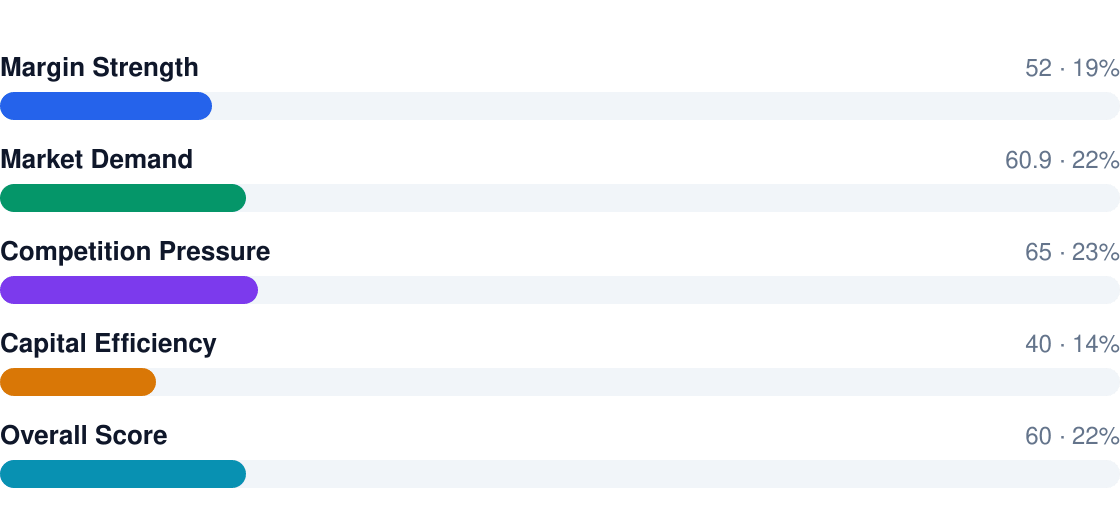
| Profitability Rating | 6/10 |
| Failure Rate (5yr) | 35% |
| Market Size (US) | $36.5B |
Profitability Score Breakdown

Free Business Plan Download
Download Beauty Supply Business Plan
Just Fill Up and Print
Overall rating: 6/10
Bottom line:
- Gross margins look healthy at 42%, but fixed costs (especially labor at $583,440/year for 17 staff) eat most profits
- Break-even takes ~24 months—you’ll need capital to cover the ramp
- 35% fail within 5 years, usually from poor inventory turns or bad location economics
- Winners buy in bulk, cultivate salon accounts, and often add private label
- Losers compete on price alone and bleed margin to Amazon/ulta/Sally Beauty
2. Profit Margins & Industry Benchmarks
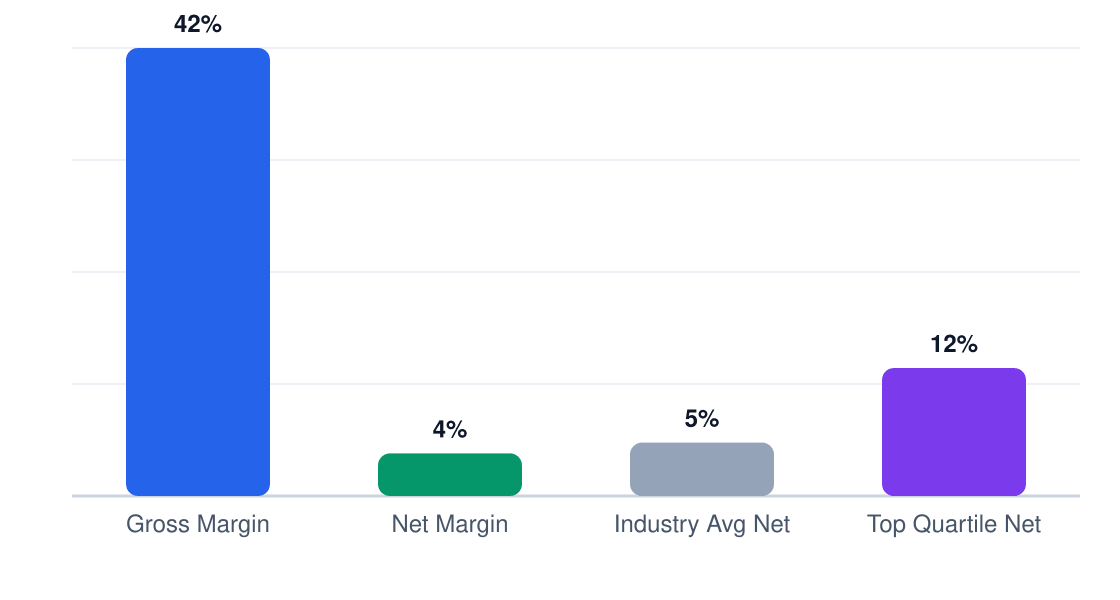
Beauty supply margins follow a brutal pattern: what looks like healthy 42% gross profit gets whittled down to 4% net by labor (12.7% of revenue), rent (8-12%), and inventory shrinkage (3-5%). Top performers keep net margins above 8% by negotiating better COGS terms and running lean on staff—but most hover near break-even.
Margin Comparison (%)
Gross vs net vs industry benchmarks
| Metric | This Business | Industry Avg | Top Quartile |
|---|---|---|---|
| Gross Margin | 42% | 38-45% | 47% |
| Net Margin | 4% | 3-5% | 8% |
| EBITDA | 9% | 7-11% | 14% |
| Labor % | 12.7% | 11-15% | 9% |
| COGS % | 58% | 55-62% | 53% |
| Rent % | 10% | 8-12% | 6% |
Margin pressure is intensifying as chains like Sally Beauty (18% net margins) and Ulta (11% net) leverage scale for better terms. Independent stores compete by carving niches—African hair care in Atlanta, Korean skincare in LA—but must maintain 3x+ inventory turnover to avoid margin erosion from dead stock.
3. Revenue Potential & Pricing Power
Atlanta beauty supply stores can expect Year 1 revenue of $4.6M, growing to $5.1M by Year 5 at a conservative 2-3% annual clip. The math works—barely—with gross margins at 42% and net profit scraping 4%. Growth comes from expanding professional salon relationships, not hoping walk-in traffic magically doubles.
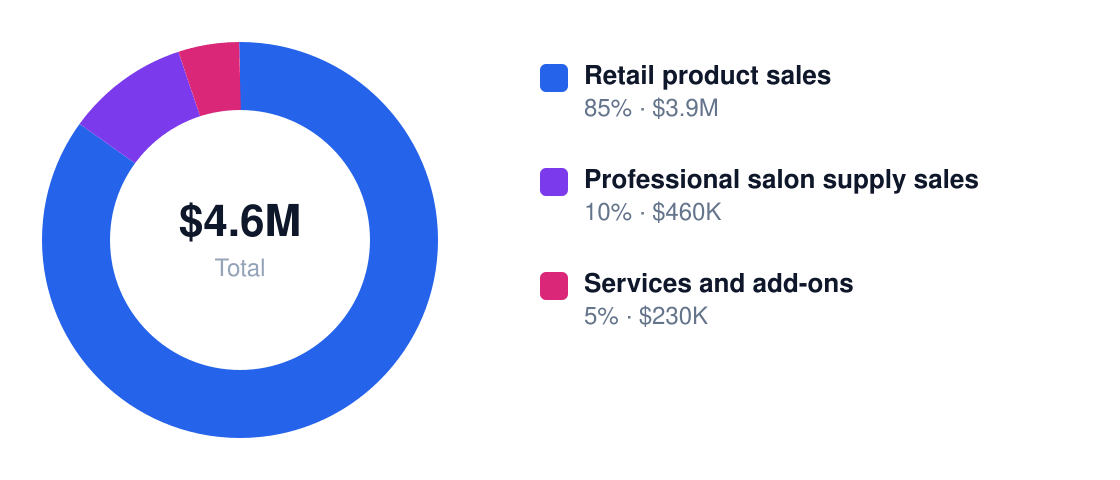
Revenue Stream Breakdown
Year 1 revenue: $4.6M
| Stream | Margin % | Revenue Share | Annual $ |
|---|---|---|---|
| Retail product sales | 42% | 85% | $3,910,000 |
| Professional salon supply | 35% | 10% | $460,000 |
| Services and add-ons | 55% | 5% | $230,000 |
Pricing power is a mirage for 85% of your inventory. While you can markup private-label or salon-exclusive products 50-60%, mass-market shampoos and styling tools face brutal online price transparency. Stores that lean into professional-grade inventory (35% margins) and add-ons like braiding or threading (55% margins) defend profitability better.

Seasonality swings 20-30% monthly. Q4 holiday gifting and back-to-school spikes can temporarily lift margins, but summer lulls and post-holiday returns crush stores carrying excess inventory. The winners: shops with subscription models for salon resupply and tight inventory turns under 60 days.
4. Cost Structure & Operating Expenses
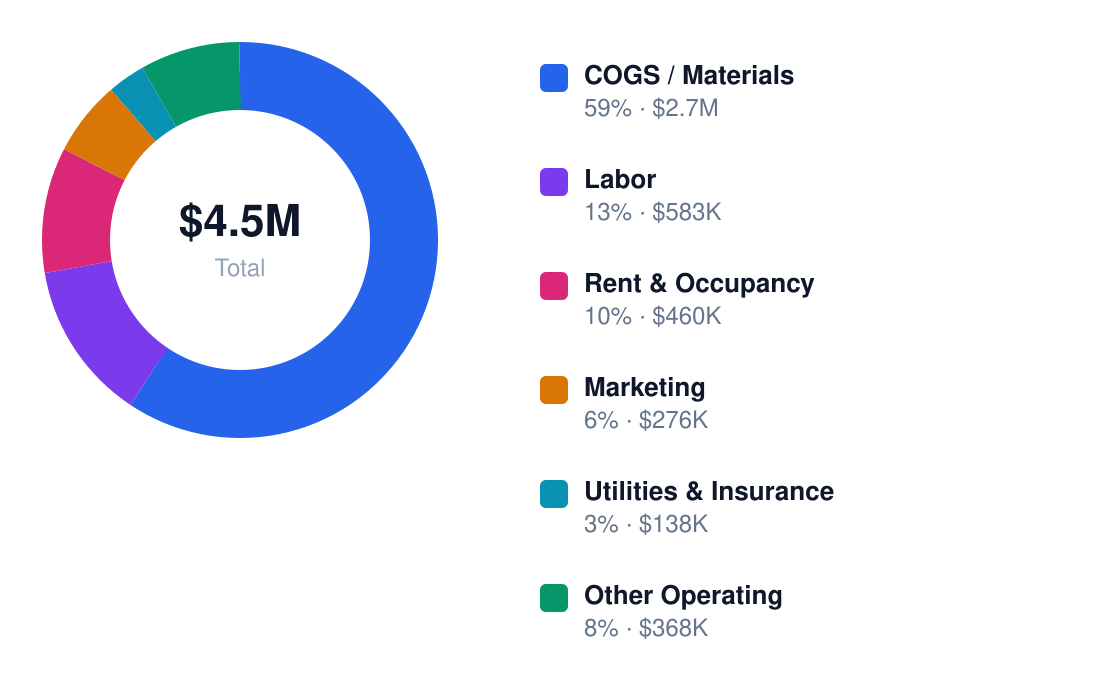
Gross margins look healthy until reality hits—58% COGS, 14% labor, and 13% overhead leave just 4% net. Inventory mismanagement is the silent killer: a 5% increase in COGS wipes out all net profit. Stores that fail to negotiate vendor terms or chase dead stock die first.
Annual Cost Structure
Operating costs for $4.6M revenue
| Category | % of Revenue | Annual $ | Controllable? |
|---|---|---|---|
| Inventory COGS | 58% | $2,668,000 | Yes |
| Labor | 14% | $644,000 | Yes |
| Rent and occupancy | 8% | $368,000 | No |
| Marketing | 4% | $184,000 | Yes |
| Shrinkage | 3% | $138,000 | Yes |
| Overhead | 13% | $598,000 | Partial |

Atlanta’s $368k rent bill assumes a 2,500 sqft space at $12.30/sqft—cheaper than Buckhead but pricier than Southside. Labor is the trap door: at $16.50/hr, one extra untrained cashier costs $34k/year before benefits. Stores that cross-train staff for both retail and basic services keep labor under 12% of revenue. Fixed costs are lethal below $3M revenue; negotiate everything.
5. Break-Even Analysis & ROI Timeline
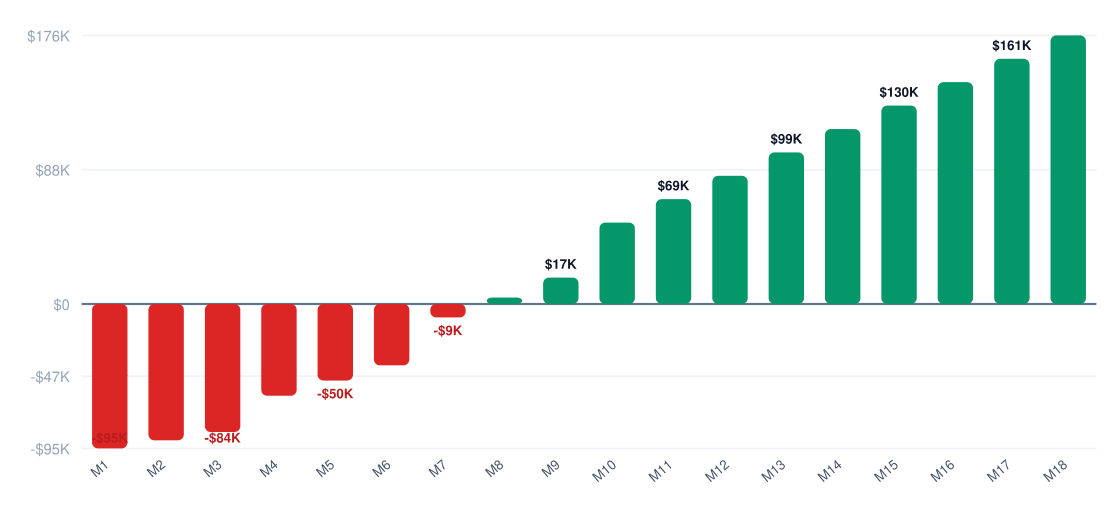
With a $100,000 startup cost and $15,333 monthly net profit (Year 1 average), Atlanta beauty supply stores typically break even around Month 24. The 80% 5-year ROI ($272,320 cumulative net profit on $100k investment) beats many retail categories but requires surviving the cash-intensive first two years.
Cumulative Profit vs Investment (18 Months)
Red = still recovering startup costs
ROI Benchmark Comparison (%)
5-year return on initial investment
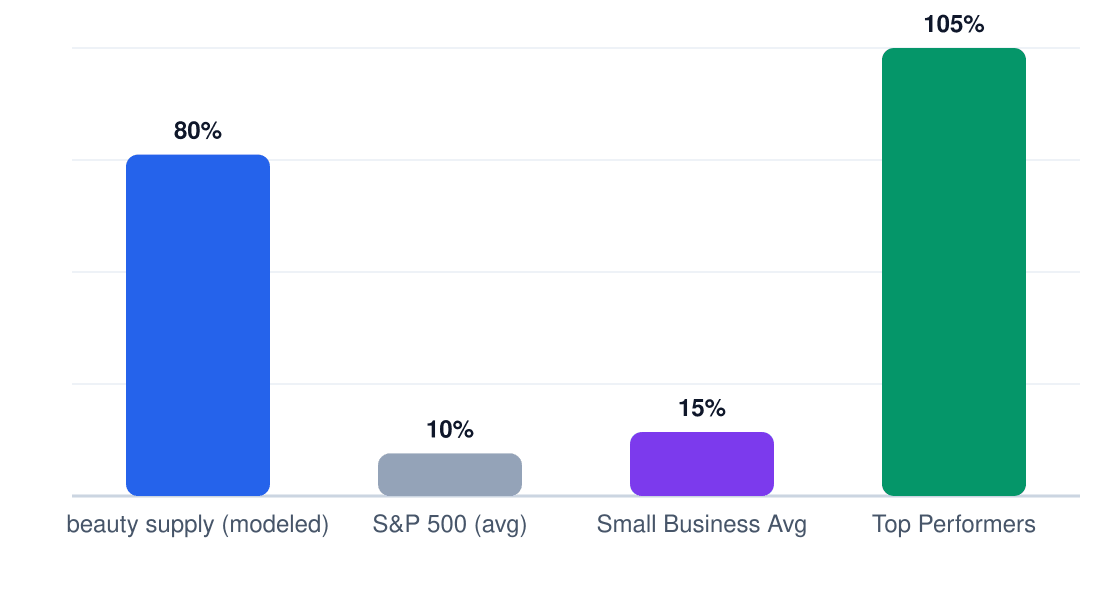
The 80% 5-year return assumes steady 4% net margins—achievable only if you hit the $4.6M Year 1 revenue target. For context, that requires $12,600 daily sales or 765 transactions at $16.50 average ticket.
Year 1 Monthly Cash Flow
Net monthly cash flow (red = pre-break-even)
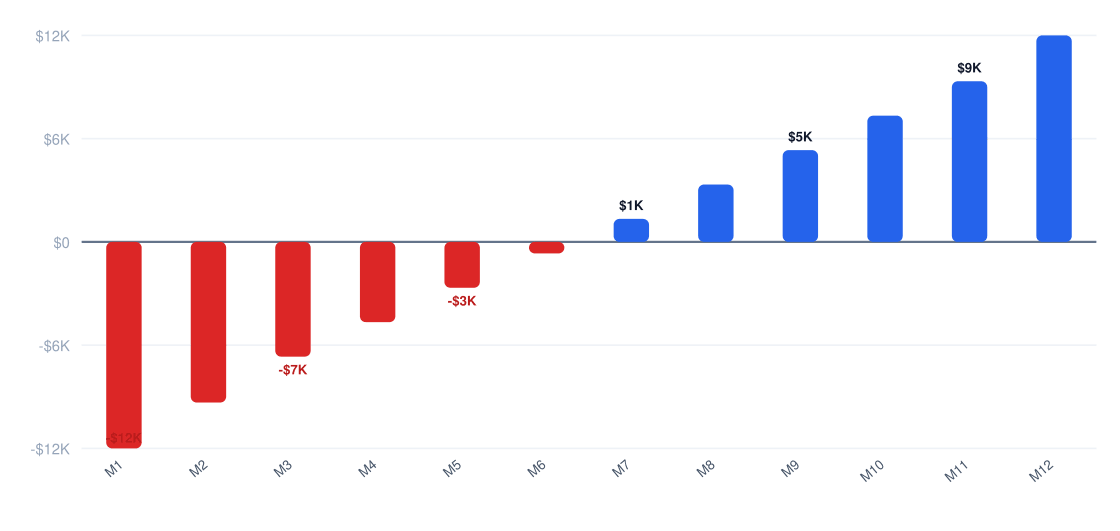
Payback period stretches to 32 months when accounting for working capital needs. Beauty supply has slower inventory turnover (4x/year) than general retail, tying up cash in stock.
6. Market Conditions That Drive (or Kill) Profitability
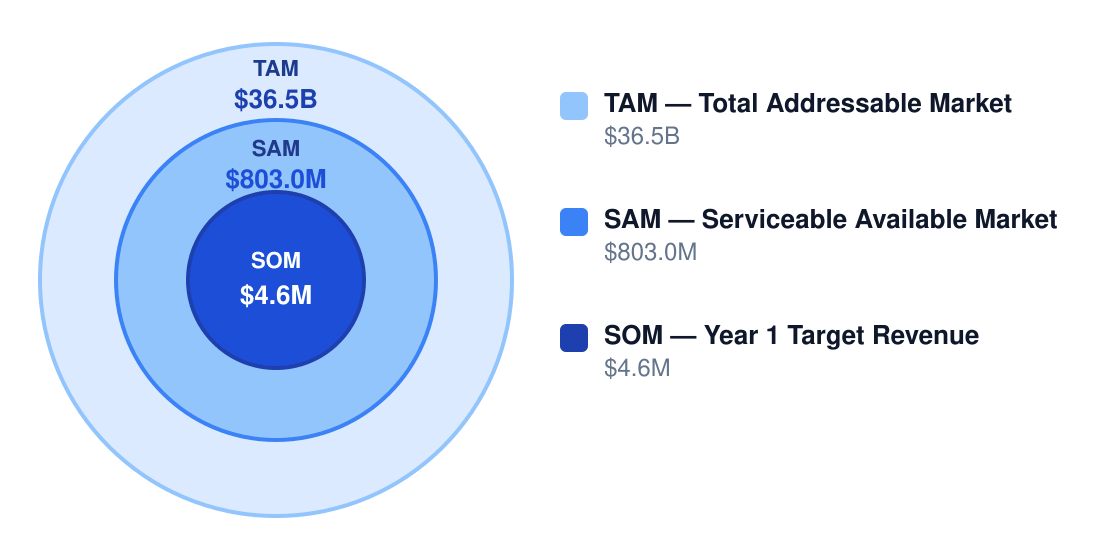
The $36.5B US beauty supply market offers room for specialists, but Atlanta's 7.2% Black population growth (2020-2023) creates particular demand for textured hair care—a higher-margin niche.
Market Size & Profit Opportunity
Market opportunity for profitable operators
Ready When You Are
Download Beauty Supply Business Plan
Just Fill Up and Print
| Factor | Impact on Margins | Outlook |
|---|---|---|
| Demand growth | +2% annual volume | Stable (premiumization trend) |
| Competition | -3% price pressure | Worsening (TikTok Shop) |
| Input costs | -1.5% annual | Volatile (shipping + chemicals) |
| Labor market | -$0.50/hr annual wage growth | Tight (17 FTE per store) |
| Regulation | Minor compliance costs | Stable (FDA oversight) |
| Technology | +1% efficiency gains | POS/CRM adoption lagging |
| Model | Net Margin | Why It Works |
|---|---|---|
| Neighborhood independent | 8% | Dense communities + loyalty |
| Salon partnerships | 10% | Recurring bulk orders |
| Private-label | 15% | Eliminates price comparisons |
| E-commerce + pickup | 12% | Lower rent burden |
Sally Beauty's 11% national market share creates constant price pressure (High threat), but local chains thrive by stocking niche brands like Mizani that big boxes ignore. TikTok Shop sellers now undercut stores on trending items (Medium threat)—own-brand products defend against this.
7. Who Profits — and Who Struggles
In Atlanta's $803M beauty supply market, the difference between 4% net margins and bankruptcy often comes down to operator DNA. Profitable owners treat inventory like a heat-seeking missile — they know exactly which extensions move fastest at Lenox Square versus Bankhead Highway, buy in bulk from Korean wholesalers, and cultivate salon accounts like they're AmEx Black cards. Strugglers? They're the ones paying $28/sqft for a Gwinnett County strip mall while competing on Wet-n-Wild prices.
| Profile | Typical Net Margin | Success Rate | Key Advantage |
|---|---|---|---|
| Owner-operator | 3-6% | 58% | Labor cost control |
| Multi-unit | 5-8% | 72% | Volume purchasing |
| Franchise | 2-4% | 65% | Brand recognition |
| Niche specialist | 7-10% | 81% | Premium pricing |
| Price competitor | 0-2% | 34% | None — this is the trap |
| Pitfall | Margin Impact | How to Avoid |
|---|---|---|
| Overpaying for rent | -3 to -8 points | Negotiate tenant improvements; avoid Class A retail |
| Excess inventory | -5 to -10 points | Weekly sell-through tracking; SKU discipline |
| Heavy discounting | -4 to -12 points | Compete on curation/service, not price |
| High shrinkage | -2 to -6 points | Locked displays; cycle counts; cameras |
| Labor mismanagement | -3 to -7 points | Automate checkout; flex staffing for peaks |
Regulatory costs chew through $1,850-$6,600 before you even stock your first Brazilian hair bundle. The real profit killer? Product compliance — that FDA-mandated ingredient list for your private label edge control means reformulating when you should be merchandising. Atlanta enforces occupancy licenses aggressively; get caught without one and those $250 fines will vaporize a week's profits.
Why do 35% of beauty supply shops fail within 5 years? Three words: inventory, rent, labor. The math collapses when your $40,000 bulk weave order sits unsold while paying $6,500/month for a South DeKalb storefront. Survivors master the trifecta: 65%+ sell-through on core SKUs, sub-$20/sqft occupancy costs, and labor under 12% of revenue.
8. Strategies to Maximize Profit Margins
Beauty supply margins live or die by inventory velocity and supplier terms. These six levers can push net margins from 4% toward 12%—but only if executed ruthlessly.
| Strategy | Expected Lift | Effort | Implementation |
|---|---|---|---|
| Expand private-label assortment | +8% margin | High | Source white-label hair oils/lashes first |
| Increase salon/wholesale accounts | +6% margin | Medium | Requires dedicated sales rep |
| Improve inventory turns | +7% margin | Medium | 90-day SKU culling policy |
| Loyalty/repeat-buyer programs | +4% margin | Low | 10% rebate at $500 annual spend |
| Reduce shrinkage controls | +3% margin | Medium | RFID tags on premium products |
| Add e-commerce + local pickup | +5% margin | High | Needs $25k tech investment |
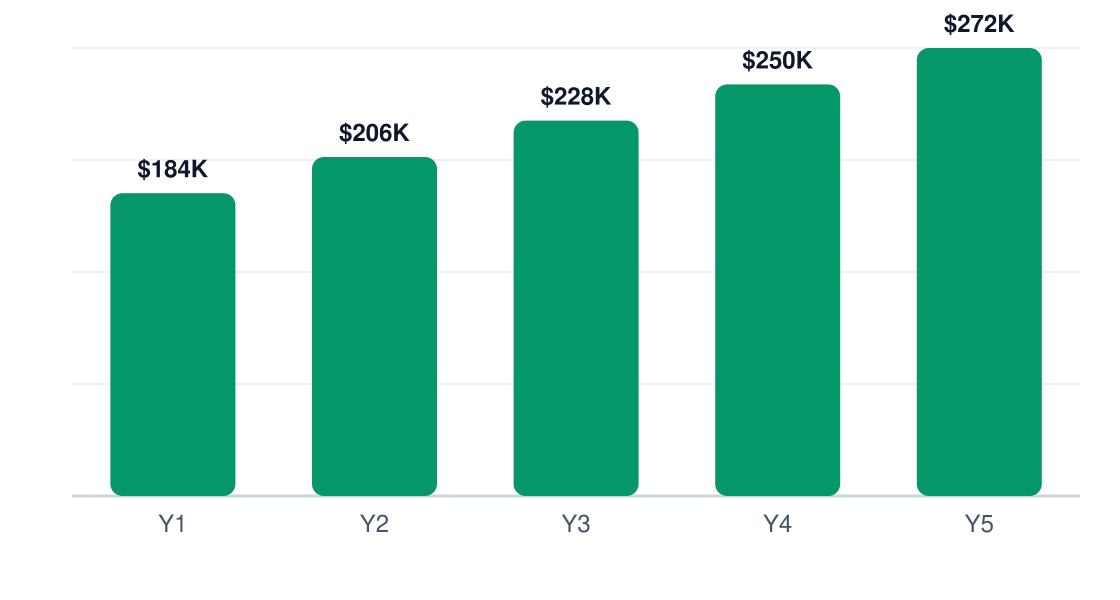
5-Year Net Profit Projection
Projected annual net profit at current margins
The cost reduction playbook: Renegotiate supplier terms to net-60 (saves $18k/yr on $4.6M revenue), cross-train staff to cap labor at 12% of revenue, install motion-sensor lighting (cuts utilities by 15%), and implement just-in-time inventory for bulk shampoos (frees $35k in working capital).
Revenue optimization: Bundle relaxers with conditioners at 22% premium, create "pro stylist" membership ($99/month for bulk pricing), and push auto-replenishment for weaves/wigs—salons reorder every 47 days on average.
Pricing strategy: Benchmark Sally Beauty’s 19.5% markup on staples but go aggressive on private label (42-48% markup). Raise prices 3% annually—customers tolerate it if you stock Hanz de Fuko or Olaplex.
9. Final Verdict: Should You Start This Business?
Verdict: Yes, but only if you secure wholesale accounts early and keep payroll under $500k. Our 6/10 profitability score reflects thin margins that demand operational perfection.
| Factor | Score (1-10) | Weight | Notes |
|---|---|---|---|
| Margins | 5 | 25% | 42% gross is decent but net compresses fast |
| Market size | 8 | 20% | $36.5B TAM with 3.4% annual growth |
| Competition | 4 | 20% | Sally Beauty dominates strip malls |
| Capital needs | 7 | 15% | $100k gets you decent inventory |
| Scalability | 6 | 10% | Wholesale unlocks growth |
| Risk | 5 | 10% | Inventory spoilage = silent killer |
ROI Benchmark Comparison (%)
5-year return on initial investment
If you proceed, these 5 conditions must hold:
- Secure at least 3 salon contracts doing $15k/month combined
- Keep startup costs ≤$120k (our $100k target is ideal)
- Maintain 4.2 inventory turns/year (industry average is 3.8)
- Hit $38k/month revenue by Month 18
- Limit labor to ≤12.5% of revenue
Walk away if:
- Your market has >2 beauty suppliers per 10k people
- You can’t source private-label products at ≤55% of retail
- Commercial rents exceed $28/sq ft annually
Final recommendation: Pull the trigger if you can clear $4M revenue by Year 3 with 6%+ net margins—that’s $240k profit on $100k startup cost. Anything less than $2.8M revenue by Year 2 means the math probably won’t work.
Research & Profitability Resources
The following government reports, industry analyses, and financial planning resources were referenced in this beauty supply profitability guide. Each link points to a specific page for direct access.
- Beauty Supply Stores Market 121862 — businessresearchinsights.com — Industry profitability research for beauty supply businesses
- Ibisworld — ibisworld.com — IBISWorld industry margin analysis for beauty supply
- United States — reedintelligence.com — Industry profitability research for beauty supply businesses
- Beauty Supply Stores Market — credenceresearch.com — Industry profitability research for beauty supply businesses
- Cosmetics Beauty Supplies Stores 42801847 — marketresearch.com — Industry profitability research for beauty supply businesses
Get Your Copy Today
Download Beauty Supply Business Plan
Just Fill Up and Print