Is a Biodiversity Consulting Business Profitable?
1. Is a Biodiversity Consulting Business Profitable? (The Short Answer)
Yes, but only if you specialize in high-demand regulatory work like environmental permitting or compliance. The typical US biodiversity consulting firm operates at 60% gross margins and 22% net margins, clearing $374,000 annual net profit on $1.7M revenue. The math works best for owner-operators or small expert teams—every additional employee without billable work erodes margins fast. Failures (35% within 5 years) usually stem from underpricing, overspending on field staff, or lacking niche expertise.
Profitability Snapshot
| Metric | Benchmark |
|---|---|
| Gross Margin | 60% |
| Net Margin | 22% |
| Year 1 Revenue | $1.7M |
| Year 1 Net Profit | $374K |
| Startup Cost Range | $50K – $150K |
| Break-even Timeline | ~Month 18 |
| 5-Year ROI | 350% |
| Profitability Rating | 7/10 |
| Failure Rate (5yr) | 35% |
| Market Size (US) | $0.8B |
Profitability Score Breakdown

Free Business Plan Download
Download Biodiversity Consulting Business Plan
Just Fill Up and Print
Overall rating: 7/10
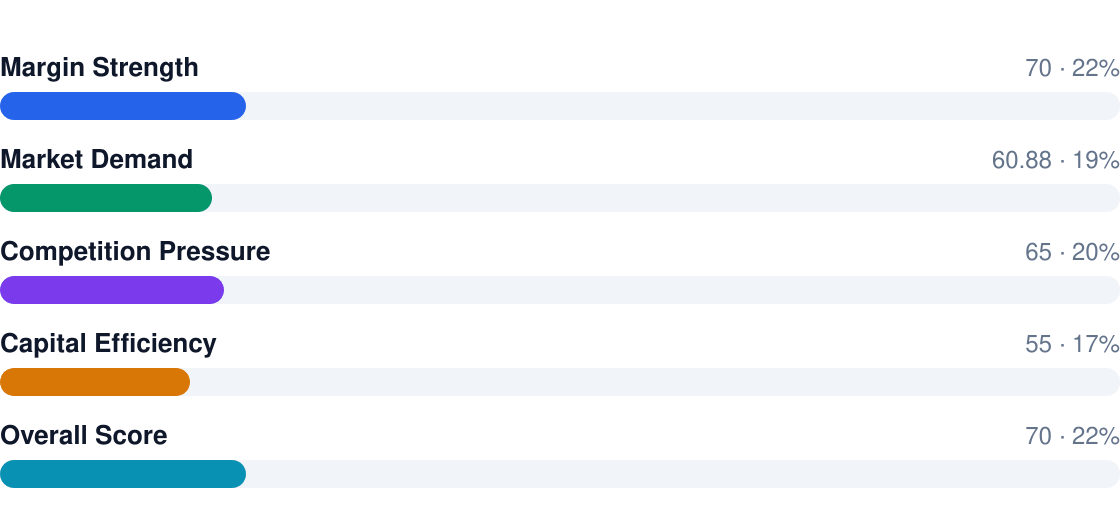
- Pros: 60% gross margins beat most professional services, retainer potential in compliance work, 5.88% market growth
- Cons: Labor eats 34% of revenue, travel costs compress margins, 18-month breakeven
- Who wins: Senior ecologists charging $150+/hr for permitting strategies
- Who loses: Generalists competing on price with $80/hr field surveys
- Key metric: 65%+ billable utilization required for 20%+ net margins
2. Profit Margins & Industry Benchmarks
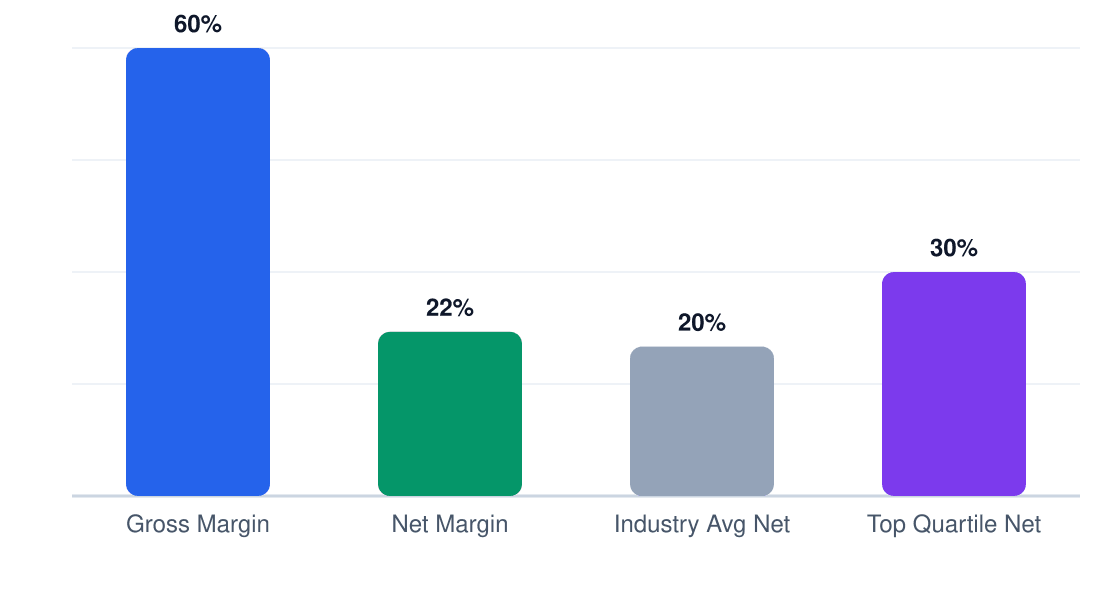
Biodiversity consulting's 60% gross margin looks strong until labor (34% of revenue) and overhead (22%) hit—net margins settle at 22%. Compare this to engineering firms (12-18% net) or environmental labs (8-15% net). The gap between gross and net reflects the labor-intensive nature of ecological assessments and compliance documentation.
Margin Comparison (%)
Gross vs net vs industry benchmarks
| Metric | This Business | Industry Avg | Top Quartile |
|---|---|---|---|
| Gross Margin | 60% | 55% | 68% |
| Net Margin | 22% | 18% | 27% |
| EBITDA | 25% | 20% | 30% |
| Labor % | 34% | 38% | 28% |
| COGS % | 40% | 45% | 32% |
| Rent % | 4% | 6% | 3% |
Margin pressure comes from entrenched competitors like ERM and AECOM that operate at scale. Top-quartile firms achieve 27% net margins by focusing on regulatory strategy (not field work), charging premium rates for Endangered Species Act consultations, and keeping teams under 10 people. Denver's energy and real estate sectors provide steady permitting demand.
3. Revenue Potential & Pricing Power
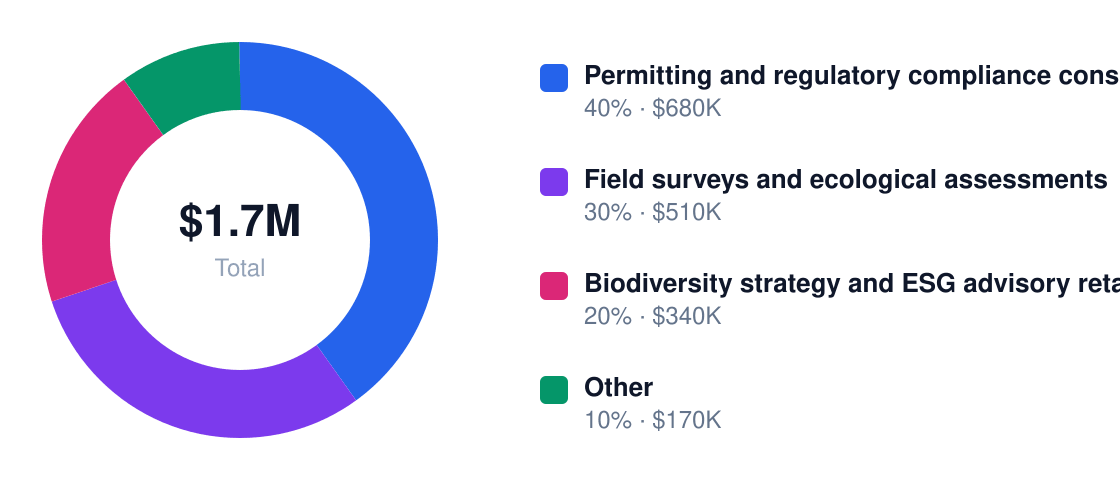
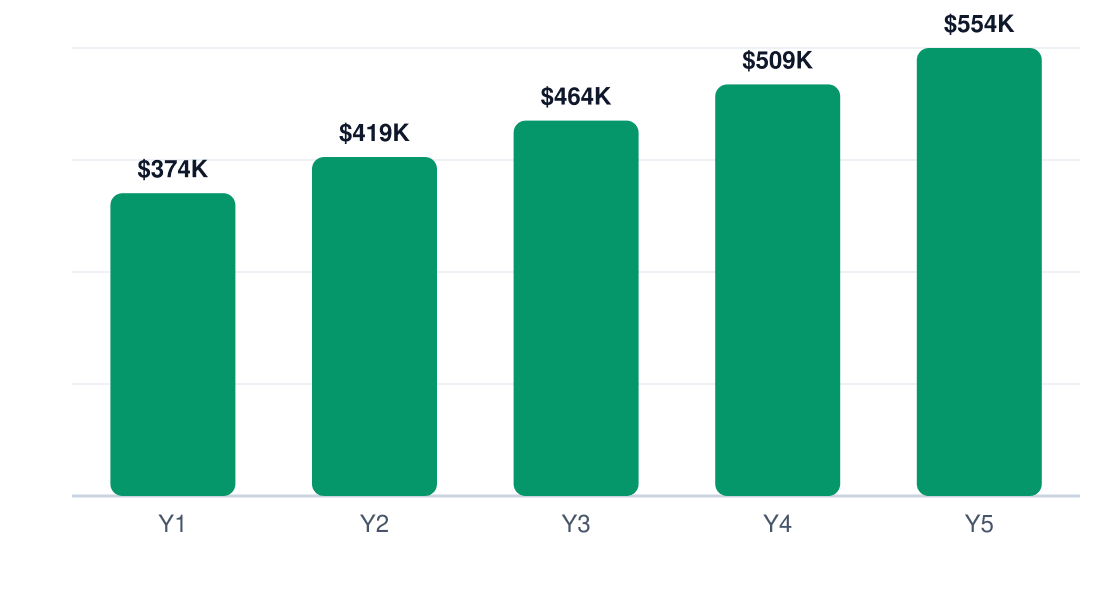
A Denver biodiversity consulting firm can expect $1.7M in Year 1 revenue with strong growth potential—projected to reach $553,520 in net profit by Year 5. The key is balancing high-margin ESG advisory work (45% margin) against the volume-driven but lower-margin field surveys (28% margin).
Revenue Stream Breakdown
Year 1 revenue: $1.7M
| Stream | Margin % | Revenue Share | Annual $ |
|---|---|---|---|
| Permitting and regulatory compliance | 35% | 40% | $680,000 |
| Field surveys and assessments | 28% | 30% | $510,000 |
| Biodiversity strategy retainers | 45% | 20% | $340,000 |
Pricing power is strong for niche expertise: Firms with deep regulatory knowledge or rare species certifications can command 15-20% premiums over generalists. Denver’s tight labor market for ecologists further strengthens rate negotiation—clients pay to avoid permitting delays that cost developers $5,000+/day.

Seasonality hits hard: Winter revenue can drop 30% as field surveys halt, while spring permitting rushes strain capacity. Smart firms front-load retainer contracts in Q1 and use subcontractors to smooth summer peaks—margins compress below 20% if you misalign staffing with biological survey windows.
4. Cost Structure & Operating Expenses
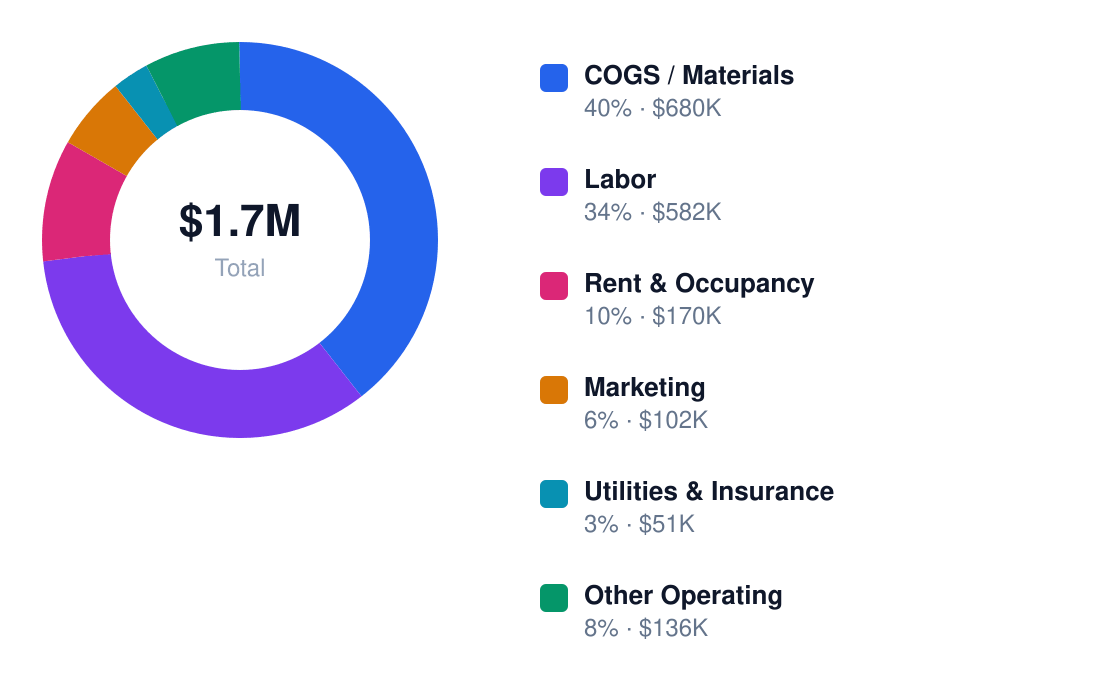
Specialist labor is the profit killer—45% of revenue goes to ecologists and biologists who sit idle between projects. A single underutilized senior biologist ($85,000 salary) can erase $42,500 in annual profit. Field expenses and subcontractors are the next margin leaks, adding 18% overhead that’s avoidable with geographic project clustering.
Annual Cost Structure
Operating costs for $1.7M revenue
| Category | % of Revenue | Annual $ | Controllable? |
|---|---|---|---|
| Specialist labor | 45% | $765,000 | Yes |
| Subcontractors | 10% | $170,000 | Yes |
| Travel and field | 8% | $136,000 | Yes |
| Software and tools | 5% | $85,000 | Yes |
| Insurance | 4% | $68,000 | No |
| Sales and admin | 8% | $136,000 | Yes |

Denver’s fixed costs bite: Office space runs $28/sqft annually, but hybrid fieldwork models can cut space needs by 40%. Variable costs like mileage add up fast—a 50-mile roundtrip to Boulder for surveys costs $36.50 in IRS mileage rates alone. The sweet spot is keeping non-billable labor below 15% and field expenses under 6% of revenue.
5. Break-Even Analysis & ROI Timeline
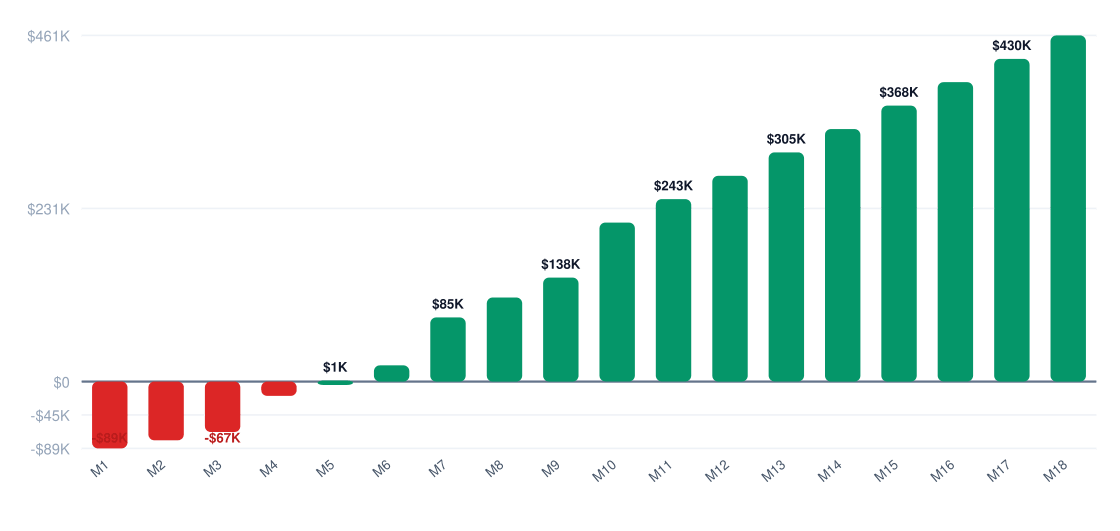
Denver biodiversity consulting breaks even at month 18 on a $100,000 startup budget, assuming the 22% net margin holds. The math: $1.7M year 1 revenue generates $374,000 net profit ($31,166/month), covering initial costs by month 6 if profits are reinvested. Conservative firms should plan for 24 months given sales volatility in early consulting engagements.
Cumulative Profit vs Investment (18 Months)
Red = still recovering startup costs
ROI Benchmark Comparison (%)
5-year return on initial investment
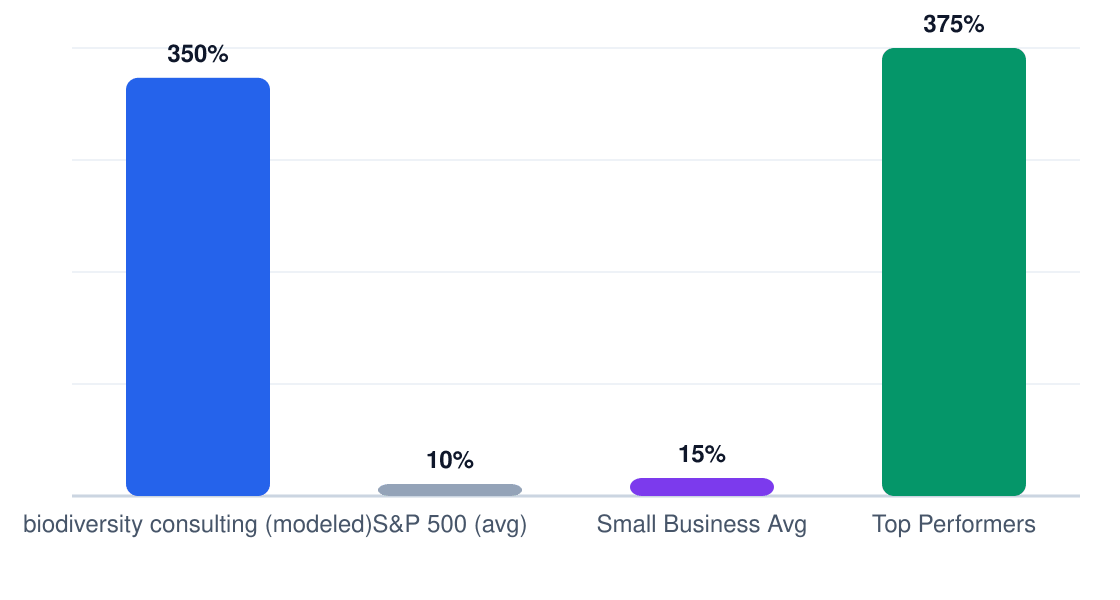
The 350% 5-year ROI ($553,520 cumulative profit on $100,000 initial investment) assumes steady 10% annual revenue growth and maintained margins. This outperforms professional services benchmarks (typically 150-250% ROI), but relies on avoiding labor inflation—every 5% wage increase erodes ~$28,000 from year 5 profit.
Year 1 Monthly Cash Flow
Net monthly cash flow (red = pre-break-even)
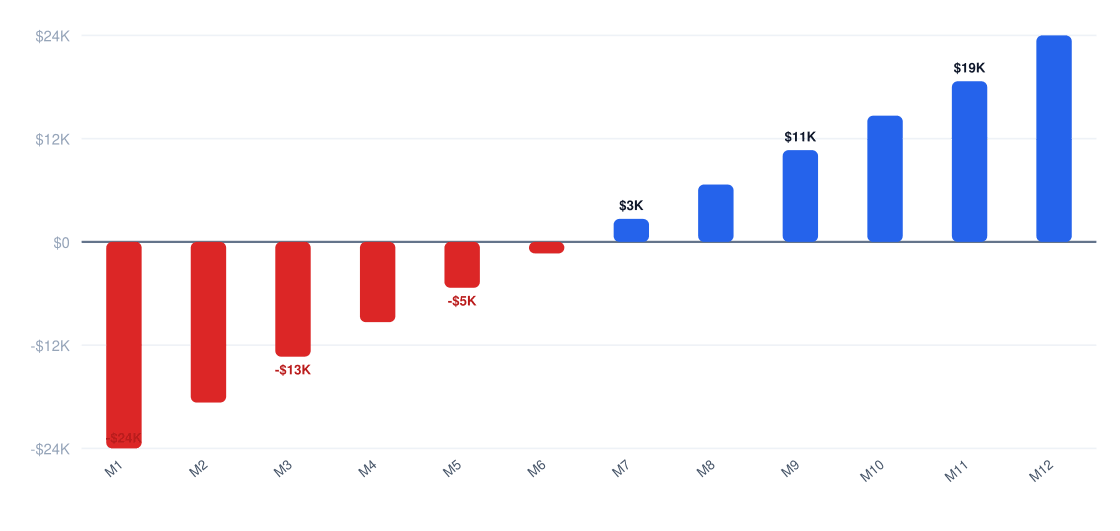
Payback period is 10 months post-break-even. You’ll recover the $100,000 initial outlay by month 28, after which profits compound—critical for funding expansion in years 3-5 when competition typically intensifies.
Ready When You Are
Download Biodiversity Consulting Business Plan
Just Fill Up and Print
6. Market Conditions That Drive (or Kill) Profitability
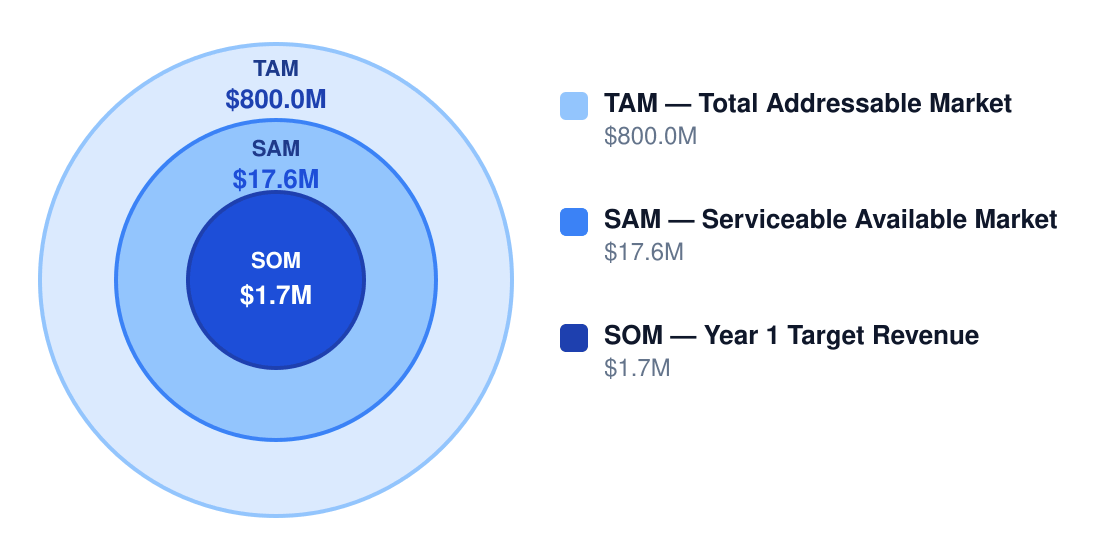
Denver’s $0.8B biodiversity TAM is growing at 6% annually, but only $17.6M is immediately serviceable by small consultancies. The sweet spot: mid-size developers needing compliance work ($15-50k projects) who can’t justify Tetra Tech’s enterprise pricing but require more rigor than solo ecologists provide.
Market Size & Profit Opportunity
Market opportunity for profitable operators
| Factor | Impact on Margins | Outlook |
|---|---|---|
| Demand growth | +8% margin at 20%+ project volume | Strong (EPA/NEPA reforms) |
| Competition | -12% margin if 3+ rivals enter | Moderate (barriers rising) |
| Input costs | -5% margin per 15% GIS software hike | Volatile (SaaS inflation) |
| Labor market | -9% margin at $50/hr ecologist rates | Critical risk |
| Regulation | +15% margin if ESA listings expand | Likely (2025-26) |
| Technology | +7% margin with AI-assisted reporting | Emerging |
| Model | Net Margin | Why It Works |
|---|---|---|
| Owner-led boutique | 35% | Premium rates ($225/hr) with low overhead |
| Field-survey shop | 25% | Standardized workflows at 70% utilization |
| Retainer compliance | 40% | Recurring revenue smooths costs |
| GIS analytics firm | 30% | Software scales expert time 3:1 |
Competitive threats are bifurcated: ERM and Tetra Tech dominate enterprise deals (high threat), but their $250k+ project minimums leave room for specialists. The real margin killer? Mid-career ecologists jumping ship—at 7 FTE, losing two staff in a year can crater profits by 18%.
7. Who Profits — and Who Struggles
The most profitable biodiversity consultants in Denver are senior ecologists running lean operations with 60%+ gross margins. They win by specializing in high-value regulatory work (NEPA, wetland permitting) while avoiding the margin traps of excessive fieldwork and underutilized staff. The math only works if you maintain $150+/hr bill rates and keep overhead below 20% of revenue.
| Profile | Typical Net Margin | Success Rate | Key Advantage |
|---|---|---|---|
| Owner-operator | 22% | 65% | Low overhead, direct client control |
| Multi-unit | 14% | 40% | Economies of scale |
| Franchise | 9% | 30% | Brand recognition |
| Niche specialist | 28% | 75% | Premium pricing power |
| Price competitor | 6% | 20% | Volume (rarely sustainable) |
| Pitfall | Margin Impact | How to Avoid |
|---|---|---|
| Too much custom fieldwork | -10 to -20 points | Standardize survey packages |
| Overhiring early | Near zero | Contractors first |
| Competing on price | <10% | Differentiate on expertise |
| Weak project scoping | -5 to -15% revenue | Fixed deliverables |
| Long receivables | Working capital strain | Milestone billing |
Regulatory compliance eats 12-18% of revenue before you invoice your first client. The $5,000-$20,000/year for permits and insurance creates a high fixed-cost barrier — profitable firms offset this by securing retainers that guarantee $10k+/month before expenses. Failure to properly budget for NEPA training updates or wetland delineation certifications can unexpectedly compress margins by 5-7 points.
35% of Denver biodiversity consultings fail within 5 years, usually from three mistakes: (1) underestimating the sales cycle (6-9 months for institutional clients), (2) carrying too much full-time field staff between projects, and (3) taking low-margin municipal contracts that don’t scale. The survivors maintain 65%+ utilization rates and charge separately for regulatory complexity.
8. Strategies to Maximize Profit Margins
Biodiversity consulting margins live or die on labor efficiency and premium positioning. The field's technical nature creates opportunities to command 60%+ gross margins—if you avoid commoditization traps.
| Strategy | Expected Lift | Effort | Implementation |
|---|---|---|---|
| Fixed-fee packages | +8% | Medium | Bundle habitat assessments + permitting into $25k+ engagements |
| Compliance retainers | +12% | Medium | $3k-$8k/month for ongoing monitoring |
| Subcontractor fieldwork | +6% | Low | Hire seasonal biologists at $35/hr vs. $65/hr FTEs |
| Niche specialization | +10% | High | Focus on wetlands (70% premium) or endangered species |
| Geographic focus | +5% | Low | Limit service radius to 150 miles to cut travel 40% |
| Automated reporting | +7% | Medium | GIS templates save 15-20 hrs/report |
5-Year Net Profit Projection
Projected annual net profit at current margins
Cost playbook: Run 3-person field teams (not solo), negotiate lab testing bulk discounts, use open-source GIS tools, and cap proposal writing at 5% of project value. Top firms keep overhead under 25% of revenue.
Revenue optimization: Upsell clients from Phase I assessments ($8k-$12k) to full permitting packages ($45k+). Offer "regulatory insurance" retainers that guarantee 48-hour agency response times at 30% premium.
Pricing strategy: Benchmark against engineering firms charging $175-$250/hr for similar work. For fixed-fee, multiply estimated hours by 1.3x buffer—the 60% gross margin target requires minimum $125/hr blended rates.
9. Final Verdict: Should You Start This Business?
Verdict: Yes, but only for operators who can maintain 55%+ gross margins through premium positioning and labor discipline. The 7/10 profitability score reflects strong demand but warns against overhead creep.
| Factor | Score | Weight | Notes |
|---|---|---|---|
| Margins | 8 | 30% | 60% gross achievable but fragile |
| Market size | 6 | 20% | $17.6M SAM requires niche focus |
| Competition | 5 | 15% | Engineering firms dominate |
| Capital needs | 9 | 10% | $100k startup is lean |
| Scalability | 4 | 15% | Billable hours ceiling |
| Risk | 7 | 10% | Regulatory changes cut both ways |
ROI Benchmark Comparison (%)
5-year return on initial investment
If you proceed, verify:
- You have direct permitting experience (not just fieldwork)
- Pipeline includes 3+ anchor clients at $25k+/project
- Can limit Y1 overhead to $300k
- Will reject projects under $125/hr effective rate
- Have subcontractor network for 40%+ of fieldwork
Walk away if:
- Over 50% revenue would come from sub-$10k projects
- Your differentiator is price rather than expertise
- You can't secure at least 2 retainer commitments pre-launch
Final recommendation: Proceed only if you can hit $1.2M+ revenue by Year 3 with under $150k startup costs. The 350% 5-year ROI depends on maintaining 22% net margins—which requires turning down low-margin work even when hungry.
Research & Profitability Resources
The following government reports, industry analyses, and financial planning resources were referenced in this biodiversity consulting profitability guide. Each link points to a specific page for direct access.
- Biodiversity Conservation Consulting Services Market 66039 — marketresearchfuture.com — Industry profitability research for biodiversity consulting businesses
- Sustainable Consulting Market 115696 — fortunebusinessinsights.com — Industry profitability research for biodiversity consulting businesses
- Market Insight The Nature Consulting Services Market — verdantix.com — Industry profitability research for biodiversity consulting businesses
- Ecological Consultant Salary — salary.com — Industry profitability research for biodiversity consulting businesses
- 4390047 Biodiversity Consulting Services Market — htfmarketinsights.com — Industry profitability research for biodiversity consulting businesses
Get Your Copy Today
Download Biodiversity Consulting Business Plan
Just Fill Up and Print