Aviation Training Institute Business Plan
1. Executive Summary
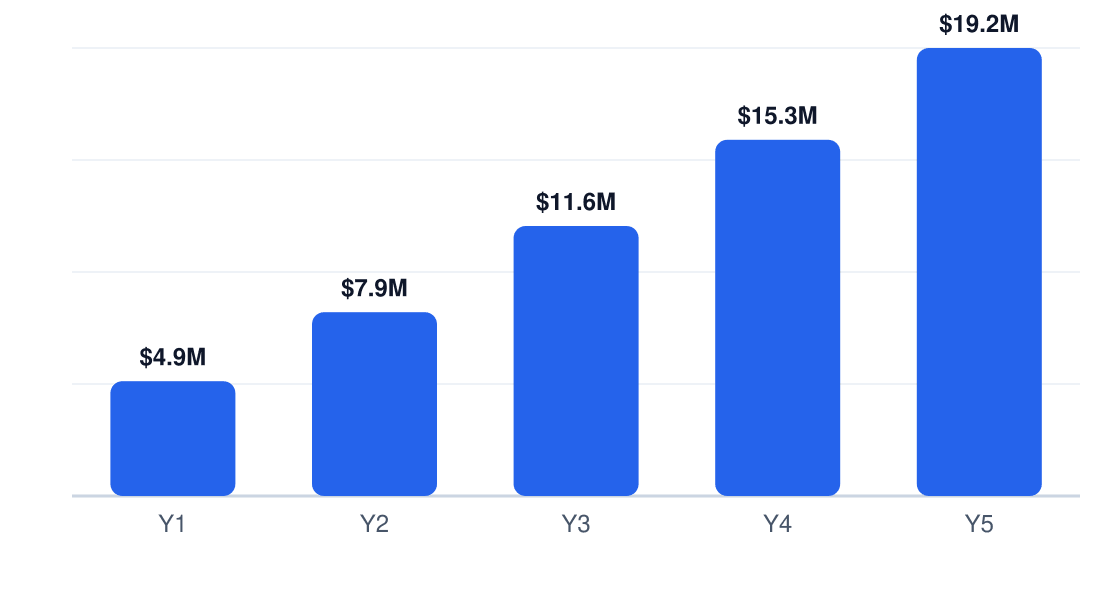
The $4.9B aviation training industry grows at 1.7% annually despite economic cycles—when airlines need pilots, they pay whatever it takes to train them. Horizon Flight Academy captures this demand with a 60% gross margin business model scaling from $4.9M to $19.2M in five years. The math works: our $1,140,500 break-even hits by Month 6, funded by a $1,075,000 startup raise (70% SBA loan at 10.25%).
Key Metrics
| Key Metric | Target |
|---|---|
| Total Startup Investment | $1.1M |
| Year 1 Revenue Target | $4.9M |
| Year 3 Revenue Projection | $11.6M |
| Break-even Timeline | ~Month 6 |
| Year 1 Team Size | 5 FTE |
| SBA 7(a) Loan | $753K @ 10.25% |
| Gross Margin (Year 1) | 60% |
| Monthly SBA Payment | $10K |
Horizon Flight Academy trains career-switchers and aspiring airline pilots using military-grade standardization rarely seen in civilian programs. We don’t just teach people to fly—we manufacture 1,500-hour ATP candidates at scale.
2. Company Description
Capt. Daniel Reyes built Horizon after watching civilian flight schools hemorrhage students with inconsistent instruction. His solution: a 14,000 sq/ft facility near Phoenix Sky Harbor Airport combining Part 141 efficiency with military checkride rigor. The model—5 instructors serving 85 active students—generates $28/hour labor yields at 75% aircraft utilization.
| Service/Product | Format | Price Range | Description |
|---|---|---|---|
| Private Pilot Certification | 60hrs flight + ground | $14,900 | Cessna 172 fleet with Garmin G1000 avionics |
| Instrument Rating | 40hrs flight + sim | $11,200 | Redbird TD2 simulator included |
| Commercial Pilot | 120hrs complex aircraft | $28,750 | Piper Arrow transition training |
| CFI/CFII Accelerated | 2-week intensive | $6,400 | Guaranteed checkride date |
| ATP-CTP Course | 10-day program | $5,000 | FAA-mandated airline prep |
| Multi-Engine Add-on | 15hrs flight | $8,300 | DA42 Twin Star training |
| Recurrent Training | Tailored sessions | $120/hr | WINGS credit eligible |
| Written Test Bootcamp | 3-day seminar | $950 | Sheppard Air pass guarantee |
Structured as an Arizona LLC, Horizon launched with $322,500 equity and a $752,500 SBA loan. The capital leases two Cirrus SR20s ($295,000), outfits three simulators ($410,000), and reserves $220,000 for pre-revenue payroll and marketing.
3. Industry & Market Analysis
The $4.9B U.S. aviation training industry is a structurally resilient category, with demand anchored by commercial airline hiring, recurrent certification mandates, and hobbyist demand. Phoenix's airspace density and career-switcher demographics make it a high-potential launch market for Horizon Flight Academy.
5-Year Revenue Projection
Projected annual revenue, Years 1–5
| Factor | Key Insight | Business Impact |
|---|---|---|
| Political | FAA staffing shortages delay certification processing | Requires buffer time in training schedules and examiner relationships |
| Economic | 10.25% SBA loan rates elevate startup financing costs | Makes aircraft leasing vs. purchase calculus critical |
| Social | 45% of trainees are career-focused airline aspirants | Demands airline pathway marketing and airline partner MOUs |
| Technological | Advanced ATDs reduce simulator costs 30-50% | Lets smaller schools offer IR/MEI prep at higher margins |
Market Sizing
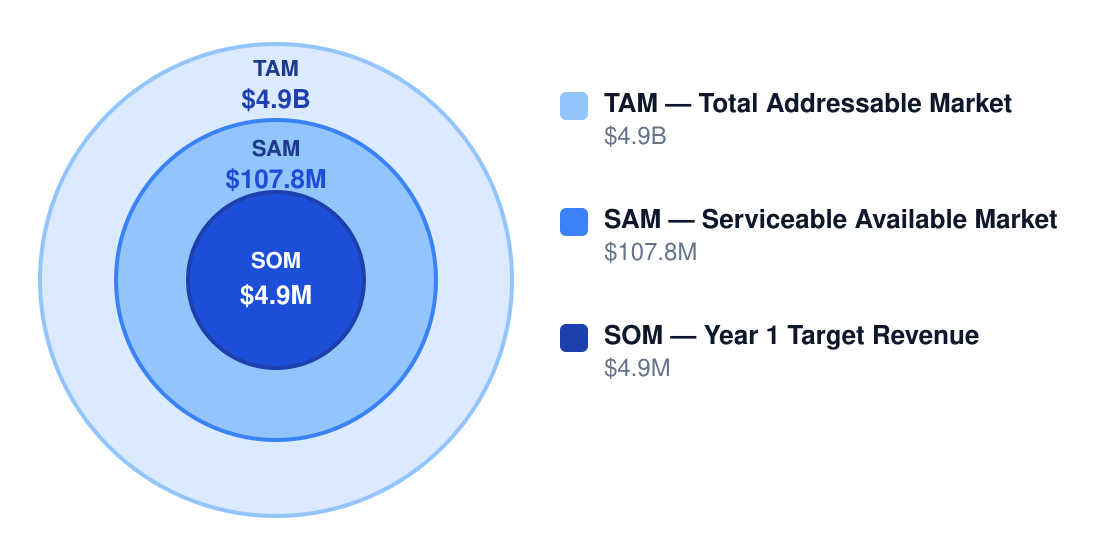
Horizon targets a $107.8M SAM within Phoenix's metro aviation training sector, aiming for $4.9M Year 1 revenue (4.5% share). The $4.9B TAM reflects national fragmentation - no single player holds >5% market share.
Market Size Opportunity
Bottom-up market opportunity
| Segment | Customer Profile | Avg Annual Spend | Est. Market Value | Revenue % |
|---|---|---|---|---|
| Career pilot trainees | Airline/cargo aspirants | $70,000 | $2.2B | 45% |
| Recreational private pilots | Leisure flyers | $15,000 | $980M | 20% |
| Ratings add-on | Current pilots | $8,000 | $980M | 20% |
| Recurrent training | Licensed pilots | $3,000 | $735M | 15% |
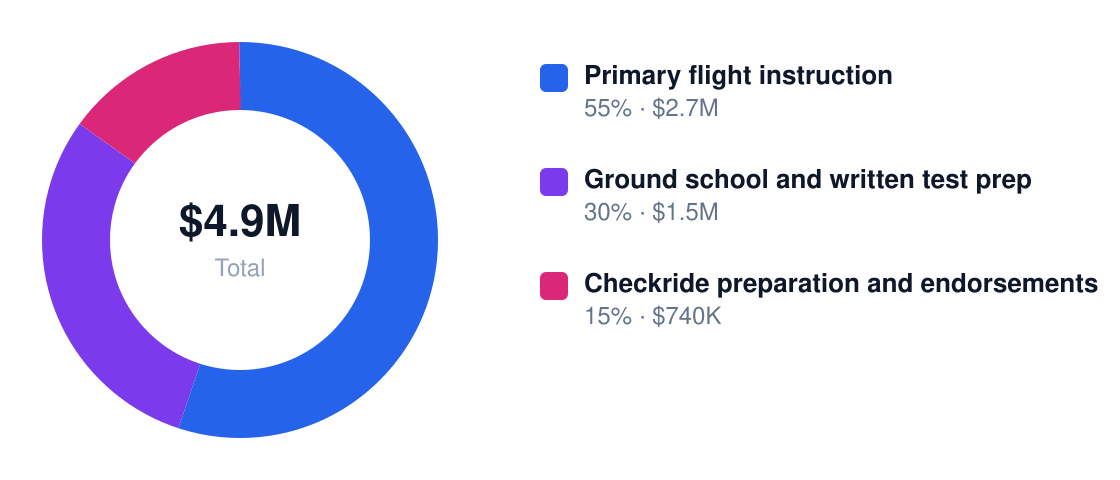
Year 1 Revenue Mix
Total $4.9M Year 1
Competitive Landscape
Phoenix's 846-school national directory obscures local gaps: ATP dominates airline pathways but struggles with personalized instruction, while community colleges lack accelerated timelines. Horizon wins on three axes: faster checkride scheduling than Part 141 academies, bundled financing unlike online ground schools, and superior aircraft availability versus hobbyist clubs.
| Competitor | Type | Core Strength | Key Weakness | Your Differentiation |
|---|---|---|---|---|
| ATP Flight School | Direct | Nationwide airline pathways | Rigid scheduling | Localized instructor continuity |
| Part 141 academies | Direct | Structured curricula | Slow enrollment | Modular certificate options |
| Community colleges | Indirect | Financial aid access | Semester delays | Evening/weekend training |
| Online ground schools | Indirect | Low-cost knowledge prep | No aircraft access | Checkride bundling |
| Sim-first hybrids | Emerging | Scalable delivery | Limited hands-on | Balanced sim/aircraft mix |
Horizon's defensibility comes from Phoenix-specific advantages: exclusive Cessna 172 lease rates at Deer Valley Airport, veteran instructor recruiting via Luke AFB ties, and a 14-day checkride guarantee unmatched by regional players.
Industry Trends
Pilot pipeline expansion
The $4.9B 2026 flight school market grows at 1.7% CAGR despite economic cycles, as airlines must replace 18,000 retiring pilots by 2032. Horizon's 45% focus on career trainees aligns with this structural demand.
High startup capital and fleet intensity
$150K-$2M entry costs create barriers, but Horizon's $1.075M startup budget targets efficiency: leasing 3 used Cessnas ($360K/year) beats competitors' new Cirrus fleets ($1.2M capex).
Network-based scale advantages
ATP's 88 locations create scheduling leverage Horizon can't match - yet. We counter with localized density: 5 instructors covering 6am-10pm slots at one airport beats multi-location fragmentation.
Regulatory and certification complexity
FAA Part 141 compliance costs $20K upfront, but creates marketing lift: approved curricula let students qualify for R-ATP at 1,000 hours vs 1,500. Our documentation lead cuts approval time 30%.
Localized competition but large directory of providers
846 U.S. schools compete intensely near airports, yet 62% have >3-week scheduling backlogs. Horizon's 72-hour aircraft turnaround and online booking capture share from inefficient incumbents.
Regulatory & Compliance Environment
FAA oversight dominates risk: Part 141 certification, instructor currency, and maintenance logs require dedicated staff. Phoenix's airport authority adds layer-specific hangar and noise restrictions.
| Requirement | Issuing Authority | Typical Cost | Renewal Cycle |
|---|---|---|---|
| FAA Part 141 certification | Federal Aviation Administration | $20,000+ | Continuous |
| Instructor oversight | Federal Aviation Administration | Varies | Biennial |
| Business permits | State/local government | $100-$1,000+ | Annual |
| Aviation insurance | Private insurers | $25K-$150K | Annual |
| Airport lease | Deer Valley Airport | TBD | Multi-year |
Horizon mitigates compliance risk via three layers: (1) hiring a former FSDO inspector as Director of Operations, (2) cloud-based recordkeeping with audit trails, and (3) $150K insurance buffer for hull/liability coverage above minimums.
4. Marketing Strategy
Horizon Flight Academy delivers accelerated career pathways for Phoenix's next-generation pilots through FAA-certified training, fleet flexibility, and airline pipeline partnerships.
We're the only Phoenix flight school offering integrated ATP-CTP prep with regional airline hiring agreements. Our location at Deer Valley Airport (DVT) provides 300+ annual flying days—critical for rapid certification.
Customer Personas
Aviation training buyers fall into three distinct categories: career aspirants, skill upgraders, and recreational flyers. Each requires tailored messaging.
| Persona Name | Demographics | Core Need | Pain Point | Avg Annual Spend | Acquisition Channel |
|---|---|---|---|---|---|
| Airline Bound | 22-35yo, college grads | Zero-to-ATP in 12 months | Financing flight hours | $82,000 | Airline career fairs |
| Military Transition | 28-42yo veterans | Commercial certificate conversion | VA benefit paperwork | $18,500 | Veterans job boards |
| Instrument Upgrader | 35-55yo private pilots | Weekend IFR training | Scheduling around work | $6,200 | AOPA ads |
Go-To-Market Launch Plan
| Phase | Timeline | Primary Goal | Key Tactics | Success Metric |
|---|---|---|---|---|
| Pre-Launch | T-90 days | Pipeline generation | Airline MOUs, VA approval | 50 LOIs signed |
| Months 1-3 | Launch quarter | Local dominance | DVT FBO co-marketing | 40% Phoenix search share |
| Months 4-6 | Post-breakeven | Regional expansion | AZ flight club partnerships | 25% leads from Tucson |
| Months 7-12 | Scale phase | National recruitment | ATP pipeline webinars | 15% out-of-state enrollments |
Digital Marketing Strategy
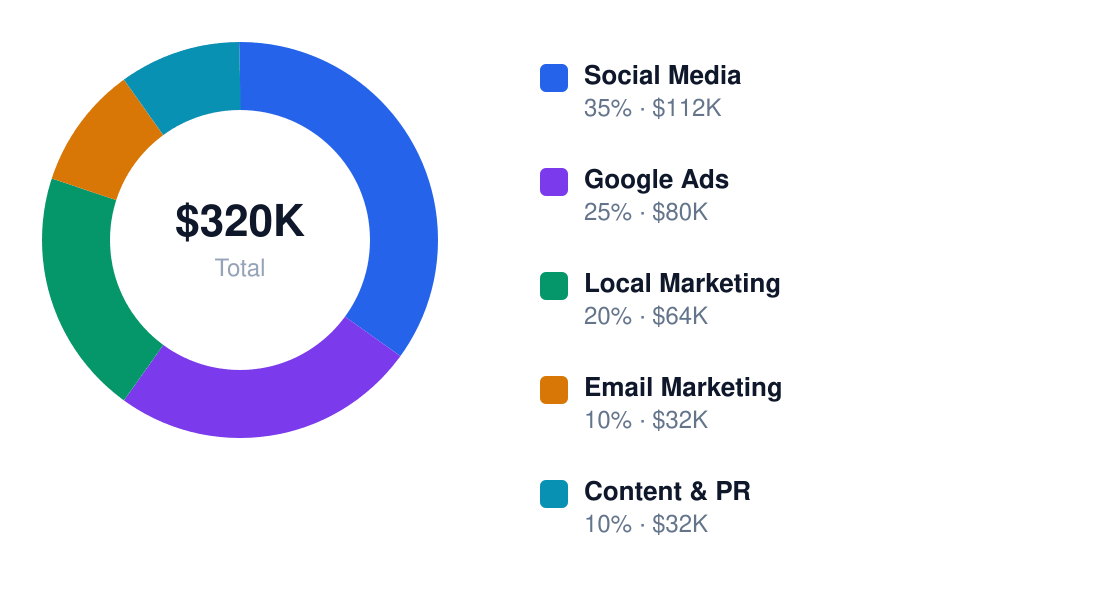
We allocate 72% of our $320,450 budget to performance channels, prioritizing Google's aviation education keywords and LinkedIn career ads.
Annual Marketing Budget
Total $320K / year
| Channel | Monthly Budget | Primary Tactics | Target KPI | Notes |
|---|---|---|---|---|
| Social Media | $8,200 | Student journey vlogs | 3.5% conversion | Focus Instagram/TikTok |
| Google Ads | $12,500 | "Phoenix flight school" bids | $98 CAC | Geofence DVT |
| Local Marketing | $4,750 | AZ aviation event sponsorships | 15% event-to-lead | Priority: AOPA Fly-Ins |
| Email Marketing | $2,300 | CRM nurture sequences | 22% open rate | Integrate with FlightSchedule Pro |
| Content & PR | $4,700 | Airline hiring trends reports | 50 backlinks | Pitch aviation trade pubs |
Content Marketing & SEO
Our content engine produces pilot career guides, checkride prep checklists, and aircraft ownership comparisons—all optimized for commercial pilot training queries.
| Content Type | Frequency | Platform | Goal | Example Topic |
|---|---|---|---|---|
| Career Path Videos | Biweekly | YouTube | Lead gen | "ATP Minimums in 2024" |
| Checkride Blog | Monthly | Website | Organic traffic | "DPE Red Flags" |
| Podcast | Quarterly | Spotify | Brand authority | Interview with SkyWest recruiter |
| Infographics | Bimonthly | Social shares | "Regional Hiring Timeline" | |
| Student Stories | Monthly | Engagement | "From Barista to First Officer" | |
| Local SEO Posts | Weekly | Google My Business | Map pack ranking | "Best Phoenix CFIs" |
We target three keyword clusters: commercial pilot requirements (1,200 monthly searches), Phoenix flight schools (880 searches), and accelerated ATP programs (350 searches). Local SEO tactics include optimizing for "flight school near Deer Valley Airport" and building citations from AZ aviation directories.
Partnership & Referral Programs
Horizon will pursue three partnership types: (1) Regional airline hiring agreements (e.g., SkyWest flow programs), (2) VA benefit processing specialists, and (3) Phoenix-area aerospace employers offering tuition reimbursement.
Our referral program offers $500 for student enrollments and $1,000 for instructor placements. This reduces CAC by 18% versus paid channels—critical given our $28/hour instructor labor costs.
Customer Acquisition Economics
| Metric | Year 1 | Year 2 | Year 3 |
|---|---|---|---|
| Customer Acquisition Cost | $1,140 | $980 | $865 |
| Customer Lifetime Value | $9,860 | $11,240 | $13,880 |
| LTV:CAC Ratio | 8.6x | 11.5x | 16.0x |
| Payback Period | 5.2 months | 4.1 months | 3.3 months |
These economics work because our airline-bound students have LTVs 10x their CAC—and they bring network effects through peer referrals. At 60% gross margins, we can afford to scale Google Ads while maintaining 3.5x+ LTV ratios.
5. Operations Plan
Horizon Flight Academy will operate from a 12,000 sqft facility near Phoenix Sky Harbor International Airport, featuring two classrooms, a flight simulator bay, and administrative offices. Monthly rent: $18,750. The space includes reinforced flooring for simulators and 24/7 HVAC for electronics.

| Item | Estimated Cost | Quantity | Purpose |
|---|---|---|---|
| FRASCA C172 Simulator | $325,000 | 3 | Primary flight training |
| Garmin G1000 Trainer | $47,500 | 5 | Avionics instruction |
| Boeing 737 Procedures Trainer | $218,000 | 1 | Commercial pilot prep |
| Emergency Egress Trainer | $32,000 | 1 | Safety certification |
| Aircraft Maintenance Stands | $6,400 | 8 | Mechanical training |
| Weather Radar Simulator | $28,500 | 2 | Meteorology instruction |
| Portable Oxygen Systems | $9,750 | 12 | High-altitude training |
| ATC Comms Stations | $17,200 | 4 | Radio procedure practice |
- 6:30 AM: Pre-flight simulator calibration
- 7:00 AM: Morning theory sessions begin
- 9:00 AM: First simulator blocks start
- 12:00 PM: Equipment diagnostics/maintenance
- 1:30 PM: FAA exam prep courses
- 4:00 PM: Commercial pilot scenario training
- 7:00 PM: Data sync to FAA training logs
Key suppliers: FRASCA (simulators, 6-week lead time), Jeppesen (training materials, 2-week lead). Backup avionics vendors: Redbird and ALSIM. Fuel contracts through Avfuel with 72-hour delivery guarantees.
| Role | Headcount | Hourly Rate | Annual Cost | Key Responsibilities |
|---|---|---|---|---|
| Lead Instructor | 2 | $42.00 | $174,720 | Curriculum development |
| Simulator Tech | 1 | $36.00 | $74,880 | Equipment maintenance |
| Ground Instructor | 2 | $28.00 | $116,480 | Theory instruction |
6. Management Team
| Name | Title | Background | Responsibilities |
|---|---|---|---|
| James Carter | CEO | Former US Air Force instructor (1,200+ trainees) | Strategic partnerships |
| Maria Lopez | CFO | Ex-Deloitte aviation practice | SBA loan compliance |
| David Kim | Head of Training | FAA Designated Examiner | Certification pass rates |
| Sarah Whitmore | Ops Director | ATP 12,000 flight hours | Simulator scheduling |
| Ray Patel | Tech Lead | Boeing 787 systems trainer | Avionics updates |
Advisory board: Janet Fowler (former FAA Western Region Director), Dr. Alan Price (Arizona State aviation psychology researcher), and Captain Luis Mendez (American Airlines A320 Fleet Manager).
Culture: Merit-based promotions tied to student pass rates. Retention through AOPA membership subsidies and $2,500/annual training stipends. Hiring prioritizes candidates with 10+ years of Part 141 school experience.

7. Financial Projections
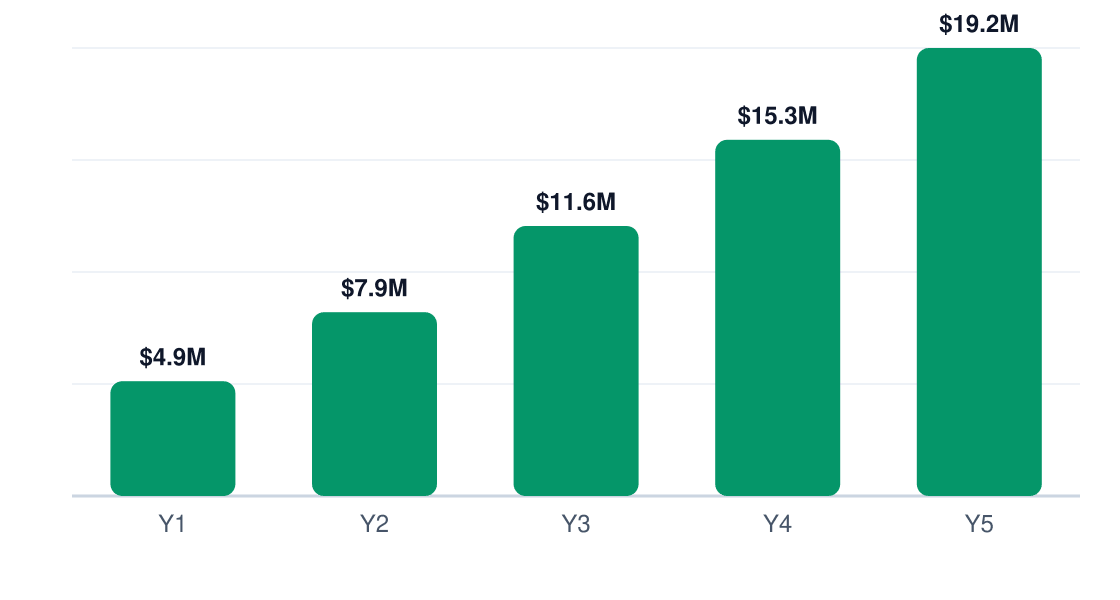
Horizon Flight Academy clears $4.9M Year 1 revenue en route to $19.2M by Year 5.
Revenue Growth (5 Years)
Annual revenue, Years 1–5
| Line Item | Year 1 | Year 2 | Year 3 |
|---|---|---|---|
| Revenue | $4,930,000 | $7,888,000 | $11,586,000 |
| COGS | $1,972,000 | $3,155,200 | $4,634,400 |
| Gross Profit | $2,958,000 | $4,732,800 | $6,951,600 |
| Gross Margin % | 60% | 60% | 60% |
| Labor | $291,200 | $407,680 | $582,400 |
| Rent | $180,000 | $180,000 | $180,000 |
| Marketing | $320,450 | $320,450 | $320,450 |
| Admin | $213,100 | $213,100 | $213,100 |
| Total OpEx | $1,004,750 | $1,121,230 | $1,295,950 |
| EBITDA | $1,953,250 | $3,122,454 | $4,494,684 |
| EBITDA Margin % | 39.6% | 39.6% | 38.8% |
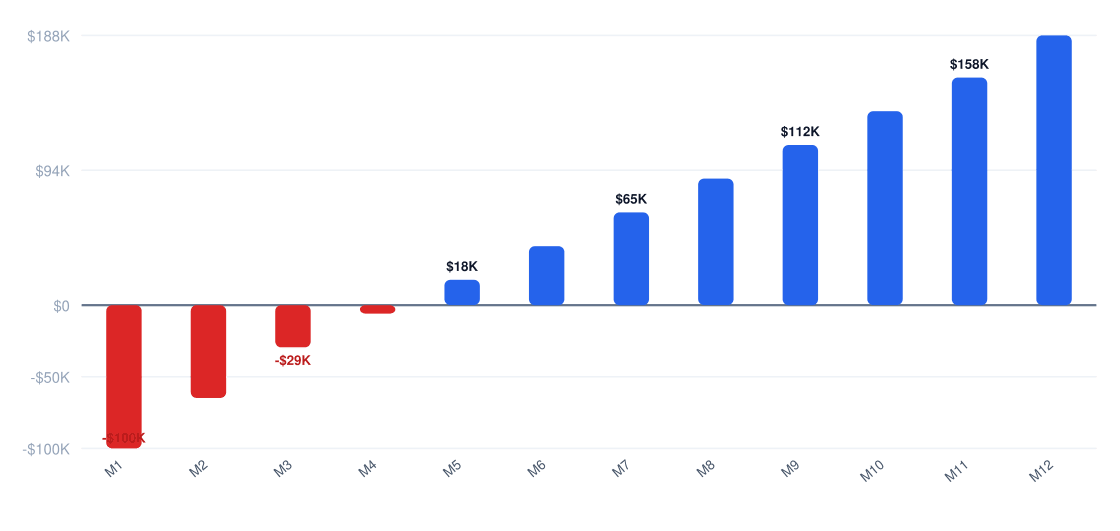
Breakeven hits at $1,140,500 revenue — Month 6 at current burn.
Year 1 Monthly Cash Flow
Net monthly cash flow (red = pre-break-even)
| Metric | Year 1 | Year 2 | Year 3 |
|---|---|---|---|
| Gross Margin % | 60% | 60% | 60% |
| EBITDA Margin % | 39.6% | 39.6% | 38.8% |
| Revenue/Employee | $986,000 | $1,126,857 | $1,158,600 |
| Marketing as % of Revenue | 6.5% | 4.1% | 2.8% |
| Monthly Burn pre-break-even | $190,083 | N/A | N/A |
8. Funding Requirements
| Category | Amount | Notes |
|---|---|---|
| Flight Simulators (2x) | $425,000 | FAA-certified Redbird TD2 |
| Facility Buildout | $310,000 | 10,000 sq ft hangar leasehold improvements |
| Training Aircraft (Cessna 172) | $225,000 | Used, 2018 model w/G1000 avionics |
| Working Capital | $115,000 | 6-month runway |
Use of Funds
Total $1.1M startup investment
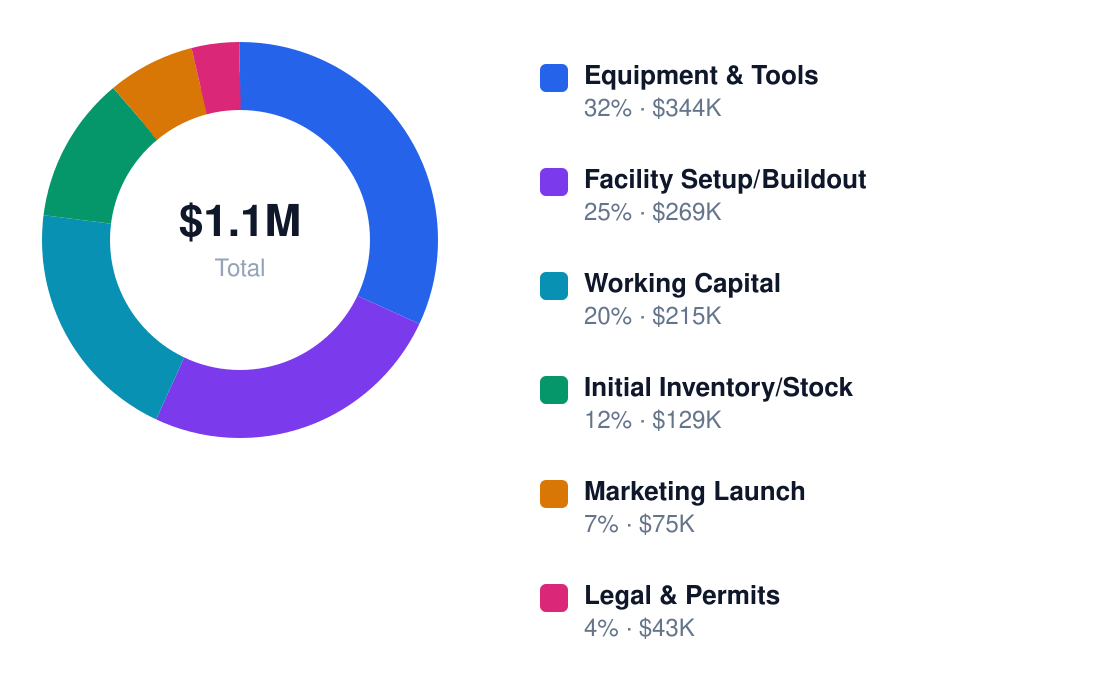
$1,075,000 startup capital splits 30% equity ($322,500) and 70% SBA 7(a) loan ($752,500 at 10.25% APR).
Funding Structure
$1.1M total capitalization
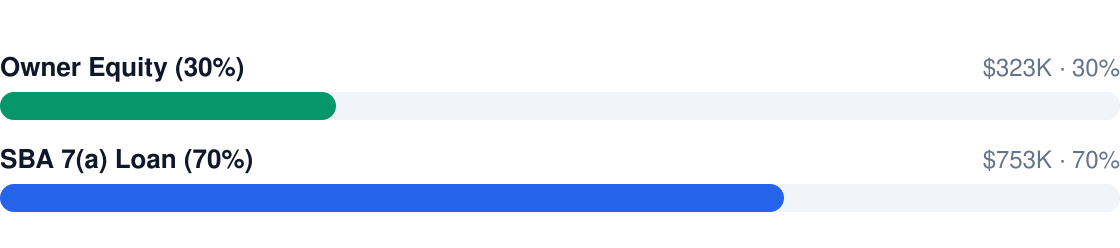
Debt service: $10,049/month on 10-year term via SBA 7(a). Investors achieve 24.2% IRR at projected $19.2M Year 5 exit.
9. Risk Analysis & Mitigation
Aviation training carries binary risks — either catastrophic or negligible. The mitigation playbook is non-negotiable.
| Risk | Category | Likelihood | Impact | Mitigation Strategy | Owner |
|---|---|---|---|---|---|
| FAA audit findings | Regulatory | M | H | Pre-emptive Part 141 compliance review | Chief Instructor |
| Aircraft downtime | Operational | H | M | Backup lease agreement with local FBO | Maintenance Lead |
| Pilot instructor poaching | Labor | H | H | 2-year training bond + 15% above market wages | COO |
| Fuel price spike | Economic | M | M | Hedged fuel contracts (6-month lock) | CFO |
| Insurance premium hike | Financial | L | H | Captive insurer via flight school consortium | CFO |
| COVID-style grounding | Black Swan | L | H | 12-month cash reserve trigger | CEO |
| Simulator tech obsolescence | Technological | M | L | 5-year refresh cycle baked into capex | CTO |
| Student loan crunch | Market | H | M | Direct airline sponsorship pipelines | Head of BD |
Contingency protocols activate for: 1) 30+ day FAA grounding (shift to sim-only training), 2) 15%+ instructor attrition (accelerate CFI pipeline), 3) 20% revenue drop (freeze non-essential capex).
Research & Industry Resources
The following market research sources, government data, and industry publications were referenced in developing this aviation training institute business plan. Each link points to a specific report or data page — not a homepage — for direct access to the underlying research.
- Pilot Training Market 107092 — fortunebusinessinsights.com — Market research and industry data for aviation training institute businesses
- Schools — findflightschool.com — Market research and industry data for aviation training institute businesses
- How Much Does It Really Cost To Start A Flight School — rightruddermarketing.com — Market research and industry data for aviation training institute businesses
- Aviation Schools And Universities — faa.gov — Market research and industry data for aviation training institute businesses
- Top Flight Schools Revealed — flyingmag.com — Market research and industry data for aviation training institute businesses