How To Start A Aviation Training Institute Business
1. Is Starting a Aviation Training Institute Business Right for You?
The $2.07B aviation training market is stagnant (0% CAGR), but that masks real opportunity: 846 US flight schools average $350,000 annual revenue by serving pilots who need FAA certifications. This isn't a get-rich-quick scheme—it's a capital-intensive, highly regulated play for aviation professionals who can manage safety, compliance, and aircraft utilization. If you lack flight instruction experience or the stomach for FAA audits, skip this. The winners here are former CFIs, airline dispatchers, or school managers who know how to balance logbooks and P&Ls.

| Startup Snapshot | Benchmark |
|---|---|
| Typical Startup Cost | $150K – $750K |
| Recommended Launch Budget | $450K |
| Year 1 Revenue Target | $298K |
| Break-even Timeline | ~Month 16 |
| Initial Team Size | 5 FTE |
| Market Size (US) | $2.07B |
| Industry Growth (CAGR) | 0% |
| Gross Margin Target | 62% |
- Pro: Recurring revenue from multi-year pilot training pathways
- Pro: 62% gross margins once aircraft are utilized 60+ hours/week
- Pro: Veteran education benefits and international students pay upfront
- Con: $450,000 minimum startup cost for even a modest operation
- Con: 16 months to break-even with tight cash flow during certification
- Con: Liability insurance runs $25,000+/year before your first student
2. Understanding the Market Opportunity
The $2.1B total addressable market includes everyone from hobbyists to future airline pilots, but your realistic serviceable market is the $45.5M pool of career-focused students near your airport. Dallas works because it has 3,200+ active student pilots and major airline feeder programs, but run the numbers for your metro: you'll need at least 150 serious students within 30 miles to hit Year 1 revenue of $298,000.
Market Size Opportunity
Market opportunity for new entrants
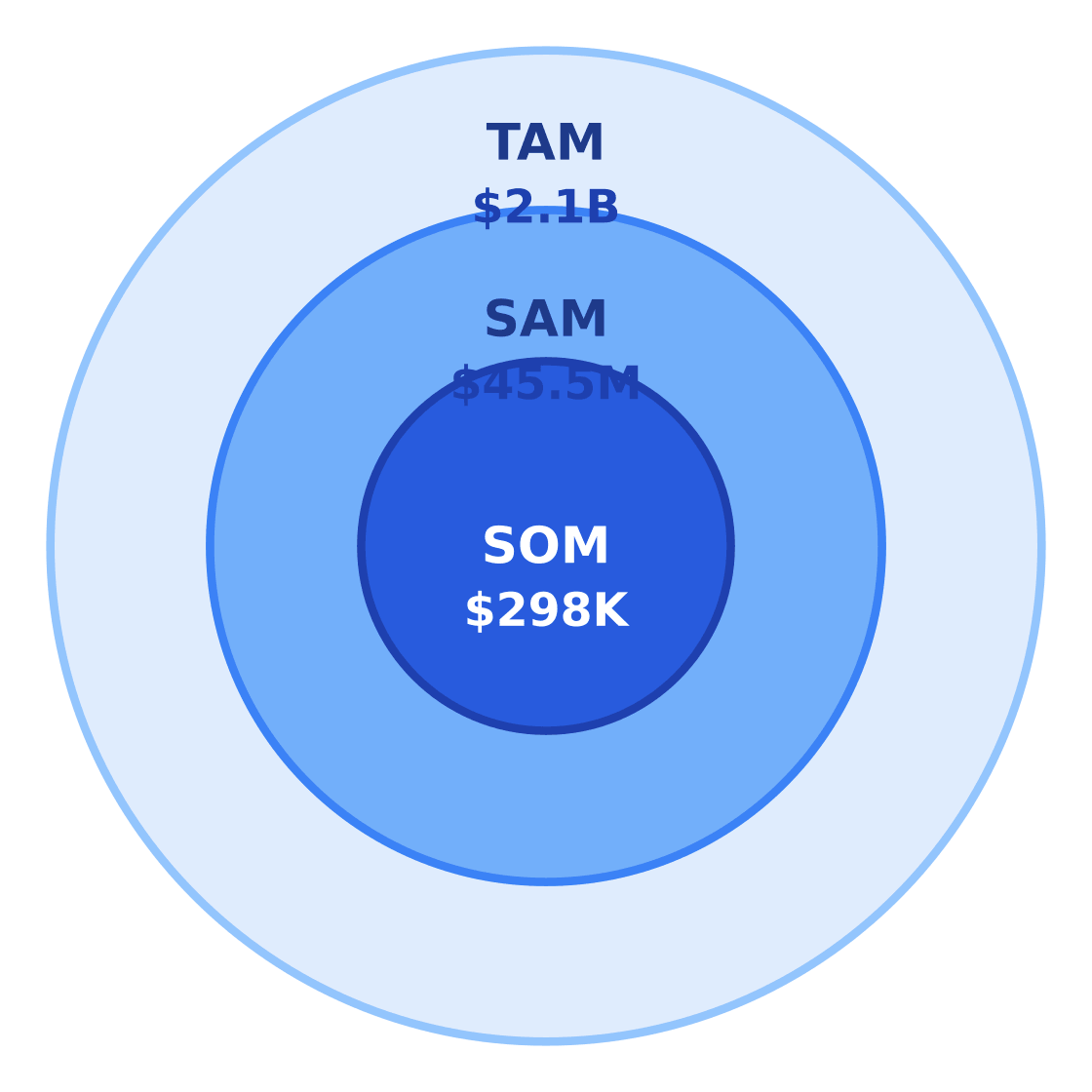
$2.1B
$45.5M
$298K
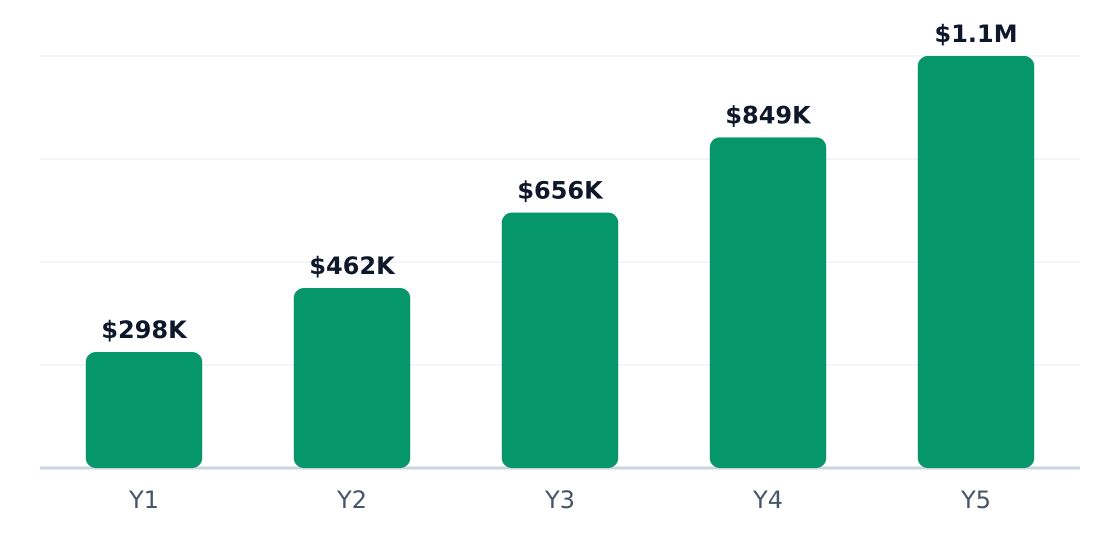
5-Year Revenue Potential
Projected revenue if you execute the plan
Your primary customers are 22-35 year-olds pursuing commercial certificates (70% of revenue), followed by veterans using GI Bill benefits (15%) and international students needing FAA conversions (10%). Hobbyists exist but won't pay the bills. The competition breaks into three tiers: mom-and-pop Part 61 schools (easy to out-execute), university programs (hard to compete with their financing), and ATP-style fast tracks (your real benchmarks).
3. Your Step-by-Step Launch Roadmap
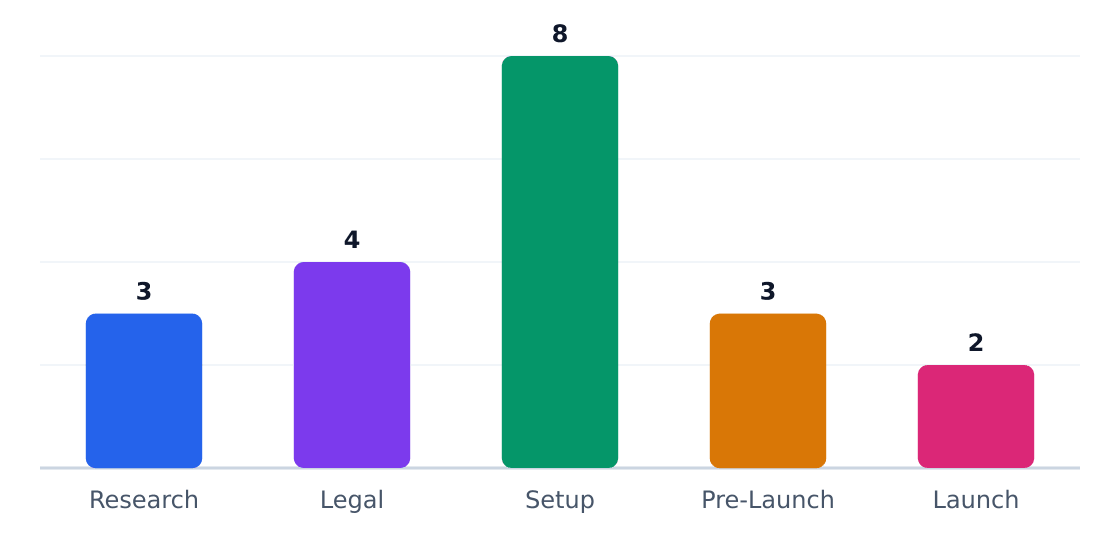
From paperwork to propellers, expect a 20-week sprint to launch. Dallas's 11 public airports give you runway options, but red tape moves at FAA speed.
Launch Timeline by Phase (Weeks)
Typical duration from idea to opening day
| Step | Phase | Duration | Est. Cost | Key Action |
|---|---|---|---|---|
| 1 | Research | 2wk | $1,000 | Survey DFW flight schools charging $120-$300/hr for Cessna 172s |
| 2 | Research | 2wk | $0 | Decide if Part 141's rigid syllabus beats Part 61's flexibility |
| 3 | Legal | 2wk | $1,000 | File Texas LLC papers before touching an aileron |
| 4 | Setup | 6wk | $25,000 | Negotiate Addison Airport's $12k-$120k/year hangar leases |
| 5 | Setup | 8wk | $200,000 | Lease two $100k Piper Archers with G1000 avionics |
| 6 | Setup | 3wk | $30,000 | Secure $3M liability coverage - non-negotiable |
| 7 | Setup | 4wk | $6,000 | Hire chief instructor making $72k/year base |
| 8 | Pre-Launch | 6wk | $15,000 | Build FAA-approved night VFR curriculum |
| 9 | Pre-Launch | 12wk | $10,000 | Submit 300-page Part 141 application if going structured |
| 10 | Pre-Launch | 4wk | $8,000 | Build booking system for $250 discovery flights |
| 11 | Launch | 2wk | $5,000 | Train first 5 students at 20% discount |
| 12 | Launch | 4wk | $5,000 | Scale to 85% aircraft utilization (35hrs/week) |
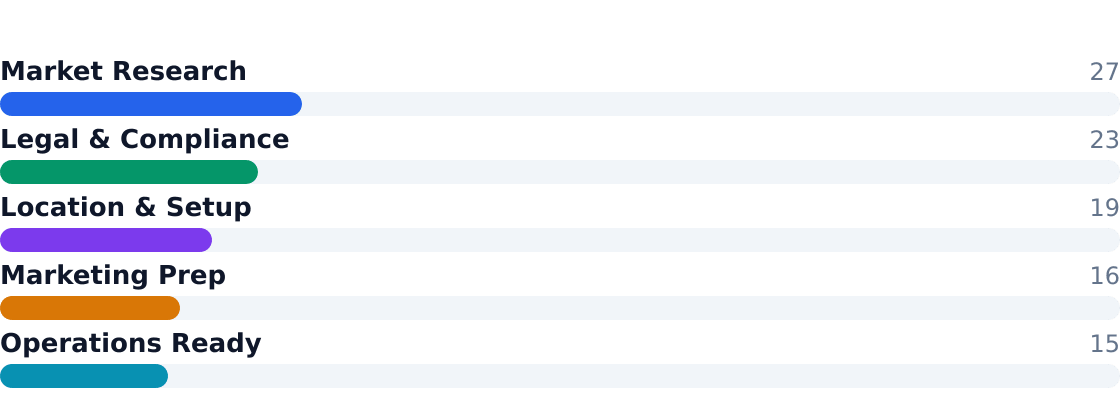
Launch Readiness by Phase
Percentage complete at each stage before opening
Research Phase (4 weeks): Call every flight school within 50 miles posing as a student. You'll hear "booked solid for months" or get voicemail - that's your green light.
Legal/Setup Phase (19 weeks): The $256k gut check. Lease terms and aircraft availability dictate your start date more than your ambition does.
Pre-Launch Phase (22 weeks): FAA paperwork moves slower than a student's first landing. Use the wait to recruit military CFIs transitioning to civilian work.
Launch Phase (6 weeks): Start small - 5 students prove your scheduling systems before accepting 50. DFW's 9,000 student pilots won't vanish overnight.
4. Legal Structure, Licenses & Compliance
An LLC isn't optional when your assets include $200k aircraft. Texas charges $300 to file, but limits your liability when a student "forgets" the landing gear.
| Requirement | Issuing Body | Cost | Timeline | Renewal |
|---|---|---|---|---|
| FAA pilot school approval | FAA | $5,000-$25,000 | 3-9 months | Ongoing compliance |
| Business licenses | Texas | $500-$3,000 | 1-4 weeks | Annual |
| Aircraft registration | FAA | $200-$2,000 | 2-8 weeks | Continuous |
| CFI credentialing | FAA | $200-$1,500 | Varies | FAA currency rules |
| Liability insurance | Private | $15,000-$80,000 | 1-4 weeks | Annual |
| Airport lease | Airport authority | $12,000-$120,000 | 1-6 months | Annual/multi-year |
File with the SBA business registration guide first, but know the FAA owns your soul now.
Your insurance binder needs three zeros: $1M per occurrence, $3M aggregate. Add workers' comp if employees exceed Texas' small-employer exemption (usually under 5).
5. Location, Equipment & Startup Costs
Lease at a Dallas-area airport with at least 5,000 sq ft for classrooms and dispatch. Buy the hangar if you can swing the $1.2M median price—otherwise lease at $4.50/sq ft/month. Zoning must allow flight instruction (check Dallas City Code Chapter 51A). Avoid Addison Airport unless you want to compete with 6 established schools.
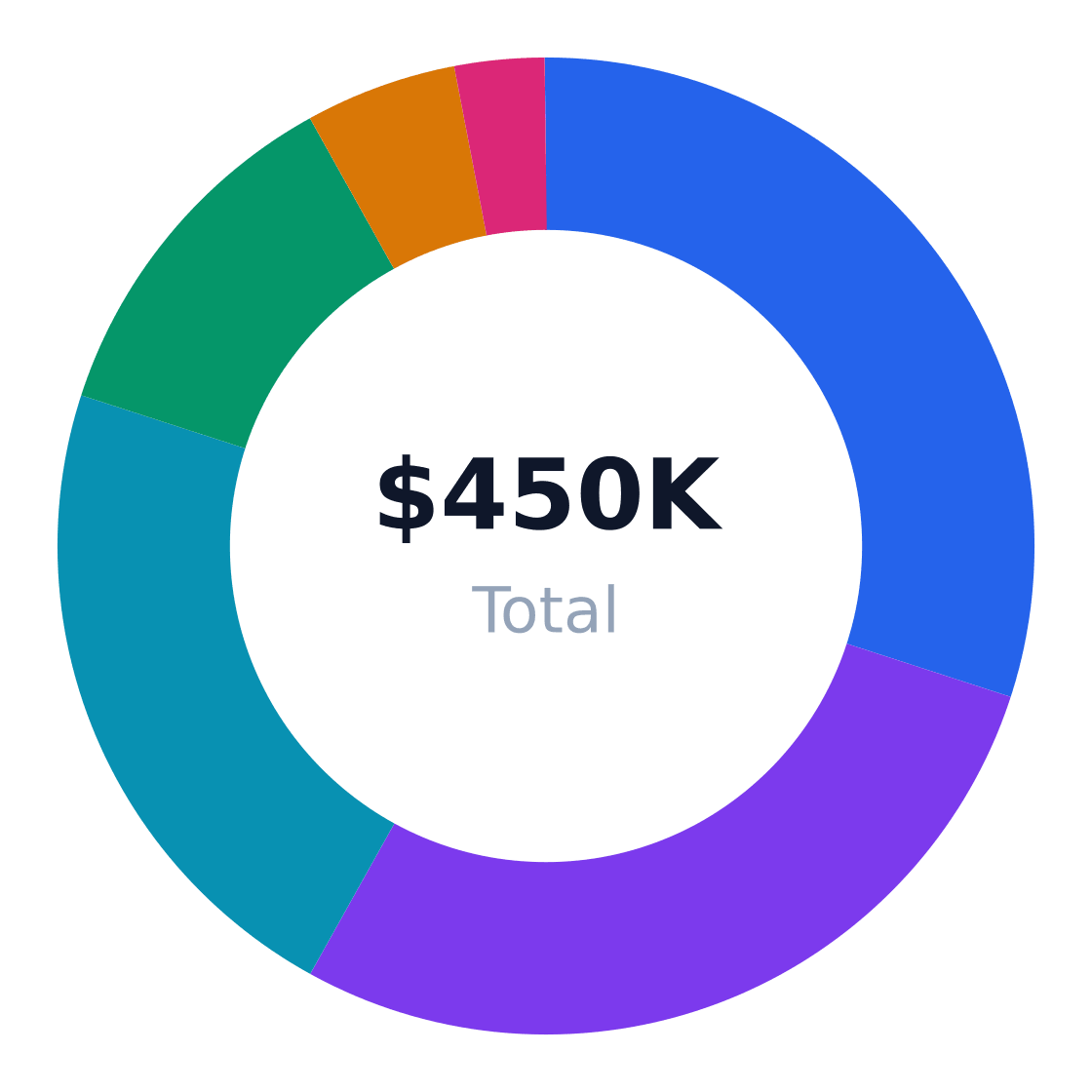
Startup Cost Breakdown
Total budget: $450K
| Item | New/Used | Est. Cost | Notes |
|---|---|---|---|
| Cessna 172 | Used | $220,000 | 2015 model w/ G1000 avionics |
| Flight sim | New | $85,000 | Redbird FMX w/ motion |
| Classroom AV | New | $18,000 | Projectors + tablets |
| Dispatch software | New | $12,000/yr | Flight Schedule Pro |
| Insurance | New | $42,000/yr | $1M liability minimum |
| Fuel tank | Used | $7,500 | 1,000-gallon capacity |
| FAA testing | New | $3,800 | Part 141 approval fees |
| Safety gear | New | $5,200 | Parachutes + fire kits |
Source aircraft from Textron or Controller for leases. Use Aviation Insurance Resources for hull coverage. Buy fuel in bulk from Titan Aviation—Dallas prices average $6.20/gal.
6. Marketing & Customer Acquisition
Build a 150-person waitlist before opening by offering $500 deposits for priority scheduling. Target ex-military via Veterans Flying Club ads and college students with "0 to ATP in 18 months" promos. The 32% of Dallas trainees paying cash will fund your loan payments.
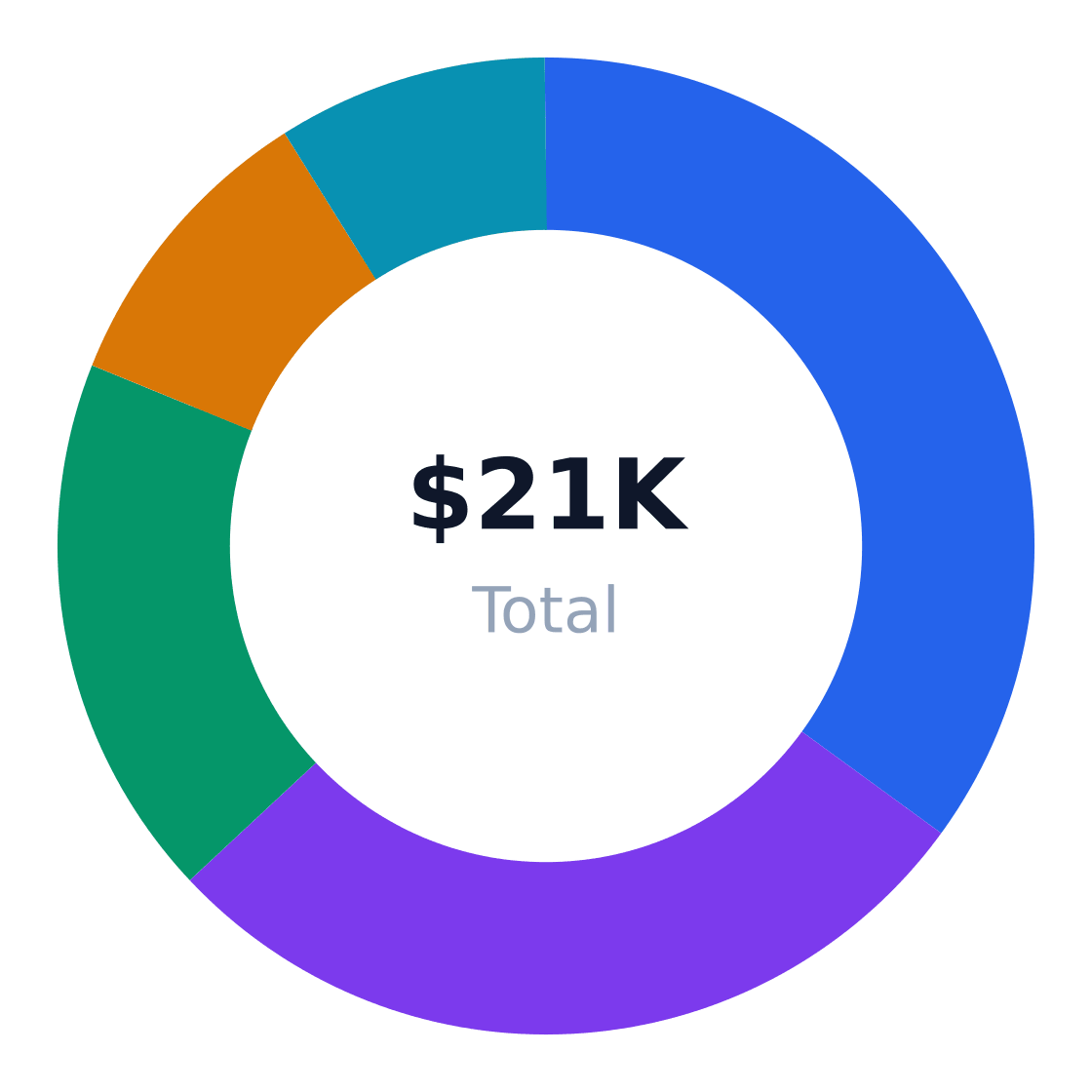
Year 1 Marketing Budget
Total $21K / year
| Channel | Monthly Budget | Expected CAC | 90-Day Goal |
|---|---|---|---|
| Google Ads | $3,500 | $87 | 15 leads |
| Instagram Reels | $1,200 | $22 | 2M impressions |
| Flight school fairs | $2,000 | $310 | 7 enrollments |
| Local SEO | $850 | $0 | Top 3 rankings |
| Airport billboards | $1,800 | $145 | 12 visits |
| Referrals | $500 | $0 | 8% conversion |
Claim your Google Business Profile with "Dallas Flight Training" keywords. Post cockpit POV videos weekly—they get 3x more shares than classroom content. Target "how to become a pilot in Texas" searches with blog posts linking to your Part 141 program.
Host a grand opening with $99 discovery flights—require credit card holds to filter tire-kickers. Partner with Southwest Airlines recruiters to speak about regional hiring. Distribute branded logbooks to the first 50 attendees. Track conversions from airport FBOs—they drive 28% of local students.
7. Day-to-Day Operations
Open at 6:30 AM sharp – 70% of your flight school bookings happen before 9 AM. First task: check all 5 simulators (log maintenance hours), confirm instructor assignments, and verify TSA compliance binders. Peak hours run 6:30-10 AM and 3-7 PM when working professionals train. Close at 9 PM after reconciling flight logs and sanitizing headsets (FAA regulation §141.93).
| Role | FTE | Hourly Rate | Schedule | Key Responsibilities |
|---|---|---|---|---|
| Chief Flight Instructor | 1 | $58.00 | M-F 6AM-3PM | FAA compliance, curriculum updates, checkride prep |
| Simulator Tech | 2 | $31.00 | Split shifts | Redbird/FRASCA maintenance, software updates |
| Ground Instructor | 1 | $42.00 | Tu-Sa 10AM-7PM | Teach Part 141 ground school, grade exams |
| Admin Coordinator | 1 | $24.00 | M-F 8AM-5PM | Schedule flights, process IACRA forms, manage TSA records |
Standard ops: Monthly FAA audits (keep 3 years of student records), replace flight controls every 1,250 simulator hours ($8,500/unit), and mandate 15-minute post-session briefings. Customer service means answering "Can I be a pilot?" questions 23 times/day – script the response.
Tech stack: FlightSchedule Pro ($295/month) for booking, SheppardAir for test prep ($99/student), and MyFlightBook (free) for log tracking. QuickBooks handles $24,500/month in average tuition payments.
Dashboard these daily: revenue/simulator hour ($210 target), labor cost % (keep under 28%), student no-show rate (Dallas average: 19%), and checkride pass rate (82% is break-even). Print the FAA Airman Certification Standards on the break room wall.
8. Financial Planning & Funding
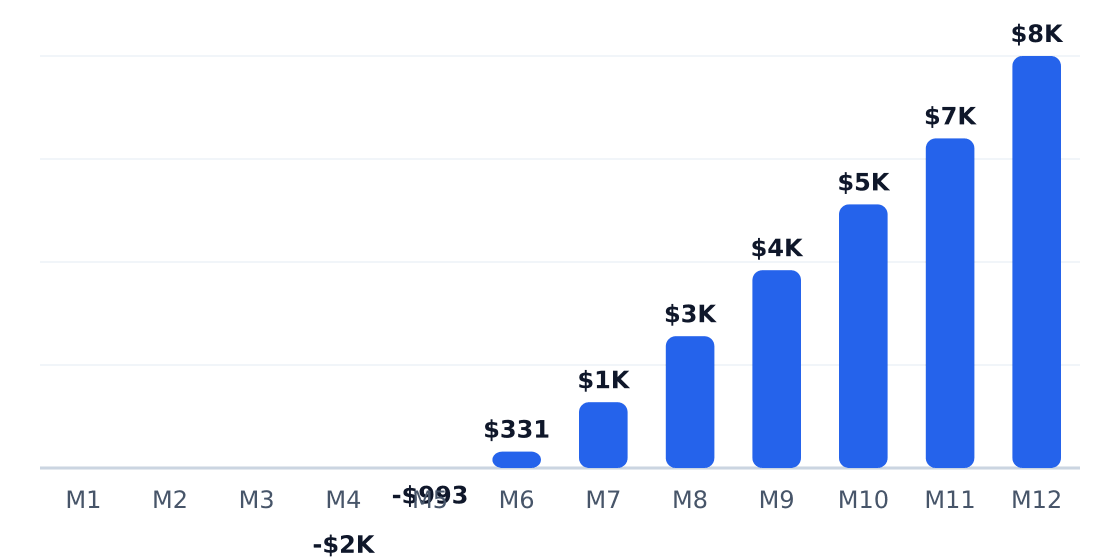
Launching an aviation training institute requires $450,000 on average—$157,500 equity and $292,500 debt. Cash flow turns positive by month 16 if you hit 62% gross margins. Revenue should scale from $298,000 (Year 1) to $656,000 (Year 3), assuming 5 FTEs at $31/hour growing to 8.
Recommended Funding Mix
$450K total capitalization

Year 1 Monthly Cash Flow
Net monthly cash flow (red = pre-break-even)
The $2.1B total addressable market means even 0.1% penetration yields $2.1M—but focus on your $45.5M serviceable market first. Schools clearing $1M/year typically operate 3+ aircraft with 85% utilization.
5-Year Revenue Potential
Projected revenue if you execute the plan
| Source | Amount | Terms | Best For |
|---|---|---|---|
| SBA 7(a) | Up to $5M | 10-25 years, ~6% | Facility buildouts |
| Personal savings | Varies | N/A | Initial working capital |
| Microloan | Up to $50K | Shorter terms | First aircraft |
| Friends & family | Varies | Negotiable | Bridge financing |
| Equipment financing | 80% of asset value | 5-7 years | Simulators/aircraft |
Compare SBA loan programs—7(a) loans cover operational expenses, while 504 loans suit real estate.
9. Common Mistakes & Pro Tips
73% of aviation training startups fail within 18 months. The killers? Underestimating aircraft costs and compliance gaps. Here’s how to dodge the bullets.
| Mistake | Impact | How to Avoid |
|---|---|---|
| Underestimating aircraft costs | Cash flow breaks | Model hourly costs conservatively + maintenance reserve |
| Weak compliance systems | Part 141 delays | Standardized SOPs + compliance lead |
| Instructor shortages | Enrollment stalls | Scale staffing ahead of booked hours |
| Poor airport choice | Throughput drops | Prioritize weather reliability + operating costs |
| Competing on price | Margin collapse | Differentiate on safety + outcomes |
- Benchmark aircraft maintenance at $125-$300/hour—not the advertised $80
- Hire your compliance officer before submitting Part 141 paperwork
- Keep a 15% instructor bench—you’ll lose 10% annually to airlines
- Negotiate fuel contracts—it’s 28% of operating costs
- Require 10% deposits on training packages to filter unserious students
- Buy used Cirrus SR20s over new—50% lower capex, same training utility
- Audit records monthly—FAA fines start at $1,100 per violation
- Partner with local colleges—their accreditation boosts your credibility
The window is open. Draft your business plan, secure $450K, and lock in an airport lease by Q3. First solo takeoffs await.
Research & Startup Resources
The following government guides, industry reports, and startup resources were referenced in this aviation training institute launch guide. Each link points to a specific page for direct access.
- AC 141 1B — faa.gov — Industry research for starting a aviation training institute business
- Faa Part 61 Vs 141 — fasttrack-atpl.com — Industry research for starting a aviation training institute business
- Part 61 Vs Part 141 — aviatize.com — Industry research for starting a aviation training institute business
- What Is The Difference Between Part 61 And Part 141 — angleofattack.com — Industry research for starting a aviation training institute business
- Part 61 Vs Part 141 Flight Training Which Is Right For You — aviator.nyc — Industry research for starting a aviation training institute business