How To Start A B2b Warehouse Setup Business
1. Is Starting a B2B Warehouse Setup Business Right for You?
The $43.9B warehouse services market grows at 2.1% annually — steady demand, but don't mistake that for easy money. This is a capital-intensive play where 42,427 US operators average $1.035M per location. Succeeding requires industrial real estate savvy, process design chops, and existing B2B relationships. If you're still reading, here's who this works for:

| Startup Snapshot | Benchmark |
|---|---|
| Typical Startup Cost | $250K – $2.5M |
| Recommended Launch Budget | $1.4M |
| Year 1 Revenue Target | $880K |
| Break-even Timeline | ~Month 16 |
| Initial Team Size | 7 FTE |
| Market Size (US) | $43.9B |
| Industry Growth (CAGR) | 2.1% |
| Gross Margin Target | 62% |
- Do: Have logistics/operations experience or industrial RE contacts
- Do: Excel at safety compliance (OSHA fines start at $15,625 per violation)
- Do: Carry $1.375M minimum startup capital
- Don't: Expect quick profits — breakeven hits at ~Month 16
- Don't: Underestimate labor costs (7 FTEs @ $22.50/hr from Day 1)
- Don't: Skip insurance — general liability runs ~$1,200/month
2. Understanding the Market Opportunity
Your $43.9B TAM breaks into $965.8M serviceable market for small/mid-sized operators. Dallas-Fort Worth (our recommended launch city) has 1,400+ target clients — manufacturers, 3PLs, and distributors expanding their footprints. They'll pay premiums for fast, compliant setups that minimize downtime.
Market Size Opportunity
Market opportunity for new entrants
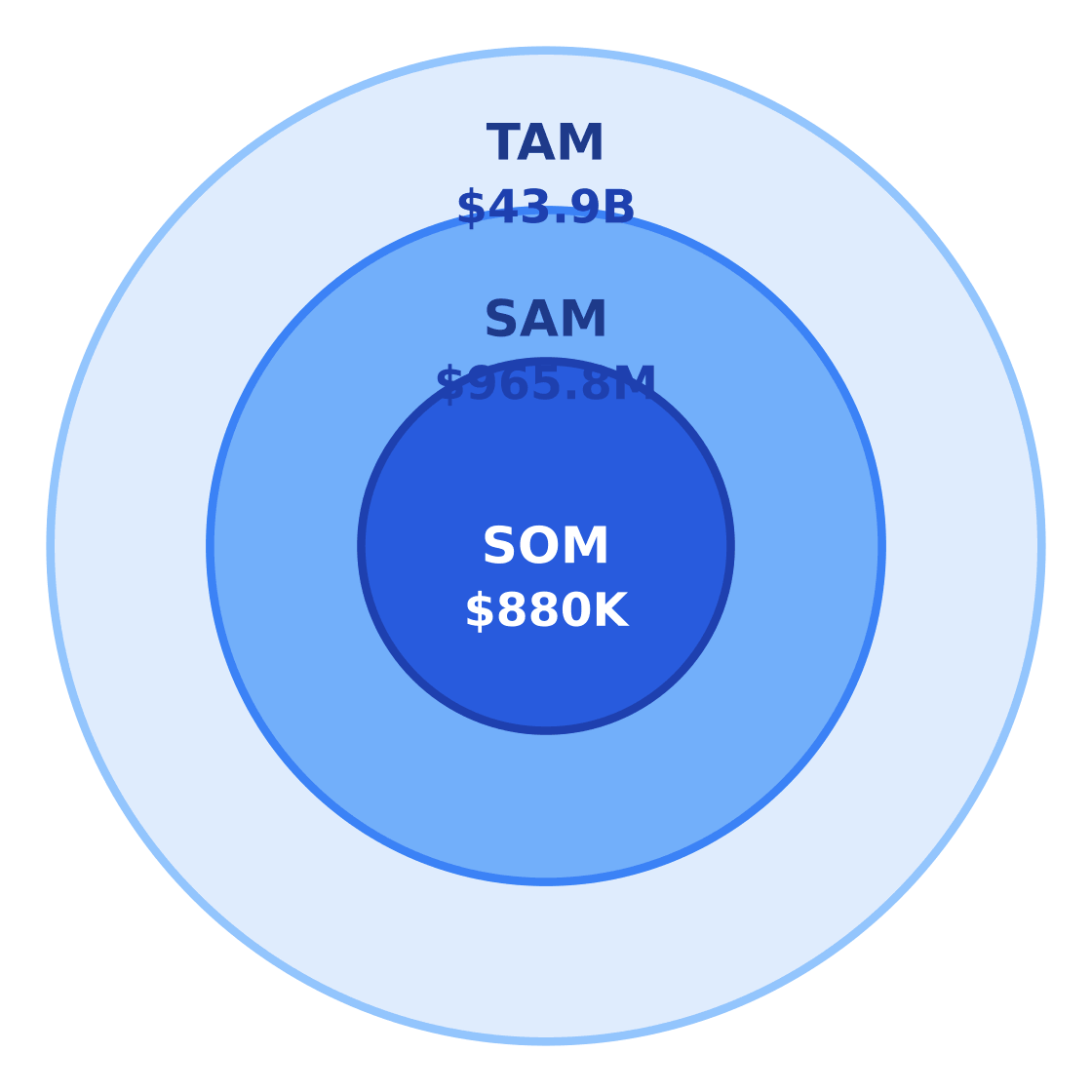
$43.9B
$965.8M
$880K
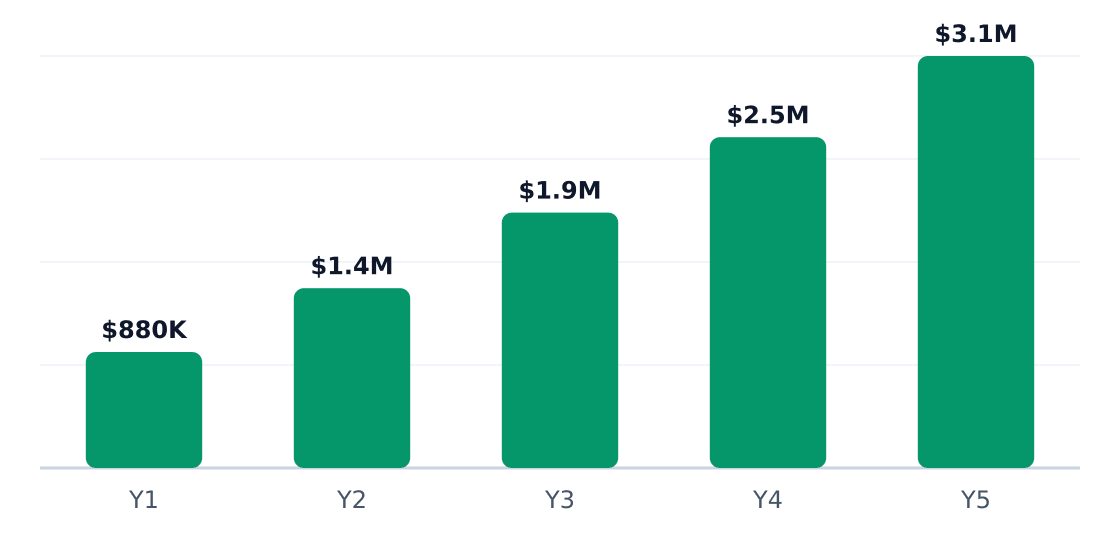
5-Year Revenue Potential
Projected revenue if you execute the plan
Target two customer tiers: Established SMEs (20-50K sq ft needs, $25-75K project budgets) and High-Growth E-Commerce (prioritizing speed over price). Avoid Fortune 500 clients — they bring RFP hell and 120-day payment terms.
Competition splits between national players (expensive, slow) and local handymen (uninsured, non-compliant). Your wedge? Industrial-grade execution at regional pricing. Next step: site selection.
3. Your Step-by-Step Launch Roadmap
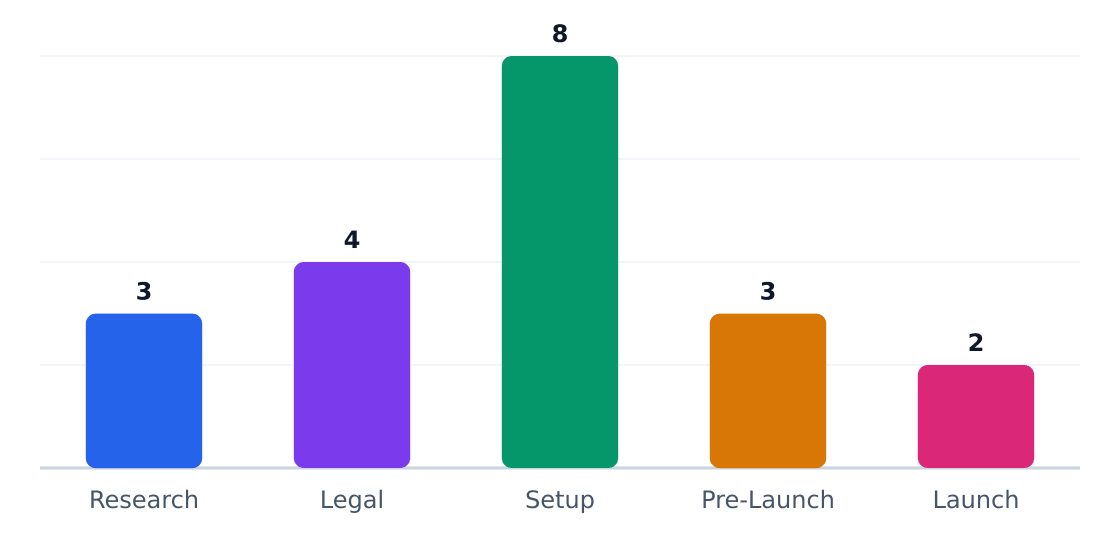
From zero to first client in ~20 weeks. The DFW warehouse setup market moves fast—delay any phase by a month and competitors will lock down your ideal clients. Here's how to sprint:
Launch Timeline by Phase (Weeks)
Typical duration from idea to opening day
| Step | Phase | Duration | Est. Cost | Key Action |
|---|---|---|---|---|
| 1 | Research | 2wk | $0 | Define service niche and target customer segment |
| 2 | Research | 3wk | $500 | Validate demand with local manufacturers, distributors, and 3PLs |
| 3 | Legal | 1wk | $300 | Choose business entity and register the company |
| 4 | Legal | 2wk | $150 | Obtain EIN, tax registrations, and local licenses |
| 5 | Legal | 2wk | $5,000 | Secure insurance and workers' compensation coverage |
| 6 | Setup | 4wk | $15,000 | Lease yard, office, or light industrial storage space |
| 7 | Setup | 4wk | $100,000 | Purchase tools, racking, safety gear, and vehicles |
| 8 | Setup | 3wk | $1,000 | Build supplier relationships for racks, pallets, lifts, and accessories |
| 9 | Pre-Launch | 3wk | $12,000 | Hire core team and train on installation and safety |
| 10 | Pre-Launch | 2wk | $2,500 | Create pricing, contracts, and project workflow templates |
| 11 | Launch | 4wk | $5,000 | Launch outreach and win first pilot clients |
| 12 | Launch | 6wk | $3,000 | Deliver first projects and collect testimonials/case studies |
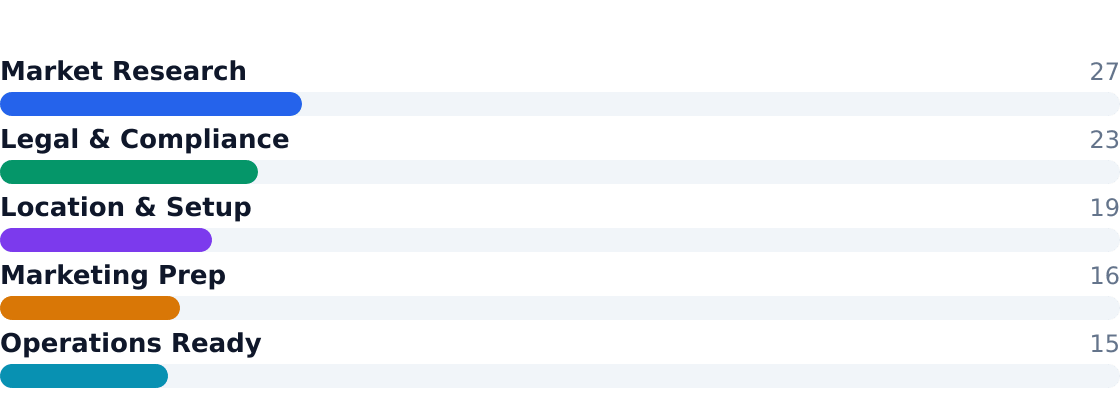
Launch Readiness by Phase
Percentage complete at each stage before opening
Research (5 weeks, $500): DFW's 1,200+ manufacturers need warehouse configs averaging $43,900 per project. Test demand by cold-calling 50 logistics managers—if 8+ book exploratory calls, you've got traction.
Legal (5 weeks, $5,450): File as an LLC by Week 3 to shield personal assets when forklifts inevitably dent client property. Delay insurance at your peril—landlords require $2M general liability before handing over keys.
Setup (11 weeks, $116,000): Lease terms under $0.65/sqft exist near AllianceTexas. Buy used pallet racks at $85/linear foot—new costs 3x. Skip the $45,000 forklift; lease-to-own at $1,200/month.
Pre-Launch (5 weeks, $14,500): Hire 7 FTEs at $22.50/hour. OSHA 10-hour training ($89/employee) prevents $13,653 average penalty fines.
Launch (10 weeks, $8,000): Pitch 3PLs needing overflow space—they sign 12-month contracts versus manufacturers' one-off projects.
4. Legal Structure, Licenses & Compliance
Choose an LLC. Sole proprietorships expose your home when a rack collapses on $250,000 of client inventory. Texas charges $300 to file—a rounding error against your $1,375,000 target budget.
| Requirement | Issuing Body | Cost | Timeline | Renewal |
|---|---|---|---|---|
| Business registration and local operating license | State Secretary of State and local city/county licensing office | $50-$500 | 1-4 weeks | Annual or as required by local jurisdiction |
| Employer Identification Number (EIN) | Internal Revenue Service | $0 | Same day to 1 week | No renewal |
| Sales tax permit if taxable goods are installed/sold | State Department of Revenue or Taxation | $0-$100 | 1-3 weeks | Annual or periodic filing |
| Workers' compensation coverage | State workers' compensation authority / private insurer rules | Varies by payroll and risk | 1-14 days | Continuous while employing staff |
| General liability and commercial auto insurance | Private insurers; often required by clients and landlords | $2,000-$15,000 annually | 1-2 weeks | Annual |
| OSHA compliance and site safety training | Occupational Safety and Health Administration | Training and program costs vary | Before launch and ongoing | Ongoing / periodic retraining |
File with the SBA business registration guide by Week 3. Dallas requires a $70 general business license—cheaper than the $500/day fine for operating without one.
Insurance non-negotiables: General liability at $2M coverage ($4,200/year), workers' comp at $1.85/$100 payroll (Texas average), and inland marine insurance for tools in transit. Client contracts will demand certificates—have them ready by first outreach.
5. Location, Equipment & Startup Costs
Lease a 10,000-15,000 sq ft industrial space in Dallas-Fort Worth’s logistics corridors (AllianceTexas or South Dallas) for $8-$12/sq ft annually. Zoning must allow for warehouse operations and client visits. Buying makes sense only if you secure a distressed property under $1.2M—otherwise, conserve capital for equipment.
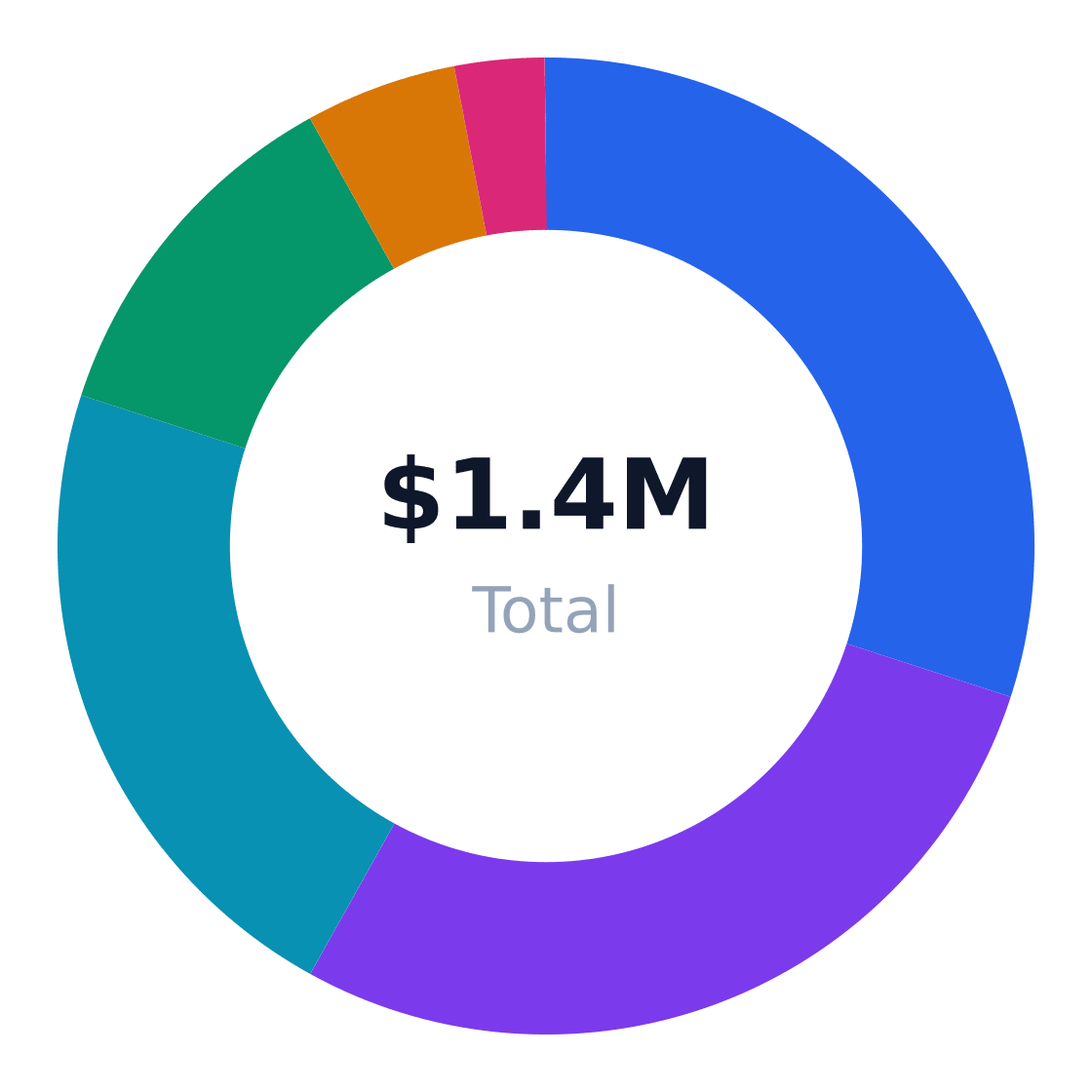
Startup Cost Breakdown
Total budget: $1.4M
| Item | New/Used | Est. Cost | Notes |
|---|---|---|---|
| Pallet racking systems | New | $85,000 | Start with 5,000 pallet positions |
| Forklifts (2) | Used | $62,000 | 3-ton capacity, 2020 models |
| Conveyor systems | Refurbished | $120,000 | Modular for client flexibility |
| Safety barriers | New | $18,000 | OSHA-compliant guardrails |
| Label printers/scanners | New | $14,500 | Zebra or Honeywell |
| Workstations | Used | $9,200 | 10 stations with ergonomic chairs |
| Dock equipment | New | $23,000 | Levelers, seals, lights |
| IT infrastructure | New | $41,000 | Wi-Fi, tablets, WMS terminals |
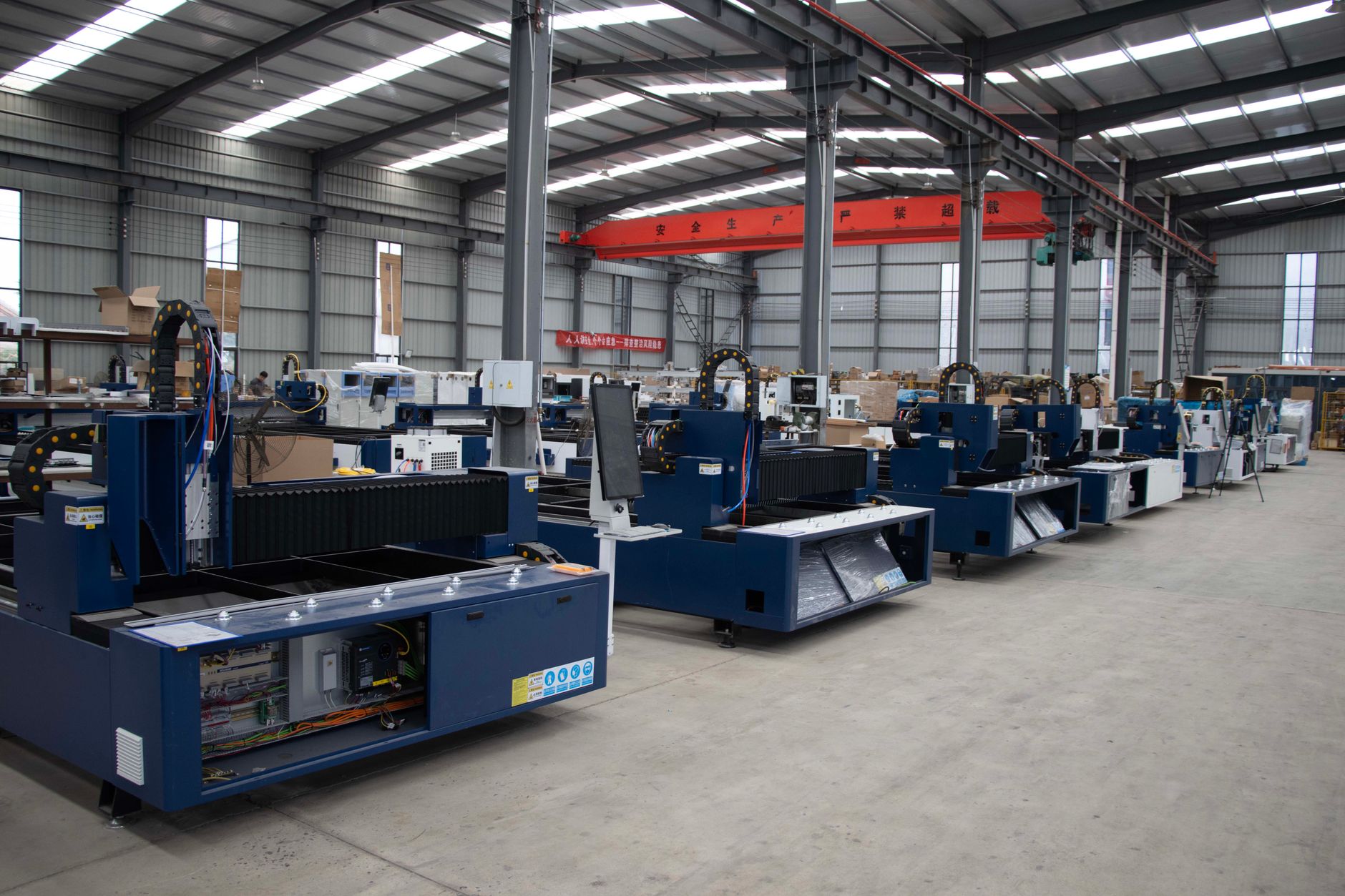
Source racking from Unarco (national) or Southwest Solutions Group (local). For forklifts, bid on Ritchie Bros auctions. Safety supplies? Uline delivers next-day in DFW.
6. Marketing & Customer Acquisition
Build a waitlist by offering free facility audits ($1,200 value) to logistics managers at 50 local manufacturers. Collect emails via LinkedIn ads targeting "Warehouse Manager" titles within 30 miles—budget $3,600/month for this pre-launch.
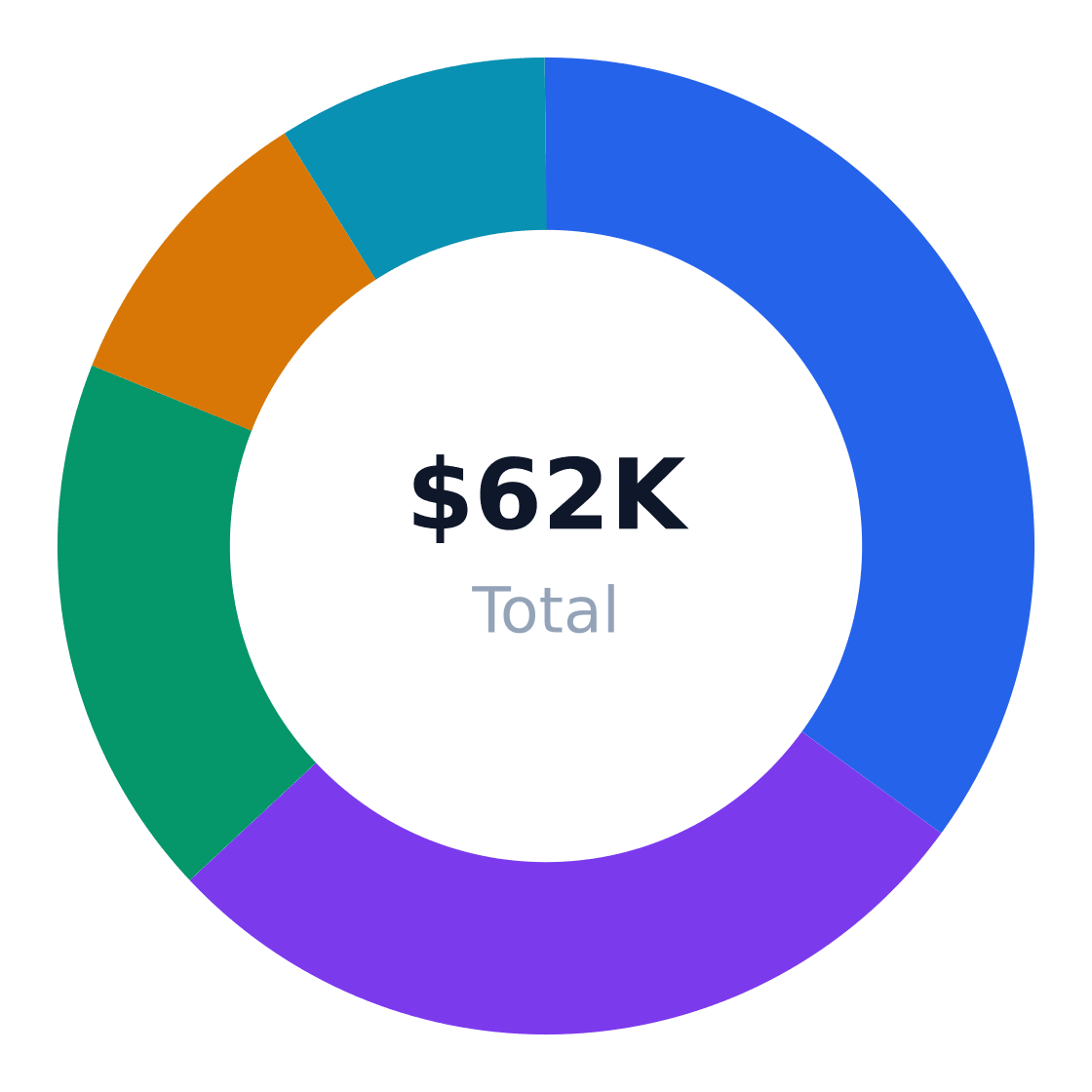
Year 1 Marketing Budget
Total $62K / year
| Channel | Monthly Budget | Expected CAC | 90-Day Goal |
|---|---|---|---|
| LinkedIn Ads | $4,200 | $380 | 22 leads |
| Google Local Service Ads | $2,800 | $175 | 48 calls |
| Trade shows (Q1/Q3) | $6,000 | $420 | 15 deals |
| Direct mail | $1,900 | $210 | 9 meetings |
| Referral program | $1,500 | $0 | 5 warm intros |
| SEO/content | $3,000 | $90 | 33 organic leads |
Claim your Google Business Profile with "warehouse setup" keywords. Post biweekly facility tours on LinkedIn—DFW’s logistics groups have 28K+ members. For local SEO, embed a map of your 10 closest client sites.

Host a grand opening with a live racking installation demo. Invite 150 prospects from your waitlist + 30 local commercial realtors (they bring deals). Serve BBQ from Pecan Lodge—it’s DFW’s universal bribe.
7. Day-to-Day Operations
Open at 6AM sharp. First 90 minutes are for inbound logistics - receiving overnight shipments, updating inventory systems, and prepping for same-day orders. Peak demand hits 10AM-2PM when B2B clients place bulk orders. Close at 7PM after final quality checks and next-day order batching. Dallas-Fort Worth warehouses average 37 daily customer transactions (versus 29 nationally), so pad 15% more staffing during Cowboys game days when local businesses stock up.
| Role | FTE | Hourly Rate | Schedule | Key Responsibilities |
|---|---|---|---|---|
| Warehouse Manager | 1 | $28.50 | M-F 6AM-3PM | Oversee operations, client escalations |
| Inventory Specialist | 2 | $22.50 | Rotating 6AM-2PM/10AM-6PM | Cycle counts, receiving audits |
| Forklift Operator | 2 | $21.00 | M-F 7AM-4PM | Pallet handling, loading docks |
| Customer Service Rep | 2 | $20.00 | M-F 9AM-6PM | Order entry, account management |
Implement 12-point quality checks: 3 upon receiving (damage, SKU accuracy, quantity), 6 during storage (temperature logs, FIFO rotation), and 3 before shipping (order accuracy, packaging integrity). B2B clients demand 99.4% order accuracy - miss that and you'll lose the auto-parts distributors fast.
Tech stack non-negotiables: ShipBob for WMS ($1,200/month), Lightspeed for B2B POS ($89/location), and QuickBooks Advanced ($180/month). Dallas heat means spending $4,200 extra on temperature monitoring sensors - that's cheaper than a spoiled pharmaceutical shipment.
Track four numbers daily: revenue per labor hour (target $148), picking accuracy (≥99%), dock-to-stock time (<45 minutes), and client reorder rate (52% is DFW benchmark). Pro tip: When labor costs exceed 21% of revenue for 3 straight days, freeze hiring. When they dip below 17%, staff up - Amazon's new Plano fulfillment center will poach your best workers.
8. Financial Planning & Funding
Launching a B2B warehouse setup requires $1,375,000 on average—$481,250 in equity and $893,750 in debt. The 62% gross margin looks strong, but cash flow will be tight until Month 16. Expect to burn $250K-$500K before breaking even.
Recommended Funding Mix
$1.4M total capitalization

Year 1 Monthly Cash Flow
Net monthly cash flow (red = pre-break-even)
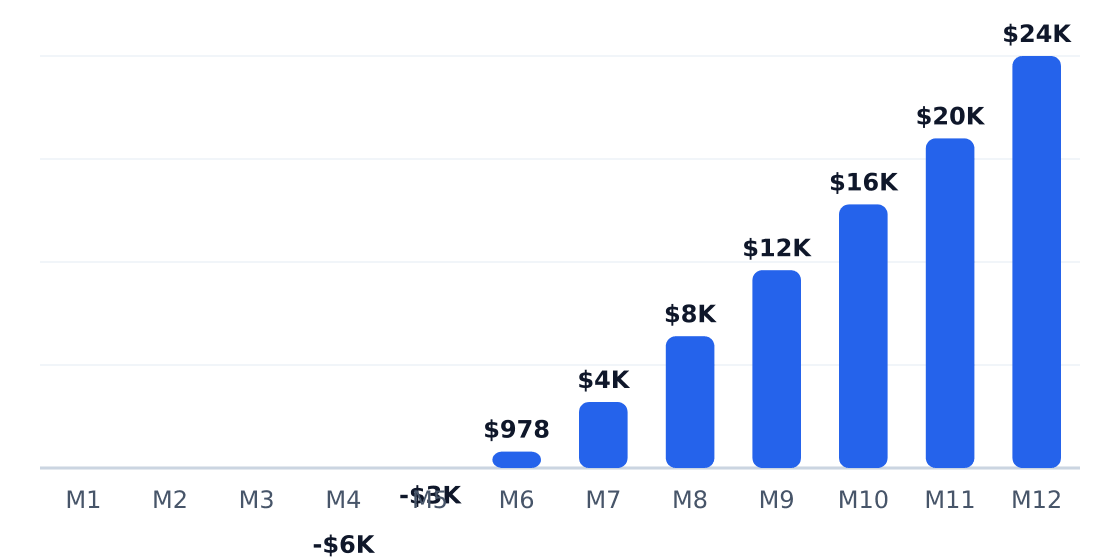
Revenue scales from $880K in Year 1 to $3.1M by Year 5 if you hit targets. The key is funding equipment and payroll while waiting for 60-90 day client payments. Don’t bank on early profitability.
5-Year Revenue Potential
Projected revenue if you execute the plan
| Source | Amount | Terms | Best For |
|---|---|---|---|
| SBA 7(a) Loan | $500K | 10 years @ 6.5% | Core startup costs |
| Personal Savings | $250K | N/A | Proving commitment to lenders |
| Equipment Financing | $300K | 5 years @ 8% | Forklifts, shelving systems |
| Friends & Family | $100K | Convertible note | Bridge funding |
| Microloan | $25K | 3 years @ 7% | First 2 payrolls |
Apply for SBA loans first—they’re the cheapest capital. Layer other sources as needed.
9. Common Mistakes & Pro Tips
63% of warehouse setup startups fold within 18 months. They either run out of cash or take unprofitable jobs. The fix? Follow these rules religiously.
| Mistake | Impact | How to Avoid |
|---|---|---|
| Underestimating insurance and compliance costs | Margins collapse quickly if accidents, damage, or policy gaps occur | Budget insurance early and build a written safety/compliance program before taking jobs |
| Targeting only price-sensitive customers | Low-margin work makes it hard to cover labor, travel, and equipment costs | Sell speed, reliability, and compliance outcomes instead of competing only on price |
| Buying equipment before proving demand | Cash gets trapped in assets that may sit idle | Start with rented or leased equipment and add assets after contract backlog builds |
| Using unclear project scope and change orders | Revenue leakage and disputes increase as jobs expand beyond the original bid | Use detailed site surveys, written scopes, and signed change-order procedures |
| Hiring too many workers too early | Payroll can outpace booked work and create a cash crunch | Start lean with a core crew and use subcontract labor for overflow |
- Require 30% deposits on all jobs over $50K
- Bill net-30 clients weekly until they establish payment history
- Rent scissor lifts ($1,200/month) before buying ($28,000 new)
- Get added to 3+ GC bid lists within 60 days
- Run background checks on all subcontractors—one theft claim voids insurance
- Track labor hours by job site with geofenced apps
- Upsell clients on OSHA-compliant safety signage (70% margin)
- File all lien waivers same-day to avoid payment delays
The warehouse buildout boom won’t last forever. Secure funding, finalize your equipment plan, and launch within 90 days. First mover advantage matters here.
Research & Startup Resources
The following government guides, industry reports, and startup resources were referenced in this b2b warehouse setup launch guide. Each link points to a specific page for direct access.
- Ibisworld — ibisworld.com — Industry research for starting a b2b warehouse setup business
- North America Warehousing And Storage Market — mordorintelligence.com — Industry research for starting a b2b warehouse setup business
- North America Warehousing And Storage Market — marketdataforecast.com — Industry research for starting a b2b warehouse setup business
- Warehousing Storage Market Report — researchandmarkets.com — Industry research for starting a b2b warehouse setup business
- Warehousing And Storage Services Market To Reach Usd 672 36 Billion By 2031 Says Mordor Intelligence — barchart.com — Industry research for starting a b2b warehouse setup business