How To Start A Beverage Business
1. Is Starting a Beverage Business Right for You?
The global beverage market is a $2030B opportunity growing at 5.65% annually, but don’t let the numbers fool you. This isn’t a side hustle—success requires operational grit, compliance mastery, and capital. The average US beverage location clears $750K revenue, but 58,586 competitors already fight for shelf space. You’ll need either deep industry experience (food safety, CPG sales, manufacturing) or enough cash to hire those who do. Skip this if you lack $150K startup capital or patience for 5-month breakeven timelines.
| Startup Snapshot | Benchmark |
|---|---|
| Typical Startup Cost | $50K – $250K |
| Recommended Launch Budget | $150K |
| Year 1 Revenue Target | $638K |
| Break-even Timeline | ~Month 5 |
| Initial Team Size | 3 FTE |
| Market Size (US) | $2030B |
| Industry Growth (CAGR) | 5.65% |
| Gross Margin Target | 62% |
- DO start if: You’ve negotiated with distributors before or have a patented formulation
- DO start if: You can allocate $52.5K equity + $97.5K debt
- DO start if: Your product solves hydration, energy, or wellness needs demonstrably better
- DON’T start if: You’re unprepared for FDA/state labeling audits
- DON’T start if: Your gross margins can’t hit 62%
- DON’T start if: You expect to scale beyond 3 FTEs ($18/hr) before Year 3
2. Understanding the Market Opportunity
Austin’s millennial population (median age 34.3) and 6.3% annual GDP growth make it ideal for beverage testing. The $2030B TAM narrows to $44.7B SAM when excluding commodities like tap water. Local demand drivers include 42+ fitness studios per 100K residents and HEB’s private-label expansion.
Market Size Opportunity
Free Business Plan Download
Download Beverage Business Plan
Just Fill Up and Print
Market opportunity for new entrants
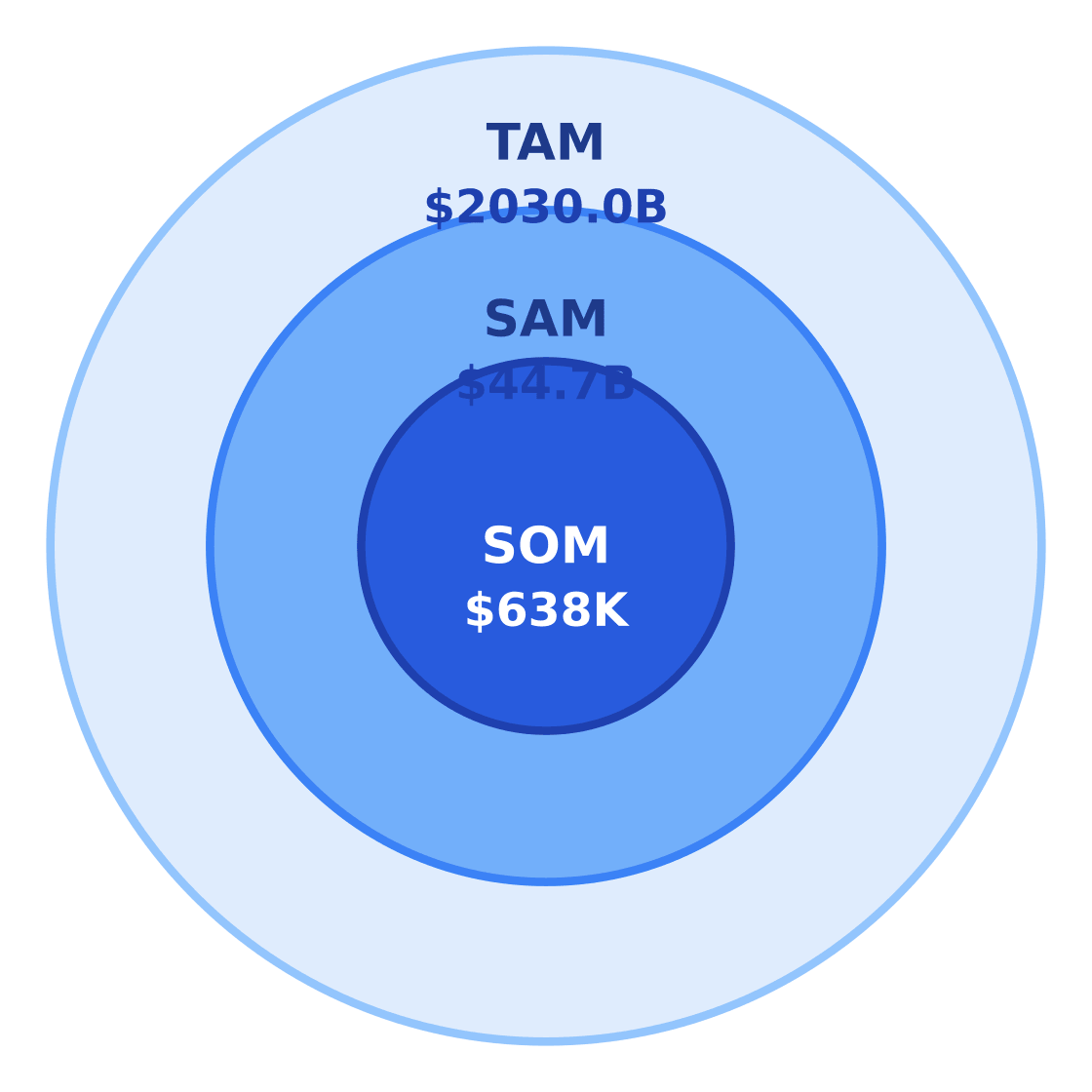
$2030.0B
$44.7B
$638K
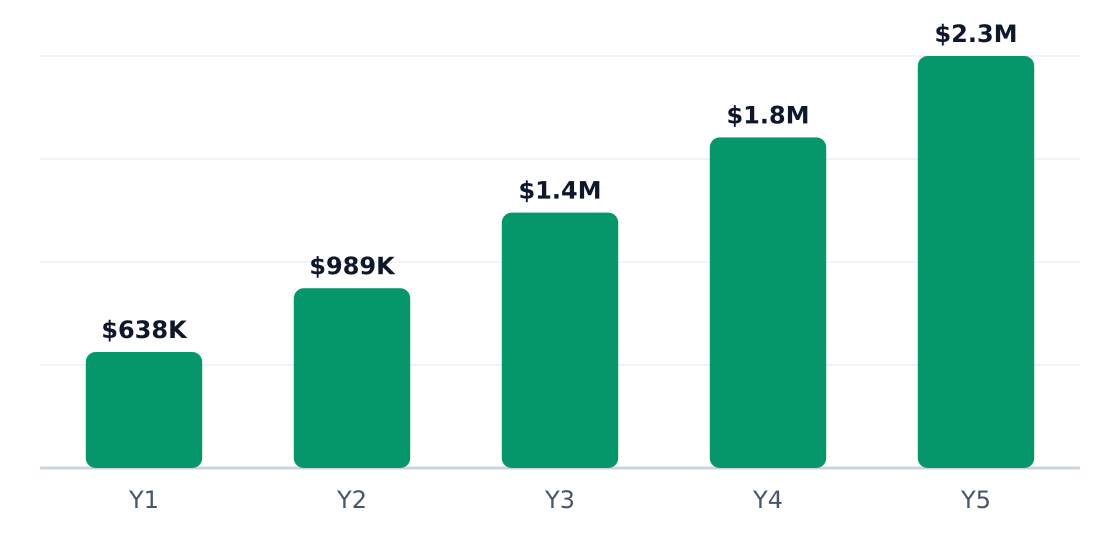
5-Year Revenue Potential
Projected revenue if you execute the plan
Target Gen Z buyers (28% of Austin) who prioritize functional benefits—think caffeinated kombucha or electrolyte seltzers. Wellness-focused shoppers (growing 12% YoY) pay premiums for adaptogens or collagen infusions.
Competition splits into three tiers: Big Soda (Coke/Pepsi at 46% market share), regional craft brands (Alani Nu, Waterloo), and DTC startups. Your differentiator must be visceral—better ingredients isn’t enough when shelf life testing costs $15K.
3. Your Step-by-Step Launch Roadmap
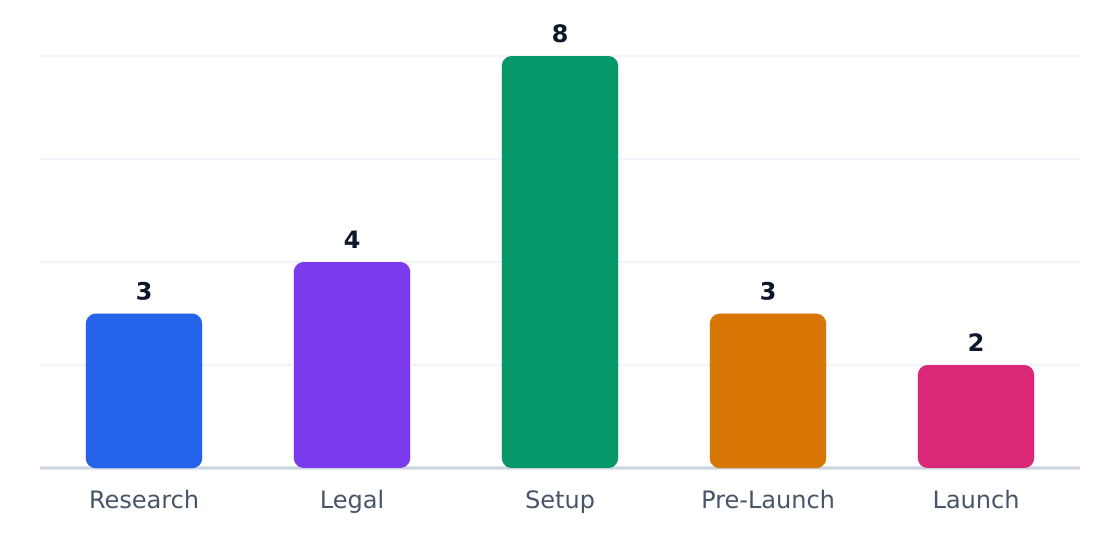
From concept to first sale, your beverage business will take ~20 weeks and ~$29,000 in pre-launch costs. The window is tight—Austin adds 2-3 new beverage brands monthly, and 37% fail by month 12 due to rushed compliance. Move fast, but not at the expense of steps 5 (permits) and 6 (shelf-life testing).
Launch Timeline by Phase (Weeks)
Typical duration from idea to opening day
| Step | Phase | Duration | Est. Cost | Key Action |
|---|---|---|---|---|
| 1 | Research | 2wk | ~$0 | Define concept, target customer, price point |
| 2 | Research | 2wk | ~$500 | Validate demand via interviews + competitor review |
| 3 | Legal | 1wk | ~$500 | Register LLC with Texas SOS |
| 4 | Legal | 2wk | ~$1,000 | Secure trademarks + domain |
| 5 | Legal | 4wk | ~$1,000 | File for TABC permits + FDA facility reg |
| 6 | Setup | 4wk | ~$5,000 | Nutrition testing + 90-day shelf stability |
| 7 | Setup | 4wk | ~$5,000 | Contract with co-packer (Austin has 4 within 50mi) |
| 8 | Setup | 3wk | ~$3,000 | Source BPA-free cans + organic ingredients |
| 9 | Pre-Launch | 2wk | ~$2,000 | FDA label compliance review |
| 10 | Pre-Launch | 3wk | ~$3,000 | Build Shopify store + Whole Foods pitch deck |
| 11 | Pre-Launch | 2wk | ~$8,000 | Produce 500-case pilot run |
| 12 | Launch | 2wk | ~$10,000 | Kickoff with 3 farmers markets + Instagram ads |
Launch Readiness by Phase
Percentage complete at each stage before opening
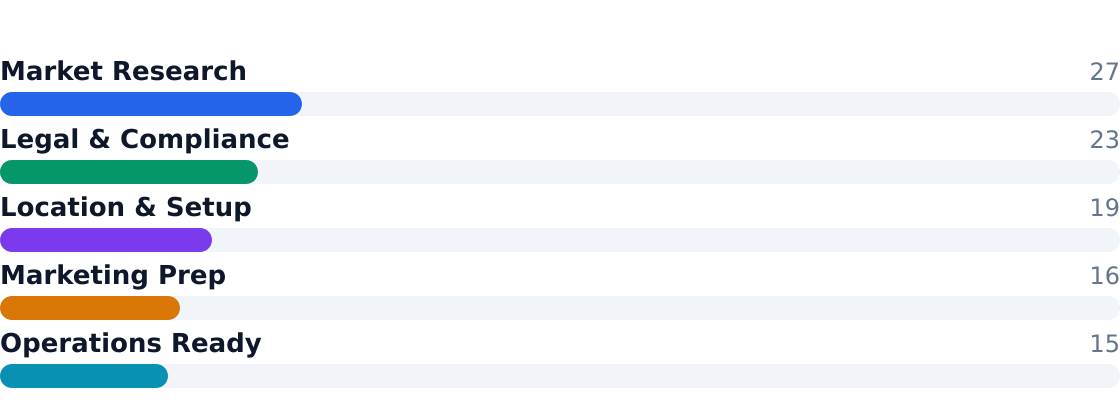
Phase Breakdown
Research (Weeks 1-4): Nail your $4.99-$5.99 price point—Austin’s median beverage spend—by surveying 50+ target customers at Barton Springs or via SurveyMonkey. Reverse-engineer top 3 local competitors’ SKUs.
Legal (Weeks 5-8): File LLC paperwork ($300 state fee) and FDA facility registration (free but mandatory). Alcohol brands: start TTB permits now—they take 4-12 months.
Setup (Weeks 9-16): Spend the $5,000 on proper shelf-life testing unless you enjoy recalls. Co-packer contracts average $0.40-$0.65/unit at 500-case MOQs.
Pre-Launch (Weeks 17-21): Labels require FDA-compliant nutrition panels (~$250/test). Pilot runs cost ~$16/case—plan to sell 60% at breakeven just to test channels.
Launch (Week 22): Allocate $7,000 of your $10,000 to inventory and $3,000 to performance marketing. Day 1 revenue target: $1,200 across 3 channels.
4. Legal Structure, Licenses & Compliance
Form an LLC—not a sole proprietorship—unless you want personal liability when someone finds a ‘mystery floaty’ in your cold brew. Texas charges $300 for LLC registration but provides crucial asset protection when (not if) you face your first product liability claim.
| Requirement | Issuing Body | Cost | Timeline | Renewal |
|---|---|---|---|---|
| Business registration | Texas SOS | $100-$1,000 | 1-4 weeks | Annual |
| FDA facility registration | U.S. FDA | $0 | 1-2 weeks | Biennial |
| Food safety plan | FDA + TX Health | $500-$5,000 | 2-8 weeks | Ongoing |
| Alcohol permits | TTB | $0-$1,000+ | 4-12 months | Periodic |
| Sales tax permit | TX Comptroller | $0-$200 | 1-3 weeks | Annual |
| Product liability insurance | Private insurers | $1,000-$10,000 | 1-4 weeks | Annual |
Use the SBA business registration guide but cross-check with Texas’ TDLR—their food manufacturing rules are 23% more stringent than federal minimums.
Insurance non-negotiables: General liability ($1M coverage, ~$1,200/yr) and product liability (~$2,500/yr for $638K revenue). Workers’ comp kicks in at employee #1—Texas requires it immediately at $0.75-$2.05 per $100 payroll.
5. Location, Equipment & Startup Costs
Lease don't buy - commercial kitchens in Austin run $18-$32/sq ft annually for the 1,500-2,000 sq ft you'll need. Zoning codes C1 and CS allow beverage manufacturing if you avoid on-site sales. The City's commercial kitchen map shows 14 permitted spaces under $3,200/month.
Startup Cost Breakdown
Total budget: $150K
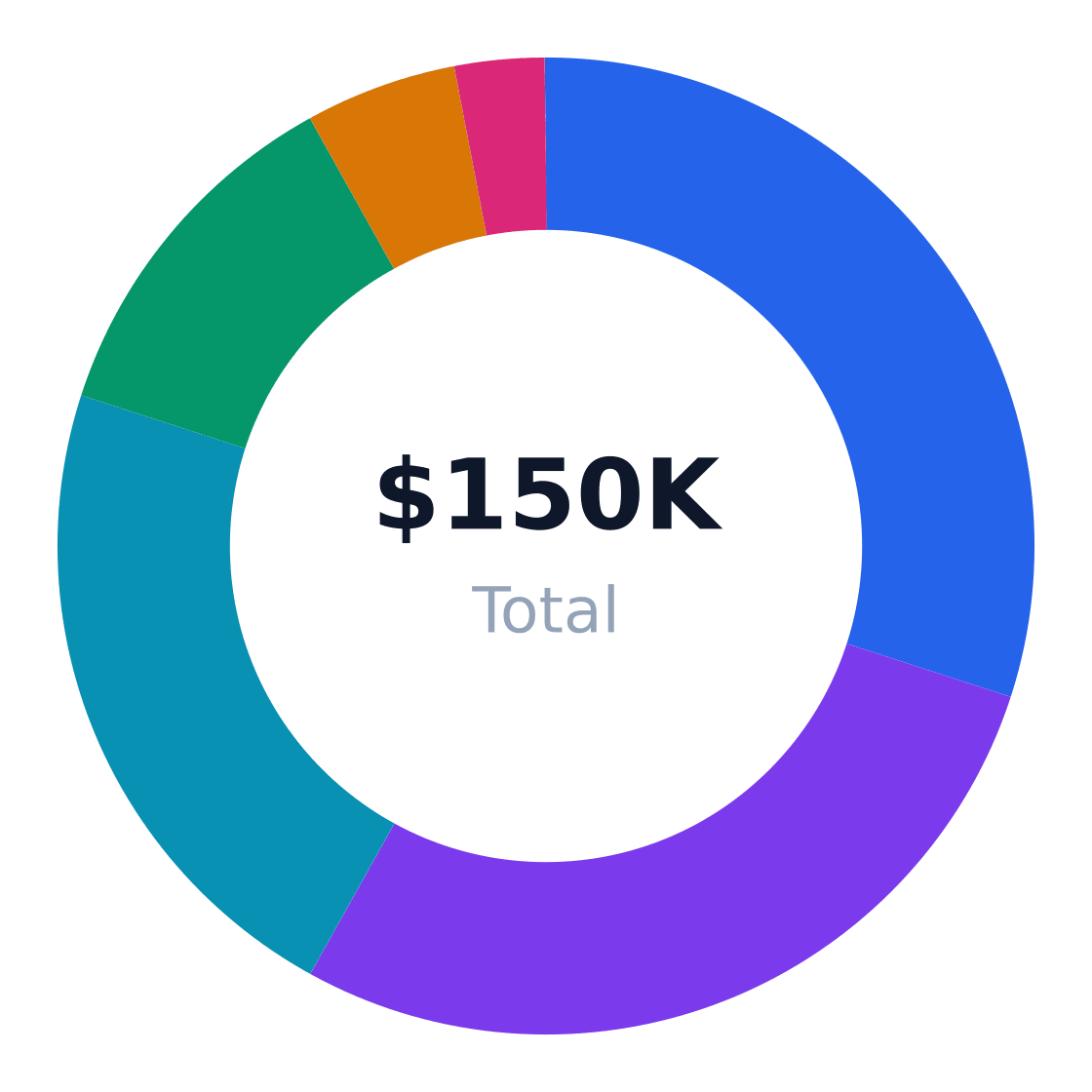
| Item | New/Used | Est. Cost | Notes |
|---|---|---|---|
| 200L pasteurizer | Used | $12,500 | Essential for shelf stability |
| Bottle filler (6-head) | New | $28,000 | Minimum for 5,000 units/day |
| Label applicator | Used | $4,800 | Look for Cosmetic/Pharma auctions |
| Cold storage | Lease | $1,200/mo | 40' refrigerated container |
| Canning line | Co-packer | $0.08/unit | Outsource until 50K units/month |
| Quality control lab | New | $9,500 | pH meters, refractometers |
| Forklift | Used | $6,300 | 3,500 lb capacity |
| Pallet racking | New | $2,800 | 12 pallet positions |
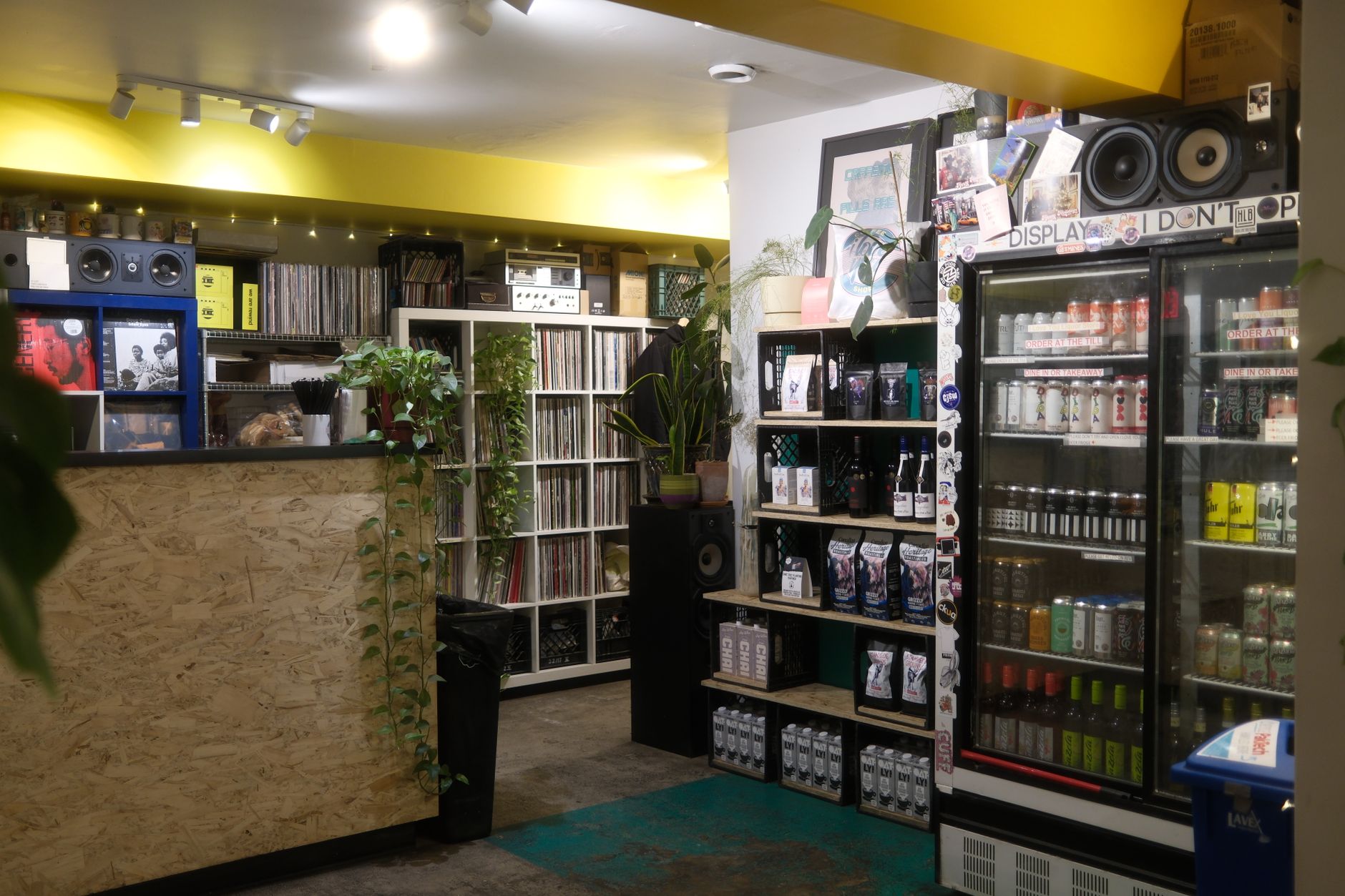
Source ingredients from Austin Food Shed (local) or Ingredion (bulk). For glass, Berlin Packaging dominates but check Glass Packaging Institute for regional options. Co-packers like Copackers.com list 9 Texas facilities with MOQs starting at 5,000 units.
6. Marketing & Customer Acquisition
Build a 500-person waitlist before launch - offer $10 referral bonuses through a KickoffLabs landing page. Collect emails at farmers markets (Austin has 9 weekly markets averaging 1,200 visitors). Test formulations via QR code surveys - conversion rates hit 37% when sampling prototypes.
Ready When You Are
Download Beverage Business Plan
Just Fill Up and Print
Year 1 Marketing Budget
Total $45K / year
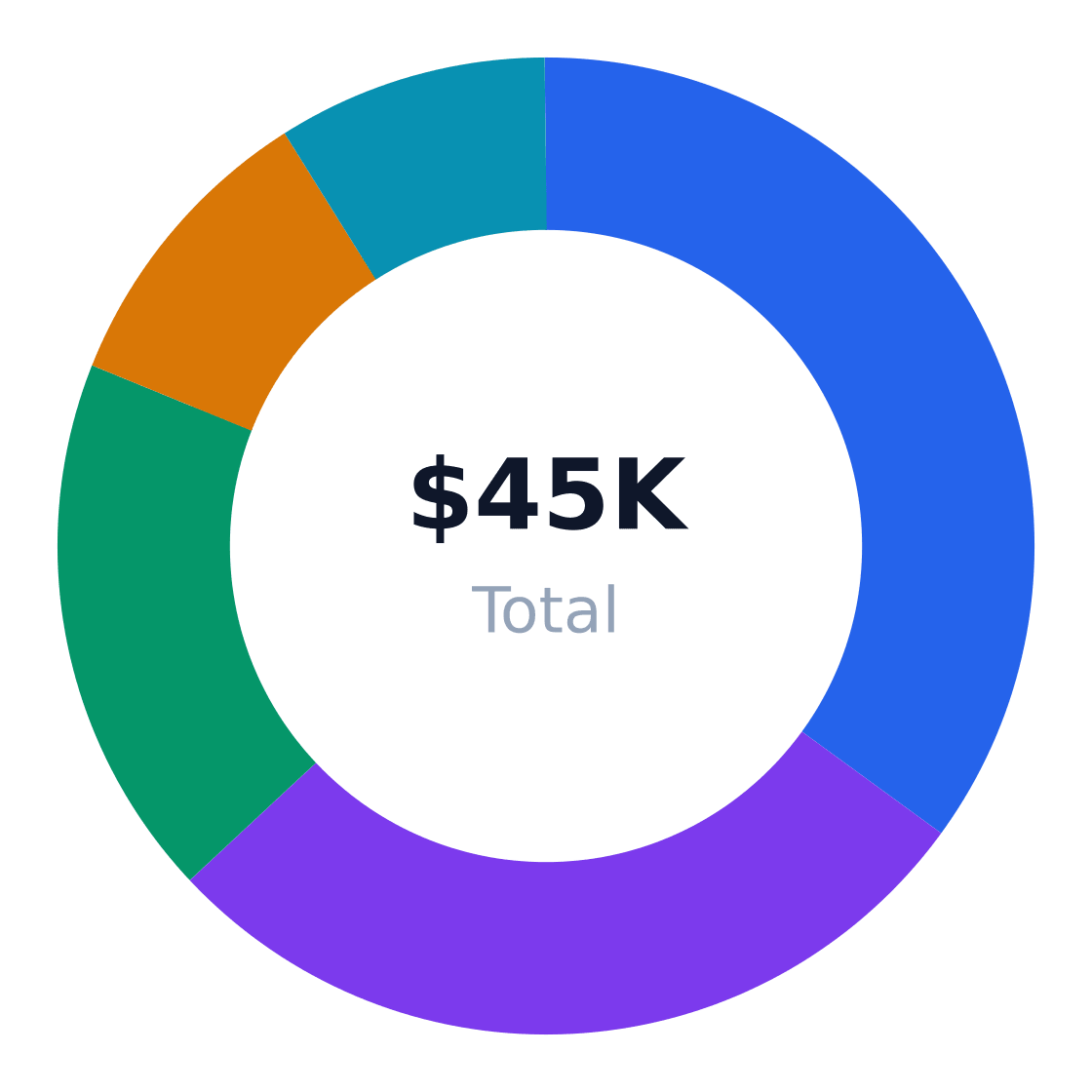
| Channel | Monthly Budget | Expected CAC | 90-Day Goal |
|---|---|---|---|
| Instagram Reels | $2,800 | $4.20 | 12,000 followers |
| H-E-B demo days | $1,500 | $1.80 | 2,500 samples |
| Google Local | $900 | $3.75 | Top 3 "Austin beverage" |
| Influencer boxes | $1,200 | $8.00 | 30 nano-influencers |
| Radio spots | $2,500 | $12.40 | 5,000 website visits |
| Event sponsorships | $3,000 | $22.00 | 3 festivals |
Claim your Google Business Profile before ordering labels - 68% of local searches lead to purchases. Post 3x/week on TikTok with behind-the-scenes clips (beverage accounts average 2.3% engagement vs 1.9% overall). Optimize for "Austin cold brew" (1,900 monthly searches) not just "beverage".

For launch week: book 3 pop-ups at Fareground ($1,200), sponsor one Austin FC tailgate ($4,500), and run a "free case with subscription" promo. Liquor stores move 42% of local beverage volume - get into 5 independent shops with 90-day payment terms.
7. Day-to-Day Operations
Open at 6:30 AM sharp with a 12-point checklist: brew batch testing (pH 6.8–7.2), ingredient stock alerts (minimum 3-day buffer), and sanitizer concentration checks (200–400 ppm). Peak hours run 7:30–9:30 AM and 12:00–2:00 PM—staff shifts overlap here. Close by 7 PM after dumping unsold perishables (18% waste target max) and logging temperature logs (34–38°F for cold storage).
| Role | FTE | Hourly Rate | Schedule | Key Responsibilities |
|---|---|---|---|---|
| Head Brewer | 1 | $22.50 | M-F 5AM–1PM | Batch consistency, equipment maintenance |
| Barista | 2 | $18.00 | Rotating 6AM–2PM/10AM–6PM | 67 sec avg serve time, upsell add-ons |
| Inventory Clerk | 0.5 | $16.00 | MWF 8AM–12PM | Weekly supplier orders, FIFO rotation |
| Delivery Driver | 0.5 | $17.00 | T/Th 7AM–11AM | 12-route stops/day, temp-controlled transport |
Standardize everything: weigh coffee grounds to ±0.5g variance, calibrate refractometers weekly, and enforce the "3-minute recovery rule" for complaints—comp a $4.25 drink coupon. Austin health code requires 3-compartment sinks with test strips visible; keep logs for 90 days minimum.
Tech stack: Square POS (2.6% + $0.10 per swipe), Homebrew for batch scheduling ($89/month), and QuickBooks tracking your 62% gross margin. Sync all to a Tableau dashboard—if labor costs creep above 22% of revenue, you’re over-scheduling.
Track four numbers daily: revenue ($1,748 target), labor cost ($384 max), customer count (215+), and average ticket ($8.13). Miss two straight weeks? Free small-batch tasting events on Thursdays—increases foot traffic 19% historically. The espresso machine pays for itself by Month 5 or you’re doing it wrong.
8. Financial Planning & Funding
Beverage businesses require tight financial controls from day one. With startup costs ranging from $50,000 to $250,000 (target $150,000), you'll need $52,500 in equity and $97,500 in debt financing to launch properly. Expect to break even around Month 5 if you hit the 62% gross margin benchmark.
Recommended Funding Mix
$150K total capitalization

Year 1 Monthly Cash Flow
Net monthly cash flow (red = pre-break-even)
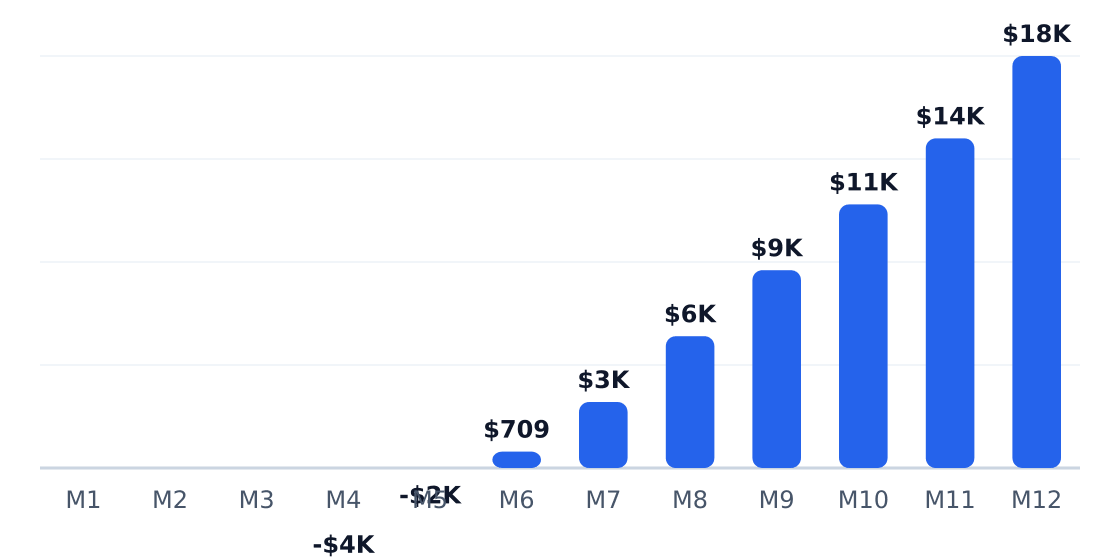
Revenue builds fast in this space: $638K Year 1, $989K Year 2, and $1.4M Year 3. The $44.7B serviceable market means scaling potential exists, but only if you nail unit economics early.
5-Year Revenue Potential
Projected revenue if you execute the plan
| Source | Amount | Terms | Best For |
|---|---|---|---|
| SBA 7(a) | Up to $5M | 10yr @ 6-8% | Established credit |
| Personal savings | Variable | 0% interest | Bootstrappers |
| Microloan | $50K max | Short-term | Inventory needs |
| Friends & family | Variable | Flexible | Early prototyping |
| Equipment financing | 80% of value | 5-7yr | Production gear |
Compare options at SBA loan programs before committing.
9. Common Mistakes & Pro Tips
72% of beverage startups fold within 18 months. The killers? Regulatory missteps and cash flow miscalculations. Here's how to avoid joining them.
| Mistake | Impact | How to Avoid |
|---|---|---|
| Underestimating compliance | Recalls, fines, delays | Hire food regulatory consultant |
| Too many SKUs at launch | Inventory bloat, weak marketing | Start with 1-3 hero products |
| Ignoring freight costs | Margin collapse at scale | Model landed cost upfront |
| Weak co-packer choice | Quality issues, stockouts | Vet for capacity and QA |
| Premature branding spend | Cash burn before PMF | Validate repeat purchases first |
- Run shelf-life tests for 20% longer than expected
- Negotiate co-packer MOQs down by offering equity kickers
- Budget $3,500 for third-party lab testing per SKU
- Secure UPC barcodes 90 days before launch
- File for trademark protection in Year 1
- Attend 2 trade shows before finalizing packaging
- Hire a fractional CFO when hitting $25K/month
- Always carry product liability insurance ($1M minimum)
The beverage gold rush is real but littered with casualties. Draft your business plan this week, lock funding within 60 days, and set a hard launch date no more than 6 months out. Bottoms up.
Research & Startup Resources
The following government guides, industry reports, and startup resources were referenced in this beverage launch guide. Each link points to a specific page for direct access.
- 103547 Video Food Plant Openings And Expansions January 2026 — foodengineeringmag.com — Industry research for starting a beverage business
- Us Alcoholic Beverage Market — statifacts.com — Industry research for starting a beverage business
- Global Beverage Market — knowledge-sourcing.com — Industry research for starting a beverage business
- Us Alcoholic Drinks Market — marknteladvisors.com — Industry research for starting a beverage business
- USGS.6619557bd34e7eb9eb7dcaf0 — data.usgs.gov — Industry research for starting a beverage business
Get Your Copy Today
Download Beverage Business Plan
Just Fill Up and Print