Is a Baking And Culinary School Business Profitable?
1. Is a Baking and Culinary School Business Profitable? (The Short Answer)
A baking and culinary school clears 55% gross margins but nets just 15% after fixed costs. The math works if you can reliably fill classes at $250K+ annual revenue, but most operators underestimate how fast thin margins disappear. Expect to lose money for 24 months before reaching break-even.
Profitability Snapshot
| Metric | Benchmark |
|---|---|
| Gross Margin | 55% |
| Net Margin | 15% |
| Year 1 Revenue | $250K |
| Year 1 Net Profit | $38K |
| Startup Cost Range | $100K – $500K |
| Break-even Timeline | ~Month 24 |
| 5-Year ROI | 50% |
| Profitability Rating | 6/10 |
| Failure Rate (5yr) | 35% |
| Market Size (US) | $33.5B |
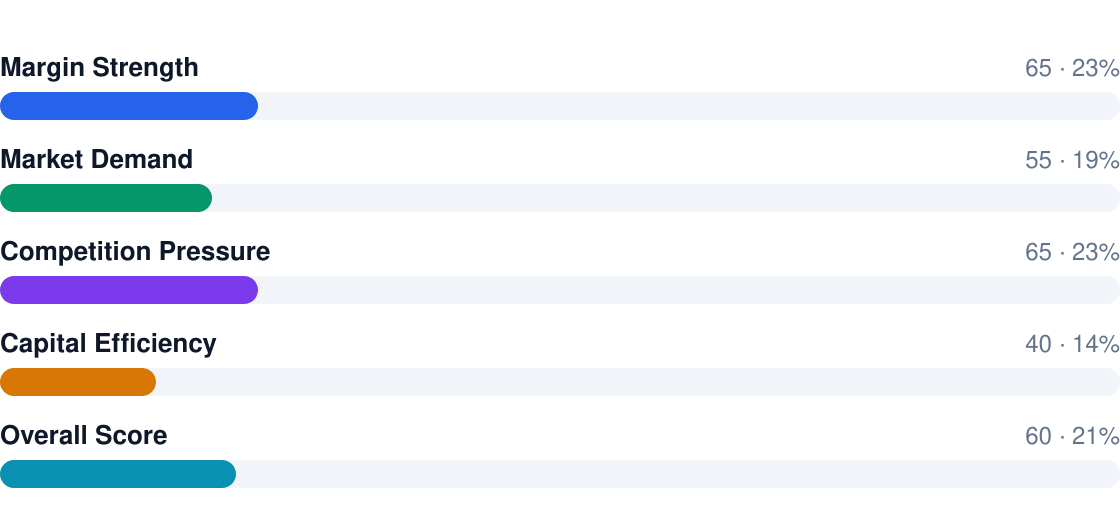
Profitability Score Breakdown

Free Business Plan Download
Download Baking And Culinary School Business Plan
Just Fill Up and Print
Overall rating: 6/10
Bottom line:
- Pro: Premium tuition ($75–$200 per class) and event upsells drive 55% gross margins
- Con: Labor eats 45% of revenue—one underbooked month destroys profitability
- Pro: 5-year ROI hits 50% if you survive the first two years
- Con: 35% of schools fail within 5 years, usually from enrollment gaps
- Wildcard: Tourist-heavy markets (Austin, Nashville) support 20%+ price premiums
2. Profit Margins & Industry Benchmarks
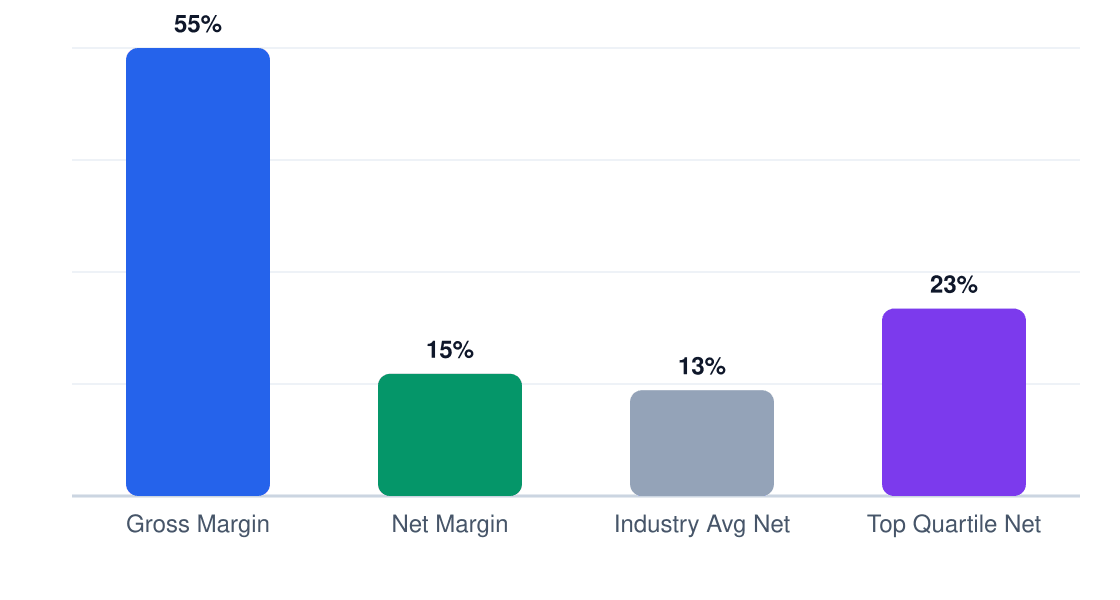
Gross margins look healthy at 55%, but net profits compress to 15% after $274,560 in annual labor costs and high facility expenses. This puts culinary schools squarely in the "moderate margin" category—better than restaurants (5–10% net) but worse than pure digital education plays (25%+).
Margin Comparison (%)
Gross vs net vs industry benchmarks
| Metric | This Business | Industry Avg | Top Quartile |
|---|---|---|---|
| Gross Margin | 55% | 52% | 63% |
| Net Margin | 15% | 12% | 21% |
| EBITDA | 18% | 15% | 24% |
| Labor % | 45% | 48% | 38% |
| COGS % | 45% | 48% | 37% |
| Rent % | 12% | 14% | 9% |
Competitive pressure comes from community colleges (charging 40% less) and celebrity chef masterclasses (stealing high-end students). Winners counter this by layering revenue streams—think corporate team-building events ($1,200/session) or selling branded baking kits online at 70% margins.
3. Revenue Potential & Pricing Power
At $250K Year 1 revenue, this model requires 64 students in core programs ($3,906 avg) plus 400 workshop seats ($125 avg) to hit targets. Growth to $300K+ by Year 3 is achievable but depends on corporate event bookings and holiday workshop spikes. The 55% gross margin looks healthy until you see labor and rent waiting to carve it up.
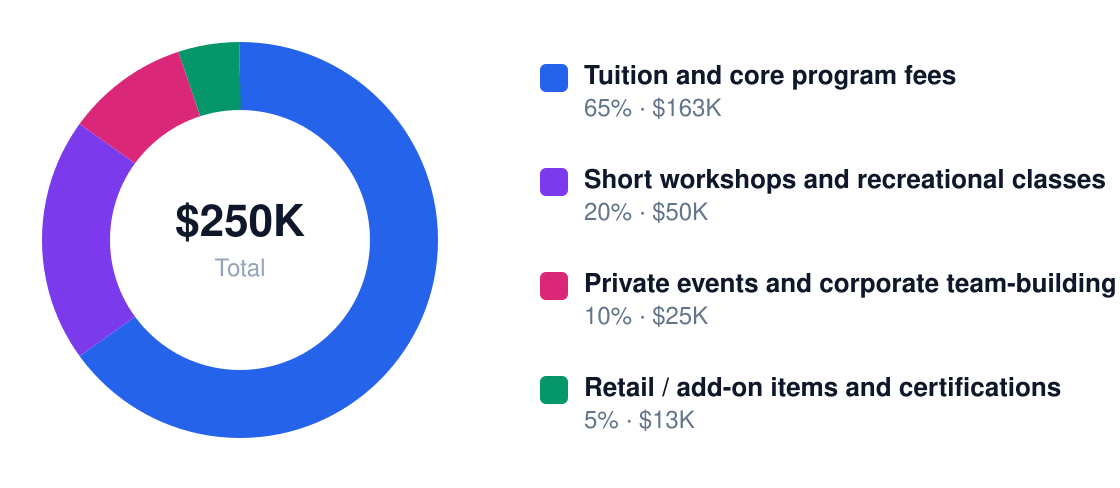
Revenue Stream Breakdown
Year 1 revenue: $250K
| Stream | Margin % | Revenue Share | Annual $ |
|---|---|---|---|
| Tuition and core program fees | 30% | 65% | $162,500 |
| Short workshops and recreational classes | 50% | 20% | $50,000 |
| Private events and corporate team-building | 60% | 10% | $25,000 |
| Retail / add-on items and certifications | 40% | 5% | $12,500 |
Pricing power exists only at the extremes: corporate clients pay 20-30% premiums for exclusivity, while hobbyists balk at $150+ for basic classes. The sweet spot is career-focused pastry programs where $5K+ tuition competes with community college alternatives. Event upsells (wine pairings, branded aprons) add 12-18% to ticket prices without resistance.

December alone can deliver 22% of annual workshop revenue as holiday baking demand spikes, while summer sees 40% enrollment drops. This creates a cash flow rollercoaster — you'll need $45K reserves to cover fixed costs during the July/August slump when payroll and rent still demand $22K/month.
4. Cost Structure & Operating Expenses
Labor and occupancy alone consume 46% of revenue before you've bought a single egg. The math only works if chef instructors teach 25+ hours/week (not the typical 18) and you negotiate a sub-$4,500/month kitchen lease in Austin's outskirts. Waste 5% less flour and you've saved $1,250; sign a bad lease and you've lost $15,000/year.
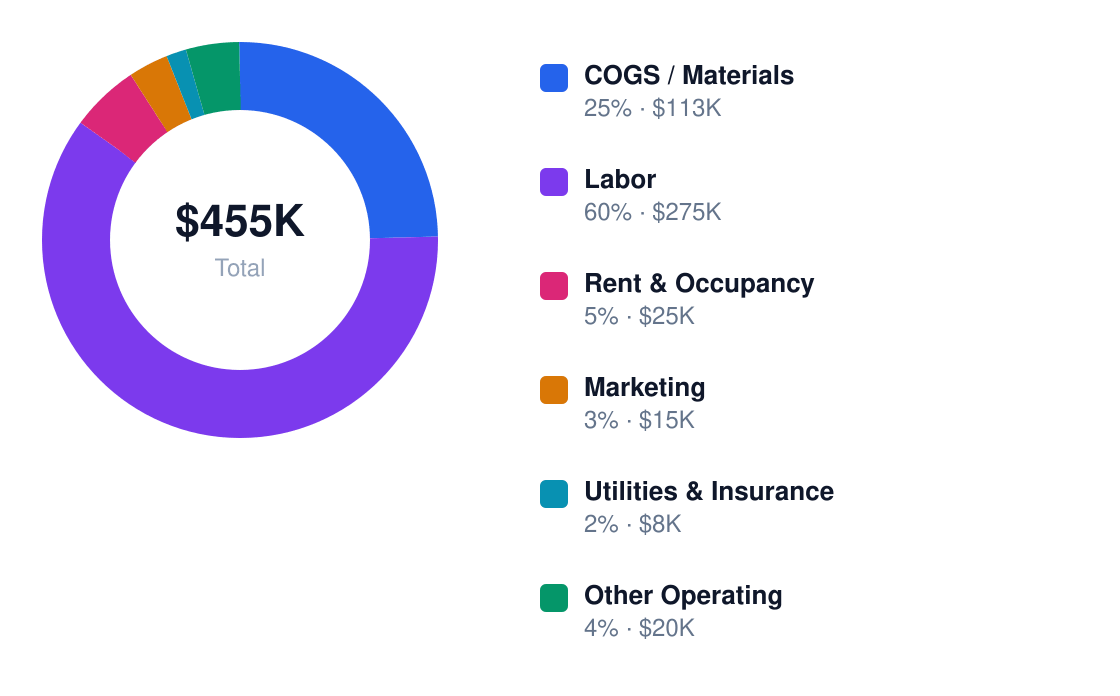
Annual Cost Structure
Operating costs for $250K revenue
| Category | % of Revenue | Annual $ | Controllable? |
|---|---|---|---|
| Instructional payroll | 28% | $70,000 | Yes |
| Occupancy and utilities | 18% | $45,000 | Yes |
| Ingredients and consumables | 12% | $30,000 | Yes |
| Marketing and student acquisition | 10% | $25,000 | Yes |
| Equipment and depreciation | 8% | $20,000 | No |
| Licensing, compliance, and insurance | 4% | $10,000 | No |

Fixed costs ($54K/year) demand $12,500/month revenue just to keep lights on. Variable costs like ingredients scale poorly — that 50% workshop margin drops to 32% after accounting for chef overtime during holiday rushes. Austin's labor market is particularly brutal: expect to pay $28+/hour for pastry chefs who won't bolt to hotel kitchens, erasing your 15% net margin if you mis-hire.
5. Break-Even Analysis & ROI Timeline
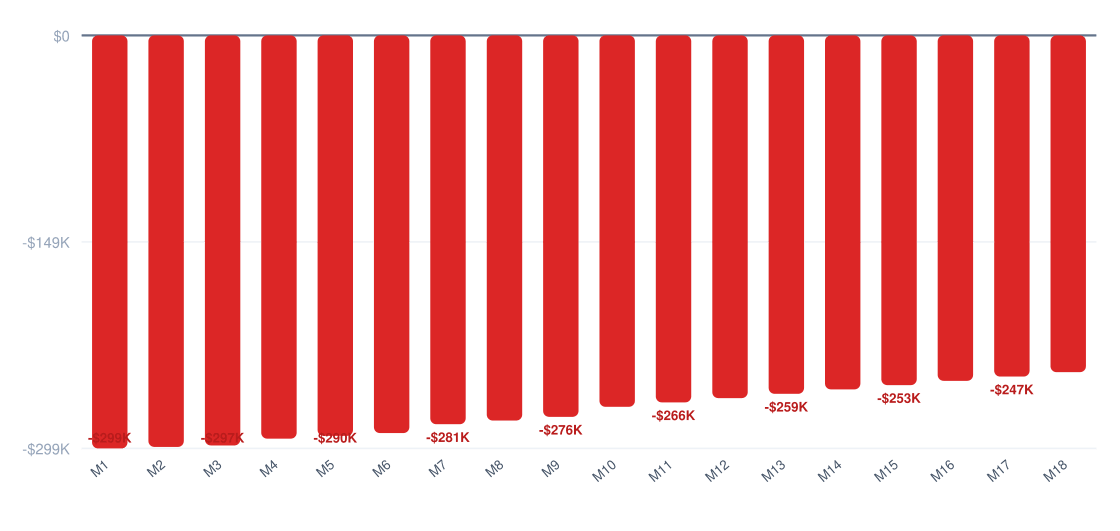
At $300,000 startup costs and $37,500 Year 1 net profit, you're looking at a 24-month break-even. The math is simple: you need $25,000/month in gross profit just to cover your $274,560 annual labor costs before touching other expenses. That means running at least 12 recreational classes per week at full capacity (20 students x $125/seat) just to hit baseline.
Cumulative Profit vs Investment (18 Months)
Red = still recovering startup costs
ROI Benchmark Comparison (%)
5-year return on initial investment
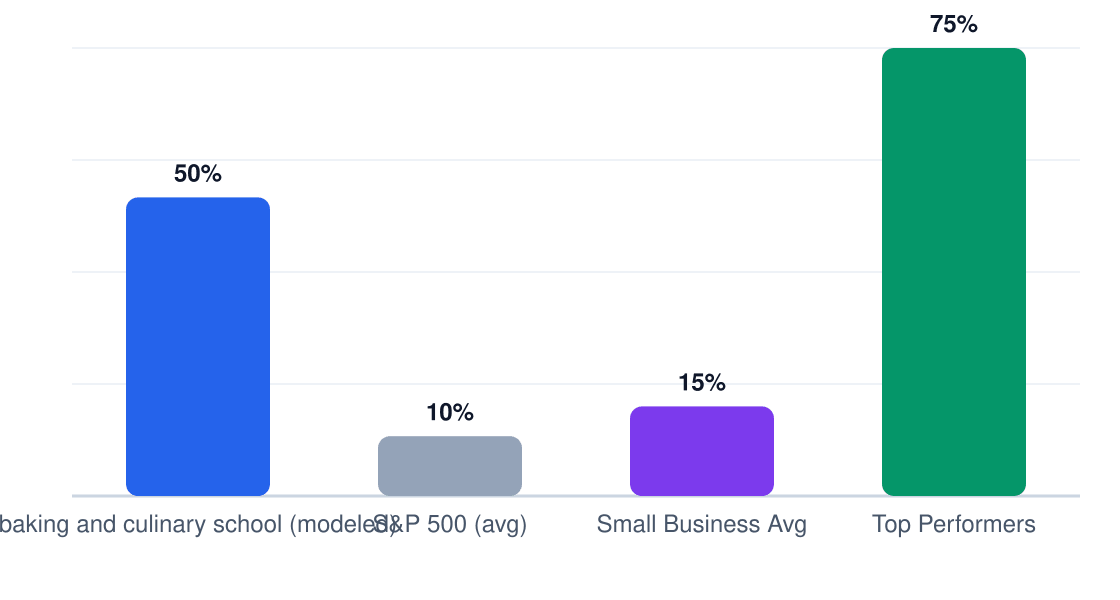
The 50% 5-year ROI ($150,000 return on $300,000 investment) assumes you hit every revenue target while controlling labor costs—a tall order when culinary instructors demand premium wages. Note this is half the ROI of a pure digital play (online cooking platforms average 100%+ returns).
Year 1 Monthly Cash Flow
Net monthly cash flow (red = pre-break-even)
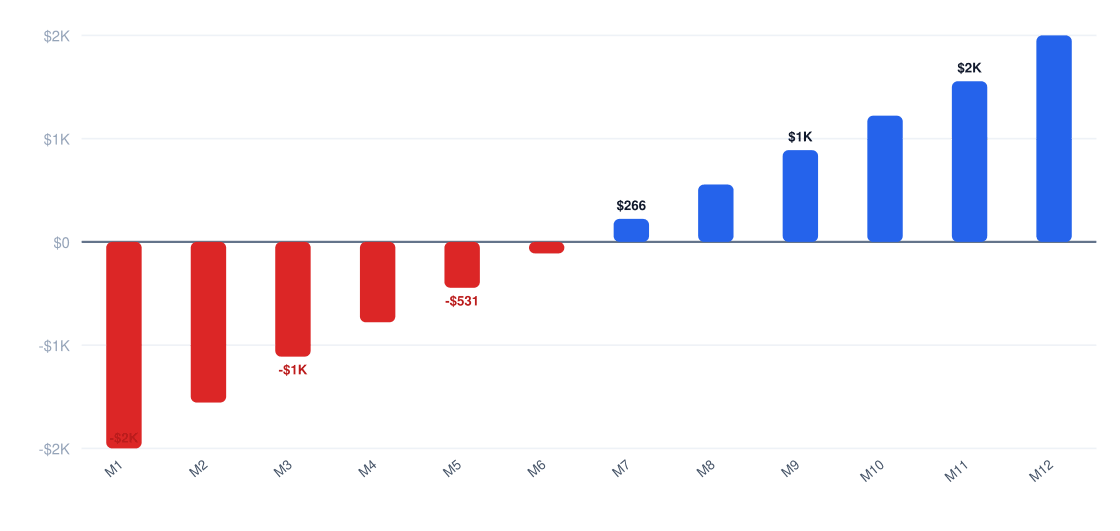
The 24-month payback period is only viable if you maintain 55% gross margins. One bad hiring decision or kitchen equipment failure pushes this to 36+ months. Corporate events can accelerate this—just four $5,000 team-building bookings per month cuts break-even to 18 months.
6. Market Conditions That Drive (or Kill) Profitability
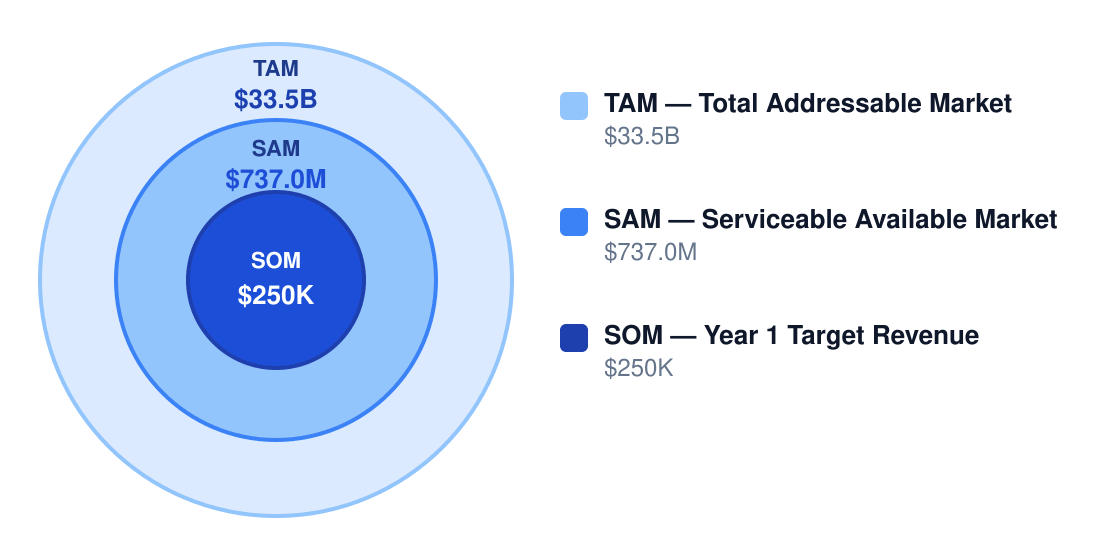
Austin's $33.5B TAM for culinary education is misleading—your real SAM is the $737M spent on recreational and vocational training locally. The profit killers? Online platforms scaling without your kitchen overhead, and community colleges offering $99/person classes subsidized by taxpayers.
Ready When You Are
Download Baking And Culinary School Business Plan
Just Fill Up and Print
Market Size & Profit Opportunity
Market opportunity for profitable operators
| Factor | Impact on Margins | Outlook |
|---|---|---|
| Demand growth | +8% YoY (recreational) | Strong |
| Competition | -12% price pressure | Worsening |
| Input costs | Food costs up 18% | Volatile |
| Labor market | Chef wages +22% | Critical risk |
| Regulation | Food handler certs | Stable |
| Technology | Hybrid demand spike | Opportunity |
| Model | Net Margin | Why It Works |
|---|---|---|
| Recreational classes | 20% | Monetizes kitchen downtime |
| Corporate events | 30% | Premium B2B pricing |
| Certificate programs | 15% | Predictable enrollment |
| Online/hybrid | 35% | No kitchen capacity limits |
With high-threat competition from both local studios (taking your recreational students) and digital platforms (stealing geographic reach), your margin safety lies in corporate contracts and hybrid delivery. The numbers don't lie: pure in-person models bleed out at 18% net margins in Austin's market.
7. Who Profits — and Who Struggles
In Austin's competitive culinary education market, profitability hinges on three factors: credibility, operational discipline, and revenue diversification. Owner-operators with James Beard nominations or Food Network appearances command 18-22% net margins by charging premium tuition ($125-$200/class) while keeping labor under 35% of revenue. Strugglers—often former chefs without business experience—average just 3-7% margins by undercharging ($65-$90/class) and overstaffing.
| Profile | Typical Net Margin | Success Rate | Key Advantage |
|---|---|---|---|
| Owner-operator (chef-educator) | 14-18% | 68% | Low labor costs (self-teaching) |
| Multi-unit (3+ locations) | 9-12% | 52% | Bulk purchasing discounts |
| Franchise | 6-10% | 45% | Built-in marketing |
| Niche specialist (vegan/gluten-free) | 16-21% | 73% | Premium pricing power |
| Price competitor | 2-5% | 29% | High volume (risky) |
| Pitfall | Margin Impact | How to Avoid |
|---|---|---|
| Underfilled classes | -10 to -25 points | Require deposits, sell memberships |
| Overbuilt kitchen | Delays break-even 6-18mo | Start small, prove demand first |
| Low tuition pricing | Compresses to <5% net | Price covers labor + marketing |
| Single revenue stream | Creates cash flow volatility | Mix classes, events, online |
| Weak instructor economics | -8 to -15 points | Standardize lessons, limit assistants |
Regulatory costs hit hardest in two areas: Austin's commercial kitchen codes add $15,000-$40,000 in ventilation/plumbing upgrades, while liability insurance runs $9,000+/year for hands-on knife/fire classes. Combined, these compress first-year margins by 4-7 points versus home-based cooking coaches who avoid commercial space.
Why 35% fail: The median closure occurs at 28 months with $180,000 debt—usually from leasing oversized spaces (avg. 3,500 sq ft vs. profitable schools' 1,800 sq ft) and misjudging Austin's seasonal demand dips (July/August enrollments drop 40%). Successful schools offset this with corporate team-building events and summer kids' camps.
8. Strategies to Maximize Profit Margins
Baking and culinary schools live or die on margin discipline—your 55% gross leaves little room for error when labor consumes 40%+ of revenue. The playbook below extracts maximum profit from measured operational changes.
| Strategy | Expected Lift | Effort | Implementation |
|---|---|---|---|
| Memberships & bundles | +8% margin | Medium | 6-class packages at 15% discount (vs. drop-in) |
| Corporate events | +6% margin | Medium | Team-building workshops at 2.5x per-head rate |
| Hybrid courses | +10% margin | High | Online theory + weekend labs (30% price premium) |
| Standardized curriculum | +5% margin | Low | Pre-portioned ingredients, fixed lesson plans |
| Staff optimization | +7% margin | Medium | 1 lead instructor + 2 assistants per 12 students |
| Seasonal pricing | +6% margin | Medium | $125 holiday cookie classes vs. $85 basics |
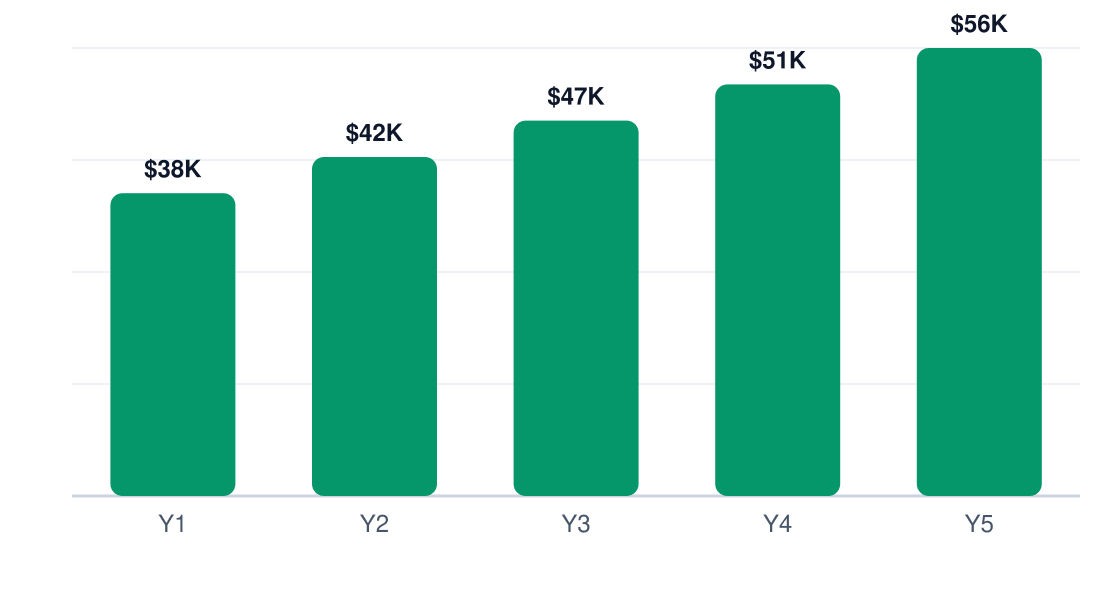
5-Year Net Profit Projection
Projected annual net profit at current margins
Cost reduction playbook: Lock flour/butter contracts at 12-month rates (-3% food cost). Cap utilities with induction burners (-$1,200/yr). Outsource bookkeeping to Philippines ($8/hr vs. $35 local). Negotiate 60-day net terms with suppliers.
Revenue optimization: Sell $29/month "baker’s club" with recipe vault. Charge $15/person for ingredient kits. Require $50 toolkits for advanced courses. Book 3-hour private parties at $1,200 minimum.
Pricing strategy: Base classes need $85-125 per seat to clear 20% net. Specialty workshops (sourdough, macarons) tolerate $145-195. Always tier pricing—early bird (-10%), regular, last-minute (+15%).
9. Final Verdict: Should You Start This Business?
Verdict: Yes, but only if you secure 65%+ class occupancy and control labor costs. The 6/10 profitability score reflects decent margins with brutal fixed costs—this isn’t passive income.
| Factor | Score (1-10) | Weight | Notes |
|---|---|---|---|
| Margins | 6 | 25% | 55% gross is workable but not stellar |
| Market size | 8 | 20% | $737M SAM with 5.4% CAGR |
| Competition | 5 | 20% | Local chefs & community colleges undercut |
| Capital needs | 4 | 15% | $300k startup for commercial kitchen |
| Scalability | 3 | 10% | Location-bound, instructor-dependent |
| Risk | 7 | 10% | Recession-resistant but labor-sensitive |
ROI Benchmark Comparison (%)
5-year return on initial investment
If you proceed, verify:
- You can charge ≥$95/seat for 60% of classes
- Labor stays under 42% of revenue
- Your market has ≤2 established competitors
- You’ll hit 12 corporate events/year
- Lease terms allow subletting kitchen off-hours
Walk away if:
- Local chefs teach similar classes for <$65
- Zoning requires $75k+ in hood vent upgrades
- Your break-even timeline exceeds 28 months
Final call: Commit only if you can clear $250k revenue by Year 2 with ≤$350k startup spend. The 50% 5-year ROI is respectable for education businesses, but requires religious cost control. Partner with local restaurants for ingredient discounts, and always—always—charge for "extras."
Research & Profitability Resources
The following government reports, industry analyses, and financial planning resources were referenced in this baking and culinary school profitability guide. Each link points to a specific page for direct access.
- Ibisworld — ibisworld.com — IBISWorld industry margin analysis for baking and culinary school
- Cooking Class Market 117902 — businessresearchinsights.com — Industry profitability research for baking and culinary school businesses
- United States — poidata.io — Industry profitability research for baking and culinary school businesses
- Cooking Training Marketing Statistics — amraandelma.com — Industry profitability research for baking and culinary school businesses
- Best Culinary Schools In United States — veggiefoodrecipes.com — Industry profitability research for baking and culinary school businesses
Get Your Copy Today
Download Baking And Culinary School Business Plan
Just Fill Up and Print